Published: 09 April 2026. The English Chronicle Desk. The English Chronicle Online.
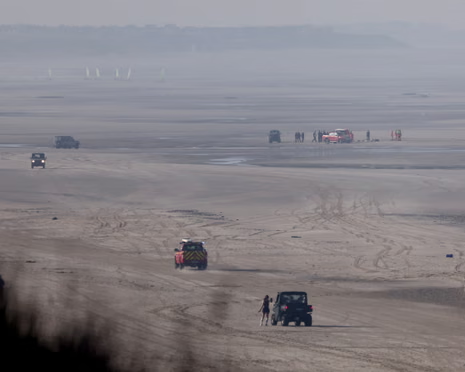
The cold waters of the English Channel have claimed four more lives this morning. This devastating incident involved a small vessel attempting the crossing from the French coastline. Local authorities in Calais confirmed that two men and two women lost their lives today. Emergency responders were alerted to the unfolding disaster near the shores of Équihen-Plage quite early. The rescue teams arrived to find a scene of profound desperation and total chaos. Preliminary reports suggest that the vessel was an overcrowded craft used by human smugglers. These small boats are often unsuitable for the treacherous conditions of the open sea. French maritime officials stated that the situation remains fluid as they continue their assessment. Every life lost at sea represents a failure of current international border control policies. This tragedy highlights the extreme risks that vulnerable people take for a new life. The local community in northern France has reacted with a mixture of grief and anger. Many residents feel that these avoidable deaths have become an all too common occurrence.
The vessel involved in today’s tragedy is known locally as a specialized taxi-boat. This term describes a tactic where smugglers move along the coastline picking up passengers. Instead of launching from one fixed point, these boats stop at multiple beach locations. This method allows smugglers to evade heavy police patrols stationed at major port areas. Authorities believe this boat may have started its perilous journey from the Belgian coast. From there it likely traveled south toward the narrower crossing points near the Calais region. This operational shift makes it much harder for French authorities to monitor every launch. It also increases the time that these flimsy vessels spend in the open water. The longer a boat is at sea, the higher the chance of structural failure. Smugglers prioritize their illicit profits over the basic safety of the people they carry. These crafts are frequently loaded far beyond their safe weight capacity for maximum profit. Today’s event is a stark reminder of the brutality inherent in the smuggling trade.

This latest sinking comes immediately after a very busy day for the rescue services. On Wednesday, over one hundred people required emergency assistance after getting into serious difficulty. Those individuals were lucky to be pulled from the water before any fatalities occurred. Unfortunately, the four victims discovered this morning did not share that same fortunate fate. Their deaths follow another fatal incident that occurred just at the start of April. Two other individuals perished during a similar attempt only a few short days ago. The frequency of these events has placed a massive strain on local maritime resources. Rescue crews often work through the night in freezing conditions to save struggling people. Each successful rescue is a testament to the bravery of these dedicated coastal workers. However, they cannot be everywhere at once on such a busy shipping lane. The English Channel is one of the most crowded waterways in the entire world. Massive freight ships move through these waters at high speeds throughout the day. A small rubber dinghy has very little chance against such large industrial vessels.
The political climate surrounding these crossings remains incredibly tense and very deeply divided. British and French officials are currently engaged in intense negotiations for a new deal. An interim arrangement is presently in place to manage the ongoing maritime security crisis. This temporary measure was necessary after the previous formal agreement expired last month. The failure to secure a long-term plan has drawn criticism from many political figures. Critics argue that the lack of a firm treaty emboldens the smuggling networks. They believe that a clear and robust legal framework is essential for border safety. Meanwhile, human rights advocates call for safer and more legal routes for asylum seekers. They point out that desperate people will continue to risk everything regardless of laws. Without a safe alternative, the demand for smuggling services will likely remain quite high. The current impasse between London and Paris creates a dangerous vacuum of effective policy. Both nations agree that the loss of life is a significant humanitarian disaster. Finding a practical solution that satisfies both governments remains a very difficult challenge.
Data from the Migration Observatory at the University of Oxford provides a broader context. Approximately two thousand two hundred people have crossed the Channel so far this year. This figure covers only the first two months of the current year of 2026. Last year, the total number of people making the crossing reached over forty thousand. These statistics illustrate the massive scale of the migration challenge facing the United Kingdom. Behind every single number is a human being with a story and a family. Many of those arriving have traveled through multiple countries before reaching the French coast. They often spend months living in makeshift camps while waiting for a crossing opportunity. The conditions in these camps are often described as being extremely harsh and unsanitary. People smugglers exploit the desperation of those living in such difficult and precarious situations. They charge thousands of pounds for a single seat on an unsafe rubber boat. This predatory industry thrives on the absence of a coordinated and humane migration strategy. The sheer volume of crossings indicates that current deterrents are not working as intended.
Public opinion in the United Kingdom remains sharply divided over how to respond. Some citizens feel that border security must be the primary focus of the government. They worry about the impact of large-scale migration on public services and local communities. Others believe that the UK has a moral duty to protect those fleeing conflict. They argue that the country should offer more support to people in genuine need. This debate is often reflected in the headlines of major national newspapers and websites. The tragedy today will likely reignite these passionate arguments across the British political spectrum. Politicians from all parties have expressed their deep condolences to the families of victims. However, there is little consensus on the best path forward to prevent more deaths. The Home Office has stated its commitment to breaking the business model of smugglers. They intend to increase surveillance and work more closely with European law enforcement agencies. Whether these measures will be enough to stop the crossings remains to be seen. The lure of the UK continues to draw people from across the globe.

Local French residents near Équihen-Plage witnessed the arrival of the emergency services this morning. They described the sound of sirens and helicopters filling the quiet early morning air. Many people gathered on the cliffs to watch the rescue operation unfold at sea. There was a somber mood as the bodies were brought back to the shore. Local charities have been working tirelessly to provide clothing and food to survivors. These volunteers see the human cost of the border crisis on a daily basis. They often provide the first bit of comfort to those who make it across. For those who do not survive, the charities help with the difficult identification process. The identity of the four people who died today has not been released. Officials are currently working to notify their next of kin in their home countries. This process can be incredibly complicated and often takes several weeks to complete. It is a heartbreaking conclusion to a journey that was fueled by high hopes. For now, the focus remains on the survivors and the ongoing investigation into smugglers.
As the sun sets over the Channel tonight, the sea looks deceptively calm and peaceful. Yet, the memory of this morning’s tragedy will linger in the minds of many. The four victims are a grim addition to a growing list of maritime fatalities. Their deaths serve as a powerful reminder of the urgent need for global cooperation. No single nation can solve the complex issues driving migration and human smuggling alone. It requires a unified effort to address the root causes of displacement and conflict. Until then, people will continue to board small boats in search of safety elsewhere. The cycle of tragedy and political debate seems destined to repeat itself once more. We must ask ourselves how many more lives must be lost in these waters. The English Chronicle will continue to follow this developing story as more details emerge. For today, our thoughts are with those who lost their lives in the Channel. Their stories ended far too soon in the waves between two distant shores. We hope for a future where such dangerous journeys are no longer a necessity.
Related News:
 Gambia Supreme Court Hears Case to Overturn FGM Ban
 Iran Death Toll Crisis Exposed: Bodies, Mass Graves, and Concealment
 Files Link Andrew to Epstein Dinner After Prison Release
 Thousands Protest ICE in New York Against Trump Deportation Campaign
 Concerns rise for Canberra boy amid Iran detention fears
 Brazilian Politician Brothers Sentenced for Marielle Murder
 Anthony Albanese Must Uphold Rights for All Australians
 Woman Executed in Somalia Sparks Debate on Justice System
 Uganda Crackdown: Two Women Arrested for Public Kissing
 Slovenia Election: A Nation at a Crossroads
 Police Seek Immunity in Indigenous Custody Death Case
 Manila Transport Crisis: Fuel Costs Hit Breaking Point
 UN Warns Israeli Death Penalty Bill Could Be a War Crime
 Spain Faces Backlash Over Xenophobic Chants in Egypt Draw
 A Global Voice For Justice: Stephen Lewis Dies At Age 88
 Artist Sues in Paris Over Israeli Strike Killing Parents
 Canadian Mother and Daughter Released From ICE Detention
 Bondi Nanny Adriana Rivas to Face Extradition to Chile
 Queensland Youth Justice Debate: The Data Behind the Law
 Gaza Child Arrives in UK for Life-Changing Care
 Brisbane Rideshare Driver Faces Serious Assault Charges
 Capitol Attack Anniversary Sparks Deep Political Divide
 Saudi Officials Report Zubaidi Flee Before Yemen Peace Talks
 Protest Rights Under Threat Across England and Wales
 UK Targets in New York Bomb Threat Hoax: Man Jailed
 Trump targets Iran trade with 25% tariff warning
 Rudd successor: Defence chief and former ministers considered
 US Senate rejects resolution limiting Trump military powers
 Venezuela regime claims release of political prisoners signals new era
 Gulf states warn Trump Iran strikes risk wider Middle East war
 Machado Trump medal gesture reshapes Venezuela power struggle
 Greenland defence seen as shared Nato duty amid troop arrivals
 Geopolitical football: Iran, Trump and the World Cup clash
 Canada-China trade gains momentum in new strategic partnership
 Trump Receives Machado’s Nobel Medal in White House Meeting
 Syria President Declares Victory as Ceasefire Reached with SDF
 US Considers Asylum for British Jews Amid Rising Antisemitism
 Trump slams UK ‘stupidity’ over Chagos Islands, eyes Greenland takeover
 Trump Tightens Grip on EU and UK Energy Supply
 Shinzo Abe’s killer receives life sentence in Japan
 China General Under Investigation Amid Leadership Purge
 Philippines ferry disaster leaves 15 dead, dozens missing
 Calls Grow for King Charles to Apologise for Crown’s Role in Slavery
 Cambridge Faces Scrutiny Over Arms Investment Transparency
 Epstein UAE Emails Shake British Royal Andrew’s Legacy
 Christchurch gunman seeks to vacate guilty plea
 Liberal Fallout: Taylor Challenge Casts Shadow Over Sussan Ley’s Leadership
 Infantino Faces Russia Threat and Trump Concerns at Uefa Congress
 How Dark Web Agent Spotted Bedroom Wall Clue to Rescue Girl from Years of Harm
 Gower, Waugh and Gavaskar Among Cricket Legends Calling for Imran Khan to Receive Proper Medical Care
 Hero Rescuer Saves Baby from Icy Chicago Lake
 Caribbean Leaders Urge Dialogue Amid US Oil Embargo on Cuba
 Ukraine Sends Drone Experts to Defend US Bases in Jordan
 New Zealand Covid Response Praised Despite Lingering Scars
 Abramovich Chelsea Sale Cash Faces Jersey Probe
 Yvette Cooper: UK Must Follow Principles, Not US Pressure
 US Strike on IRIS Dena Strains Strategic Indian Security Ties
 Jury Rules Meta and YouTube Liable for Addictive Design
 Saudi Arabia Urging US to Keep Up Iran Attacks
 Trump Softens Cuba Oil Stance as Russian Tanker Nears
 The Woman Guarding Earth From the Threat of Asteroids
 IMF Predicts Global Economic Crisis Due to Gulf Unrest
 California Defies Trump With Strict New AI Standards
 Germany Grapples With AI Abuse Following TV Star Scandal
 Exiled Tycoon Warns of New Russian Attacks on UK Soil
 Labor Under Fire Over Stalled University Fee Reform
 LA 2028: Millions of Affordable Olympic Tickets Announced
 Trump Slams Europe as Transatlantic Tensions Boil Over
 Inside the Deceptive Machine: A Former Producer Speaks Out
 Italy Faces Third Successive World Cup Absence After Loss
 Starmer Urges Ambitious EU Ties Amid Middle East Conflict
 Trump Issues Stark Warning After Strike On Iran’s Largest Bridge
 Hope and Fear as Iranians Flee Across the Turkish Border
 Tragic End to Outback Search as Floods Claim a Life
 Ben Roberts-Smith Arrested Over Alleged War Crimes
 Reform UK Pledges To Halt Visas Over Reparations Demands
 US and Iran Agree to Two-Week Provisional Ceasefire
 Starmer visits Gulf as US and Iran agree ceasefire
 Israel Defies Ceasefire as Lebanon Operations Persist
 Pakistan Brokers Historic Peace Deal Amid Rising Tensions