
Published: 05 October ‘2025. the English Chronicle Desk
The UK Home Office has announced plans to grant police new powers to address repeated protests, with particular focus on demonstrations related to Gaza and other high-profile causes. The proposed measures, set to amend the Public Order Act 1986, would allow authorities to consider the “cumulative impact” of recurring protests at the same location, enabling them to order organisers to relocate events or impose restrictions on timing. Failure to comply could result in arrest.
Home Secretary Shabana Mahmood explained that the legislation aims to close what she described as a “gap in the law,” noting that repeated disruptions at the same site over several weeks would qualify for enforcement under the new powers. Mahmood emphasised that the intent is not to ban protests outright but to provide police with the tools to manage frequency and disruption while protecting public order. She also indicated a wider review of existing protest laws to ensure powers are sufficient and applied consistently across the country.

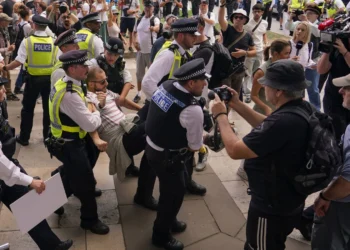
The announcement follows a series of high-profile demonstrations, including a protest in London where nearly 500 people were arrested for expressing support for Palestine Action, a proscribed organisation. Mahmood stated that these measures are necessary to balance the right to protest with the need for communities to continue their daily activities without intimidation. She stressed that the new powers would allow police to consider cumulative disruption as a factor when setting conditions for protests.
Speaking to Sky News, Mahmood highlighted the rationale behind the changes, saying: “Cumulative disruption, that is to say the frequency of particular protests in particular places, is in and of itself a reason for the police to be able to restrict and place conditions.” She added that authorities could impose measures such as relocating protests or limiting their duration to ensure safety and order.
The Home Secretary also defended recent mass arrests and the government’s decision to proscribe Palestine Action under terrorism laws, noting that supporting a banned organisation would always prompt police intervention. These moves coincide with growing concerns about repeated demonstrations and their impact on public services and policing resources.
Law enforcement representatives have expressed support for the changes. Paula Dodds, chair of the Metropolitan Police Federation, highlighted the strain on officers managing consecutive protests, saying: “Enough is enough. Our concentration should be on keeping people safe at a time when the country is on heightened alert from a terrorist attack. And instead officers are being drawn in to facilitate these relentless protests.”

The new powers are intended to complement other measures already in Parliament’s crime and policing bill, including restrictions on the possession of face coverings, fireworks, flares at protests, and criminalising climbing certain war memorials. Collectively, these measures aim to strengthen police capabilities in maintaining public order while balancing civil liberties and the right to lawful assembly.
The Home Office has indicated that further details will be set out in due course, including the precise criteria for intervention, the process for police enforcement, and the scope of review for wider protest legislation. Officials stress that the approach is designed to respond swiftly to ongoing disruptions while upholding democratic rights.
Related News:
 Tasers Introduced in UK Prisons to Combat Rising Violence and Protect Staff
 Police Advised to Disclose Ethnicity of Suspects in High-Profile Cases
 Charlie Kirk Killing Used to Mobilise UK’s Largest Far-Right Rally in Decades
 Commons Speaker Warns UK Parliament Vulnerable to Foreign Espionage After China-Linked Case Dropped
 Asylum Seeker Accused of Walsall Murder Seen Elated Post-Attack
 French Taxi Driver Cleared in David Lammy Theft Case After Fare Dispute
 Met Police Culture Makes Racial Harm ‘Inevitable’
 Victims’ commissioner Baroness Newlove dies aged 63
 UK Asylum Reforms: Temporary Refugee Status and Faster Deportations
 South African Detained After Neo-Nazi Rally in Australia
 Minister Defends Tough New Asylum Reform Plan
 UK Net Migration Falls Sharply After ONS Revisions
 Serial Rapist and Former Cop Found Guilty Again
 Trump Slams Democrats With ‘Seditious’ Death Claim
 Ex-Classmate Accuses Farage of Dishonesty on Racism Claims
 Peers Get Extra Time to Debate Assisted Dying Bill
 Ex-Brexit MEP Rejects Claim of Pro-Russia Payments
 Man Arrested Over Manchester Synagogue Terror Attack
 Twelve Prisoners Released in Error, Two Still Missing
 Trump Administration Dismisses 17 Immigration Judges, Sparking Debate Over Judicial Independence
 Northern Ireland Family of Three Shot Dead in Maguiresbridge Home Incident
 Targeted Attack in Bury Sparks Murder Investigation as Community Awaits Justice
 Man Remanded After Children Fall Ill at Leicestershire Summer Camp in Shocking Child Cruelty Case
 AI Revolutionises Grooming Gang Investigations as Police Target Cold Cases Across England and Wales
 Police Prepare for Potential Disorder as Far-Right Groups Promote Anti-Migrant Protests Across England
 Mass Arrests in London as Protest Defies Ban on Palestine Action
 Sally Rooney Pledges BBC Royalties to Support Palestine Action Despite UK Terror Ban
 Merseyside Police Helicopter Crew Cleared After Low-Altitude Pursuit of Suspect
 UK Police Face ‘Chronic Pressure’ Amid Surge in Protests Over Asylum and Gaza
 Angela Rayner Faces Scrutiny as Stamp Duty Row Deepens
 Tanni Grey-Thompson Faces Abuse Over Opposition to Assisted Dying Bill
 UK Launches Major Crackdown on Networks Profiting from Online Child Sexual Abuse
 First “One In, One Out” Deportation Flight Departs Without Migrants Amid Legal Challenges
 Corbyn and Sultana Clash Over Membership Portal as Divisions Surface in New Leftwing Party
 “Social Housing Crisis in England: Tenant Complaints Soar Amid Dangerous Living Conditions”
 Mahmood Pledges Reform of Modern Slavery Laws After Court Blocks Deportation Appeal
 Migrants in UK May Need to Contribute or Face Removal, Home Secretary Signals
 Jailed Georgian Opposition Leaders Warn UK of Iranian Links to Ruling Party
 No Evidence Found to Substantiate Alleged Rape in Oxfordshire Churchyard, Police Confirm
 MPs’ pay watchdog seeks to give public greater voice in how politicians are funded
 Stephen Lawrence’s Father Demands Justice Before Killer’s Parole
 Digital ID Plans Ignite Debate Over £600m Treasury Tax Boost and Privacy Concerns
 Madeleine McCann Detectives to Testify Against Woman Accused of Stalking the Family
 Boris Johnson Breached Rules on Post-Office Business Contacts
 Lucy Powell urged ministers to reconsider costly legal case for Labour donor’s firm
 Lisbon Transport Board Resigns After Deadly Funicular Crash
 Starmer Accused of Creating ‘Toxic Downing Street’
Johnson Approved China’s London ‘Super-Embassy’ in 2018
Starmer Accused of Creating ‘Toxic Downing Street’
Johnson Approved China’s London ‘Super-Embassy’ in 2018
 Five More Prisoners Freed by Mistake in Essex Week
 Afghan man charged with murder after west London knife attack
 Zarah Sultana Launches Party to Change Politics
 FBI Director Kash Patel Defends Girlfriend Amid Government Jet Claims
 Just Stop Oil Protesters Convicted Amid Climate Defence Row
 British Grandmother to Return Home After Death Sentence in Bali
 ‘Reckless’ cuts to victims’ services will cost more than they save
 Palace to reinstate hyphen in Andrew’s surname
 New review urges UK to repatriate Shamima Begum, others from Syria
 Pressure Mounts on Starmer to Sack Chief of Staff Over Briefing Row
 Peers Flood Assisted Dying Bill with 942 Amendments
 US Justice Department Files Lawsuit Against California Over Partisan Voting Maps
 UK Unveils Fast-Track Deportation and Asylum Overhaul
 UK Asylum Overhaul Sparks Debate Over Human Rights and Deportations
 UK Candidate Moved to Safe House After Election Threats
 Mahmood Defends Tough Overhaul of UK Asylum System
 Paralegal Fired After Exposé on Illegal Worker Scam
 Mother Watches in Horror as Teen Daughter Dies on Tracks
 Westminster Advances Legacy Bill Amid Criticism
 Only One Republican Opposes Mass Release of Epstein Files
 UK Vulnerable to Attack, Defence Committee Finds
 Rama Rebukes Mahmood for Targeting Albanian Families
 Russian Vessel Used Lasers on RAF Pilots, UK Claims
 Two Officers Injured After Van Deliberately Rams Patrol Car
 Venezuela Threatens Nobel Winner Machado with Fugitive Status
 Trump Envoy to Discuss Ukraine Peace at Kremlin
 Millions Face Higher Taxes Under Reeves New Budget
 Planned Palestinian Flag Raising at Belfast City Hall Faces Delay Amid Legal Concerns
 Video shows Israeli troops kill Palestinians after surrender
 Government righting decades-old injustice for miners
 Second homes curbs quashed in Gwynedd legal ruling
 Chinese & Japanese Boats Clash Near Disputed Islands