Published: 20 November 2025 Thursday . The English Chronicle Desk. The English Chronicle Online
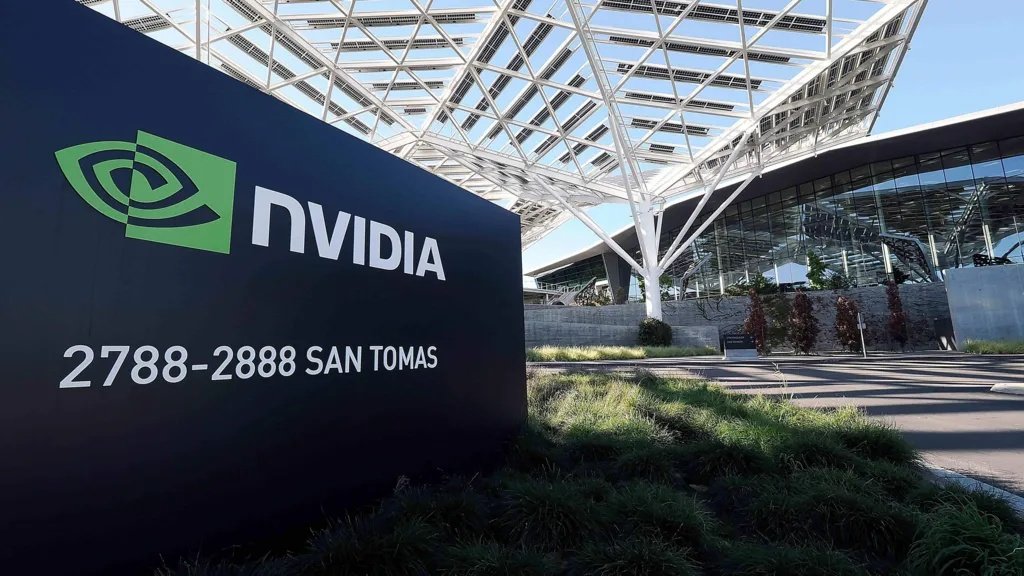
Nvidia, the world’s most valuable company and the undisputed engine behind the global artificial intelligence revolution, once again shattered Wall Street expectations on Wednesday as the chipmaker reported extraordinary quarterly figures that left investors both relieved and exhilarated. At a time when markets have been rattled by concerns of an overheated AI sector, Nvidia’s performance not only exceeded forecasts but reinforced its unparalleled dominance in an industry undergoing historic transformation.
For the three months ending in October, Nvidia posted an astonishing 62% rise in revenue, reaching $57bn—numbers that would have seemed unimaginable even during the early stages of the AI surge. The bulk of this performance was fueled by insatiable demand for Nvidia’s high-performance chips used in data centres powering advanced AI models. The data centre division alone recorded sales surpassing $51bn, marking a 66% increase year-on-year and cementing its role as the backbone of modern AI infrastructure.
The company further elevated investor optimism by projecting fourth-quarter revenue in the range of $65bn, a figure that comfortably outpaced market expectations. Following the announcement, Nvidia shares jumped approximately 4% in after-hours trading, restoring confidence after several days of market turbulence driven by fears of overvaluation in the tech sector.

Nvidia has long been viewed as the bellwether of the AI boom, and Wednesday’s announcement once again validated that reputation. In an environment where countless AI start-ups and even established companies have seen their valuations called into question, Nvidia’s results stood as a firm reminder that not all corners of the AI economy move at the same pace—or carry the same level of risk.
Chief executive Jensen Huang, whose charismatic leadership has turned Nvidia into a global powerhouse, wasted no time expressing his confidence in the company’s trajectory. He described sales of Nvidia’s new AI Blackwell systems as “off the charts,” emphasising that “cloud GPUs are sold out.” The message was unmistakable: demand was not merely strong—it was overwhelming.
Addressing analysts on a conference call, Huang pushed back sharply against the growing narrative that an AI bubble may be forming. “There’s been a lot of talk about an AI bubble,” he said. “From our vantage point, we see something very different. We excel at every phase of AI.” His remarks captured Nvidia’s posture of confidence in the face of broader market anxiety.
The anticipation surrounding Nvidia’s quarterly report had been especially intense. With the S&P 500 index logging four consecutive declines—a sell-off driven almost entirely by concerns about lofty AI valuations—many investors were looking to Nvidia for reassurance. Analysts agreed that Wall Street was expecting a blowout performance; the only question was the scale.
Adam Turnquist, chief technical strategist at LPL Financial, summed it up: “It was not whether Nvidia would beat expectations, but by how much.” And once again, Nvidia delivered.
Matt Britzman, senior equity analyst at Hargreaves Lansdown, noted that even though some areas of the AI sector may need to “take a breather,” Nvidia remained “in a different league altogether.”
Nvidia’s success is not simply the result of its ability to deliver high-performance chips. The company has carefully positioned itself at the heart of a rapidly evolving ecosystem that connects major AI players such as OpenAI, Anthropic, Meta, Google, Microsoft, Amazon, and the emerging xAI backed by Elon Musk. Nvidia’s chips have become indispensable for training and deploying the world’s most advanced AI models—systems that demand unprecedented computational power.
Earlier this year, Huang announced that Nvidia expected to receive $500bn in AI chip orders through next year. The figure stunned the industry and underscored how aggressively global companies are investing in AI. During Wednesday’s analyst call, Nvidia chief financial officer Colette Kress confirmed that the company would “probably” receive even more orders on top of that already monumental number.
But the company’s rapid rise has not been unchallenged. One of the most significant constraints on Nvidia’s expansion has come from regulatory limitations imposed by the US government on the export of advanced AI chips to China. These rules have forced Nvidia to redesign chips and adjust product strategies to maintain a foothold in one of the world’s biggest technology markets. Kress expressed disappointment over these restrictions, saying the US “must win the support of every developer,” including those in China—a rare public expression of frustration from a company that typically navigates geopolitical sensitivities with extreme caution.
Despite these challenges, Nvidia has been forging new alliances across the globe. At the US-Saudi Investment Forum in Washington on Wednesday, Jensen Huang appeared alongside Elon Musk to announce a massive new data centre complex in Saudi Arabia. The facility, equipped with hundreds of thousands of Nvidia chips, will serve as the first major compute cluster for Musk’s AI company, xAI. This announcement followed major reporting from The Wall Street Journal revealing that the US Commerce Department had reversed its earlier decision and approved the sale of up to 70,000 advanced AI chips to state-backed companies in Saudi Arabia and the UAE. This approval reportedly came after discussions involving US President Donald Trump and Saudi Crown Prince Mohammed bin Salman during the prince’s White House visit this week.
These developments highlight a powerful shift—from US-dominance in AI hardware to a broader global competition where the Middle East, eager to diversify beyond oil, is emerging as a major AI investment hub.
Meanwhile, the world’s leading tech firms show no signs of slowing their own spending. Recent earnings reports from Meta, Alphabet and Microsoft revealed relentless investment in AI infrastructure, from hyperscale data centres to next-generation chips. While some executives, including Alphabet CEO Sundar Pichai, have warned that a degree of “irrationality” exists within parts of the AI investment frenzy, few are willing to scale back for fear of falling behind.

Still, market analysts caution that Nvidia’s astonishing rise should be viewed in context. Simon French, chief economist at Panmure Liberum, likened parts of today’s AI landscape to the dotcom bubble of the late 1990s. “The issue is not so much these big cash-generative companies like Nvidia,” he said, “but the wider tech ecosystem—much of which is currently unprofitable.” His concern reflects broader fears that while Nvidia itself is thriving, some AI start-ups may be riding an unsustainable wave of investor hype.
Another area drawing scrutiny is the increasingly circular nature of AI investments. Nvidia has stakes—directly or indirectly—in major AI players including OpenAI, Anthropic and xAI. These companies in turn rely on Nvidia chips, creating a feedback loop in which investment fuels demand, which then drives valuations even higher. Nvidia’s $100bn investment in OpenAI, the maker of ChatGPT, is the most prominent example. Critics warn that such interlinked relationships could create systemic risks if AI funding slows or regulatory scrutiny intensifies.
Yet for now, Nvidia remains at the centre of a global technological transformation. As companies race to build intelligent systems capable of reshaping industries—from healthcare and finance to entertainment and defence—the world’s appetite for compute power continues to grow. For Nvidia, that translates into soaring revenue, insatiable demand, and a level of influence unmatched in modern technology.
Whether this momentum continues will depend on a mix of factors: geopolitics, regulatory decisions, emerging competitors, and the trajectory of global AI investment. But for this quarter at least, Nvidia has sent an unambiguous message to markets: the AI boom is far from slowing, and the company driving it is still accelerating.
Related News:
 Taylor Wimpey Sales Drop Amid Budget Uncertainty
 Aston Martin cuts £300m investment as Trump tariffs and weak China demand hit profits.
 Gopichand Hinduja, UK’s Wealthiest Business Leader, Dies
 US private equity set to acquire UK online retailer Very Group
 Troubled drinks giant Diageo names former Tesco boss to lead turnaround push
 UK Energy Bills to Rise Slightly in January
 Netherlands Suspends Nexperia Takeover Amid China Talks
 Prada buys Versace for $1.38bn, expanding luxury fashion empire
 Derby Bounce Centre to Close Amid Car Park Dispute
 UK Small Business Owner to Challenge L’Oréal in Tribunal
 Ryanair Chief UK Economy ‘Doomed’ Under Labour
 ABF May Split Primark from Food Division Amid Tough Market
 UPS Cargo Plane Crash in Kentucky Kills Seven
 M&S Profits More Than Halve After Cyber-Attack
 From Lego to Pokémon: How Adults Are Driving UK Toy Market Growth
 Skims Eyes Global Expansion After Reaching $5 Billion Value
 US Strikes Last Penny After 230 Years of Production
 Switzerland Rolls Out Charm Offensive to Cut Trump’s 39% Tariffs
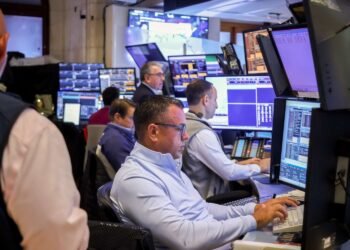 Global markets drop amid tech sell-off and China slowdown
 Eurotunnel Investment Halted as UK Rates Soar
 Mossmorran Plant Closure Hits Cowdenbeath Hard
 UK Government Borrowing Higher Than Expected
 English Mayors Set to Introduce Tourist Taxes
 Asahi says 1.5 million customers’ data potentially leaked in cyber-attack
 India’s Labour Law Overhaul Sparks Fierce Debate
 EU reviews Apple Ads and Maps under strict digital rules
 Huawei, ZTE secure 5G deals in Vietnam amid US tensions
 Black Friday Footfall Falls as UK Shoppers Hold Back Amid Economic Concerns
 Rising Water Bills Lift Troubled Thames Back to Profit
 Post Office Scandal Compensation Tops £1 Billion as Victims Finally See Justice
 Shein UK Faces Allegations of Shifting Majority of Profits to Singapore to Reduce UK Tax
 GSK Chief Executive Emma Walmsley to Step Down After Eight Years at the Helm
 Pizza Hut to shut 68 sites after collapsing into administration
 Reeves Faces Setback as Labour May Miss Homes Target
 Hospice Cuts Raise Alarm Across England Amid Funding Crisis
 Virgin Trains Moves Closer to Challenging Eurostar Monopoly
 Trump’s UK Ambassador Urges North Sea Drilling to Strengthen US Ties
 Tony Blair think tank warns Rachel Reeves must cut taxes if manifesto broken
 Earl of Yarmouth Faces £1.3m Legal Bill Over Family Estate
 Britain deploys RAF specialists to assist Belgium with drone threats
 US Senate Passes Funding Bill to End Historic Shutdown
 Millionaires group urge Reeves to introduce wealth tax to ‘lift kids out of poverty’
 Shouting Works Best to Deter Gulls, UK Study Finds
 New laws to bolster UK’s defences against cyber attacks on NHS, transport and energy
 PM Condemns Leaks, Vows Loyalty to Ministers and Stability
 Son Reveals UK Couple in Iran Resort to Hunger Strike for Help
 TalkTV Fires Mike Graham Over Racist Facebook Post
 Saka Solidifies Role as Tuchel’s Key England Lieutenant
 Former Lion Heskey Warns of Shortage of England Strikers
 December Run-Off in Chile as Election Produces No Winner
 Zelenskyy Signs Fighter Jet Deal Amid Russian Drone Attacks
 Orban Says Ukraine Has ‘No Chance’ as EU Support Continues
 Stroke Patient Mistaken for Drunk, Care Delayed
 Mother Watches in Horror as Teen Daughter Dies on Tracks
 Canada Passes Carney’s First Budget in Tight Parliamentary Vote
 Seven Countries, One Winner: Europe’s Best Christmas Market
 Van Dwellers Face Eviction After Park Misuse Sparks Outcry
 Shadow Fleet at Sea: Europe’s Battle Against Illicit Oil Shipping
 Haiti Qualifies for World Cup Despite Coach Never Visiting Country
 Deadly Russian Strikes Hit Western Ukraine, 20 Killed in Ternopil
 Snow and Ice Cause Travel Chaos in North Yorkshire
 Serial Rapist and Former Cop Found Guilty Again
 Pentagon Officials in Ukraine to Discuss War End
 Vietnam Battles Deadly Floods as Rains Continue
 Scottish Families Take Legal Action Over School CO Leak
 Venezuela Threatens Nobel Winner Machado with Fugitive Status
 At Least Three Dead in Bangladesh Earthquake
 Vicki Fears Losing Motability Car
 Israel Confirms Hamas Returned Dror Or’s Body
 Millions Face Higher Taxes Under Reeves New Budget
 Two National Guard Soldiers Critically Injured Near White House
 Mbappe Scores 4 as Real Madrid Edge Olympiakos
 Sri Lanka Floods Leave 56 Dead, Dozens Missing
 Scotland Gains 33 New Towns – Life in Growing Communities
 Jordan Bardella: France’s Young Presidential Contender
 AI Actress Creator Says Tilly Norwood Won’t Replace Actors
 Search underway for British man overboard off Tenerife
 Virgin Media Fined £23.8m Over Telecare Safety Failures
 Pavarotti statue frozen in Italian ice rink sparks backlash
 Barcelona, Atletico set for decisive La Liga showdown