Published: 29 December 2025. The English Chronicle Desk. The English Chronicle Online.
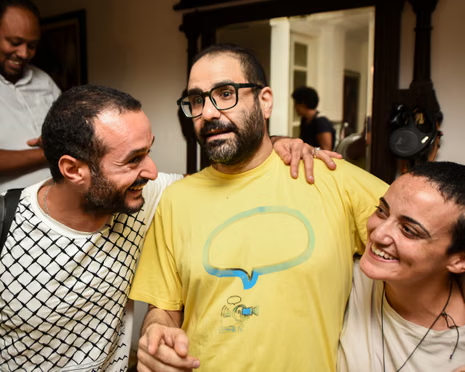
British-Egyptian human rights activist Alaa Abd el-Fattah has formally apologised for tweets he wrote over a decade ago, acknowledging their hurtful and shocking nature. The social media posts, written during the Arab Spring between 2010 and 2012, resurfaced recently, prompting criticism from political figures and members of the public in the UK. Abd el-Fattah, who was released from over ten years in Egyptian prison before returning to the UK, described his past writings as the impulsive expressions of a younger man engaged in heated online debates.
In a statement issued early Monday, Abd el-Fattah said he understood the gravity of the posts. “Looking at the tweets now – the ones not completely twisted – I understand how shocking and hurtful they are, and for that I unequivocally apologise,” he stated. He explained that many tweets were written in moments of anger and frustration amid regional conflicts, including the wars in Iraq, Lebanon, and Gaza, as well as escalating police brutality against Egyptian youth. He admitted some tweets were part of online exchanges that disregarded how they might affect others, acknowledging that he should have acted more responsibly.
Some of the messages, which have drawn significant attention, described acts of violence against Zionists as heroic and used offensive language towards British people. Abd el-Fattah emphasised that these tweets reflected the tone of online culture at the time and were not intended to offend a wider public. He highlighted that in the real world, he actively campaigned for democracy and human rights in Egypt, facing repeated incarceration for advocating equality and secular governance.

Addressing concerns raised in the UK, Abd el-Fattah insisted his real-life record should be considered over his past social media posts. “Today, this middle-aged father firmly believes all our fates are entwined, and we can only achieve prosperous lives for our children together,” he wrote, highlighting his long-standing advocacy for minorities, LGBTQ rights, and freedom of speech in Egypt. He also asserted that some tweets had been deliberately misrepresented. One post criticised homophobia, but was misinterpreted as a homophobic statement, and another appeared to suggest Holocaust denial, whereas it was intended to mock such denial.
Abd el-Fattah strongly rejected accusations of antisemitism. “I take accusations of antisemitism very seriously. I have always believed sectarianism and racism are the most dangerous forces, and I faced imprisonment for defending Christians falsely accused of violence,” he explained. He noted that his activism often carried personal risk, including defending religious minorities and challenging police brutality under Egypt’s authoritarian regime.
The controversy also intersects with his British citizenship, which he automatically received in 2021 under UK immigration law through his mother, who was born in London. Calls have emerged from Conservative figures for Abd el-Fattah’s deportation. Kemi Badenoch described him as someone whose presence in the UK is unacceptable, while Nigel Farage reportedly referred the matter to counterterrorism authorities. Within Labour, some expressed regret that his historical tweets were not more thoroughly scrutinised, especially given his high-profile profile in human rights campaigns.
Abd el-Fattah highlighted the personal toll of the controversy, noting that the weekend of the backlash coincided with what should have been his first celebration of his son’s birthday with him since 2012. He reiterated his commitment to equality, justice, and secular democracy, values that had led to his repeated imprisonment in Egypt. “My freedom was stripped for defending human rights. These values are core to my identity,” he emphasised, framing his apology within a broader narrative of lifelong advocacy.
He also referenced earlier controversies surrounding his social media activity. When he was nominated for the Sakharov Prize in 2014, some tweets resurfaced, prompting public criticism. A subsequent chapter in his book of essays addressed his writings on armed struggle in anti-colonial contexts, but critics argue it did not fully account for the most provocative posts. Abd el-Fattah maintained that he had drawn distinctions between combatants and civilians in those discussions, stressing the anti-colonial rather than sectarian motivation behind his writings.
While the apology may not satisfy all critics, it signals a clear acknowledgment of the impact of his past online behaviour. Abd el-Fattah’s response is likely to influence ongoing debate in the UK about public accountability for historical social media content, the relevance of personal history in evaluating contemporary citizenship, and the intersection of political activism with national security concerns.
His statement underlines the complexity of judging a human rights activist’s past expressions within the context of their broader life and activism. It also reflects the continuing scrutiny faced by public figures who return to the UK after long-term activism abroad, especially in politically sensitive contexts. By presenting a detailed account of his motivations and clarifying misinterpretations, Abd el-Fattah has sought to balance personal accountability with an appeal to understand the broader impact of his advocacy work.

Observers in the UK political landscape are now weighing the response carefully. Some Labour figures have called for measured consideration of his long-standing contributions to human rights, while Conservative voices remain vocally critical, highlighting the tensions between historical online statements and current citizenship rights. The debate underscores broader societal questions about digital responsibility, the evolution of personal views over time, and the potential consequences of social media content emerging years later in different political climates.
As this story develops, Abd el-Fattah’s apology may form part of a wider discourse on how countries reconcile citizenship, past actions, and ongoing activism. His emphasis on real-world human rights achievements, alongside acknowledgement of earlier offensive online rhetoric, aims to draw a nuanced distinction between youthful online behaviour and adult public service.
The situation has drawn attention to the need for political parties and government authorities to examine the implications of granting citizenship and positions of influence to individuals with complex histories. The controversy also raises questions about the lasting impact of social media posts and the potential for misinterpretation across decades, especially when amplified by political rivals.
Alaa Abd el-Fattah’s apology, while addressing specific tweets, also serves as a reflection on the broader challenges of reconciling digital pasts with contemporary public life. His call to evaluate him on tangible human rights work rather than online provocations highlights the continuing tension between personal accountability and recognition of societal contributions in politically sensitive contexts.
Related News:
 King Charles Pledges to Defend Europe Against Russia
 Sevenfold Rise in Gatwick Detention Centre Incidents
 Treasury Opens Inquiry into Autumn Budget Leak Claims
 Families to Receive Support to Exit Temporary Accommodation
 Labour MP’s Biscuit Debt Video Surges Past 3.3m Views
 UK Ends Haven Status for Dirty Money in Bold New Crackdown
 UK Asylum Crackdown Fuels Deaths and Violence
 Prince Harry’s Security Faces UK Review
 Farage Urged to Come Clean on Clacton Spending
 Reform campaign in Clacton faced ‘juggernaut’ scrutiny, say rivals
 Starmer Calls for Modern ECHR Curb to Counter Europe’s Populist Surge
 Youth Strategy Aims to End Decades of Political ‘Indifference’
 UK Borrowing Costs May Ease as Markets Gain Confidence
 Asylum Overhaul Could Worsen Homelessness, Whitehall Warns
 Javid Claims Johnson Was Cummings’ Puppet Before Resignation
 Conservatives Pledge to Scrap 2030 Petrol and Diesel Car Ban
 Ministers to back regulation of England’s funeral industry
 Starmer’s communications chief to outline media strategy overhaul
 Minister Rejects Claims of Abuse Against Hunger Strikers
 Farage avoids police investigation over election spending claims
 Kent Council Faces Scrutiny Over £40m Savings Claim
 Resident Doctors Seek Fresh Talks to Prevent New NHS Strikes
 Leaving ECHR Would Undermine UK Rights, Equality Chief Warns
 Farm Inheritance Tax U‑Turn Eases Burden After Months of Protests
 U‑Turn on Farmers’ Inheritance Tax Sparks Political Firestorm
 UK to Launch Military ‘Gap Year’ Scheme to Boost Recruitment
 Tories and Labour face scrutiny over Abd el-Fattah support
 Third of Reform UK Council Leaders Voice Vaccine Scepticism