Published: 29 January 2026. The English Chronicle Desk. The English Chronicle Online.
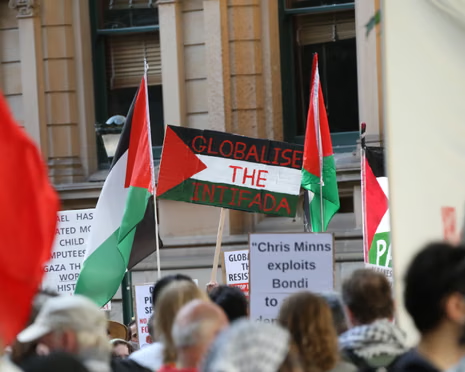
A New South Wales parliamentary inquiry has recommended restricting the use of the phrase “globalise the intifada” when it incites hatred, intimidation, harassment, or violence. The inquiry clarified that this recommendation does not constitute an outright ban, nor does it extend to phrases like “from the river to the sea,” which remain outside its scope. Labor MP Edmond Atalla, chair of the inquiry, confirmed the draft findings to Guardian Australia ahead of a final closed meeting on Thursday. The committee voted to table the report almost entirely unchanged.
The focus keyword “globalise the intifada” appears prominently in the debate, reflecting concerns about its use in political demonstrations. NSW opposition members have described the inquiry as rushed and predetermined, arguing that the recommendations risk criminalising conduct already covered by existing law. The inquiry, open for public submissions for only three weeks, received more than 500 submissions, of which only 150 were published.

Deputy chair, Labor MP Hugh McDermott, defended holding the inquiry over the holiday period, noting that multiple committee members, including Atalla, were overseas during parts of the process. “We have been in discussions nearly every single day,” McDermott said. Shadow attorney general Damien Tudehope criticised the draft, saying it would “ban one slogan but only in circumstances already captured by the Crimes Act.” He added that the recommendation could create confusion by giving the impression that other uses of the phrase were acceptable.
The report advises that legislation should proscribe the phrase “globalise the intifada” only when it is directly linked to incitement of harm, including hatred, harassment, intimidation, or violence. Legal experts have highlighted the importance of a “causal element” to avoid constitutional challenges. The phrase itself originates from Arabic, meaning uprising or shaking off, and is used by pro-Palestine supporters referencing uprisings against Israel. Members of the Jewish community have expressed concern, describing it as a call to violence against them.
The NSW Jewish Board of Deputies and the Executive Council of Australian Jewry (ECAJ) supported a ban on certain slogans, including “globalise the intifada,” while other organisations such as Palestine Action Group, the Australian National Imams Council, and the Jewish Council of Australia rejected the notion that the phrases were inherently hateful. They warned that banning political slogans could infringe on constitutional freedoms.
Constitutional law expert Prof Anne Twomey noted that proposals targeting specific chants present complex legal challenges, especially when committees are expected to formulate robust laws in a limited timeframe. She remarked that the recommendation would be legally safer than a blanket ban, but careful implementation is essential. NSW already has laws under the Crimes Act addressing incitement to hatred or violence, but McDermott argued that naming “globalise the intifada” could increase the likelihood of successful prosecutions.
Legislative measures would allow defences for artistic, academic, or educational uses of the phrase, but officials acknowledged that determining incitement to violence could be subjective. Atalla suggested the historical context of the phrase should be considered, noting that “words alone may mean nothing to some, but they threaten the Jewish community.”
NSW Premier Chris Minns, who had signalled a desire to restrict the phrase following the Bondi attack in December, emphasised the independence of the inquiry. He stated he did not expect immediate legislation, awaiting the report’s submission to government. McDermott explained that holding a shorter, closed inquiry was justified given the urgency after the attack, and that submission extensions were granted due to community support demands on the Jewish organisations.

Atalla attended the final meeting via video link while on a humanitarian mission in Namibia, asserting that his responsibilities as chair were maintained. The committee previously convened twice: first to set the inquiry’s terms of reference on 22 December, and later on 13 January after public submissions closed. McDermott confirmed that members had read all 700 submissions, ranging in length from a single sentence to 40 pages.
The committee also reviewed existing hate speech laws and international best practices, including UK approaches. In the UK, the phrase “globalise the intifada” has not been banned outright, but police have acted under existing legislation to address chants calling for intifada during pro-Palestine protests. In December, three individuals were charged in London for using the phrase at a protest, highlighting the global attention on its implications. Including this development was the only amendment carried at the committee’s final meeting.
The inquiry’s measured recommendation reflects a balancing act between protecting free speech and addressing potential threats to public safety. Lawmakers and communities continue to debate how to respond to politically charged slogans that may incite violence. As NSW prepares for possible legislation, the phrase “globalise the intifada” remains under scrutiny, illustrating the challenges governments face when addressing sensitive political expressions.
Related News:
 Experts Question HMRC Over Possible Child Benefit Privacy Breach
 Phillipson urges careful review of gender recognition guidance
 French Taxi Driver Cleared in David Lammy Theft Case After Fare Dispute
 China-critical UK academics face ‘extremely heavy’ pressure from Beijing
 Met Police Culture Makes Racial Harm ‘Inevitable’
 Remaining rebel Labour MPs have whip restored
 Tim Davie resigns as BBC director general amid bias claims
 Palace to reinstate hyphen in Andrew’s surname
 Major Rent Reform Ends No-Fault Evictions in England
 Peers Flood Assisted Dying Bill with 942 Amendments
 US Justice Department Files Lawsuit Against California Over Partisan Voting Maps
 Your Party Turmoil Deepens Over Withheld Donations
 UK Unveils Fast-Track Deportation and Asylum Overhaul
 Trump Deploys DHS to Charlotte in Major Arrest Operation
 UK Asylum Overhaul Sparks Debate Over Human Rights and Deportations
 UK Asylum Reforms: Temporary Refugee Status and Faster Deportations
 Mahmood Defends Tough Overhaul of UK Asylum System
 Scottish Ministers Express Alarm Over UK Asylum Reforms
 South African Detained After Neo-Nazi Rally in Australia
 Westminster Advances Legacy Bill Amid Criticism
 Minister Defends Tough New Asylum Reform Plan
 UK Net Migration Falls Sharply After ONS Revisions
 Federal Court Blocks Texas Republican Maps Over Racial Bias
 Only One Republican Opposes Mass Release of Epstein Files
 Congress Approves Release of Epstein Files, Trump Expected to Sign
 Senedd Suspends Politician Over Offensive Racial Slur
 Trump Signs Bill Releasing Justice Department Files on Epstein
 Texas Governor Faces Lawsuit From CAIR
 Peers Get Extra Time to Debate Assisted Dying Bill
 US National Guard Member Killed in DC Shooting
 ICC to Rule on Duterte’s Provisional Release
 Chinese & Japanese Boats Clash Near Disputed Islands
 Putin Meets US Envoy Amid Key Ukraine Peace Talks
 Plans to Limit Jury Trials Face Retreat After Mounting Opposition
 Australia grants Asio powers to designate hate groups under new laws
 Criticism of Netanyahu Risks Offence Under Australia Law
 Tim Walz urges Trump to withdraw federal agents immediately
 Trump officials continue false claims after Alex Pretti shooting
 UK and EU Signal Fresh Push for Defence Cooperation Talks
 Files Link Andrew to Epstein Dinner After Prison Release
 Thousands Protest ICE Operations in Nationwide US Day of Action
 Australia’s Opposition Coalition Reunites After Rift
 Sydney Protest Clash Triggers Police Probe
 Civil Service Pay: Union Urges Ministers to End ‘Barking Mad’ Limits
 Labour Lawyers Blocked From Briefing MPs on Jury Trials
 Queensland Protest Laws Spark Free Speech Backlash
 Report Says Pezzullo Acted ‘Recklessly’ in Dealings
 Starmer Defends Workers’ Rights Amid Rising Green Threat
 Hungary election: Orbán faces biggest test amid scandal
 Suspected Plot Targets Pipeline Before Hungary Vote
 Harmeet Dhillon Faces Scrutiny in DOJ Role Debate
 Crackdown Backfires on UK Climate Protesters
 Trump at Press Dinner Sparks Tension
 US Court Weighs Fate of TPS for Migrants
 Florida Redistricting Map Sparks Major US Political Battle
 US Voting Rights Ruling Sparks Celebration and Outcry
 US Court Ruling Reshapes Voting Rights Landscape
 Cartel crackdown raises fears of fresh violence
 US states redraw maps after voting rights ruling
 Judge halts deportation of Yemeni refugees in US
 Asylum deal sparks fears over Syria deportations
 UK may ban protests amid rising antisemitism fears
 White House Security Case Sparks Political Firestorm
 Trump warns Iran as Middle East tensions surge again
 US Supreme Court fast-tracks Voting Rights ruling
 Immigration Judges Fear Pressure in Trump Era
 FDA Chaos Deepens as Trump Eyes Makary Exit
 US green card applicants must apply from abroad, DHS says
 Tulsi Gabbard exits after turbulent intelligence tenure
 Former ICC prosecutor condemns US sanctions
 Gunman Killed After White House Security Shootout
 Irish Gangland Figure Fails in Dublin Election Bid
 Prosecutor Proposes Law to Combat Election Deceit
 Trump Weighs Retreat from Controversial $1.8bn Slush Fund
 NSW Legal Scandal: Top Prosecutor Faces Inquiry Findings
 Le Pen’s Popularity Holds Despite Conviction
 Mystery Grows Over Mitch McConnell’s Health
 Trump Refuses to Sign Housing Bill, But Law Takes Effect
 Trump Orders Signs Criticising Smithsonian Museum
 Pradhan Resigns Amid Protests