Published: 06 February 2026. The English Chronicle Desk. The English Chronicle Online.
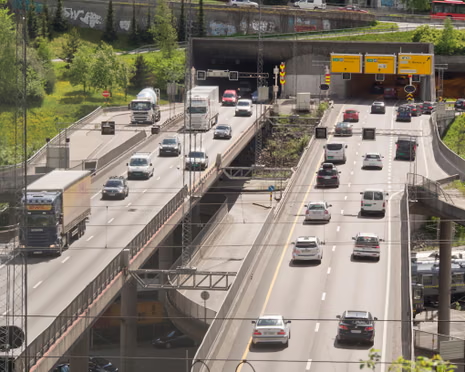
In an unprecedented shift within Norway’s automotive market, petrol car sales collapsed to just seven vehicles in January, underscoring the dramatic rise of electric vehicle adoption across the Scandinavian nation and beyond. The astonishingly low petrol car tally juxtaposed against thousands of battery electric vehicles highlights a transformation once seen as distant now unfolding at full speed. The focus keyword for this report, Norway EV surge, appears naturally in the first hundred words and echoes throughout the narrative to reflect this pivotal moment in automotive history.
The Norway EV surge was already anticipated, yet the news that only seven petrol cars found buyers in January stunned analysts, carmakers, and climate advocates alike. According to official figures, new registrations of internal combustion engine cars amounted to next to nothing while Norway’s electric fleet continued its overwhelming expansion. The nation’s transition has not merely been gradual; it has been swift enough that what once would have taken decades has now been compressed into a handful of years. This remarkable change did not occur by accident but was engineered through policy decisions that incentivised low‑emission vehicles and penalised traditional petrol engines.

Industry insiders say that the Norway EV surge is a direct result of a policy environment that long embraced electrification. Generous subsidies, exemptions from import taxes, and meaningful road benefits for electric vehicles made battery‑powered cars far more attractive than their petrol counterparts. Carbon taxation on fossil fuels and strong regulatory pressure to cut emissions have also played their part in reshaping consumer behaviour, nudging new car buyers toward sustainable alternatives.
Analysts caution that the January petrol car figures were influenced by market timing and tax policy shifts. Many buyers rushed to purchase vehicles in December to avoid looming tax increases on electric vehicles, creating a distorted beginning‑of‑year sales chart. Even with that context, the number remains striking: seven petrol models sold compared with more than 2,000 battery electric vehicles across the country. This stark contrast illustrates vividly how deeply the Norway EV surge has penetrated new car demand.
Despite the remarkable figures, officials caution against complacency, noting that the broader vehicle fleet still includes millions of fossil‑fuel cars that will take years to be replaced. While new registrations are overwhelmingly dominated by electric models, the total number of internal combustion engine vehicles in use far outnumbers their electric counterparts. Therefore, the Norway EV surge in new sales may not immediately translate into a fully electric fleet.
Electric vehicle advocates point to the positive feedback loop created by rising electric demand. Increased sales spur more competition among manufacturers, leading to a wider range of models and more competitive pricing. This, in turn, encourages further adoption, broadening consumer choice beyond niche or luxury segments into mainstream markets. Many Norwegians now view electric cars as the default option when considering what vehicle to buy, a cultural shift that took years to solidify but now seems irrevocable.
Industry figures also note that Norway’s experience may foreshadow trends elsewhere in Europe. Countries such as Denmark, the Netherlands, Sweden, and Finland have reported significant increases in electric vehicle market share, though none have matched Norway’s near‑complete dominance. Emerging markets in Asia, including China and India, are likewise accelerating adoption, though their contexts differ due to manufacturing scale and infrastructure constraints.
Critics of the rapid electrification model argue that reduced incentives or economic downturns could slow the momentum of the Norway EV surge, cautioning that sustainable progress requires stable policy frameworks and robust charging infrastructure. Nonetheless, at this moment Norway stands as a showcase of what rapid decarbonisation in transportation can look like. Even with some uncertainties ahead, the current trajectory suggests that petrol cars will soon be a rarity on Norwegian roads.
Used car markets reflect this transition as well. Sales of pre‑owned electric vehicles have risen sharply, indicating that the appeal of electrification extends beyond first‑time buyers. This broader adoption is critical for ensuring that the Norway EV surge extends past new car buyers and into the existing vehicle population, where the bulk of emissions reduction potential resides.
Public sentiment in Norway also underscores the wider cultural shift toward electric vehicles. Many drivers view electrification as not only environmentally responsible but also economically sensible, citing lower running costs and increasing performance parity with traditional petrol vehicles. These attitudes have helped cement the Norway EV surge as a defining trend in the nation’s transport landscape.

Automakers are responding to this shift with increased investment in electric platforms, recognising that Norway’s market signals reflect broader global demand trends. Major manufacturers are expanding their electric lineups and announcing plans to phase out new combustion engine development in favour of battery‑electric and hybrid technologies. This strategic pivot among producers is both a response to policy realities and a reflection of shifting consumer preferences worldwide.
Environmental groups welcome the Norway EV surge as a critical step toward climate targets, noting that transport emissions represent a substantial portion of national and global greenhouse gas outputs. Reducing dependency on petrol vehicles aligns with broader climate strategies aimed at curbing warming and air pollution. There remains much work to be done, but Norway’s progress offers a compelling example of how bold policy and market forces can converge to accelerate sustainable change.
As Norway navigates the next stages of this transition, stakeholders will watch closely to see whether the momentum can be sustained, especially as incentives evolve and new technologies emerge. For now, the Norway EV surge remains a headline capture of how quickly an entire automotive culture can change.
Related News:
 Santos Wins Landmark Greenwashing Case in Court
 Yorkshire Water Funding Sparks Debate Amid Fines and Pay Row
 The Truth Behind Rising Energy Costs and Fossil Fuel Myths
 New £10bn rescue plan offered for Thames Water
 Trump to Deploy “God Squad” Over Gulf Wildlife Protections
 UK Fossil Fuel Expansion Risks Global Climate Collapse
 Capitalism ‘Suicidal’, Warns Petro at Climate Summit
 UK Firm Faces Backlash Over US Oil Advertising Deals
 Thinktank Urges Speed Limit Cuts to Offset Iran War Costs
 Whitehall Steps In: The Battle Over Thames Water Deepens
 The Carbon Capture Con: Wasted Billions for Taxpayers
 Thames Water Future Remains Uncertain Amid Funding Crunch
 Reeves Faces Setback as Labour May Miss Homes Target
 Virgin Trains Moves Closer to Challenging Eurostar Monopoly
 Trump’s UK Ambassador Urges North Sea Drilling to Strengthen US Ties
 Ryanair Chief UK Economy ‘Doomed’ Under Labour
 M&S Profits More Than Halve After Cyber-Attack
 Millionaires group urge Reeves to introduce wealth tax to ‘lift kids out of poverty’
 From Lego to Pokémon: How Adults Are Driving UK Toy Market Growth
 Canada Passes Carney’s First Budget in Tight Parliamentary Vote
 Starmer Says Labour’s Economic Plan Needs Years to Deliver
 ‘Extinct’ Antelope Returns to Sahara, Bringing Hope
 Starmer Faces Parliamentary Battles Over UK-EU ‘Reset’ Plan
 ScottishPower Tops List of Worst UK Energy Suppliers
 Markets Slide As Gold Rally Signals Risk From Trump Greenland Tariff Plan
 City & Guilds pay surge sparks backlash amid £22m cuts
 Judi Dench Champions Fight to Save London’s Green Spaces
 UK Inflation Hits 3.4% in December, Ending Five-Month Decline
 Trump Fed bid heads to Supreme Court
 Half the World’s Largest Cities Face Rising Water Stress
 India-EU Free Trade Deal Marks Historic Economic Shift
 Telstra AI jobs cuts as automation drive expands
 UK shelves £110m border project amid trade strain
 Chikungunya Spread in Europe Climbs as Climate Warms
 Aston Martin Cuts 20% Jobs Amid £363m Loss
 Reeves Must Back Defence Plan or Face Dismissal, Says Unite Chief
 Switching Energy Deal Can Save £200 as Price Cap Falls
 Grocery Inflation Rises Amid War Fears
 Peak Greggs fears as profits tumble sharply
 Wood burner legal threats spark council row
 BrewDog sold Highland estate for knockdown price after abandoning reforestation plans
 Abramovich Chelsea Sale Cash Faces Jersey Probe
 Welsh Water Faces £44.7m Enforcement Over Sewage Breaches
 UK Energy Reform Could Cut Bills by £200
 Oil Slides, Stocks Jump on Trump Peace Signals
 Middle East Deluge: Freak Storms Bangle Desert Nations
 Iran Drone Strike Hits Kuwaiti Oil Tanker in Dubai Port
 Trump Slams Europe as Transatlantic Tensions Boil Over
 UK Small Firms Face Crisis as Energy Bills Double Amid War
 Oil Prices Surge as Trump Issues New Deadline to Iran
 Stefano Gabbana Resigns as Chair of Italian Luxury Giant
 Rolls-Royce SMR Secures £600m Boost for Nuclear Future
 Trump Rate Cuts Risk ‘Banana Republic’ Status, Says Yellen
 Medellín’s Green Revolution: A Global Climate Blueprint
 Urban Flood Crisis: A Growing Threat to English Homes
 Trump approval plunges amid Iran war fears
 Tough Fiscal Realities Await Next Scottish Government
 US Awaits Iran Reply on New Ceasefire Proposal
 Aramco Surges as East-West Pipeline Counters Gulf Tensions
 High Street Crisis: Fears Grow Over Post Office Closures
 UK Firms Freeze Spending as Iran Conflict Bites
 Reeves to Fast-Track Clean Energy Amid Iran Crisis
 Oil Markets Face ‘Red Zone’ Threat Amid Iran Crisis
 Belfast Approves Pilot Extension of Sunday Trading Hours
 Tube Strike Brings Capital to a Standstill Over Shift Disputes
 BP Stands Firm on Amanda Blanc Amid Boardroom Storm
 UK House Prices Drop For Third Month Due To War Fears
 GSK Secures Landmark $10.6bn Deal for Nuvalent
 AI Scams Push UK Investment Fraud Past £220m
 Rethinking the Blueprint for Youth Employment in Britain
 Sainsbury’s Boss Optimistic As Grocery Inflation Eases
 UK Households Suffer Squeeze As Disposable Incomes Drop
 US Courts Back Trump on Park Signage Removals
 UK Heatwaves Ignite Crisis of Sleep and Public Safety
 Britain’s Mini Fan Craze Sparks Major Waste Crisis
 Record £28m Fine for Virgin Media Over Cancellation Woes
 US Chemical Accidents Rise as Protections Are Rolled Back
 Swift Nesting Crisis Sparks Outrage in South Tyneside
 Ukraine Creates Long-Range Strike Command
 BBC Faces Real Jeopardy as Licence Fee Income Declines