Published: 20 February 2026. The English Chronicle Desk. The English Chronicle Online.
As the holy month of Ramadan begins, UK Muslim charities face growing obstacles in delivering Ramadan donations abroad, raising concerns that millions in vital aid may never reach crisis zones. Each year, British Muslims contribute roughly £2 billion to charitable causes, with giving peaking during Ramadan, when the spiritual significance of generosity is heightened. Buckets passed in mosques, community fundraisers, and WhatsApp appeals collectively generate substantial support for vulnerable populations, yet banking challenges threaten to limit the impact of these Ramadan donations. These issues are tied to policies known as “derisking,” where financial institutions avoid perceived risks linked to conflict or disaster regions, inadvertently affecting humanitarian work.
The UK-based coalition, Muslim Charities Forum (MCF), reported that over two-thirds of Muslim charities encounter difficulties opening bank accounts, and 42% have had services completely withdrawn. This compares starkly with just 12% of charities overall, highlighting a disproportionate impact on organisations serving communities in need. Charities have described delays in sending aid to humanitarian projects, sometimes for months, simply due to banking restrictions. These restrictions are not imposed out of malice, but stem from banks’ attempts to comply with stringent anti-money laundering and counter-terrorism regulations. As a result, legitimate aid efforts often face bureaucratic hurdles that slow life-saving assistance to the most vulnerable.
MCF’s chief executive, Fadi Itani, emphasised the difficulties charities face when operating in crisis-hit regions, such as Sudan, where banks are reluctant to transfer funds. He warned that these obstacles disrupt essential operations and weaken the delivery of critical humanitarian relief. “As part of wider derisking strategies, banks are becoming increasingly reluctant to serve charities, particularly those in perceived high-risk jurisdictions,” Itani explained, noting that organisations are effectively excluded from the financial system. This cautious approach, while designed to mitigate risk, can prevent charities from supporting populations in urgent need, leaving many initiatives stalled indefinitely.

Many Muslim-led charities have reported waiting up to three years just to open a bank account. Others have faced abrupt account closures without explanation or appeal, while routine aid transfers undergo heightened scrutiny. Particular difficulty arises when funds are intended for regions such as Palestine, Syria, or Pakistan, where political and security concerns amplify banking hesitancy. Charities report that even well-intentioned references, such as “Syrian refugees,” can trigger frozen transactions, delaying medical care, food distribution, and educational programmes. These disruptions can erode donor confidence, particularly when Ramadan donations are delayed or questioned.
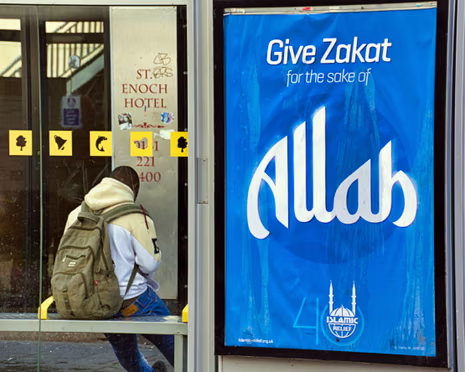
The cultural and religious significance of Ramadan motivates many British Muslims to make annual zakat payments, which are calculated at 2.5% of surplus wealth and directed to support those in poverty. While some of this aid remains within the UK, a large portion is earmarked for crisis regions abroad. According to a December report by thinktank Equi, Muslims donate four times more than the average adult in Britain, with much of this generosity concentrated during Ramadan. Yet, the full potential of these Ramadan donations is stifled by banking hurdles, leaving donors concerned about delays or mismanagement.
Expert analysis suggests that derisking policies, although not explicitly designed to target Muslim charities, disproportionately affect them because many operate in fragile states. Dr Samantha May, senior lecturer at the University of Aberdeen, explained that organisations often avoid applying for licences required to work in sanctioned regions, such as Afghanistan, due to anticipated bureaucratic complications. She noted that attempting to secure such permits can raise “red flags” with banks, creating further administrative difficulties. Consequently, charities may refrain from providing assistance in areas most in need, despite donors’ strong intentions to support these populations.
Community leaders echo the concern that donors are cautious in their contributions due to these banking restrictions. In east London, an administrator from a mosque described a careful approach to charitable support, selecting only four organisations during Ramadan or Friday prayers to ensure direct oversight. Such measures reflect a broader trend in which mosques and individual donors prefer partners they know well, wary of unexpected obstacles or delays caused by banking scrutiny. These limitations can reduce the scale and reach of vital humanitarian programmes funded by Ramadan donations.
Razib Hasan, finance director at Muslim Aid, one of the UK’s largest Islamic charities, advocates for legislative solutions to protect charities from financial exclusion. He points to France and Belgium, where law guarantees the right to maintain a bank account, as a model the UK could adopt. MCF’s Itani concurs, arguing that such measures would allow charities to devote more time and resources to humanitarian work rather than administrative battles. “Muslim-led charities must be able to operate without undue hindrance,” he said, emphasising the need for systemic support to maximise their capacity to help vulnerable communities both domestically and internationally.
The Financial Conduct Authority (FCA) acknowledges the scale of the problem and the disproportionate impact on charities serving conflict-affected regions. A spokesperson confirmed that the regulator has issued guidance to ensure banks approach charity accounts proportionately, balancing compliance with operational needs. “We’ve been clear in our expectations on banks for how they should handle charity accounts,” the FCA stated, highlighting ongoing monitoring of banking practices to prevent unnecessary exclusion. The regulator emphasises that anti-money laundering policies should be applied with nuance, rather than uniformly restricting organisations that meet regulatory requirements.

In practice, derisking can cause cascading delays in aid delivery, limiting the effectiveness of charitable initiatives during Ramadan. While millions of pounds are pledged annually, administrative hurdles can prevent timely distribution to crisis zones. Charities face a delicate balance between maintaining transparency, satisfying regulatory requirements, and ensuring funds reach intended recipients without excessive delay. In some cases, delays may mean children miss critical medical treatment or families are denied basic sustenance. This underscores the urgent need for reforms that protect both donors and recipients, allowing Ramadan donations to flow efficiently while remaining compliant with financial regulations.
The combination of spiritual motivation and legal complexity creates a challenging landscape for Muslim charities in the UK. Ramadan, a time when generosity is spiritually amplified, coincides with peak giving, yet banking obstacles limit operational capacity. Charities must navigate an intricate web of compliance, risk assessment, and oversight while striving to deliver aid to those who need it most. Community leaders stress that enhanced legislation, stronger regulatory oversight, and targeted support could help ensure Ramadan donations reach global crisis zones without undue hindrance.
As Ramadan continues, UK Muslim charities and their supporters remain hopeful that reforms will allow unhindered charitable operations. Removing unnecessary barriers could ensure that donations directly benefit those in urgent need, preserving the integrity of the annual giving tradition. Both policymakers and financial institutions have the opportunity to support these humanitarian efforts by aligning regulatory frameworks with the practical realities faced by charities operating in high-risk regions. Failure to act risks diminishing both the generosity of donors and the life-saving impact of aid initiatives.
Related News:
 Peterborough Mosques Tighten Security After Attack
 Reeves Faces Setback as Labour May Miss Homes Target
 Hospice Cuts Raise Alarm Across England Amid Funding Crisis
 Kate Winslet to Narrate Film Highlighting King’s Environmental Mission
 Green Party Surges Past Labour in Latest UK Poll
 Trump’s UK Ambassador Urges North Sea Drilling to Strengthen US Ties
 Children to Learn Local History in Major Curriculum Overhaul
 French Taxi Driver Cleared in David Lammy Theft Case After Fare Dispute
 UK Bans Fake Numbers: Scammers Lose Their Trick
 Prince William Plants Trees with Brazil’s Nature Heroes
 M&S Profits More Than Halve After Cyber-Attack
 Kent village told to remove flags before Christmas lights go up
 Patients to Test Health at Home to Ease NHS Winter Pressure
 King Charles to Lead Nation in Remembrance Sunday Service
 Palace May Restore Hyphen to Andrew Mountbatten-Windsor’s Name
 Millionaires group urge Reeves to introduce wealth tax to ‘lift kids out of poverty’
 Starmer Faces Growing Dissent as Labour MPs Weigh Leadership Challenge
 Shouting Works Best to Deter Gulls, UK Study Finds
 Reeves rejects £1bn plea for NHS redundancy payouts
 Northern Lights may illuminate UK skies this week
 PM Condemns Leaks, Vows Loyalty to Ministers and Stability
 Son Reveals UK Couple in Iran Resort to Hunger Strike for Help
 Major Rent Reform Ends No-Fault Evictions in England
 Former Lion Heskey Warns of Shortage of England Strikers
 Criminal Gangs Pose as Truckers to Hijack UK Supply Chains
 Stroke Patient Mistaken for Drunk, Care Delayed
 Mother Watches in Horror as Teen Daughter Dies on Tracks
 Van Dwellers Face Eviction After Park Misuse Sparks Outcry
 ‘Traumatic Wait’: Northern Ireland Women Face Breast Cancer Delays
 Serial Rapist and Former Cop Found Guilty Again
 Royal Navy Shadows Russian Warships Entering the Channel
 Inside the Helpline Protecting Missing Children in the UK
 Most Tories Expect to Support a Farage-Led Government
 Boots Showstopper Beauty Bundle Outshines Many Advent Calendars This Holiday Season
 Bill Murray Terrified Wes Anderson but Became His Closest Collaborator
 Labour’s ‘blinkered’ drive to build risks pushing wildlife to point of no return, nature experts warn
 PlayStation PS5 Deals Hit Lowest Prices Ahead of Black Friday
 Karen Carney Stuns on Blackpool Week, Deserves Strictly Final
 Five-Year-Old Dies After Rare Tonsil Surgery Complication
 Fibromyalgia Patients Struggle as NHS Fails to Provide Care
 Starmer Says Labour’s Economic Plan Needs Years to Deliver
 Virgin Media Fined £23.8m Over Telecare Safety Failures
 More Patients Now Contacting GPs Online, Data Shows
 UK unemployment rises to four-year high of 5.1% before budget
 Culture secretary to review Telegraph takeover by Daily Mail owner
 Wiltshire Police Use Lasso to Catch Rampaging Village Goat
 Prince George Helps Father at London Homelessness Charity
 Children to Receive Home Vaccines as England Acts
 Cambridge College Faces Backlash Over Private School Recruitment
 NHS Violence Crisis: Staff Face Daily Assaults
 Celebrity Campaign Highlights SMA Screening Failures
 Bereaved Fathers Gain New Paternity Leave Rights in UK
 Storm Goretti leaves Cornwall homes without power
 New Documentary Examines Teen’s Zombie Knife Murder
 Woman Jailed for Life After Killing E-Bike Rider in Tragic Mistaken Identity Case
 Right Must Unite After Jenrick Defection, Urges Rees-Mogg
 UK Ministers Drop Foreign Student Targets for Global Education Push
MPs warn AI financial risks threaten UK stability
UK Ministers Drop Foreign Student Targets for Global Education Push
MPs warn AI financial risks threaten UK stability
 No Gas Boiler Ban as UK Warm Homes Plan Backs Heat Pumps
 UK Glaucoma Rise Signals Looming Eye Health Crisis by 2060
 Shinzo Abe’s killer receives life sentence in Japan
 Police response times face strict new national limits
 Edinburgh, Glasgow Lead UK Nightlife Hotspots, Uber Data
 Labour policing overhaul sparks fears over growing central control
 Devon hosts first high-density hydro power system
 Pornhub blocks new UK users over age checks dispute
 Reform candidate sparks British identity row in byelection
 Starmer warns of toxic division politics in Reform challenge
 UK New Car Discounts Near £6,000 as Prices Are Slashed
 Pneumonia Surge Pushes England Emergency Cases Higher
 Wigan Dump Crisis Sparks Health and Safety Alarm
 Palantir contracts face UK halt calls over transparency
 Teen Girl Chased in Broad Daylight in Ipswich
 Send spending gap leaves deprived areas behind
 Cabinet Secretary Shake-Up Triggers Due Diligence Warning
 Hidden Crisis: Domestic Abuse Suicide Toll in UK
 Farage to Name Jenrick as Reform Chancellor Pick
 UK MPs Demand Ban on Brazilian Butt Lifts
 Civil Service Pay: Union Urges Ministers to End ‘Barking Mad’ Limits
 Antonia Romeo appointment sparks criticism