Published: 25 February 2026. The English Chronicle Desk. The English Chronicle Online.
Political donations in cryptocurrency should face an urgent temporary ban to prevent foreign interference. The focus on crypto in political finance has intensified following global security concerns and the increasing use of digital currencies in campaigns. Matt Western, chair of the national security committee, stressed that a moratorium is necessary until robust safeguards are in place to verify the source of all cryptocurrency contributions. The committee warned that without immediate intervention, foreign entities could exploit gaps in current political finance regulations. Western called for statutory guidance from the Electoral Commission to standardise how crypto donations are processed.
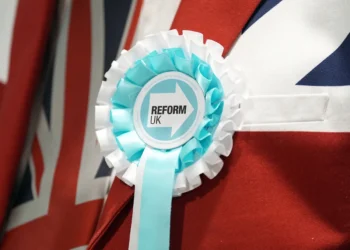
The committee highlighted that the new elections bill lacks any restrictions on donations made in cryptocurrency, prompting urgent calls for legislative action. Western addressed his concerns in a letter to Steve Reed, the cabinet minister responsible for electoral finance, urging swift measures to address potential risks. Reform UK became the first political party to openly accept contributions in digital currency earlier this year, using a dedicated crypto portal to handle donations with claimed enhanced verification checks. While the party says it has implemented safeguards, critics argue these measures are insufficient to prevent covert foreign influence in the political system.

Concerns have mounted that the absence of a central enforcement authority for political finance leaves the UK vulnerable to manipulation. Responsibility is currently split across the Electoral Commission, Metropolitan Police, counter-terror policing units, the National Crime Agency, MI5, and local police forces. Western argued that this fragmentation weakens the oversight of donations and may allow illicit funds to enter the political system undetected. The committee recommended establishing a single national police lead for political finance, with a focus on identifying and mitigating foreign interference risks. Such coordination would streamline investigations and strengthen public confidence in the integrity of elections.
The report further emphasised that interim guidance for cryptocurrency donations must require parties to work exclusively with Financial Conduct Authority-registered service providers. Parties should only accept donations where there is high confidence in the identity of the ultimate fund source. Any mechanism that obscures the origin of funds should be strictly prohibited. Western noted that the bill’s proposed “know your donor” checks do not adequately address the risk of foreign influence, as donors could use corporate entities or third parties to conceal illicit contributions.
Data from the Electoral Commission indicates that foreign money entering the political system, though relatively small in proportion, remains a tangible threat. The committee warned that as cryptocurrency becomes more widespread, the likelihood of foreign actors exploiting these channels will increase. Western stressed that without legislative action, political parties may inadvertently expose themselves to the risk of illicit finance. Campaign groups, such as Spotlight on Corruption, have reinforced these warnings, noting that crypto donations provide a range of tools for malign actors to hide the true source of funds. Tim Picton, senior advocacy adviser, described cryptocurrency contributions as a significant threat to democratic integrity.
Efforts to tackle the issue through the current elections bill have been described as insufficient by experts and parliamentary committees. While the government acknowledges the risks, it has yet to implement a ban on crypto contributions, citing the need for proper legislative backing. Ministerial sources previously told The Guardian that any government-imposed prohibition would likely require a statutory framework, rather than being left to voluntary guidance from the Electoral Commission. Western urged that a temporary moratorium be introduced immediately, until detailed regulatory guidance is established and enforced.
The committee also called for a review of sentencing for electoral offences, suggesting that harsher penalties would improve deterrence against illicit funding. Police officials have indicated that many covert investigative measures are only available for crimes carrying potential sentences of at least three years, leaving minor offences under current law less scrutinised. Western highlighted the importance of strengthening enforcement mechanisms alongside new restrictions on cryptocurrency donations to ensure that foreign actors cannot exploit loopholes.
Government departments have acknowledged the evolving threat posed by digital currencies in political finance. A spokesperson from the Ministry of Housing, Communities and Local Government said the Representation of the People bill aims to combat foreign interference by tightening rules around donations. Additionally, the ministry has commissioned an independent review led by former permanent secretary Philip Rycroft to explore further measures against illicit contributions, including cryptocurrency. This review is expected to provide comprehensive recommendations for safeguarding political finance while balancing transparency and party autonomy.
The debate over cryptocurrency in politics also touches on broader concerns about election integrity and public trust. Analysts argue that accepting donations in digital currency could open the door to anonymous foreign influence that is difficult to trace. Even with enhanced verification protocols, the inherent complexity of blockchain transactions and anonymised digital wallets presents enforcement challenges. Western’s committee stressed that without proper guidance, political parties may unintentionally expose themselves to accusations of receiving illicit funding, potentially undermining voter confidence.
Public scrutiny of political donations has intensified in recent years, especially with growing awareness of foreign interference in democratic processes. The UK’s security agencies have repeatedly warned that adversarial states may attempt to exploit vulnerabilities in political finance to advance strategic objectives. The committee’s recommendation for a single national police lead is intended to centralise oversight, improve coordination across multiple agencies, and ensure that any attempt to funnel funds through cryptocurrencies is promptly detected and addressed.

Experts emphasise that legislation alone cannot fully eliminate the risk of illicit crypto donations. Strong enforcement, rigorous verification protocols, and cross-agency collaboration are crucial for mitigating threats. Western underscored that the temporary moratorium on crypto donations would provide a necessary window to develop these safeguards. By mandating that all service providers are FCA-registered and that donor identities are verified with high confidence, parties can significantly reduce the likelihood of covert foreign interference.
In summary, the call for a temporary ban on cryptocurrency political donations reflects growing concern over the potential for foreign influence in UK elections. Matt Western and his committee argue that immediate legislative action, interim guidance, and enhanced enforcement are essential to protect the integrity of the political system. As Reform UK and potentially other parties continue to embrace digital currency contributions, the urgency for clear statutory guidance and a central enforcement authority becomes increasingly apparent. Policymakers face the challenge of balancing innovation in political fundraising with the imperative to safeguard democratic processes from foreign and illicit interference.
The committee’s recommendations aim to ensure that cryptocurrency does not become a tool for undermining electoral integrity. By establishing a moratorium, centralising oversight, and requiring robust verification, the UK can mitigate emerging risks while maintaining transparent political finance practices. These measures reflect an ongoing effort to protect elections from the evolving threats posed by modern technology, foreign actors, and the increasing use of digital currencies in politics. Immediate action, according to the committee, is necessary to prevent potential exploitation and safeguard democratic accountability ahead of future elections.
Related News:
 Tories Push to Dilute Labour’s Workers’ Rights Bill
 Trump’s UK Ambassador Urges North Sea Drilling to Strengthen US Ties
 Rachel Reeves Set to Break Labour Pledge and Raise Income Tax
 Thinktanks Urge Rachel Reeves to Reform UK Tax System
 Company linked to Michelle Mone owes £39m in tax
MPs Press Rachel Reeves to Hike Gambling Taxes
Company linked to Michelle Mone owes £39m in tax
MPs Press Rachel Reeves to Hike Gambling Taxes
 Cuts to home insulation funding threaten UK climate goals
 Millionaires group urge Reeves to introduce wealth tax to ‘lift kids out of poverty’
 PM Highlights UK Business at G20 in South Africa
 English Mayors Set to Introduce Tourist Taxes
 Starmer Says Labour’s Economic Plan Needs Years to Deliver
BBC bosses ‘right to stick by their guns’ against Trump, says minister
Starmer Says Labour’s Economic Plan Needs Years to Deliver
BBC bosses ‘right to stick by their guns’ against Trump, says minister
 China Dependence Threatens UK Energy Supply Chains and Jobs
 MPs warn AI financial risks threaten UK stability
 MPs warn AI financial risks threaten UK stability
 UK Government Borrowing Drops to £11.6bn in December
 Labour Must Revive High Streets to Avoid Election Collapse
 Barclays drops Global Counsel after Mandelson link scrutiny
 Unsustainable gaps in franchise policing, MPs warn
 UK shelves £110m border project amid trade strain
 UK Sees Record £30.4bn Budget Surplus, Boosting Reeves’ Position
 Reeves Must Back Defence Plan or Face Dismissal, Says Unite Chief
 OBR Reform Row Deepens Before Spring Forecast
 UK Doubles Steel Tariffs to 50% to Protect Domestic Plants
 Starmer Adviser Urges New Profit Cap on Energy Firms
 Fuel Duty Relief Plea Amid Middle East Oil Crisis
 OpenAI Halts Stargate UK Project Amid Energy Crisis
 Reform UK funding: mystery billionaire revealed
 BBC News Faces Deep Cuts in 2,000 Job Plan
 Silent Tracks: Rail Line Without Passengers
 Labour Faces Internal Pressure for Bold Economic Shift
 Labour Factions Propose Bold Tax Cuts Amid Leadership Storm
 Thames Water Rescue Package Hit by Downing Street Chaos
 UK Pushes for New EU Goods Trade Deal
 Reeves Fights to Keep Treasury Role Amid Labour Turmoil
 UK Urged to Build EU Rejoin Consensus, Says Miliband
 UK Supply Chains Face Major Risks From Global Instability
 Hospitality Traders to Exploit Summer VAT Cut Loophole
 Andy Burnham Enlists Economic Heavyweights for Leadership Bid
 Great Britain Faces £90bn Electricity Grid Rewire Bill
 Burnham Promises Relief on Cost of Living Crisis
 Burnham unveils £65m drought aid for farmers
 Kemi Badenoch Unveils ‘Golden Rule’ to Halve Spending Cuts for Deficit Reduction at Tory Conference
 Reeves Faces Setback as Labour May Miss Homes Target
M&S Profits More Than Halve After Cyber-Attack
Reeves Faces Setback as Labour May Miss Homes Target
M&S Profits More Than Halve After Cyber-Attack
 Reeves rejects £1bn plea for NHS redundancy payouts
 PM Condemns Leaks, Vows Loyalty to Ministers and Stability
 Major Rent Reform Ends No-Fault Evictions in England
 Starmer Faces Parliamentary Battles Over UK-EU ‘Reset’ Plan
 ScottishPower Tops List of Worst UK Energy Suppliers
 Trump Fed bid heads to Supreme Court
 Artificial intelligence will cost jobs, admits Liz Kendall
 Mandelson Faces Police Inquiry Over Epstein Leak
 Morgan McSweeney downfall shocks Labour leadership
 UK Unemployment Rate Climbs to 5.2% Peak
 Farage Unveils Reform UK Frontbench Team
 Green Party Stuns Labour in Gorton and Denton Byelection
 Switching Energy Deal Can Save £200 as Price Cap Falls
 Labour Together scandal sparks clean break vow
 Grocery Inflation Rises Amid War Fears
 BrewDog sold Highland estate for knockdown price after abandoning reforestation plans
 Starmer Praised for Stance on Trump and Iran Conflict
 NHS Plans to Cut Overseas Workers Labeled Overambitious
 UK Energy Reform Could Cut Bills by £200
 Army Probes Apache Flyover at Kid Rock’s Nashville Estate
 Starmer Survives Mandelson Rebellion
 Trump approval plunges amid Iran war fears
 Tough Fiscal Realities Await Next Scottish Government
 Reform UK Faces Crisis as Newly Elected Councillors Resign
 UK Firms Freeze Spending as Iran Conflict Bites
 Reeves to Fast-Track Clean Energy Amid Iran Crisis
 Secret Role of UK Security Services in Troubles Amnesty Law
 Tube Strike Brings Capital to a Standstill Over Shift Disputes
 BP Stands Firm on Amanda Blanc Amid Boardroom Storm
 UK House Prices Drop For Third Month Due To War Fears
 The Hidden Crisis Eroding Trust in British Communities
 Deepfake Abuse on X Sparks Safety Concerns for Dissidents
 Sainsbury’s Boss Optimistic As Grocery Inflation Eases
 Farage Warns Sky News Following Financial Inquiry
 Ann Widdecombe, Formidable Political Figure, Dies at 78