Published: 26 February 2026. The English Chronicle Desk. The English Chronicle Online.
The legal battle over the Palestine Action ban has entered a new phase after the home secretary secured permission to appeal. The decision ensures the controversial proscription will remain in force while senior judges reconsider its lawfulness. The development follows intense public debate, widespread arrests, and strong reactions across the political spectrum in the United Kingdom.
An order issued by the High Court on Wednesday confirmed that the government may take its challenge to the Court of Appeal. The ruling means the existing ban on Palestine Action continues pending the outcome of the fresh hearing. Supporters and critics alike recognise that the appeal could shape the limits of protest law for years.
Earlier this month, a panel led by Dame Victoria Sharp, president of the King’s Bench Division, delivered a striking judgment. Sitting alongside Mrs Justice Steyn and Mr Justice Swift, she ruled that the original decision to proscribe the group was disproportionate. The court allowed the legal challenge on two of the four grounds advanced by the claimant.
The judges concluded that most activities carried out by Palestine Action did not meet the threshold for terrorism. They noted that while the group engaged in disruptive direct action, its conduct lacked the scale and persistence required under anti-terror legislation. The judgment described the ban as a significant interference with freedom of expression and assembly.

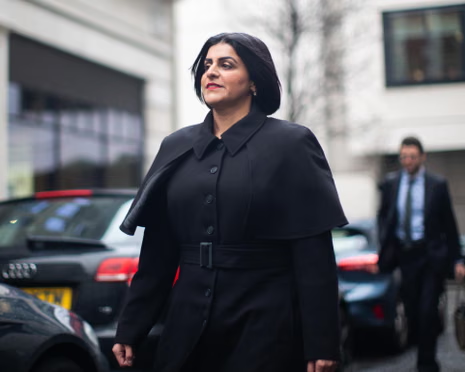
The home secretary, Shabana Mahmood, responded swiftly after the initial ruling. She expressed disappointment and made clear her intention to contest the findings before a higher court. Mahmood insisted that proscribing Palestine Action remained necessary to protect public safety and uphold the law.
In Wednesday’s order, the High Court formally granted Mahmood permission to appeal. At the same time, the judges refused a cross-appeal lodged by Huda Ammori, co-founder of the organisation. That refusal prevents Ammori from rearguing grounds previously rejected during the first hearing.
The legal dispute centres on the government’s use of powers under the Terrorism Act. Proscription makes membership or public support for a named organisation a criminal offence. Critics argue such measures must be applied cautiously to avoid suppressing legitimate political dissent.
In its earlier judgment, the High Court indicated it would quash the proscription order. However, the latest order confirms that quashing is stayed until the appeal concludes. This stay means the Palestine Action ban remains legally effective across England and Wales.
The continued enforcement of the ban has left thousands facing uncertainty. Since proscription, more than 2,500 individuals have reportedly been arrested for alleged support. Over 500 people have been charged, primarily under section 13 of the Terrorism Act.
Many of those charged were accused of displaying placards expressing opposition to genocide while voicing support for the group. Section 13 carries a maximum sentence of six months in prison. Defence lawyers argue that peaceful expression should not attract terrorism-related penalties.
Last week, Chief Magistrate Paul Goldspring addressed the growing backlog of cases. He confirmed that defendants would not face trial until the appeal process concludes. As a result, all individuals who have appeared in court so far have pleaded not guilty, yet none have been tried.
Following the initial High Court ruling, the Metropolitan Police adjusted its operational stance. Officers said they would immediately stop arresting people solely for showing support for the organisation. However, they also indicated that evidence would continue to be gathered for potential future prosecutions if the appeal succeeds.
Civil liberties groups have welcomed the High Court’s earlier findings. They argue that branding protest movements as terrorist organisations risks undermining democratic freedoms. At the same time, government ministers maintain that certain tactics crossed acceptable legal boundaries.
Palestine Action has targeted companies it considers complicit in arming Israel. Its actions have included property damage and coordinated demonstrations outside corporate premises. Supporters describe these tactics as legitimate civil disobedience aimed at ending perceived injustice.
Opponents, however, characterise the group’s methods as intimidating and unlawful. Business leaders affected by protests have expressed concern about staff safety and financial losses. The appeal hearing will likely revisit these competing narratives in detail.
Legal analysts suggest the Court of Appeal will examine proportionality closely. The earlier judgment emphasised that restrictions on speech must be justified by clear and pressing necessity. The question now is whether the government can demonstrate that necessity convincingly.
The High Court described the ban as a very significant interference with fundamental rights. Such language signals the seriousness with which judges view encroachments on civil liberties. Yet appellate courts sometimes adopt a different interpretation of security risks.
The Palestine Action ban appeal also carries political implications. The government faces pressure from some MPs to take a firm stance against disruptive protest. Meanwhile, others warn that overreach could alienate younger voters and civil society organisations.
Community leaders have urged calm while the legal process unfolds. They stress that disagreements should be resolved through lawful channels and respectful debate. The coming months may test the resilience of Britain’s legal and political institutions.
For those already charged, uncertainty remains the dominant theme. Families and supporters describe prolonged anxiety while awaiting clarity from higher courts. Defence teams continue preparing arguments in anticipation of eventual trial dates.
Observers note that proscription powers were originally designed to address violent extremist threats. Applying them to domestic protest movements raises complex constitutional questions. The Court of Appeal’s reasoning could clarify how broadly such powers may be interpreted.

In Parliament, ministers defend their approach as measured and necessary. They argue that persistent damage to property and threats to public order justified decisive action. Critics counter that existing criminal laws were sufficient without invoking terrorism statutes.
The appeal process may take several months to conclude. Until then, the Palestine Action ban remains a live and contentious issue across the country. The outcome will determine not only the group’s legal status but also the trajectory of hundreds of pending cases.
Legal scholars highlight the importance of judicial independence in moments like this. Courts must balance national security considerations against individual rights without political influence. The careful language of the earlier judgment reflected that delicate task.
Public interest in the case continues to grow. Social media discussions reveal deep divisions about protest, foreign policy, and domestic security. Yet most agree that clarity from the Court of Appeal is urgently needed.
As proceedings move forward, both sides prepare detailed submissions. Government lawyers will seek to overturn findings of disproportionality and policy breach. Claimants will defend the High Court’s reasoning while constrained by the refusal of cross-appeal grounds.
Whatever the final decision, the case already marks a significant chapter in modern protest law. It highlights the tension between safeguarding national security and protecting democratic freedoms. The Court of Appeal now carries responsibility for delivering a judgment that commands public confidence.
Related News:
 British Woman in Iran ‘Losing Hope’ Amid Ongoing Detention
 BBC Journalist Held and Interrogated in Vietnam
 Green Party Surges Past Labour in Latest UK Poll
 Celebrities and Charities Demand UK Government Act on Child Poverty
 Trump’s UK Ambassador Urges North Sea Drilling to Strengthen US Ties
 FBI Director Kash Patel Defends Girlfriend Amid Government Jet Claims
 French Taxi Driver Cleared in David Lammy Theft Case After Fare Dispute
 MPs Press Rachel Reeves to Hike Gambling Taxes
 Boris Johnson accused of undermining BBC leadership
 ‘Reckless’ cuts to victims’ services will cost more than they save
 Millionaires group urge Reeves to introduce wealth tax to ‘lift kids out of poverty’
 Starmer Faces Growing Dissent as Labour MPs Weigh Leadership Challenge
 Reeves rejects £1bn plea for NHS redundancy payouts
 Farage appointee to lead Reform youth accused of anti-British views
 Politics latest: Starmer ‘will fight any leadership coup’ as Streeting denies attempt to oust Labour PM
 PM Condemns Leaks, Vows Loyalty to Ministers and Stability
 Major Rent Reform Ends No-Fault Evictions in England
 Peers Flood Assisted Dying Bill with 942 Amendments
 England’s Special Needs Support Faces Breaking Point
 MoD warned over Excel risks before Afghan data breach
 UK Asylum Overhaul Sparks Debate Over Human Rights and Deportations
 UK Candidate Moved to Safe House After Election Threats
 UK Warns China After MI5 Issues Espionage Alert
 Labour Faces Historic Decline in Wales
 Rama Rebukes Mahmood for Targeting Albanian Families
 PM Highlights UK Business at G20 in South Africa
 Kate Forbes: Motherhood Harder Than Politics
 Most Tories Expect to Support a Farage-Led Government
 Labour MP claims devolution bill is ‘blatant discrimination’ against Cornwall
 Millions Face Higher Taxes Under Reeves New Budget
 Peers Get Extra Time to Debate Assisted Dying Bill
 Planned Palestinian Flag Raising at Belfast City Hall Faces Delay Amid Legal Concerns
 Starmer Says Labour’s Economic Plan Needs Years to Deliver
 Culture secretary to review Telegraph takeover by Daily Mail owner
 Andy Burnham Apologises for Past LGBTQ+ Police Discrimination
 Plans to Limit Jury Trials Face Retreat After Mounting Opposition
 Jenrick Reform defection deepens Tory civil war
 Right Must Unite After Jenrick Defection, Urges Rees-Mogg
 UK Ministers Drop Foreign Student Targets for Global Education Push
 MPs warn AI financial risks threaten UK stability
 MPs warn AI financial risks threaten UK stability
 No Gas Boiler Ban as UK Warm Homes Plan Backs Heat Pumps
 Hugh Grant Joins Call for Under-16 Social Media Ban in UK
 Shinzo Abe’s killer receives life sentence in Japan
 Lords Vote Piles Pressure on Starmer Over Social Media Ban
 Planned Troubles Board Game Sparks Outrage in Northern Ireland
 Reform UK Health Plan ‘Would Cost £1.7bn’, Streeting Says
 Police response times face strict new national limits
 Labour policing overhaul sparks fears over growing central control
 Tories criticised after Braverman defection sparks mental health row
 Burnham Westminster return hopes fade amid Labour rift
 Starmer warns of toxic division politics in Reform challenge
 Starmer China visit raises human rights pressure on Beijing
 Labour Must Revive High Streets to Avoid Election Collapse
 Calls Grow for King Charles to Apologise for Crown’s Role in Slavery
 Starmer Signals UK Return to EU Defence Pact Talks
 Palantir contracts face UK halt calls over transparency
 Labour Thinktank Row Deepens Over Journalist Probe Claims
 Sarwar call shakes Labour as No 10 calms fears
 Labour Lord Doyle Apologises Over Paedophile Ties in Political Storm
 Palestine Action Verdict Sparks Debate on Activist Tactics
 Cabinet Secretary Shake-Up Triggers Due Diligence Warning
 Starmer Faces Inquiry Calls Over Thinktank Probe
 Royal Mail Delivery Crisis Deepens Amid Weather Chaos
 Labour Together probe scandal sparks fresh Cabinet Office investigation
 Farage to Name Jenrick as Reform Chancellor Pick
 Farage Unveils Reform UK Frontbench Team
 NHS Negligence Ruling Raises Payout Costs
 Civil Service Pay: Union Urges Ministers to End ‘Barking Mad’ Limits
 Antonia Romeo appointment sparks criticism
 Trump and Chagos Deal Rift Over Iran Strikes
 Andrew Mountbatten-Windsor Arrest After FBI Radar
 Farage Chagos Islands Row Sparks Fury
 Trump Tariffs Threat Spark UK and EU Alarm
 Gasfield Deal Sparks Debate Over Fracking in Lincolnshire
 Reform UK targets workers’ rights repeal
 Ministers Urged to Ban Crypto Political Donations
 Mandelson Denounces Arrest Over ‘Baseless’ Fleeing Claims
 Russian Trade Routed Through British Islands Exposed
 Mandelson Arrest: Met Apologises to Hoyle