Published: 26 February 2026. The English Chronicle Desk. The English Chronicle Online.
Germany has faced widespread criticism after its government announced the scrapping of a key renewable heating mandate.
The coalition agreement to remove the previous law’s renewable requirements signals a dramatic policy shift. The original legislation, passed in 2023 under the centre-left government led by Olaf Scholz, mandated that most newly installed heating systems use at least 65% renewable energy, including heat pumps, to reduce carbon emissions. This bold initiative, championed by the Greens, aimed to place Germany at the forefront of Europe’s green transition, reflecting ambitious environmental goals while addressing climate change. However, the amendment now allows homeowners to rely on oil and gas systems without obligatory expert consultation, effectively reversing the stricter renewable targets.
Experts argue the changes could derail Germany’s climate objectives and undermine its commitment to achieving net zero emissions by 2045. The Greens, who now occupy opposition benches, have condemned the revised law, arguing it prioritises short-term convenience over long-term environmental responsibility. Katharina Dröge, co-leader of the Greens parliamentary group, stated that the current coalition has made climate protection “of no importance whatsoever,” accusing the government of abandoning established emission benchmarks. These criticisms come amid a wider political debate, with climate policy increasingly entangled in coalition dynamics and voter sentiment following economic hardships.
The 2023 law faced substantial resistance even before its enactment, fueled by rising energy prices and public wariness after the Covid-19 pandemic. Germany’s energy security was further shaken by the conflict in Ukraine, which led to the suspension of Russian gas imports. These events exacerbated inflation and heightened public sensitivity to energy costs. The media campaign led by the tabloid Bild, which labelled the policy “Habeck’s heating hammer,” intensified public scrutiny, portraying the legislation as an imposition on households forced to undergo expensive renovations. This political narrative contributed to frictions within the coalition of Social Democrats, Greens, and Free Democrats, eventually leading to early fractures in the governing alliance.

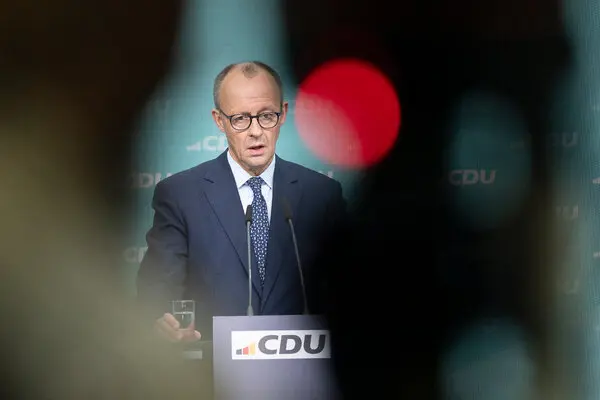
The far-right Alternative für Deutschland (AfD) party also campaigned aggressively against the renewable mandate, framing heat pump requirements as an infringement on personal freedom. Their rhetoric focused on the financial burden imposed on households, arguing that the government was forcing citizens into costly home improvements. By repealing the mandate, the current government led by Chancellor Friedrich Merz seeks to offer homeowners more flexibility, balancing environmental ambitions with public acceptability. The CDU insists that CO2 emissions from buildings, which constitute a major portion of Germany’s greenhouse gas output, will still decline under the new framework.
Economy Minister Katherina Reiche defended the law, stressing that it restores freedom of choice while maintaining climate-conscious options. She highlighted hybrid heating systems, biomass, and incremental integration of biogas and bio-oil as viable alternatives. Reiche also pointed out that the previous legislation had inadvertently discouraged investments in modern heating solutions, leading to a decline in sales of heat pumps and efficient boilers. “People stopped building altogether,” she noted, suggesting that policy rigidity had backfired and slowed the adoption of greener technologies.
Germany continues to rely heavily on fossil fuels, with oil and gas supplying nearly 80% of domestic heating demand. Buildings and transport sectors remain major obstacles in the country’s climate agenda, and experts have noted the scarcity of renewable fuels such as biomethane globally, pushing prices higher. Heat pumps, although more expensive upfront than gas boilers, are cheaper to operate over time and enjoy significant subsidies ranging from 30% to 70% of installation costs. These incentives will remain under the new legislation at least until 2029, providing some continuity for renewable adoption despite relaxed mandates.
International comparisons illustrate Germany’s relative position in renewable adoption. Norway, for instance, has 635 heat pumps per 1,000 households, reflecting strong public uptake, while Germany lags at 47 and the UK trails at 15. This discrepancy highlights the ongoing challenges Germany faces in transitioning its building sector toward greener technologies, emphasizing that policy incentives alone may not suffice without widespread public engagement and affordability measures.
The revised heating law outlines a gradual increase in the use of climate-friendly fossil fuels, targeting a minimum of 10% by 2029 and rising progressively until 2040. While this approach maintains a pathway for emissions reduction, critics argue it delays decisive action on climate commitments. Germany’s position as the EU’s largest economy and its significant emissions footprint means that such policy shifts resonate beyond national borders, affecting broader European climate strategies. Analysts warn that scaling back ambitious renewable requirements could undermine the credibility of Germany’s climate leadership and slow the pace of continental decarbonisation.
The political context is crucial for understanding the decision. The CDU-led government, supported by the SPD, has sought to balance economic concerns with environmental goals, reflecting campaign promises and attempts to appease diverse voter bases. Meanwhile, the Greens’ diminished influence in parliament, polling around 12% nationally, limits their capacity to enforce stricter climate policies. This tension underscores the complex interplay between political feasibility and environmental ambition, showing how coalition politics can shape policy outcomes in significant ways.
Observers note that public perception of energy affordability heavily influenced the government’s decision. Households wary of high costs were reluctant to invest in heat pumps and renewable systems, even with generous subsidies. Reiche suggested that providing more flexible options could reignite construction and heating system replacements, indirectly supporting climate goals without imposing top-down mandates. She argued that a pragmatic, market-sensitive approach could foster broader acceptance of sustainable technologies over the long term, highlighting the delicate balance policymakers must strike between urgency and practicality.
The legislative debate also reflects a broader European challenge of integrating renewable heating systems into existing infrastructure. While ambitious targets are praised for environmental vision, practical considerations such as installation complexity, supply chain limitations, and regional energy disparities often constrain rapid adoption. Germany’s experience exemplifies the need for carefully calibrated policies that combine incentives, technical support, and public engagement to accelerate the transition effectively.
Despite political controversies, Germany remains committed to its overall net zero ambition, aiming to achieve it by 2045. The focus now shifts to how effectively the government can implement the revised law while ensuring continued uptake of renewable technologies. Analysts stress that clear communication, consistent subsidies, and technical guidance will be essential to prevent the erosion of climate credibility. As the debate unfolds, the case illustrates how environmental objectives, political strategy, and economic realities intersect, shaping the trajectory of national climate policy in a complex global context.

The recent policy revision demonstrates the tension between climate responsibility and homeowner choice, highlighting the trade-offs inherent in sustainable energy transitions. While the scrapping of mandatory renewables drew sharp criticism from opposition parties and environmentalists, proponents argue that flexibility will ultimately encourage wider adoption of hybrid and renewable solutions. Germany’s approach may serve as a reference point for other nations navigating similar political and economic pressures, showing the challenges in balancing ambition with pragmatism in climate policymaking.
The unfolding situation underscores the ongoing importance of energy policy in public discourse, with the potential to influence electoral outcomes, investment strategies, and social perceptions of climate responsibility. As Germany negotiates these competing priorities, the path forward will reveal whether flexibility can coexist with meaningful emissions reductions, or if delayed action will compromise long-term environmental objectives. The debate also raises questions about the role of subsidies, market readiness, and public engagement in achieving a sustainable energy future, emphasizing that policy success relies on a combination of political will, technical innovation, and societal acceptance.
Related News:
 BP’s Influence Sparks Controversy in UK STEM Education
 Water firms may avoid fines under UK water reform plan
 No Gas Boiler Ban as UK Warm Homes Plan Backs Heat Pumps
 Reform UK Taps Boris Ally to Shape Party Nature Agenda
 Scotland’s Climate Plans Face Scrutiny Over ‘Science Fiction’ Targets
 Net Zero Cheaper Than One Fossil Fuel Crisis, UK Told
 Trump to Deploy “God Squad” Over Gulf Wildlife Protections
 Big Tech Lobbies EU to Hide Massive Datacentre Emissions
 Capitalism ‘Suicidal’, Warns Petro at Climate Summit
 Charities Demand Labour Deliver Urgent New Clean Air Act
 Trump’s Library Visit Sparks Fierce Environmental Outcry
 US Courts Back Trump on Park Signage Removals
 Lanarkshire AI Hub Fails Energy Promises
 Three-Quarters of England’s Riverbanks Still Off Limits
 Army Officers Orders to Cut Ties with Men-Only Clubs
 Trump’s UK Ambassador Urges North Sea Drilling to Strengthen US Ties
BBC to Apologise Over Edited Trump Speech Amid Backlash
Trump’s UK Ambassador Urges North Sea Drilling to Strengthen US Ties
BBC to Apologise Over Edited Trump Speech Amid Backlash
 Britain deploys RAF specialists to assist Belgium with drone threats
 Millionaires group urge Reeves to introduce wealth tax to ‘lift kids out of poverty’
 Reeves rejects £1bn plea for NHS redundancy payouts
 PM Condemns Leaks, Vows Loyalty to Ministers and Stability
 Major Rent Reform Ends No-Fault Evictions in England
 Greene Pushes Epstein Files Amid Trump Fallout
 Shadow Fleet at Sea: Europe’s Battle Against Illicit Oil Shipping
 Starmer Says Labour’s Economic Plan Needs Years to Deliver
 ‘Extinct’ Antelope Returns to Sahara, Bringing Hope
 Australia grants Asio powers to designate hate groups under new laws
 Trump press secretary attacks reporter over ICE question
 Spoof “Make America Go Away” Caps Rally Denmark Over Greenland
 Judi Dench Champions Fight to Save London’s Green Spaces
 Trump Fed bid heads to Supreme Court
 Pentagon Signals Reduced Role in Deterring North Korea
 Artificial intelligence will cost jobs, admits Liz Kendall
 Partial US Government Shutdown Hits Homeland Security Funding
 Mandelson Faces Police Inquiry Over Epstein Leak
 Morgan McSweeney downfall shocks Labour leadership
 UK and US Drop in Global Corruption Index Rankings
 Farage Unveils Reform UK Frontbench Team
 Canberra Poster Seizure Sparks Free Speech Row
 Evo Morales Returns After Mysterious Absence
 Wales Approves Assisted Dying Bill Consent
 The Dangerous Rise of Remigration Across Modern Europe
 US to offer passport services in West Bank settlements
 Green Party Stuns Labour in Gorton and Denton Byelection
 Labour Together scandal sparks clean break vow
 Iran Defiance Grows Amid US-Israel War Pressure
 Welsh Water Faces £44.7m Enforcement Over Sewage Breaches
 Starmer Praised for Stance on Trump and Iran Conflict
 NHS Plans to Cut Overseas Workers Labeled Overambitious
 Danish Election Deadlock Shakes Frederiksen’s Grip
 Pope Rebukes Leaders for War as Middle East Tensions Rise
 Middle East Deluge: Freak Storms Bangle Desert Nations
 Army Probes Apache Flyover at Kid Rock’s Nashville Estate
 Farage Shuns Truss as US Right-Wing Roadshow Hits London
 Chancellor Meets Supermarket Chiefs Over Living Costs
 Italian Town Buys Mussolini Villa to Keep Away Fascist Fans
 Report Says Pezzullo Acted ‘Recklessly’ in Dealings
 Suspected Plot Targets Pipeline Before Hungary Vote
 Medellín’s Green Revolution: A Global Climate Blueprint
 Trump Defiant After Washington Hotel Shooting
 Urban Flood Crisis: A Growing Threat to English Homes
 Starmer Survives Mandelson Rebellion
 Trump approval plunges amid Iran war fears
 Tough Fiscal Realities Await Next Scottish Government
 US ‘Narco Boat’ Strikes Draw Global Outcry
 One Nation Candidate’s Surprising Ties to Independents
 Labour Members Doubt Starmer Future as Burnham Leads Poll
 Reform UK Faces Crisis as Newly Elected Councillors Resign
 Tony Abbott Returns as New Liberal Party President
 Secret Role of UK Security Services in Troubles Amnesty Law
 The Hidden Crisis Eroding Trust in British Communities
 Deepfake Abuse on X Sparks Safety Concerns for Dissidents
 Trump’s Mount Rushmore Speech: A Divisive Anniversary
 Trump’s Red-Card Intervention Hurts the US World Cup
 Farage Warns Sky News Following Financial Inquiry
 Britain’s Mini Fan Craze Sparks Major Waste Crisis
 Trump Swaps Planes Amid Iran Tensions
 US Chemical Accidents Rise as Protections Are Rolled Back
 Ann Widdecombe, Formidable Political Figure, Dies at 78
 Houthis Strike Saudi Arabia as Middle East Tensions Rise