Published: 27 February 2026. The English Chronicle Desk. The English Chronicle Online.
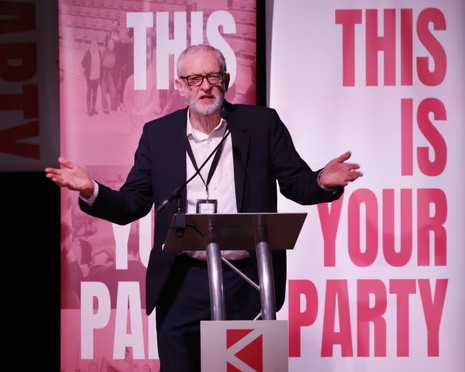
Jeremy Corbyn has been elected to lead Your Party, signalling a new strategy of collaboration with the Green Party. This development comes as Corbyn aims to unite left-leaning voters under a single, coordinated approach against Reform and Labour. Party insiders confirmed that this initiative represents a deliberate effort to consolidate progressive voices, emphasising policy over personal disputes. Following a contentious election period, Corbyn’s victory positions him as parliamentary leader while underscoring a renewed commitment to pro-Gaza and socially conscious communities.
The leadership contest concluded with Corbyn-backed candidates winning 14 out of 24 central executive committee positions, establishing firm control over party direction. Zarah Sultana’s faction, Grassroots Left, secured seven seats, with three independent members filling the remaining positions. A turnout of 61 per cent reflected 25,347 votes cast from 40,985 verified members, demonstrating significant engagement despite recent internal conflicts. Sources close to Corbyn indicated that the campaign’s focus would now shift to substantive policy initiatives rather than prolonged infighting within the party.
Corbyn told supporters that the movement’s purpose was to confront what he described as “fear, divisiveness and racism” propagated by Reform. He emphasised the importance of fostering a socialist, mass-based political organisation capable of challenging both Starmer and Farage. Members were encouraged to unite around a vision promoting equality, peace, and a caring society, with Corbyn asserting that “the real work begins” now that leadership has been consolidated.

Efforts to rebuild bridges with previously alienated groups, particularly Muslim communities disenchanted by Sultana’s statements, are expected to play a central role. According to party insiders, Sultana’s earlier comments about social conservatives had created tensions, which Corbyn intends to resolve by cultivating inclusive dialogue. The Green Party will no longer be regarded as an adversary, and cooperation with other left-leaning organisations is now a strategic priority. This approach aims to strengthen Your Party’s influence amid declining traditional Labour support.
Despite the collective leadership model adopted by Your Party, the election effectively served as a referendum on competing visions for the party’s future. Corbyn’s “The Many” slate emphasised broad coalition-building, appealing to voters on issues including the cost-of-living crisis and Palestine. In contrast, Sultana’s “Grassroots Left” focused on ideological purity, prioritising member democracy and cautioning against replicating a Labour-style hierarchy. Independent candidates voiced concern that the prominence of these two factions limited opportunities for alternative perspectives.
Following the election, tensions within the party remain palpable. Grassroots Left issued a statement demanding that expelled members be reinstated and insisting on the cessation of internal conflicts described as “witch-hunts” and “stitch-ups.” Sultana herself acknowledged that her slate did not achieve the desired outcome, but insisted that the contest conveyed a meaningful message to members regarding democratic engagement and strategic priorities. She reinforced her commitment to the party’s socialist and anti-imperialist objectives, highlighting the ongoing struggle against injustice worldwide.
Sources close to Sultana confirmed that she does not intend to leave Your Party, and will continue advocating for member empowerment alongside the seven Grassroots Left representatives elected to the executive committee. This group will work to ensure that Corbyn’s leadership remains accountable to the broader membership, reflecting the party’s commitment to a democratic structure despite factional divides. The CEC, composed of 20 women among 24 members, will determine key roles such as chair, deputy chair, treasurer, political officer, and spokesperson, shaping operational leadership for the year ahead.
Corbyn’s supporters see his election as a turning point for the party, with the potential to expand support across progressive constituencies. Former MP Adnan Hussain welcomed the result, describing it as a demonstration of confidence in Corbyn’s leadership and vision. While he refrained from confirming his return to active politics, Hussain noted that the result affirms the momentum behind a mass movement intended to engage a wider demographic, particularly those disaffected by Labour’s recent shifts.
Policy priorities under Corbyn’s leadership are expected to focus on long-standing socialist principles, including equitable distribution of resources, tackling the housing emergency, and confronting the climate crisis. Analysts suggest that coordinated engagement with the Green Party and other left-aligned groups could amplify these initiatives, enabling Your Party to exert greater influence at both local and national levels. This approach seeks to move past internal discord and concentrate energy on tangible political outcomes that resonate with voters.
Corbyn has publicly framed the party’s mission as a challenge to systemic inequalities and social exclusion, advocating a political strategy centred on empathy and solidarity. By integrating diverse left-leaning constituencies and focusing on grassroots engagement, Your Party aims to establish itself as a credible alternative to traditional political options. Observers note that success will require maintaining cohesion within a party that has previously experienced pronounced factional disputes.
While internal disagreements remain, the leadership contest and subsequent formation of a unified executive committee suggest that Your Party is entering a period of consolidation. Sultana’s continued involvement and the presence of other independent voices are anticipated to ensure a measure of oversight, fostering dialogue between differing ideological perspectives. Party insiders emphasise that transparency, collaboration, and responsiveness to member concerns will be essential for sustaining growth and legitimacy in the political landscape.

The emerging strategy under Corbyn prioritises coordinated campaigns on national policy issues, including healthcare provision, economic fairness, and social justice. By focusing on shared objectives and forging partnerships with like-minded organisations, Your Party intends to extend its appeal beyond core supporters, attracting voters seeking principled leadership. Analysts predict that the party’s ability to navigate the complexities of internal and external political pressures will determine its long-term viability.
As Your Party moves forward, members express cautious optimism that Corbyn’s leadership can reconcile past divisions and cultivate a broader coalition. The emphasis on collective strategy, combined with an inclusive approach to policy development, reflects a commitment to addressing both historical grievances and contemporary political challenges. Stakeholders remain attentive to the party’s trajectory, recognising that effective leadership and strategic collaboration are critical for translating vision into measurable electoral success.
Ultimately, the election outcome positions Jeremy Corbyn as the central figure in shaping Your Party’s future, consolidating influence while maintaining a platform for diverse voices. His efforts to coordinate with the Green Party and other progressive actors signal a strategic pivot towards cooperative campaigning and policy-driven activism. Analysts note that the ability to balance factional interests with overarching political objectives will be essential for sustaining momentum and achieving tangible change in the current political climate.
The renewed focus on inclusivity, combined with an emphasis on policy over personal conflict, offers Your Party the opportunity to establish itself as a serious political contender. By maintaining open channels for dialogue and prioritising collaborative initiatives, the leadership hopes to attract supporters disenchanted with mainstream options, consolidating a left-flank alliance capable of addressing pressing national concerns.
Related News:
 British Woman in Iran ‘Losing Hope’ Amid Ongoing Detention
 BBC Journalist Held and Interrogated in Vietnam
 Green Party Surges Past Labour in Latest UK Poll
 Celebrities and Charities Demand UK Government Act on Child Poverty
 Trump’s UK Ambassador Urges North Sea Drilling to Strengthen US Ties
 FBI Director Kash Patel Defends Girlfriend Amid Government Jet Claims
 French Taxi Driver Cleared in David Lammy Theft Case After Fare Dispute
 Boris Johnson accused of undermining BBC leadership
 ‘Reckless’ cuts to victims’ services will cost more than they save
 Millionaires group urge Reeves to introduce wealth tax to ‘lift kids out of poverty’
 Starmer Faces Growing Dissent as Labour MPs Weigh Leadership Challenge
 Reeves rejects £1bn plea for NHS redundancy payouts
 Politics latest: Starmer ‘will fight any leadership coup’ as Streeting denies attempt to oust Labour PM
 PM Condemns Leaks, Vows Loyalty to Ministers and Stability
 Major Rent Reform Ends No-Fault Evictions in England
 Peers Flood Assisted Dying Bill with 942 Amendments
 England’s Special Needs Support Faces Breaking Point
 MoD warned over Excel risks before Afghan data breach
 UK Asylum Overhaul Sparks Debate Over Human Rights and Deportations
 UK Candidate Moved to Safe House After Election Threats
 UK Warns China After MI5 Issues Espionage Alert
 Labour Faces Historic Decline in Wales
 Rama Rebukes Mahmood for Targeting Albanian Families
 PM Highlights UK Business at G20 in South Africa
 Kate Forbes: Motherhood Harder Than Politics
 Most Tories Expect to Support a Farage-Led Government
 Labour MP claims devolution bill is ‘blatant discrimination’ against Cornwall
 Millions Face Higher Taxes Under Reeves New Budget
 Peers Get Extra Time to Debate Assisted Dying Bill
 Planned Palestinian Flag Raising at Belfast City Hall Faces Delay Amid Legal Concerns
 Starmer Says Labour’s Economic Plan Needs Years to Deliver
 Culture secretary to review Telegraph takeover by Daily Mail owner
 Andy Burnham Apologises for Past LGBTQ+ Police Discrimination
 Plans to Limit Jury Trials Face Retreat After Mounting Opposition
 Jenrick Reform defection deepens Tory civil war
 Right Must Unite After Jenrick Defection, Urges Rees-Mogg
 UK Ministers Drop Foreign Student Targets for Global Education Push
 MPs warn AI financial risks threaten UK stability
 MPs warn AI financial risks threaten UK stability
 No Gas Boiler Ban as UK Warm Homes Plan Backs Heat Pumps
 Hugh Grant Joins Call for Under-16 Social Media Ban in UK
 Shinzo Abe’s killer receives life sentence in Japan
 Lords Vote Piles Pressure on Starmer Over Social Media Ban
 Planned Troubles Board Game Sparks Outrage in Northern Ireland
 Reform UK Health Plan ‘Would Cost £1.7bn’, Streeting Says
 Police response times face strict new national limits
 Labour policing overhaul sparks fears over growing central control
 Tories criticised after Braverman defection sparks mental health row
 Burnham Westminster return hopes fade amid Labour rift
 Starmer warns of toxic division politics in Reform challenge
 Starmer China visit raises human rights pressure on Beijing
 Labour Must Revive High Streets to Avoid Election Collapse
 Calls Grow for King Charles to Apologise for Crown’s Role in Slavery
 Palantir contracts face UK halt calls over transparency
 Labour Thinktank Row Deepens Over Journalist Probe Claims
 Sarwar call shakes Labour as No 10 calms fears
 Labour Lord Doyle Apologises Over Paedophile Ties in Political Storm
 Cabinet Secretary Shake-Up Triggers Due Diligence Warning
 Starmer Faces Inquiry Calls Over Thinktank Probe
 Royal Mail Delivery Crisis Deepens Amid Weather Chaos
 Labour Together probe scandal sparks fresh Cabinet Office investigation
 Farage to Name Jenrick as Reform Chancellor Pick
 Farage Unveils Reform UK Frontbench Team
 NHS Negligence Ruling Raises Payout Costs
 Civil Service Pay: Union Urges Ministers to End ‘Barking Mad’ Limits
 Antonia Romeo appointment sparks criticism
 Trump and Chagos Deal Rift Over Iran Strikes
 Andrew Mountbatten-Windsor Arrest After FBI Radar
 Farage Chagos Islands Row Sparks Fury
 Trump Tariffs Threat Spark UK and EU Alarm
 Gasfield Deal Sparks Debate Over Fracking in Lincolnshire
 Reform UK targets workers’ rights repeal
 Ministers Urged to Ban Crypto Political Donations
 Mandelson Denounces Arrest Over ‘Baseless’ Fleeing Claims
 Russian Trade Routed Through British Islands Exposed
 Mandelson Arrest: Met Apologises to Hoyle
 Palestine Action ban appeal moves forward
 Reeves Must Back Defence Plan or Face Dismissal, Says Unite Chief
 NHS Maternity Units Cover Up Harmful Childbirth Errors
 Green Party Stuns Labour in Gorton and Denton Byelection