Published: 02 March 2026. The English Chronicle Desk. The English Chronicle Online.
The Iranian Australian community is facing deep divisions after several mosques held vigils for Ayatollah Ali Khamenei. The news has sparked distress among many Iranian Australians who fled the regime he led for decades. Iranian state media confirmed his death on Sunday following reported strikes by Israel and the United States on Iranian targets. His passing has intensified emotions across the diaspora, especially within the Iranian Australian community.
Khamenei, aged 86, served as Iran’s supreme leader since 1989. He succeeded Ayatollah Ruhollah Khomeini, the founder of the Islamic Republic. As commander-in-chief, he oversaw the armed forces, including the Islamic Revolutionary Guard Corps. The IRGC was formally listed by Australia as a state sponsor of terrorism last year.
Guardian Australia reported that five Shia Muslim mosques and Islamic centres in Sydney and Melbourne hosted memorial gatherings. Social media posts showed invitations for majlis, or special sittings, beginning on Sunday night. In Melbourne, the El Zahra Islamic Community Centre confirmed it had held a memorial service. A representative described Khamenei as a respected scholar who had been killed.

For many within the Iranian Australian community, those words caused significant pain. Some members say they escaped persecution under the very leadership now being mourned. Dr Rana Dadpour, founder of advocacy group AusIran, spoke openly about the trauma resurfacing. She said the vigils were deeply distressing for families affected by state violence.
Dadpour stated that Khamenei bore responsibility for the deaths of thousands of protesters. She added that members of her own family and circle of friends were among victims. Her comments reflect the anger felt by many Iranian Australians who experienced repression first-hand. They argue that mourning the former leader ignores decades of alleged abuses.
Nos Hosseini from the Iranian Women’s Association also expressed concern. She described Khamenei’s legacy as one marked by brutality and global consequences. Hosseini said many women who fled Iran carried memories of severe restrictions and fear. For them, public mourning feels like a denial of their suffering.
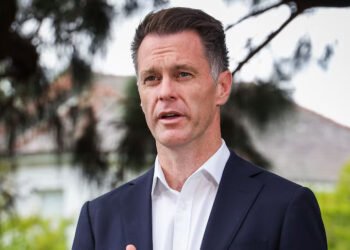
The controversy reached political leaders in New South Wales. Premier Chris Minns labelled the vigils “atrocious” during a press appearance. He criticised Khamenei’s leadership and cited reports of mass killings of protesters. Minns argued that strong language was necessary when discussing alleged crimes.
His remarks have further intensified debate across the Iranian Australian community. Some believe elected officials must clearly condemn authoritarian regimes. Others caution that political rhetoric could inflame tensions between communities. The situation illustrates how overseas conflicts often echo loudly within multicultural Australia.
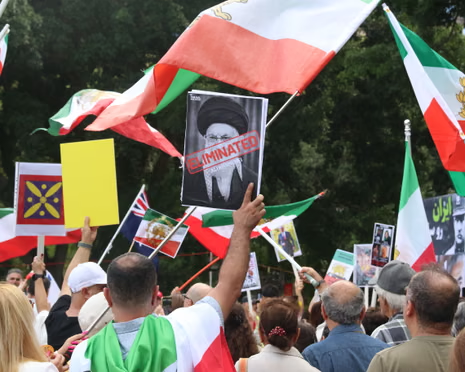
On the same day, thousands of Iranian Australians reportedly attended gatherings celebrating Khamenei’s death. These events were held in various suburbs with large Iranian populations. Organisers described them as moments of relief after years of anxiety. For many attendees, the day symbolised hope for political change in Iran.
Meanwhile, the Shia Muslim Council of Australia released a joint statement. Directors Ali Alsamail and Julie Karaki emphasised Iran’s profound religious significance. They noted that many Shia Muslims regard Khamenei as a senior religious authority. According to the council, mourning him represents communal grief rather than political endorsement.
The statement stressed that acknowledging grief should not be misinterpreted as support for policies. It called for understanding and empathy during an emotionally charged period. The council also highlighted fears felt by Australian Shia families with relatives overseas. Escalating tensions in the Middle East have created uncertainty and anxiety.
Dr Rateb Jneid, president of the Australian Federation of Islamic Councils, echoed similar sentiments. He affirmed the right of Muslims to meet religious obligations peacefully. Funeral prayers, he said, are standard rituals performed for any deceased Muslim. Jneid emphasised that such practices do not automatically imply political allegiance.
These clarifications, however, have not eased divisions within the Iranian Australian community. Many diaspora members argue that context matters when public figures are involved. They say Khamenei’s political authority cannot be separated from his religious role. For them, communal mourning risks overlooking serious allegations against his regime.
Academic perspectives offer further insight into this complex reaction. Professor Shahram Akbarzadeh from Deakin University commented on the contrasting views. He explained that some Shia Muslims worldwide see the supreme leader as a mentor. Others within Iran, he said, associate the role with authoritarian state control.
Akbarzadeh argued that decades of strict governance pushed many Iranians away from religion. According to his research, enforced ideology often generates resentment rather than devotion. This dynamic helps explain why diaspora responses appear so polarised. Personal experiences shape how individuals interpret religious symbolism.
Australia’s security context has also influenced public discussion. In November, the federal government listed the IRGC as a terrorist entity. The decision followed security agency revelations about alleged Iranian-linked attacks in Australia. These included a firebombing at a Melbourne synagogue and an arson attack in Sydney.
Such incidents have heightened scrutiny of any perceived connections to the Iranian state. Community leaders stress that most Australian Muslims reject violence unequivocally. They argue that collective blame would undermine social cohesion. Nevertheless, the timing of the vigils has amplified sensitivities.
Within Sydney and Melbourne, conversations continue across community forums and social platforms. Some Iranian Australians urge respectful dialogue rather than condemnation. They worry that hostility could deepen divisions within families and friendship circles. Others insist that moral clarity remains essential when addressing human rights concerns.
The Iranian Australian community is diverse in political, religious, and cultural backgrounds. Many arrived as refugees during different waves of migration. Their experiences under the Islamic Republic vary significantly. This diversity explains why responses to Khamenei’s death are far from uniform.

Community advocates emphasise the importance of peaceful expression. Australia’s democratic framework protects freedom of religion and speech. At the same time, it allows robust criticism of political figures. Balancing these rights requires sensitivity from leaders and citizens alike.
Observers note that diaspora tensions often reflect unresolved conflicts abroad. When leaders with global influence die, emotions intensify quickly. For some, grief represents spiritual loss. For others, relief signals hope for justice and reform.
As events unfold in the Middle East, the Iranian Australian community will likely continue debating its response. Families remain concerned about relatives living in uncertain conditions overseas. Local authorities are monitoring community safety while encouraging calm. The coming weeks may reveal whether dialogue can bridge current divides.
What remains clear is that identity and memory shape reactions powerfully. The vigils have highlighted generational and ideological differences. They also demonstrate how international politics intersects with local community life. For many Iranian Australians, the discussion goes beyond one individual.
It touches on questions of accountability, faith, and belonging. It also reflects Australia’s ongoing effort to maintain harmony amid global turbulence. Whether unity emerges will depend on respectful engagement from all sides. The Iranian Australian community now stands at a sensitive crossroads.
Related News:
 British Woman in Iran ‘Losing Hope’ Amid Ongoing Detention
 BBC Journalist Held and Interrogated in Vietnam
 The diet that can significantly ease symptoms of IBS
 Trump Speaks on Prince Andrew’s Royal Scandal Fallout
 Pregnant UK Teen to Be Freed from Georgian Jail
 Zohran Mamdani becomes New York City’s first Muslim mayor
 Top Christmas Books Reads: Classics to Cozy Romcoms
 UPS Cargo Plane Crash in Kentucky Kills Seven
 Just Stop Oil Protesters Convicted Amid Climate Defence Row
Zohran Mamdani names all-female transition team for NYC mayoralty
Just Stop Oil Protesters Convicted Amid Climate Defence Row
Zohran Mamdani names all-female transition team for NYC mayoralty
 Tension and Turmoil at Aston Villa v Maccabi Match
 British Grandmother to Return Home After Death Sentence in Bali
 Parents Urge Home Office to Reunite Daughter After Hurricane
 Lando Norris Dominates Brazil GP to Strengthen F1 Title Bid
 Second world war veterans honoured as King leads Remembrance Sunday
 BBC director-general and news chief resign amid bias row
 Palace May Restore Hyphen to Andrew Mountbatten-Windsor’s Name
 Ronaldo Confirms Final World Cup and Plans Retirement
 Rama Rebukes Mahmood for Targeting Albanian Families
 Russian Vessel Used Lasers on RAF Pilots, UK Claims
 Royal Navy Shadows Russian Warships Entering the Channel
 Ireland Boosts Ukraine Aid as Zelensky Visits Dublin
 US Africa aid remarks spark anger after leaked State email
 Starmer China visit raises human rights pressure on Beijing
 UK and EU Signal Fresh Push for Defence Cooperation Talks
 UK New Car Discounts Near £6,000 as Prices Are Slashed
 Cory Bernardi joins One Nation for SA election
 Starmer Condemns ‘Depraved’ Russian Strikes on Ukraine
 Sydney Protest Pepper Spray Clash During Herzog Visit
 Mexico Challenges UK Asylum Decision
 Trump Warns Over Chagos Islands Deal
 NSW Mental Health Crisis: Escapes Spark Alarm
 Trump and Chagos Deal Rift Over Iran Strikes
 Andrew Mountbatten-Windsor Arrest After FBI Radar
 Farage Chagos Islands Row Sparks Fury
 Trump Tariffs Threat Spark UK and EU Alarm
 Mediterranean Storms: A New Era of Climate Tragedies
 UK Allows US Base Use Amid Iran Tensions
 Middle East evacuation plans for Britons
 Trump rebukes Starmer over Iran strikes
 Trump Rebukes Starmer Over Iran Strikes Row
 US Iran strikes strain special relationship
 Iran War Threatens Globalisation and UK Economy
 Gulf shipping crisis sparks food price fears
 UK Rescue Flight Delayed Amid Middle East War
 UK Rescue Flight Leaves Oman After Delay Amid Evacuation Effort
 UK Prepares Aircraft Carrier for Middle East Crisis
 Gordon Brown urges court for crimes against children
 Yvette Cooper: UK Must Follow Principles, Not US Pressure
 Iran War Warning: Starmer Backs Ukraine Visit
 UK Wage Growth Slows as Jobs Market Holds Firm
 UK Minister Denies Iran Missile Threat to Britain
 Australia Imposes Sudden Travel Ban on Iranian Visitors
 Middle East Conflict to Hit UK Economy Hardest
 Army Probes Apache Flyover at Kid Rock’s Nashville Estate
 Relationship with Trump may be beyond repair, Starmer warned
 ICE Detains Soldier’s Bride Days After Louisiana Wedding
 Zelenskyy Warns US Trust in Putin Risks Middle East Safety
 Charles Faces Trump Test in High-Stakes US Visit
 UK Stands Firm on Falklands Amid US Rift
 Premier League drama defines crucial weekend
 Ceasefire Standoff Deepens in Ukraine War
 Koh-i-noor Diamond Row Reignites Colonial Debate
 RFU Backs Borthwick Despite England’s Poor Six Nations
 Starmer Faces Revolt After Crushing Election Losses
 Fear and Betrayal: The Chilling Case of Kouri Richins
 Tragedy in the Maldives: Inside the Deep Sea Rescue
 US Ebola Case Sparks Urgent Global Screening Measures
 UK Pushes for New EU Goods Trade Deal
 Reeves Fights to Keep Treasury Role Amid Labour Turmoil
 Farage and Reform UK Reshape British Politics
 Starmer Leadership Under Pressure After Setbacks
 Deadly Russian Air Raids Strike Across Ukraine
 Britain’s Crowning Butterfly Takes the Nation by Storm
 Russian Frigate Fires Warning Shots Near British Yacht
 UK Government Cancels Higher Education Programme for Women and Girls
 New South Wales Premier Chris Minns Signals Tough Road Ahead for Labor
 Violent London Clash After World Cup Semi-Final Match
 Labour MPs Urge Burnham to Revive UK Aid Target
 UK’s Largest Muslim Convention Scales Up Security Amid Rising Bigotry