Published: March 5, 2026 . The English Chronicle Desk . The English Chronicle Online
China has announced its lowest economic growth target in more than three decades, signalling a cautious outlook for the world’s second-largest economy as policymakers confront mounting domestic and global challenges. The new target, set between 4.5% and 5% for 2026, marks the most modest official growth goal since 1991 and reflects concerns about slowing momentum in key sectors such as property, consumption and exports.

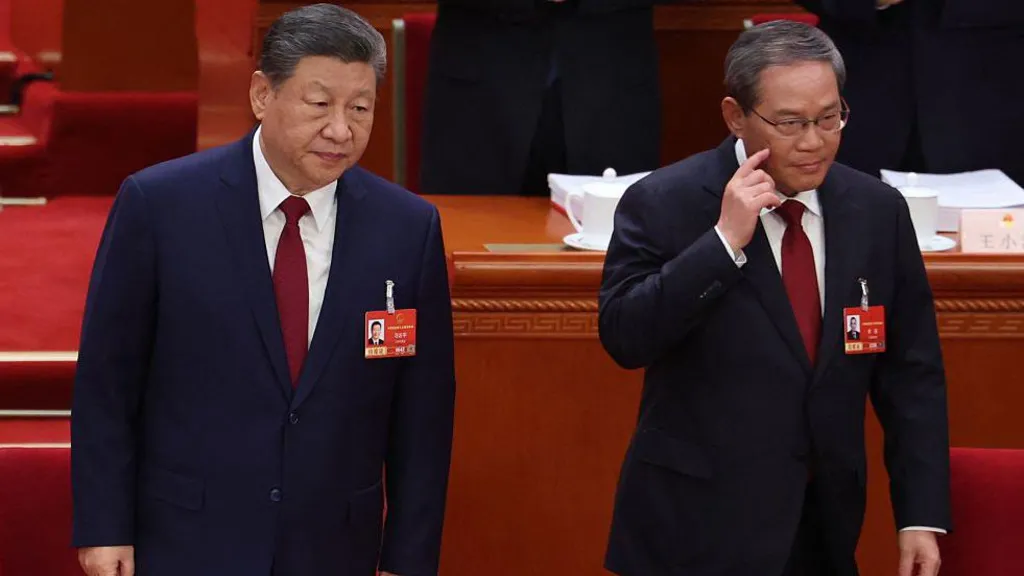
The announcement came during China’s annual parliamentary gathering, widely known as the “Two Sessions,” where Premier Li Qiang presented the government’s annual work report outlining economic priorities and policy direction for the year ahead. Officials acknowledged that the country faces a complex economic environment shaped by both internal structural problems and external geopolitical pressures.
For decades, China’s economic growth targets often exceeded 6% or even 8%, helping drive its transformation into a global manufacturing powerhouse. However, the newly lowered target highlights a recognition in Beijing that the previous growth model—driven heavily by property development, infrastructure spending and export manufacturing—has reached its limits. Analysts say the revised target represents a shift toward a more cautious and sustainable growth strategy.
Economists note that several structural factors are weighing on China’s economic outlook. A prolonged property sector downturn has undermined investment and consumer confidence, while weak domestic demand has slowed retail spending. At the same time, the country is grappling with demographic changes, including a shrinking workforce and declining population growth, which could constrain long-term productivity.
In his policy address, Premier Li emphasised the need for “high-quality growth,” suggesting that Beijing’s focus is shifting from sheer expansion toward improving technological capability, innovation and industrial resilience. Officials highlighted sectors such as advanced manufacturing, clean energy and artificial intelligence as future drivers of economic development.
The government also signalled a more proactive fiscal stance to support the economy. Beijing plans to maintain a budget deficit of around 4% of GDP, alongside moderately accommodative monetary policies designed to stimulate domestic consumption and encourage business investment.
Despite the lowered target, some analysts argue that achieving even a 4.5% growth rate could prove challenging without stronger policy support. Consumer confidence remains fragile, youth unemployment has been a persistent concern, and private sector investment has shown signs of hesitation amid regulatory uncertainty and global trade tensions.
China’s export sector, once a powerful engine of growth, also faces headwinds from slowing global demand and rising geopolitical frictions with major trading partners. Trade disputes, supply-chain diversification and shifting manufacturing patterns have reduced the pace at which Chinese exports can drive economic expansion.
However, policymakers in Beijing appear determined to guide the economy through a gradual transition rather than relying on massive stimulus packages used in the past. Officials emphasised targeted policies aimed at stabilising employment, supporting small and medium-sized enterprises, and strengthening domestic consumption as part of a longer-term strategy to rebalance the economy.
Another important element of China’s economic planning is technological self-reliance. Government initiatives continue to channel investment into strategic industries such as semiconductor production, digital infrastructure and renewable energy, areas viewed as crucial for maintaining competitiveness in an increasingly fragmented global economy.
International markets reacted cautiously to the announcement. Investors had largely anticipated a lower growth target, but the symbolic significance of the lowest target in 35 years underscores the challenges facing China’s economic transition. Analysts say the move reflects realism within China’s leadership about the country’s slowing growth trajectory as it shifts from rapid expansion to a more mature phase of development.
Global economic observers are closely watching China’s policy choices because of the country’s central role in international trade and financial markets. Slower Chinese growth could affect commodity demand, supply chains and investment flows across Asia, Africa and Europe, particularly in countries heavily dependent on Chinese imports or infrastructure financing.

Even with the reduced growth target, China remains one of the largest contributors to global economic expansion. Yet the new goal signals that Beijing is preparing for a period of more moderate growth after decades of extraordinary economic performance. For policymakers, the challenge now is to maintain stability while steering the economy toward a new model driven less by property and exports and more by innovation, technology and domestic demand.
Related News:
 Trump Announces Global Tariffs to Rise to 15%
 Live Markets Bet on Spring Rate Cut as Inflation Falls
 City Bets on Rate Cuts as Unemployment Soars
 Japan Braces as Takaichi Begins New Term with Huge Mandate for Low‑Tax, Ultra‑Conservative Agenda
 US and Indonesia Finalise Deal to Cut Tariffs to 19%
 US Trade Deficit Hits Fresh High Despite Trump’s Tariffs
 How Budget Fast Fashion Is Taking Small‑Town India by Storm
 Uncertainties Loom for Businesses and Consumers After Trump’s Tariff Changes
 ‘Hard to Keep Lights On’: Business Owners Cautiously Welcome Tariff Ruling
 Canada Eyes Trade Talks After US Supreme Court Tosses Trump Tariffs
 UK Job Vacancies Fall to Lowest Level Since Pandemic
 Ukraine war briefing: Russia exporting more oil now than before war despite sanctions – report
 Trump’s tariff strategy collapse sows global chaos and confusion
 German Chancellor Lands in Beijing for Inaugural China Trip
 Canada’s Finance Minister Says US Unlikely to Lift Tariffs
 Why Asian Firms Are Not Cheering Trump Tariff Ruling
 Why Asian Firms Are Not Cheering Trump Tariff Ruling
 Why Middle Managers Can’t Get a Job Anymore
 The Little Town Making Nearly All of China’s Lanterns
 Post Office Scandal Compensation Tops £1 Billion as Victims Finally See Justice
 Tensions Unfold in Market Harborough as Asylum Seeker Hotel Sparks Divisive Protests
 How to Exit Your Broadband Contract Without Paying Exit Fees
 Diageo Faces Profit Slump and Tariff Blow Amid Leadership Crisis
 China’s crackdown on civil servant perks sparks economic concerns
 Chancellor Rachel Reeves Pushes for Sweeping Changes to Environmental Protections to Accelerate Development
 Inflation Latest: Cost of Living Expected to Rise Again in Key Figures Released Today
 Shein UK Faces Allegations of Shifting Majority of Profits to Singapore to Reduce UK Tax
 Big Pharma Investment Freeze Puts UK Life Sciences Sector Under Strain
 Jaguar Land Rover Extends Production Halt Following Cyber-Attack
 Great Britain’s Energy Operator Commits to Strengthening Grid to Prevent Blackouts
 UK Government Backs Return of International Rail Travel to Kent Stations
 Wetherspoon vows to keep prices low amid soaring energy and tax costs
 UK House Price Growth Slows as Buyers Exercise Caution Ahead of Autumn Budget
 Kemi Badenoch Unveils ‘Golden Rule’ to Halve Spending Cuts for Deficit Reduction at Tory Conference
 New V-Level qualification to transform post-16 education
 Real living wage set to rise nearly 7% for UK workers in 2026
 Reeves Faces Setback as Labour May Miss Homes Target
 Virgin Trains Moves Closer to Challenging Eurostar Monopoly
 Trump’s UK Ambassador Urges North Sea Drilling to Strengthen US Ties
 Ryanair Chief UK Economy ‘Doomed’ Under Labour
 M&S Profits More Than Halve After Cyber-Attack
 Earl of Yarmouth Faces £1.3m Legal Bill Over Family Estate
 Millionaires group urge Reeves to introduce wealth tax to ‘lift kids out of poverty’
 From Lego to Pokémon: How Adults Are Driving UK Toy Market Growth
 New laws to bolster UK’s defences against cyber attacks on NHS, transport and energy
 Canada Passes Carney’s First Budget in Tight Parliamentary Vote
 Starmer Says Labour’s Economic Plan Needs Years to Deliver
 Virgin Media Fined £23.8m Over Telecare Safety Failures
 Anglo American Scraps Bosses’ £8.5m Bonus Plan After Investor Fury
 Historic £100-Weekly Pension Boost Brings Relief for UK Mineworkers
 FTSE 100 Hits 10,000: UK Market Celebrates Record Year
 Metals and Mining Stocks Lift FTSE 100 to Record Close
MPs warn AI financial risks threaten UK stability
Metals and Mining Stocks Lift FTSE 100 to Record Close
MPs warn AI financial risks threaten UK stability
 US Dollar Hits Four-Year Low Amid Market Turmoil
 Amazon mistakenly signals new global layoffs to employees
 Households in England Face Rising Water Bills in April
 UK New Car Discounts Near £6,000 as Prices Are Slashed
 Pound Sinks and Borrowing Costs Rise as Starmer Fights for Job
 London Loses Its Grip on Ambitious Young Workers
 Major UK Clothing Firm Collapses into Administration — 109 Jobs at Risk
 Telstra AI jobs cuts as automation drive expands
 BT Names New Openreach Chief Amid Major Fibre Expansion
 Is Dining Out Dying Out?
 After the Landslide: Can India Reset Ties with BNP Bangladesh?
 Could Manchester Lead the UK’s Economic Revival?
 Japan’s Lost “Tigers” Were Actually Lions, Study Reveals
 Lloyds Boss Accepts Concern Over Use of Staff Data in Pay Talks
 Live Nation Sees Strong Ticket Sales as Monopoly Lawsuit Looms
 AI Coding Firm’s ‘Pride’ at Business Award Win
 UK Job Vacancies Hit Five-Year Pandemic Low
 Duterte Refuses to Attend ICC Pre-Trial Hearing Over ‘Drug War’ Case
 Trump’s new tariff takes effect at lower than expected rate
 UK Youth Unemployment Surges Amid Tax Changes
 Strong Rebound for UK Housing Market Sees 6% More Homes
 Bill Gates ‘Took Responsibility’ Over Epstein Ties in Staff Meeting, Foundation Says
 Netflix Drops Bid for Warner Bros, Clearing Way for Paramount Takeover
 Burger King Rolls Out AI Headsets to Track Employee ‘Friendliness’
 Switching Energy Deal Can Save £200 as Price Cap Falls
 Labour’s Employment Shake‑Up ‘Makes Britain Worse Than France’
 Limited Flights Leave UAE But Disruption Continues Amid Iran Strikes