Published: March 5, 2026 . The English Chronicle Desk . The English Chronicle Online
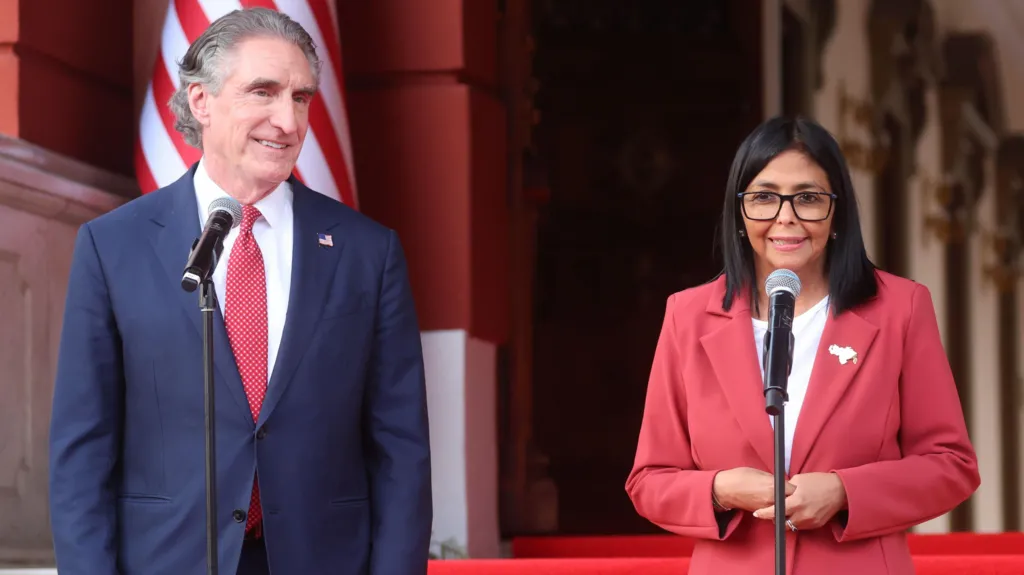
Venezuela and the United States have announced plans to cooperate on major mining developments, signalling a new phase in economic relations between the two countries as Caracas seeks to attract foreign investment into its vast natural resource sector. The announcement was made by Venezuela’s interim president Delcy Rodríguez following high-level discussions in Caracas with senior U.S. officials and representatives from American mining companies.

The agreement emerged after a meeting between Rodríguez and U.S. Interior Secretary Doug Burgum, who travelled to the Venezuelan capital accompanied by more than two dozen executives from American mining and minerals companies. Officials from both sides said the talks focused on developing Venezuela’s large reserves of strategic minerals and opening the country’s mining industry to international investment.
Rodríguez said the two governments would work together to encourage new mining projects, modernise regulations and reduce bureaucratic barriers that have long discouraged foreign investors. She also confirmed that the Venezuelan government plans to submit reforms to the country’s primary mining law in the coming days in an effort to create a more attractive environment for international companies.
The proposed legal changes could allow foreign firms to exploit resources such as gold, diamonds and potentially rare earth minerals, which are essential for modern technologies including electric vehicles, renewable energy systems and advanced defence equipment. Venezuelan officials believe the reforms could unlock billions of dollars in investment while creating thousands of jobs across the country.
U.S. officials also emphasised the strategic importance of securing access to critical minerals as global competition intensifies. Washington has increasingly sought to diversify supply chains away from countries that dominate key mineral markets, particularly China, which controls large portions of the global rare-earth processing industry. Venezuela’s mineral deposits—including gold, coltan, bauxite and diamonds—are therefore seen as valuable resources in the broader geopolitical contest for critical materials.
During the meetings in Caracas, Burgum said the potential for cooperation between the two countries was substantial. American mining firms participating in the discussions are believed to represent billions of dollars in possible investment and large-scale development projects in the Venezuelan mining sector.
The proposed partnership forms part of a broader shift in economic relations between the United States and Venezuela following a turbulent political period in the country. The Trump administration has recently increased its involvement in Venezuela’s energy and natural-resource sectors, arguing that American investment could help rebuild the country’s economy while improving global access to key commodities.
Signs of growing commercial cooperation have already begun to emerge. Venezuela’s state-owned mining company Minerven recently signed a deal to supply gold to international commodities trader Trafigura for delivery to U.S. refineries. The agreement, involving hundreds of kilograms of gold, is seen as one of the first concrete examples of the renewed economic ties between the two countries.
Despite the optimism expressed by officials, some analysts have urged caution. Venezuela’s mining sector has long faced challenges including environmental concerns, illegal mining activities and limited infrastructure in remote resource-rich regions. Large-scale development projects will require major investments in transport networks, energy supply and regulatory oversight.
Environmental groups have also raised concerns about the potential impact of expanding mining operations in areas such as the Orinoco Mining Arc, a vast region of mineral-rich rainforest in southern Venezuela. Critics argue that poorly regulated mining could accelerate deforestation, pollution and social conflicts involving indigenous communities.
Nevertheless, Venezuelan officials insist that the new regulatory framework will include stronger safeguards while encouraging responsible investment. Rodríguez said the government hopes to replicate reforms previously introduced in the oil sector, which were designed to attract foreign companies while maintaining national oversight of strategic resources.
For the United States, the cooperation represents part of a broader strategy to secure stable access to critical minerals needed for advanced technologies, clean energy infrastructure and defence manufacturing. By strengthening partnerships with resource-rich countries such as Venezuela, Washington aims to reduce supply chain vulnerabilities and ensure reliable access to materials considered essential for economic and national security.
The discussions in Caracas suggest that both governments see significant opportunities in closer economic cooperation. If the proposed mining reforms are approved by Venezuela’s legislature and investment flows materialise, the country could witness one of the largest expansions of its mining sector in decades.

However, the success of the initiative will depend on political stability, regulatory transparency and the ability of both governments to maintain investor confidence. For now, the announcement marks a significant step toward rebuilding economic ties between Caracas and Washington and highlights the growing global importance of critical minerals in shaping international partnerships.
Related News:
 Post Office Scandal Compensation Tops £1 Billion as Victims Finally See Justice
 Tensions Unfold in Market Harborough as Asylum Seeker Hotel Sparks Divisive Protests
 How to Exit Your Broadband Contract Without Paying Exit Fees
 Diageo Faces Profit Slump and Tariff Blow Amid Leadership Crisis
 China’s crackdown on civil servant perks sparks economic concerns
 Chancellor Rachel Reeves Pushes for Sweeping Changes to Environmental Protections to Accelerate Development
 Inflation Latest: Cost of Living Expected to Rise Again in Key Figures Released Today
 Retail Sales See Uptick Amid Errors and Delays as ONS Faces Scrutiny
Shein UK Faces Allegations of Shifting Majority of Profits to Singapore to Reduce UK Tax
Retail Sales See Uptick Amid Errors and Delays as ONS Faces Scrutiny
Shein UK Faces Allegations of Shifting Majority of Profits to Singapore to Reduce UK Tax
 UK Retail Sales Rise in August, but Tax Concerns Loom Over Festive Period
 Big Pharma Investment Freeze Puts UK Life Sciences Sector Under Strain
 Jaguar Land Rover Extends Production Halt Following Cyber-Attack
 UK Labour Market Shows Signs of Cooling as Wage Growth Slows and Redundancies Rise
 Great Britain’s Energy Operator Commits to Strengthening Grid to Prevent Blackouts
 UK Government Backs Return of International Rail Travel to Kent Stations
 GSK Chief Executive Emma Walmsley to Step Down After Eight Years at the Helm
 Senior Tories Condemn Badenoch’s Vow to Repeal Climate Change Act as Catastrophic
 Wetherspoon vows to keep prices low amid soaring energy and tax costs
 UK House Price Growth Slows as Buyers Exercise Caution Ahead of Autumn Budget
 Kemi Badenoch Unveils ‘Golden Rule’ to Halve Spending Cuts for Deficit Reduction at Tory Conference
 Capita Fined £14m for 2023 Cybersecurity Failures
 Parents spending £5,000 on special school assessments in England
 New V-Level qualification to transform post-16 education
 Pizza Hut to shut 68 sites after collapsing into administration
 Real living wage set to rise nearly 7% for UK workers in 2026
 Reeves Faces Setback as Labour May Miss Homes Target
 Virgin Trains Moves Closer to Challenging Eurostar Monopoly
 Trump’s UK Ambassador Urges North Sea Drilling to Strengthen US Ties
 Ryanair Chief UK Economy ‘Doomed’ Under Labour
 M&S Profits More Than Halve After Cyber-Attack
 Tony Blair think tank warns Rachel Reeves must cut taxes if manifesto broken
 Earl of Yarmouth Faces £1.3m Legal Bill Over Family Estate
 Millionaires group urge Reeves to introduce wealth tax to ‘lift kids out of poverty’
 From Lego to Pokémon: How Adults Are Driving UK Toy Market Growth
 New laws to bolster UK’s defences against cyber attacks on NHS, transport and energy
 Skims Eyes Global Expansion After Reaching $5 Billion Value
 Global markets drop amid tech sell-off and China slowdown
 Canada Passes Carney’s First Budget in Tight Parliamentary Vote
 Starmer Says Labour’s Economic Plan Needs Years to Deliver
 Virgin Media Fined £23.8m Over Telecare Safety Failures
 Rising Water Bills Lift Troubled Thames Back to Profit
 Anglo American Scraps Bosses’ £8.5m Bonus Plan After Investor Fury
 Historic £100-Weekly Pension Boost Brings Relief for UK Mineworkers
 ACCA Ends Remote Exams Over AI Cheating Surge
 FTSE 100 Hits 10,000: UK Market Celebrates Record Year
 UK House Prices Fall Sharply at Year-End, Nationwide Reports
 Wessex Water chiefs receive £50,000 extra despite government bonus ban
 Metals and Mining Stocks Lift FTSE 100 to Record Close
 Canada-China trade gains momentum in new strategic partnership
MPs warn AI financial risks threaten UK stability
Canada-China trade gains momentum in new strategic partnership
MPs warn AI financial risks threaten UK stability
 US Dollar Hits Four-Year Low Amid Market Turmoil
 Amazon mistakenly signals new global layoffs to employees
 Households in England Face Rising Water Bills in April
 UK New Car Discounts Near £6,000 as Prices Are Slashed
 Pound Sinks and Borrowing Costs Rise as Starmer Fights for Job
 London Loses Its Grip on Ambitious Young Workers
 Major UK Clothing Firm Collapses into Administration — 109 Jobs at Risk
 Telstra AI jobs cuts as automation drive expands
 BT Names New Openreach Chief Amid Major Fibre Expansion
 Is Dining Out Dying Out?
 Could Manchester Lead the UK’s Economic Revival?
 Lloyds Boss Accepts Concern Over Use of Staff Data in Pay Talks
 Glencore Approves $2bn Payout Despite Profit Slump
 Live Markets Bet on Spring Rate Cut as Inflation Falls
 Live Nation Sees Strong Ticket Sales as Monopoly Lawsuit Looms
 AI Coding Firm’s ‘Pride’ at Business Award Win
 Uncertainties Loom for Businesses and Consumers After Trump’s Tariff Changes
 UK Job Vacancies Hit Five-Year Pandemic Low
 US Will Not Back Out of Tariff Deals with UK and Others, Says Trump Trade Representative
 Trump’s new tariff takes effect at lower than expected rate
 UK Youth Unemployment Surges Amid Tax Changes
 Strong Rebound for UK Housing Market Sees 6% More Homes
 Bill Gates ‘Took Responsibility’ Over Epstein Ties in Staff Meeting, Foundation Says
 Netflix Drops Bid for Warner Bros, Clearing Way for Paramount Takeover
 Burger King Rolls Out AI Headsets to Track Employee ‘Friendliness’
 Switching Energy Deal Can Save £200 as Price Cap Falls
 UK house prices rise as market steadies
 Labour’s Employment Shake‑Up ‘Makes Britain Worse Than France’
 Bars Close and Hundreds Lose Jobs as US Firm Buys BrewDog in £33m Deal
 Limited Flights Leave UAE But Disruption Continues Amid Iran Strikes