Published: 22 March 2026. The English Chronicle Desk. The English Chronicle Online.
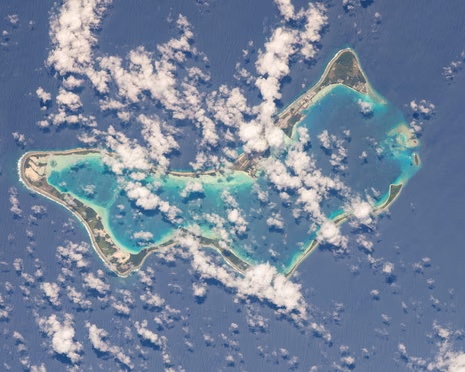
The British government has officially condemned a series of reckless Iranian threats following a significant missile strike aimed at a joint military facility. This high-stakes confrontation involved the strategic island of Diego Garcia where the United Kingdom maintains a critical presence alongside American forces. Foreign Secretary Yvette Cooper addressed the nation to clarify the official stance of the government regarding these recent escalations. She emphasized that while the United Kingdom supports defensive measures, it maintains a distinct position from its allies. Ministers are currently working toward a swift resolution to the ongoing conflict to ensure regional stability. The government remains committed to protecting British interests against any form of reckless Iranian threats in the area.
This recent surge in tension follows a specific authorization granted by the Prime Minister to the United States. This decision allowed American forces to conduct further strikes from British bases against specified hostile targets. In response to this move, Tehran issued warnings stating that British lives were now in immediate danger. Shortly after these warnings, Iran launched two intermediate-range ballistic missiles toward the Chagos Islands in the Indian Ocean. Reports from the Iranian news agency Mehr confirmed the launch of these powerful long-range weapons on Saturday. Fortunately, neither of the missiles reached their intended targets during this unprecedented and aggressive military operation.

One of the incoming missiles was successfully intercepted and shot down by a nearby United States warship. The second missile reportedly suffered a technical failure during its flight and crashed harmlessly into the sea. These details were confirmed by officials cited in the Wall Street Journal following a technical review. Had the salvo reached the island, it would have marked the longest-range strike ever recorded by Iran. Prior to this war, international intelligence services were aware of Iranian missiles capable of reaching three thousand kilometres. The distance to Diego Garcia is approximately three thousand eight hundred kilometres from the borders of Iran. This suggests a significant and worrying advancement in the missile technology currently possessed by the Iranian military.
Yvette Cooper spoke to various broadcasters on Saturday morning to provide updates on the unfolding security situation. She stated that the United Kingdom continues to support all necessary defensive actions to protect its interests. This includes providing robust support against any ballistic missile threats that could harm personnel or vital infrastructure. However, the Foreign Secretary was careful to note that the government desires a very rapid peace agreement. Our approach to this specific conflict has remained consistent despite the increasing pressure from international partners. We were not involved in offensive actions and continue to avoid direct participation in such military strikes.
The United Kingdom has intentionally taken a different view from the United States and Israel lately. This distinction is vital for maintaining the diplomatic path the current government has chosen to follow. We are supporting defensive action specifically to protect our regional interests and ensure the safety of shipping. This support includes recognizing the escalating threats Iran poses to international trade and essential maritime routes. The government also remains deeply concerned about the threats directed toward our long-standing partners in the Gulf. Protecting these alliances is a top priority for the Ministry of Defence during this period of instability.
The Ministry of Defence described the American use of British bases as limited and defensive in nature. A spokesperson for the department called the recent missile attacks from Tehran completely reckless and highly dangerous. Iran is accused of lashing out across the region while effectively holding the Strait of Hormuz hostage. These actions represent a direct threat to British interests and the security of our closest international allies. Royal Air Force jets and other military assets are currently deployed to defend all personnel in the region. The government has granted permission for limited operations to degrade the capabilities used to attack civilian shipping.
Diego Garcia has been a focal point of political discussion in Westminster for several months now. The island is part of the Chagos Islands and hosts an airbase for long-range American bomber aircraft. This location became controversial after the United Kingdom agreed to cede sovereignty of the islands to Mauritius. Under the current agreement, the British government will lease back the military base for continued strategic use. Ministers gave the United States permission to strike Iranian missile sites from this base on Friday afternoon. This authorization was specifically intended to protect the Strait of Hormuz from further hostile Iranian interference.
Previously, British bases were only utilized to strike sites targeting allies and interests within the Gulf states. The expansion of this permission led to an immediate and angry reaction from the Iranian government. Foreign Minister Abbas Araghchi claimed that his country would exercise its inherent right to total self-defence. He posted on social media that the majority of British people do not want this war. Araghchi accused Prime Minister Keir Starmer of ignoring his people and putting lives at risk through these actions. He suggested that allowing the use of bases for aggression would lead to a significant response.
United States President Donald Trump also weighed in on the situation with a characteristically blunt public statement. He suggested that the United Kingdom should have acted a lot faster in providing the necessary permissions. The President has been piling pressure on Nato allies to provide more support for the naval mission. He previously referred to some allies as cowards for refusing to offer warships for the Strait. This rhetoric has created a complex diplomatic environment for the British government to navigate with its partners. The decision to limit support to defensive actions remains a point of contention between London and Washington.
Domestic political pressure is also mounting on the Prime Minister regarding his handling of the regional crisis. Conservative leader Kemi Badenoch described the latest move as the mother of all U-turns in a post. She argued that the United Kingdom is being dragged into a conflict without a clear strategic plan. Badenoch emphasized the need for a Prime Minister who can think ahead and avoid reactive policy changes. Meanwhile, the Liberal Democrats and the Green Party have called for a formal vote in the Parliament. They believe that any further permissions for base usage must be debated and approved by elected officials.

In a phone call on Saturday, Keir Starmer spoke with the Cypriot President to offer reassurances. He reaffirmed that RAF Akrotiri in Cyprus will not be used to target Iranian missile sites directly. Downing Street stated that the security of Cyprus remains of utmost importance to the British government. The Prime Minister reiterated that the base would only be involved in collective self-defence and regional stability. This conversation highlighted the importance of maintaining trust with Mediterranean partners during this volatile period of war. Both leaders agreed that de-escalation must remain the primary goal for the international community right now.
The economic impact of the conflict is also weighing heavily on the minds of British government officials. Starmer is expected to hold a Cobra meeting next week to discuss the rising cost of living. The war has caused significant disruptions to energy markets and global supply chains for essential household goods. A joint statement from several nations recently condemned the attacks on oil and gas facilities in the region. This group included the United Arab Emirates, Bahrain, Germany, France, Japan, South Korea, and Australia. They warned that these actions would harm the most vulnerable people in all parts of the world.
The Prime Minister also contacted the Crown Prince of Bahrain to discuss the latest military and diplomatic developments. He outlined the latest support for Bahrain, which includes a team of experts to counter drone attacks. Both leaders condemned the ongoing strikes on critical national infrastructure and the vital Strait of Hormuz. The Prime Minister updated the Crown Prince on the limited use of British bases for collective defence. This diplomatic outreach is part of a broader effort to build a coalition against reckless Iranian threats. As the situation evolves, the British government continues to balance its military commitments with a desire for peace.
Related News:
 BBC to Apologise Over Edited Trump Speech Amid Backlash
 Britain deploys RAF specialists to assist Belgium with drone threats
 Palace May Restore Hyphen to Andrew Mountbatten-Windsor’s Name
 Greene Pushes Epstein Files Amid Trump Fallout
 December Run-Off in Chile as Election Produces No Winner
 Zelenskyy Signs Fighter Jet Deal Amid Russian Drone Attacks
 Canada Passes Carney’s First Budget in Tight Parliamentary Vote
 Shadow Fleet at Sea: Europe’s Battle Against Illicit Oil Shipping
 Tiny Curacao Makes History as Smallest Nation to Reach World Cup
 Deadly Russian Strikes Hit Western Ukraine, 20 Killed in Ternopil
 Ukraine Peace Plan: Zelensky Ready for Dialogue
 US Suspends Afghan Immigration After White House Shooting
 Georgians Defy Government Crackdown After Year of Protests
 ‘Extinct’ Antelope Returns to Sahara, Bringing Hope
 American Mother Extradited From UK to U.S. on Murder Charges
 Irish Beach Tragedy: Irish Drown at Whitehaven Beach in Australia
 Sanctioned oil tankers sail Channel amid Russia scrutiny
 US and UK Withdraw Personnel as Middle East Tensions Rise
 Half the World’s Largest Cities Face Rising Water Stress
 Pentagon Signals Reduced Role in Deterring North Korea
 UK and US Drop in Global Corruption Index Rankings
 SA Police Intensify Search in Gus Lamont Case
 Canberra Poster Seizure Sparks Free Speech Row
 Evo Morales Returns After Mysterious Absence
 El Mencho Killed as Mexico Faces Violence
 Australian children in Syria deserve safe return
 Greenpeace $345m Ruling Sparks Appeal Battle
 Jacinda Ardern Moves To Australia Following Her US Fellowships
 Jacinda Ardern Move Sparks Kiwi Reflection
 Middle East Airspace Crisis Strands Thousands
 Nick Greiner Warns Over Election Review Fallout
 Kelly Wilkinson Inquest Reveals Bail Failure
 Tehran Strikes Mark War’s Most Devastating Night
 Injured Mojtaba Khamenei Elevated as Iran Leader
 Gordon Brown urges court for crimes against children
 Gaza Detainee Abuse: Israel Drops Charges Against Soldiers
 The Kill Line: A Shifting Vision of the American Dream
 Oil Prices Jump After Trump Claims Iran Oil Hub Destroyed
 Pakistan Targets Militant Hideouts in Afghanistan
 Lebanon Ground Campaign Raises Occupation Fears
 Oil Slides, Stocks Jump on Trump Peace Signals
 Danish Election Deadlock Shakes Frederiksen’s Grip
 Bondi terror attack linked to global rise in IS plots
 Pope Rebukes Leaders for War as Middle East Tensions Rise
 Army Probes Apache Flyover at Kid Rock’s Nashville Estate
 Iran Drone Strike Hits Kuwaiti Oil Tanker in Dubai Port
 Artemis II: Humanity Returns to the Moon After Decades
 Nuns of Schloss Goldenstein Move Closer to Staying Home
 Italian Town Buys Mussolini Villa to Keep Away Fascist Fans
 Report Says Pezzullo Acted ‘Recklessly’ in Dealings
 Trump and Tehran Find Common Ground in Landmark Ceasefire
 Trump Employs Nixon’s Madman Theory Amid Iran Crisis
 Singapore Pledges Stable Fuel Supply for Australia
 Suspected Plot Targets Pipeline Before Hungary Vote
 Reeves Slams Trump Over Iran War Lack Of Exit Plan
 Learner Driver Charged After Expo Tragedy
 Coalition pushes fossil fuel phaseout plan
 Trump approval plunges amid Iran war fears
 Ohio’s Battle for Trust: Democrats Vying to Flip the Buckeye State
 US ‘Narco Boat’ Strikes Draw Global Outcry
 FIFA Confirms Global Ban for Benfica Star Prestianni
 US Awaits Iran Reply on New Ceasefire Proposal
 US and Mexico Face Heatwave as Floods Batter South Africa
 Putin Signals War End as Russian Momentum Stalls
 Australia Welcomes the Iconic Michelin Guide
 Scepticism and tight security as Beijing braces for Trump
 Philippine Senator Flees After Days Under Senate Siege
 Tensions Flare as Israeli Nationalists March in Jerusalem
 High Street Crisis: Fears Grow Over Post Office Closures
 Oil Markets Face ‘Red Zone’ Threat Amid Iran Crisis
 Pope Meets Families in Italy Toxic Waste Zone
 Discontent grows around Putin amid war strain
 US Strikes Iranian Sites Amid Shaky Ceasefire Talks
 Starmer Leadership Under Pressure After Setbacks
 Papal Visit Offers Political Lifeline to Spanish Premier
 Aukus Deal Facing Fierce Backing and Historic Criticism
 Thai Princess Bajrakitiyabha Passes Away at 47
 Le Pen to Run for President Despite Embezzlement Conviction
 Ukraine Creates Long-Range Strike Command
 Houthis Strike Saudi Arabia as Middle East Tensions Rise