Published: 26 March 2026. The English Chronicle Desk. The English Chronicle Online.
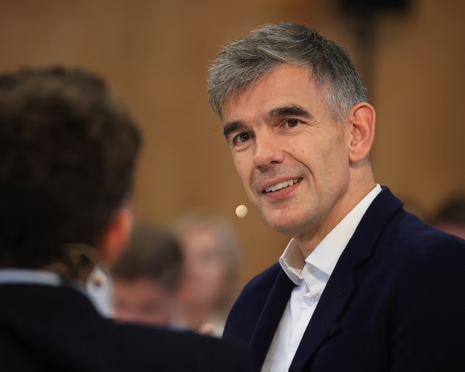
The British Broadcasting Corporation has officially entered a new era by appointing a veteran tech leader to its top position. Matt Brittin, the former president of Google for EMEA, has been named the next BBC director general today. This significant move signals a major shift in how the corporation intends to handle its future funding and technology. Brittin replaces Tim Davie at a time when the broadcaster faces intense pressure from both the government and global rivals. The board confirmed his appointment after a lengthy discussion on Thursday afternoon to find a suitable leader.
Matt Brittin is a familiar face in the corporate world but a newcomer to public service broadcasting roles. He spent many years at Google where he managed complex operations across several continents and various different markets. His background as a former Olympic rower suggests he possesses the stamina needed for this demanding public role. He is also known to be a dedicated fan of the long-running science fiction series Doctor Who. This personal touch might help him connect with the loyal audiences who cherish the BBC’s creative history. However, his primary mission will be to navigate the upcoming renewal of the Royal Charter with ministers.
The choice of a tech executive reflects the changing habits of media consumers across the United Kingdom. Traditional television viewing is declining as younger audiences move toward streaming platforms and social media for their news. Brittin is expected to use his digital expertise to modernize the corporation and its many digital services. He understands how global algorithms work and how to keep content relevant in a very crowded market. The BBC believes his experience with high-profile transformation will be an asset during these fast-changing times. He will need every bit of that experience to balance the books and satisfy the government.

There are concerns within the corporation regarding his lack of direct experience in high-level editorial decision making. The BBC often finds itself at the centre of national controversies that require swift and sensitive editorial judgment. To address this, the board is expected to create a new role for a deputy director general. This second-in-command will likely be a veteran journalist or a producer with deep roots in news. This structure allows Brittin to focus on strategy and technology while an expert handles the editorial output. A new head of BBC News will also be appointed shortly to strengthen the senior leadership team.
In his first statement, Brittin expressed his excitement about serving such a uniquely British and historic institution. He noted that the world is currently complex and fast-changing which makes a thriving BBC more important. He described the corporation as a 100-year-old asset that has always led the way in creative storytelling. Brittin believes this is a moment of both real risk and incredible opportunity for the public broadcaster. He wants the organization to have the energy to reach audiences wherever they happen to be watching. His goal is to build on the existing trust while confronting modern challenges with a lot of courage.
Samir Shah, the current chair of the BBC, praised the new appointee for his history of leadership. Shah highlighted Brittin’s ability to lead complex organizations through periods of massive and difficult internal and external change. The recruitment process was notably difficult as several high-profile candidates decided not to apply for the position. Many experts believe that leading the BBC has become one of the hardest jobs in British public life. The intense scrutiny from the press and constant political attacks have made the role less appealing to some. Despite these hurdles, Brittin emerged as the clear frontrunner to take over the reigns of the corporation.
The outgoing director general, Tim Davie, left his post following a series of highly contested claims of bias. These allegations were raised by a former external adviser and sparked a wider debate about impartiality at the BBC. Tensions also rose after the broadcaster apologized for its editing of a speech made by Donald Trump. The former US president decided to sue the corporation over the matter, claiming his words were taken out of context. Trump recently launched a fresh attack on the broadcaster during a Republican fundraiser held on Wednesday night. He accused the organization of being crooked and suggested they needed to be taught a very stern lesson.
Brittin will now have to manage these international political tensions while also identifying major cost-cutting measures at home. The BBC is currently in the middle of difficult negotiations with the government regarding its future funding model. It is widely expected that he will have to make very tough decisions about staffing and original programming. The traditional licence fee model is under more pressure than ever before as people switch to other services. Many households are choosing not to pay the fee, which has created a significant hole in the budget. The leadership has been pushing for a reformed fee that might see more homes paying less.
The professional history of the new BBC director general at Google will be vital for future partnerships. The corporation is looking to save costs by launching a dedicated technology division to streamline its internal operations. There is also a strong desire to forge a more productive relationship with YouTube in the coming years. YouTube has become incredibly influential and now commands a massive share of the total viewing time in Britain. Interestingly, televisions have now replaced mobile devices as the most common way for people to watch YouTube content. This shift brings the tech giant into direct competition with traditional broadcasters for the living room screen.

Media regulators and government ministers are pushing for public service broadcasters to have more prominence on digital platforms. They want to ensure that high-quality British content is easy for viewers to find on apps like YouTube. While these platforms offer a way to reach new people, there are fears about giving tech giants power. Some insiders worry that placing too much content on external sites might weaken the BBC’s own digital platforms. Brittin will need to use his insider knowledge of the tech world to strike the right balance here. He must protect the independence of the BBC while embracing the tools of his former employers.
The appointment also means that the BBC has still never been led by a female director general since 1922. Several highly qualified women were considered favourites for the role but ultimately chose to stay in the private sector. Charlotte Moore, a former chief content officer, was one of the names frequently mentioned by media industry analysts. Jay Hunt of Apple TV and Alex Mahon formerly of Channel 4 also decided not to pursue the job. This left the field open for Brittin to secure the position after his recent sabbatical from the corporate world. He described his time away from work as a mini gap year before starting this challenge.
Brittin originally began his professional career as a consultant before moving into the world of traditional media publishing. He worked briefly for the company now known as Reach before joining Google in the year 2007. Much like his predecessor, he is a vocal advocate for the potential benefits of using artificial intelligence. He has previously urged the television industry to learn from technology rather than being afraid of its rapid growth. His background at the Guardian Media Group also gives him some insight into the world of British journalism. Now, the public will watch closely to see if a tech leader can save a national treasure.
Related News:
 Reeves Faces Setback as Labour May Miss Homes Target
 Trump’s UK Ambassador Urges North Sea Drilling to Strengthen US Ties
 ABF May Split Primark from Food Division Amid Tough Market
 M&S Profits More Than Halve After Cyber-Attack
 Tony Blair think tank warns Rachel Reeves must cut taxes if manifesto broken
 Oprah enjoys Meghan’s jam on English muffins
 Millionaires group urge Reeves to introduce wealth tax to ‘lift kids out of poverty’
 UK toy market enjoys bumper year as ‘kidults’ fuel demand
 Global markets drop amid tech sell-off and China slowdown
 PM Highlights UK Business at G20 in South Africa
 Mossmorran Plant Closure Hits Cowdenbeath Hard
 UK Taskforce Unveils Plan to Streamline Nuclear Reactor Rules
 Steel billionaire Lakshmi Mittal reportedly leaves UK
 Starmer Says Labour’s Economic Plan Needs Years to Deliver
 Virgin Media Fined £23.8m Over Telecare Safety Failures
 Rising Water Bills Lift Troubled Thames Back to Profit
 Sainsbury’s CEO leads business honours in New Year list
 Starmer Faces Parliamentary Battles Over UK-EU ‘Reset’ Plan
 Phoenixism Costs UK Taxpayers Millions in Recruitment Sector
 ScottishPower Tops List of Worst UK Energy Suppliers
 City & Guilds pay surge sparks backlash amid £22m cuts
 UK Government Borrowing Drops to £11.6bn in December
 AI job losses UK: Britain faces sharper employment shock
 Most young adults in UK fear uncertain jobs and economic future
 Royal Mail delivery delays affect 16 million during Christmas
 UK Housing Market Shows Early Recovery Signs
 UK economy struggles as growth stalls at 0.1% in late 2025
 Bank of England Urged to Cut Rates to Spur Growth
 UK Unemployment Rate Climbs to 5.2% Peak
 UK shelves £110m border project amid trade strain
 UK Inflation Surprise Sparks Early Rate Cut Hopes
 Progress on gender equality at top UK firms ‘achingly slow’
 Strong Rebound for UK Housing Market Sees 6% More Homes
 Reeves Must Back Defence Plan or Face Dismissal, Says Unite Chief
 Switching Energy Deal Can Save £200 as Price Cap Falls
 OBR Reform Row Deepens Before Spring Forecast
 UK Hotel Data Sharing Probe Shakes Global Chains
 Rachel Reeves Faces Middle East Conflict Test
 Grocery Inflation Rises Amid War Fears
 Peak Greggs fears as profits tumble sharply
 BrewDog sold Highland estate for knockdown price after abandoning reforestation plans
 Yorkshire Water Funding Sparks Debate Amid Fines and Pay Row
 New £10bn rescue plan offered for Thames Water
 UK Energy Reform Could Cut Bills by £200
 Rising Costs Force Families to Rethink Days Out
 Hospitality Sector Teeters on Brink as Costs Surge
 Iceland Boss Offers Role to Sacked Waitrose Employee
 Student Loan Interest May Rise Despite 6% Cap
 Major Housebuilder Cuts Land Buying Amid Global Unrest
 City & Guilds Sale Sparks Fees and Pay Uproar
 Heathrow Chair Seeks Peace to Save Third Runway
Carillion Executives Banned After Reckless Misconduct
Heathrow Chair Seeks Peace to Save Third Runway
Carillion Executives Banned After Reckless Misconduct
 Labour Faces Internal Pressure for Bold Economic Shift
 Millionaires Back Higher Taxes to Save UK Public Services
 Crypto Tycoon Enters UK Rich List at Number Six
 UK Firms Freeze Spending as Iran Conflict Bites
 Summer Shock: British Energy Bills Set for Grim July Hike
 Reeves to Fast-Track Clean Energy Amid Iran Crisis
 M&S Boss Slates Food Price Caps as ‘Preposterous’
 UK Pushes for New EU Goods Trade Deal
 UK Urged to Build EU Rejoin Consensus, Says Miliband
 Tube Strike Brings Capital to a Standstill Over Shift Disputes
 BP Stands Firm on Amanda Blanc Amid Boardroom Storm
 Steel Tensions Rise Between United Kingdom and European Union
 UK House Prices Drop For Third Month Due To War Fears
 Top Chefs Back Andy Burnham to Save UK Hospitality Sector
 UK Steel Crisis: Jingye Demands Payout After Takeover
 Flutter to Cancel London Stock Exchange Share Listing
 AI Scams Push UK Investment Fraud Past £220m
 Whitehall Steps In: The Battle Over Thames Water Deepens
 Thames Water Nationalisation Pushes Closer After Rescue Objected
 John Lewis Invests £20m in Glasgow Store Upgrade
 Tesco Sales Growth Halves as Middle East Conflict Bites
 Andy Burnham Enlists Economic Heavyweights for Leadership Bid
 Tories Clinch Shock Victory in Aberdeen South Byelection
 Rethinking the Blueprint for Youth Employment in Britain
 Sainsbury’s Boss Optimistic As Grocery Inflation Eases
 UK Households Suffer Squeeze As Disposable Incomes Drop
 Bank of England Eases Rules Despite Rising AI Risks
 BBC Faces Real Jeopardy as Licence Fee Income Declines