Published: 01 April 2026. The English Chronicle Desk. The English Chronicle Online.
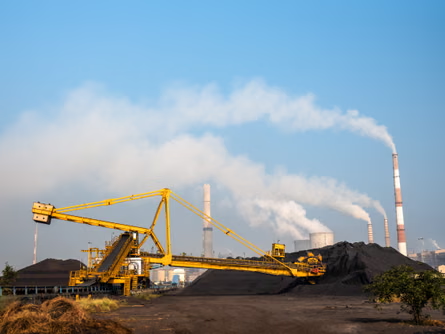
The geopolitical landscape of the Middle East has shifted into a period of intense volatility. This instability has sent shockwaves across the vast continent of Asia during the current spring season. Governments are now scrambling to secure their national power grids against massive and sudden energy shortfalls. The escalating conflict between the United States, Israel, and Iran has choked vital global trade routes. Consequently, many Asian nations are now forced to lean heavily on coal for their survival. This reliance on the world’s dirtiest fossil fuel marks a significant and deeply troubling trend. Environmentalists are watching with growing alarm as years of green progress seem to be stalling. The air quality in major industrial hubs is already beginning to show signs of rapid decline. Leaders argue they have no other choice but to keep the lights on for citizens. This desperate pivot back to coal represents a major setback for global carbon reduction goals.
Across the diverse region from Bangladesh to South Korea, the energy landscape is changing fast. Imported energy supplies have plummeted due to the total disruption of traditional Middle Eastern routes. South Korea has officially announced a significant delay in shutting down its old coal plants. Their government has also lifted previous caps on the total electricity generated from coal sources. In Thailand, officials have ordered increased output at the largest coal-fired facility in the country. The Philippines has taken the drastic step of declaring a full national energy emergency today. They plan to boost operations at every available coal-fired power plant to meet high demand. These decisions reflect a region-wide panic over the stability of modern electrical infrastructure systems. The immediate need for power is currently outweighing long-term commitments to the global environment. Each nation is fighting to prevent total economic collapse as the regional war continues.

The situation in South Asia is particularly dire as the heat of summer fast approaches. India currently relies on coal for nearly three-quarters of its total national power generation. New Delhi has ordered all coal plants to run at their maximum possible capacity now. They have also mandated that utility companies must avoid any planned maintenance or outages. Bangladesh is also following this path by increasing its domestic coal-fired power generation significantly. The country has also ramped up imports of coal-fired electricity from its neighboring regional partners. These nations face a choice between the risk of blackouts or the certainty of pollution. Most have chosen to prioritize the immediate needs of their growing and hungry populations. The logistical challenges of moving vast amounts of coal are also testing local transport networks. Trains and ships are working around the clock to feed the massive furnaces of industry.
The root of this crisis lies in the sudden disappearance of liquefied natural gas supplies. For years, natural gas was promoted as a clean bridge toward a greener future. Many experts now argue that exported gas actually emits more greenhouse gas than coal. Regardless of its carbon footprint, gas has become an essential fuel for Asian industrial growth. It powers everything from heavy manufacturing to the vital production of agricultural chemical fertilizers. Demand for gas in Asia was expected to double over the next quarter century. That optimistic forecast has been shattered by the effective closure of the Hormuz Strait. This narrow waterway is the transit point for one-fifth of all global gas shipments. Recent strikes on a major export facility in Qatar have made the shortage worse. This damage will likely affect the global energy industry for many years to come.
The speed of this market collapse has stunned even the most seasoned energy analysts. Within just four weeks, a healthy global surplus has turned into a severe deficit. This shift leads to massive price spikes and very real physical shortages of fuel. Countries with domestic coal reserves are using them as the fastest replacement for gas. Coal is seen as the cheapest way to fill the gap left by missing LNG. However, some nations like India are also trying to speed up their renewable projects. New Delhi has fast-tracked the commissioning of new wind power plants and battery systems. These efforts aim to provide some relief, but they cannot replace coal overnight. The transition to green energy requires infrastructure that takes a long time to build. In the meantime, the smoke from coal chimneys continues to fill the Asian skies.
Experts at King’s College London suggest this crisis should be a major turning point. They argue that the impact of coal on human health is truly devastating and disastrous. Decades of research have proven that coal worsens climate risks and creates toxic air. The current crisis highlights that renewable energy is essential for broader national energy security. Nations with a substantial amount of renewable capacity are proving to be much less vulnerable. Homegrown energy sources provide a shield against the unpredictable shocks of international fossil fuel markets. Governments are urged not to let this return to coal become a permanent fixture. Investing in fossil fuels is rarely a short-term fix due to the long-term infrastructure. These investments can lock a nation into a high-carbon path for many decades to come. Breaking the cycle of fossil fuel reliance is now a matter of national survival.

The human cost of the energy shortage is becoming visible in everyday Asian life. Countries are searching for any possible way to reduce their total daily energy consumption. The Philippines and Sri Lanka have introduced four-day work weeks for their government staff. Vietnam is actively encouraging its citizens to work from home to save office power. In Bangladesh, universities have closed early to bring forward the important Eid holidays. The government there has also introduced a series of planned and frequent rolling blackouts. Pakistan has moved its entire school system to remote online teaching to save energy. These measures reflect a society that is struggling to function under extreme resource pressure. Families are learning to live with less as the cost of living continues to rise. The comfort of modern life is being traded for the basic necessity of survival.
Repairing the global supply chain for liquefied natural gas will take a very long time. Many people hope for a swift ceasefire and a quick return to normal life. However, the physical damage to energy infrastructure in the Middle East is quite extensive. It will take years of engineering and massive investment to restore previous export levels. This means the current reliance on coal is not a temporary or fleeting phase. Asia must navigate a long period of energy scarcity with very limited fuel options. The environmental consequences of this shift will be felt for several generations to come. Scientists warn that the carbon released today will linger in the atmosphere for centuries. This conflict has rewritten the energy map of the world in a few weeks. The path forward for Asia is now paved with coal and uncertainty. Only a massive shift toward domestic renewables can truly secure the future of the region.
As the sun sets over the coal plants of Asia, the global community watches. The promises of past climate summits feel distant in the face of this reality. Economic growth requires energy, and currently, coal is the only fuel available in bulk. The tension between survival and sustainability has never been more obvious or more painful. Leaders must balance the immediate demands of the present with the needs of the future. The choices made in the coming months will define the next century of climate. For now, the roar of coal furnaces remains the dominant sound of Asian industry. It is a loud reminder of how fragile our global energy systems remain. The hope is that this crisis finally forces a permanent shift toward green power. Until then, the world must hold its breath as the smog begins to rise. The road back from this coal-heavy era will be long and difficult for all. Asia stands at a crossroads, waiting for the winds of change to blow.
Related News:
 BBC to Apologise Over Edited Trump Speech Amid Backlash
 Britain deploys RAF specialists to assist Belgium with drone threats
 Palace May Restore Hyphen to Andrew Mountbatten-Windsor’s Name
 Greene Pushes Epstein Files Amid Trump Fallout
 December Run-Off in Chile as Election Produces No Winner
 Zelenskyy Signs Fighter Jet Deal Amid Russian Drone Attacks
 Canada Passes Carney’s First Budget in Tight Parliamentary Vote
 Shadow Fleet at Sea: Europe’s Battle Against Illicit Oil Shipping
 Tiny Curacao Makes History as Smallest Nation to Reach World Cup
 Deadly Russian Strikes Hit Western Ukraine, 20 Killed in Ternopil
 Ukraine Peace Plan: Zelensky Ready for Dialogue
 Royal Navy Shadows Russian Warships Entering the Channel
 US Suspends Afghan Immigration After White House Shooting
 Georgians Defy Government Crackdown After Year of Protests
 Tokyo court rules Japan’s same-sex marriage ban constitutional
 ‘Extinct’ Antelope Returns to Sahara, Bringing Hope
 American Mother Extradited From UK to U.S. on Murder Charges
 Irish Beach Tragedy: Irish Drown at Whitehaven Beach in Australia
 Sanctioned oil tankers sail Channel amid Russia scrutiny
 US and UK Withdraw Personnel as Middle East Tensions Rise
 Half the World’s Largest Cities Face Rising Water Stress
 Pentagon Signals Reduced Role in Deterring North Korea
 UK and US Drop in Global Corruption Index Rankings
 SA Police Intensify Search in Gus Lamont Case
 Canberra Poster Seizure Sparks Free Speech Row
 Evo Morales Returns After Mysterious Absence
 El Mencho Killed as Mexico Faces Violence
 Australian children in Syria deserve safe return
 Greenpeace $345m Ruling Sparks Appeal Battle
 Jacinda Ardern Moves To Australia Following Her US Fellowships
 Jacinda Ardern Move Sparks Kiwi Reflection
 Middle East Airspace Crisis Strands Thousands
 Nick Greiner Warns Over Election Review Fallout
 Kelly Wilkinson Inquest Reveals Bail Failure
 Tehran Strikes Mark War’s Most Devastating Night
 Injured Mojtaba Khamenei Elevated as Iran Leader
 Gordon Brown urges court for crimes against children
 Gaza Detainee Abuse: Israel Drops Charges Against Soldiers
 The Kill Line: A Shifting Vision of the American Dream
 Oil Prices Jump After Trump Claims Iran Oil Hub Destroyed
 Pakistan Targets Militant Hideouts in Afghanistan
 Lebanon Ground Campaign Raises Occupation Fears
 UK Condemns Reckless Iranian Missile Threats on Global Bases
 ICE detention warning sparks fear among immigrants
 Air Canada CEO Faces Outcry Over Recent Language Misstep
 Extreme Weather: Europe Shivers as Cyclone Narelle Hits
 Artemis II: Humanity Returns to the Moon After Decades
 Nuns of Schloss Goldenstein Move Closer to Staying Home
 Italian Town Buys Mussolini Villa to Keep Away Fascist Fans
 Report Says Pezzullo Acted ‘Recklessly’ in Dealings
 Trump and Tehran Find Common Ground in Landmark Ceasefire
 Trump Employs Nixon’s Madman Theory Amid Iran Crisis
 Singapore Pledges Stable Fuel Supply for Australia
 Suspected Plot Targets Pipeline Before Hungary Vote
 Reeves Slams Trump Over Iran War Lack Of Exit Plan
 Learner Driver Charged After Expo Tragedy
 Coalition pushes fossil fuel phaseout plan
 Trump approval plunges amid Iran war fears
 US ‘Narco Boat’ Strikes Draw Global Outcry
 FIFA Confirms Global Ban for Benfica Star Prestianni
 US and Mexico Face Heatwave as Floods Batter South Africa
 Putin Signals War End as Russian Momentum Stalls
 Australia Welcomes the Iconic Michelin Guide
 Scepticism and tight security as Beijing braces for Trump
 Philippine Senator Flees After Days Under Senate Siege
 Tensions Flare as Israeli Nationalists March in Jerusalem
 High Street Crisis: Fears Grow Over Post Office Closures
 Xi Hosts Putin for Talks Right After Trump Visit
 Fragile Truce Shattered as Violence Escapes Diplomatic Control
 Oil Markets Face ‘Red Zone’ Threat Amid Iran Crisis
 Pope Meets Families in Italy Toxic Waste Zone
 Discontent grows around Putin amid war strain
 US Strikes Iranian Sites Amid Shaky Ceasefire Talks
 Starmer Leadership Under Pressure After Setbacks
 Papal Visit Offers Political Lifeline to Spanish Premier
 Aukus Deal Facing Fierce Backing and Historic Criticism
 Thai Princess Bajrakitiyabha Passes Away at 47
 Le Pen to Run for President Despite Embezzlement Conviction
 Ukraine Creates Long-Range Strike Command
 Houthis Strike Saudi Arabia as Middle East Tensions Rise