Published: 03 April 2026. The English Chronicle Desk. The English Chronicle Online.
The deep silence of the cosmos was broken by a powerful roar of engines. Four brave explorers have now successfully departed from the stable orbit of our home planet. They are currently hurtling through the vast darkness toward the pale glow of the moon. This historic maneuver represents a monumental leap for modern space exploration and global scientific unity. It has been over five decades since humans last ventured into this deep celestial territory. The crew of Artemis II is now writing a bold new chapter for humanity. Their spacecraft executed a flawless engine burn to escape the lingering grasp of Earth’s gravity. This critical moment has officially committed the mission to a historic lunar flyby sequence.
The intense thrust from the Orion capsule was comparable to a high-performance racing car. It accelerated with incredible force to set the correct trajectory for the long journey. Experts at mission control in Houston monitored every single data point with great precision. The engine fired for nearly six minutes to provide the necessary velocity for deep space. This propulsion has now placed the crew on a direct path toward our satellite. The astronauts reported that the sensation of the burn was smooth and very controlled. Commander Reid Wiseman confirmed that all systems are functioning exactly as the engineers intended. The atmosphere inside the cabin remains one of focused excitement and very professional calm. They are now traveling across a distance that few have ever dared to cross.

The journey to the moon will take approximately three full days of constant travel. This timeline echoes the legendary voyages of the Apollo era from the previous century. However, the technology guiding this modern crew is significantly more advanced and highly capable. The Orion spacecraft serves as a tiny island of life within the freezing vacuum. It provides everything the four pioneers need to survive and thrive during their mission. The crew members are currently settling into the daily rhythms of life in microgravity. They have already performed a series of vital checks on the primary flight systems. Every switch and sensor must be verified to ensure the safety of the crew. This is the first time that this specific hardware has carried a human cargo.
NASA officials described the successful departure as a triumph of modern engineering and design. The massive Space Launch System rocket performed its duties with nearly perfect mechanical accuracy. It lifted the heavy capsule through the atmosphere during a spectacular Florida morning launch. Thousands of spectators gathered along the coast to witness the fire and the smoke. The sight of the orange and white rocket rising was a powerful symbol. It represented the collective dreams of millions who look toward the stars for inspiration. Now that the engine burn is complete, the crew has reached a milestone. They are currently locked into a specific path known as a free return trajectory. This clever orbital mechanic uses the gravity of the moon to swing them home.
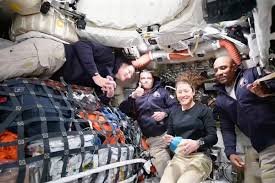
If any technical issues arise, the moon itself will pull them back toward Earth. This safety feature provides peace of mind for the families watching from the ground. The astronauts also have specialized suits designed to protect them from any sudden leaks. These advanced garments can maintain life support for nearly an entire week if needed. Such precautions are necessary when venturing so far from the reach of quick rescue. The crew includes Reid Wiseman, Victor Glover, Christina Koch, and the Canadian Jeremy Hansen. Each individual brings a unique set of skills and a wealth of experience. Their presence on this mission breaks several long-standing barriers in the history of flight. This crew features the first woman and the first person of color on such a trip.
Jeremy Hansen has also become the first non-American to venture toward the lunar surface. His inclusion highlights the international cooperation that defines the ambitious Artemis program today. The astronauts spent their initial hours in space fixing a few minor technical glitches. A small issue with the communication system required a quick and clever software patch. They also dealt with a malfunctioning toilet which is a common challenge in space. These small hurdles did not dampen the spirits of the highly motivated flight crew. They began their second day in space by playing a very upbeat song. The choice of music was a playful nod to their upcoming flight milestones. It helped to set a positive tone for the challenging tasks ahead of them.
Physical fitness is a top priority for the team during the ten-day mission. They must use a specialized flywheel device to keep their muscles strong and healthy. Without the resistance of gravity, the human body can weaken quite rapidly in space. Each member of the team dedicates thirty minutes every day to their exercise routine. This discipline ensures they will be healthy when they finally splash down in water. The ultimate goal of this specific mission is to prepare for future landings. NASA hopes to put boots back on the lunar soil by the year 2028. This would involve building a permanent base for long-term scientific research and discovery. Such a facility would serve as a stepping stone for future trips to Mars.

The current race to the moon is also fueled by significant global competition. China has expressed a strong desire to land its own astronauts by 2030. This rivalry has helped to mobilize resources and speed up the development process. NASA Administrator Jared Isaacman noted that competition often brings out the very best work. It pushes engineers and scientists to find creative solutions to very difficult problems. The political landscape in Washington also places a high pressure on the program. There is a strong desire to see results before the end of the decade. Some experts worry that the timeline is perhaps a bit too aggressive for safety. They point to the heavy reliance on private companies for key landing technologies.
Despite these debates, the crew remains focused on the beauty of their current surroundings. They recently held a press conference to share their experiences with the entire world. Commander Wiseman spoke eloquently about the view of the Earth from deep space. He described seeing the entire globe from the north pole to the south. The crew was able to witness the glowing northern lights from high above. Such a perspective often changes the way people think about our small planet. It reinforces the idea that we are all part of one single family. The astronauts felt a profound sense of awe as they watched Africa go by. They are now moving further from home than any human being in history.
The spacecraft will eventually reach a distance of over two hundred thousand miles away. At that point, the Earth will look like a tiny blue marble in darkness. The success of Artemis II will prove that we are ready to return. It validates years of hard work, billions in investment, and countless hours of testing. The world continues to watch as these four individuals move closer to the moon. Their journey is a reminder of what humanity can achieve through courage and teamwork. Every mile they travel brings us closer to a new era of understanding. The English Chronicle will continue to provide updates as the mission progresses further. For now, the stars are the only companions for the brave Orion crew. They fly toward the future with the hopes of an entire planet behind them.
Related News:
 Indonesia blocks Grok chatbot over sexual content risk
 The Woman Guarding Earth From the Threat of Asteroids
 California Defies Trump With Strict New AI Standards
 Virgin Trains Moves Closer to Challenging Eurostar Monopoly
 UK Bans Fake Numbers: Scammers Lose Their Trick
 Vibe coding’ named Collins dictionary’s word of the year
 Patients to Test Health at Home to Ease NHS Winter Pressure
 Britain deploys RAF specialists to assist Belgium with drone threats
 Stop using ChatGPT to write speeches, AI minister tells MPs
 Northern Lights may illuminate UK skies this week
 New laws to bolster UK’s defences against cyber attacks on NHS, transport and energy
 Working-Class Men with Prostate Cancer Left Behind by NHS
 New AI tool could cut wasted efforts in organ transplants
 How Cultures Interpreted the Aurora Through History
 Sundar Pichai Cautions on AI Hype and Market Risks
 Google Chief Urges Caution: Don’t Trust AI Blindly
 US Judge Says Meta Did Not Hold Illegal Social Media Monopoly
 Healthy Habits in Your 30s That Boost Life in Your 70s
 Coffins Now Too Large to Cremate Amid Rising Obesity Crisis
 AI Actress Creator Says Tilly Norwood Won’t Replace Actors
 Capitol Attack Anniversary Sparks Deep Political Divide
 Saudi Officials Report Zubaidi Flee Before Yemen Peace Talks
 UK Targets in New York Bomb Threat Hoax: Man Jailed
 Gambia Supreme Court Hears Case to Overturn FGM Ban
 Google Removes Some AI Health Summaries Over Safety Concerns
 Trump targets Iran trade with 25% tariff warning
 US Clears Nvidia AI Chip Sales to China in Policy Shift
 Amazon Milton Keynes closure sparks concern for UK warehouse workforce
 US Senate rejects resolution limiting Trump military powers
 Gulf states warn Trump Iran strikes risk wider Middle East war
 Machado Trump medal gesture reshapes Venezuela power struggle
 Geopolitical football: Iran, Trump and the World Cup clash
 Canada-China trade gains momentum in new strategic partnership
 Astronomers Prepare for First-Ever Movie of a Black Hole
 Syria President Declares Victory as Ceasefire Reached with SDF
 MPs warn AI financial risks threaten UK stability
 Shinzo Abe’s killer receives life sentence in Japan
 China General Under Investigation Amid Leadership Purge
 Philippines ferry disaster leaves 15 dead, dozens missing
 Pornhub blocks new UK users over age checks dispute
 Amazon mistakenly signals new global layoffs to employees
 AI breast screening cuts later cancer diagnoses by 12%, study finds
 UK Launches First Rapid-Charging Battery Train This Weekend
 UK New Car Discounts Near £6,000 as Prices Are Slashed
 Cambridge Faces Scrutiny Over Arms Investment Transparency
 Most Statin Side-Effects Are Not Caused by Drugs, Study Confirms
 Epstein UAE Emails Shake British Royal Andrew’s Legacy
 Christchurch gunman seeks to vacate guilty plea
 BT Names New Openreach Chief Amid Major Fibre Expansion
 Infantino Faces Russia Threat and Trump Concerns at Uefa Congress
 Tech Trends Set to Transform Life in 2026
 Concerns rise for Canberra boy amid Iran detention fears
 Indian University Kicked Out of AI Summit for Claiming Chinese Robot Dog as Its Own Invention
 How Ancient Scottish Rocks Challenge ‘Snowball Earth’ Theory
 Stewart Brand on Musk, Bezos and a Life of Long Thinking
 Facial Recognition Error Leads to Wrongful Arrest in Milton Keynes
 Social Media Trial: Woman Says Addiction Began at Six
 Ukraine Sends Drone Experts to Defend US Bases in Jordan
 Revealed: UK AI Push Faces Phantom Investment Claims
 Ministers Urged to Act Faster on Deepfakes Threat
 Abramovich Chelsea Sale Cash Faces Jersey Probe
 Tesla Enters British Energy Market Following Ofgem Approval
 Social Media Giant Trial Reaches Final Jury Decision
 Yvette Cooper: UK Must Follow Principles, Not US Pressure
 Cern Prepares First-Ever Antimatter Transport Test
 The Molten Mystery of L98-59d: A New Class of Liquid Planet
 Slovenia Election: A Nation at a Crossroads
 Jury Rules Meta and YouTube Liable for Addictive Design
 House of Lords Backs Landmark Social Media Ban for Youth
 Charity Watchdog Warns Alan Turing Institute Over Conduct
 Saudi Arabia Urging US to Keep Up Iran Attacks
 IMF Predicts Global Economic Crisis Due to Gulf Unrest
 Germany Grapples With AI Abuse Following TV Star Scandal
 Exiled Tycoon Warns of New Russian Attacks on UK Soil
 LA 2028: Millions of Affordable Olympic Tickets Announced
 Trump Slams Europe as Transatlantic Tensions Boil Over
 Inside the Deceptive Machine: A Former Producer Speaks Out
 Italy Faces Third Successive World Cup Absence After Loss
 Spain Faces Backlash Over Xenophobic Chants in Egypt Draw
 A Global Voice For Justice: Stephen Lewis Dies At Age 88