Published: 06 April 2026. The English Chronicle Desk. The English Chronicle Online.
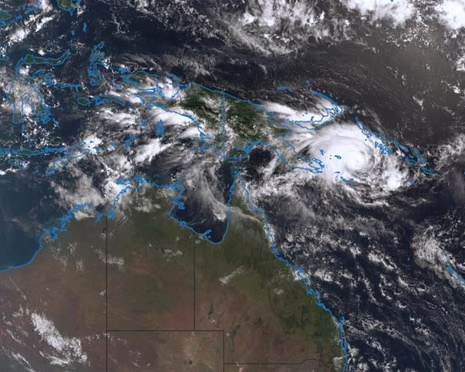
The tropical waters of the Coral Sea are once again stirring with a familiar and frightening intensity this week. Residents across far north Queensland find themselves looking toward the horizon with a deep sense of weary apprehension today. Recent reports from the Bureau of Meteorology suggest that a new threat is looming quite large over the coast. Severe Tropical Cyclone Maila is currently gathering significant strength as it moves through the warm Solomon Sea waters. This developing weather system threatens to strike the region just three weeks after another powerful storm hit. The memory of Severe Tropical Cyclone Narelle remains very fresh for many families living in the north. That previous storm left a trail of destruction that communities are still working hard to repair now.
On Monday morning the bureau confirmed that Maila was located roughly 590 kilometres west of Honiara city. The storm is currently classified as a category three system with very dangerous and powerful wind gusts. Experts have recorded these gusts reaching speeds of up to 185 kilometres per hour near the eye. Sustained winds are hovering around 130 kilometres per hour as the system slowly rotates in open water. For several days the storm has been performing strange circles between Papua New Guinea and the Solomon Islands. This erratic movement has made it quite difficult for many meteorologists to predict its exact future path. However the latest atmospheric data suggests a significant shift in its direction will occur very soon. Most models indicate that the storm will begin a south-westerly turn toward the Australian coastline midweek.

Helen Reid from the Bureau of Meteorology provided a sobering update regarding the potential for landfall soon. She noted that the most likely scenario involves the storm crossing the coast near Cape York. This specific area is still reeling from the impact of the previous category four storm last month. It would be a cruel blow for a region that has not yet finished basic cleanup. While the Cape York Peninsula remains the primary target researchers are not ruling out other paths. There is a possibility that the cyclone could swing further south toward more populated urban centres. Cities like Cairns and Townsville are being advised to monitor the situation very closely this week. Conversely there is also a slight chance that the system might miss the coast entirely later.
The uncertainty surrounding the storm is a major concern for emergency services and local residents alike today. Forecasting the exact strength and path of a cyclone involves many complex and shifting environmental variables. Reid emphasized that the jury is still out on exactly where the center will make landfall. The bureau expects the system to intensify into a category four storm within the next few days. This would mean sustained winds reaching between 160 and nearly 200 kilometres per hour at the core. Such force is capable of unroofing houses and causing widespread long-term damage to the local power grid. If it maintains this intensity it will pose a severe threat to both life and property. The warm ocean temperatures are currently providing the perfect fuel for this rapid and dangerous intensification.
Interestingly the same warm waters that powered Cyclone Narelle are now feeding this new atmospheric giant as well. Ocean temperatures have not had sufficient time to cool down since the last major storm passed through. The sea remains rich with the thermal energy required to sustain such a massive weather event now. Narelle was the strongest storm of the season so far when it struck on March twentieth. It carved a devastating path through remote areas and made landfall in three different Australian states. Such a feat has not been recorded by meteorologists in more than twenty-one long years until now. The fact that Maila follows so closely behind is a testament to the current climate conditions. Residents are finding it difficult to find the resources needed to prepare for another major hit.
Historical records show that severe cyclones in the month of April are somewhat rare for this region. The last time a major April storm crossed the Queensland coast was back in the year 2014. That system was known as Severe Tropical Cyclone Ita and it made landfall near the town of Cooktown. Like the current threat Ita brought heavy rainfall and damaging winds to the far north Queensland area. The current situation serves as a stark reminder of the volatile nature of the tropical storm season. People living in coastal communities are being urged to update their emergency kits and plans immediately. Local councils are also working to ensure that drainage systems are clear of any recent storm debris. Preparation is the only defense against the unpredictable power of a severe category four tropical cyclone.
The emotional toll on the community is becoming more apparent as the weekend forecast remains quite grim. Many farmers in the Cape York region are still assessing the damage to their crops from Narelle. Another hit could mean the total loss of harvests that have managed to survive the first round. Infrastructure such as roads and bridges may not withstand another massive surge of water and wind pressure. The bureau will continue to provide regular updates as the storm nears the Great Barrier Reef. Satellite imagery is being monitored every hour to catch any sudden changes in the storm’s central pressure. For now the people of Queensland can only wait and hope for a sudden change in direction. The next forty-eight hours will be critical in determining the true scale of the impending danger.

As the midweek approach begins the atmosphere across the north remains heavy with a sense of quiet dread. The sounds of hammers and saws are still echoing through many small towns as repairs continue daily. It is a race against time to secure properties before the winds begin to pick up speed. Authorities are reminding everyone to stay informed through official radio broadcasts and trusted online news platforms. Safety must remain the top priority for every individual and family in the potential path of Maila. Even if the storm weakens before landfall the expected rainfall could still cause significant flash flooding issues. The resilience of the Queensland people is legendary but this season is testing them like never before. Everyone is hoping for the best while preparing for the worst possible outcome this coming weekend.
In the coming days the turn toward the southwest will reveal the true intentions of this storm. If Maila continues to follow the current projections emergency evacuations may become necessary for some remote areas. The logistical challenge of moving people in the far north is always a significant and difficult task. Many communities are isolated by road even during moderate rain events due to the unique local geography. Helicopters and high-clearance vehicles are being placed on standby to assist with any urgent rescue operations. The government has promised that all necessary resources will be made available to those in the path. Despite the looming threat there is a strong sense of community spirit visible across the entire region. Neighbors are helping each other to clear yards and secure loose items that could become projectiles.
The scientific community is also watching this event with great interest due to its rare back-to-back nature. Having two severe category four systems strike the same area within a month is a statistical anomaly. It raises important questions about the long-term trends of tropical weather patterns in the southern hemisphere regions. For the average citizen however the focus remains purely on survival and protecting their homes and families. The beauty of the tropical north is often matched by its terrifying capacity for extreme weather events. As Monday draws to a close the eye of Maila remains over the deep blue sea. It is a calm before a potential storm that could rewrite the history books for this season. We will remain vigilant and continue to report on every development as this situation unfolds further.
Related News:
 Evacuations Ordered as California Wildfires Spread Fast
 Wildfires rage across Europe as hundreds arrested in France
 Dutch Nationwide Fireworks Ban Expected to Transform New Year Traditions
 Scotland’s Climate Plans Face Scrutiny Over ‘Science Fiction’ Targets
 Ocean Warming Drives Massive Marine Life Loss, Study Warns
 Tropical Flowers Shift Blooming Due to Climate Crisis
 UK Records Earliest Spring as Nature Awakens Fast
 Tragic End to Outback Search as Floods Claim a Life
 US Waste Crisis: Mexico Branded a Toxic Garbage Sink
 Cyclone Maila Intensifies to Category Five Strength
 Cyclone Vaianu Forces Mass Evacuations in New Zealand
 Broken Promises: Murray-Darling River Crisis Deepens
 Capitalism ‘Suicidal’, Warns Petro at Climate Summit
 The Lion Guard: How One Woman Heals the Zambezi Valley
 Record May Heat to Cold Front in Eastern Australia
 Ukraine strikes Tuapse as oil disaster worsens
 Stolen Hives: The Great Australian Bee Heist
 UN Faces Crucial Vote on Landmark ICJ Climate Ruling
 UK Faces Mass Water Shortages by 2055, Lords Warn
 Hope for mountain bongos returns to Kenya
 Outcry Over Kushner’s Albanian Resort
 Sydney Records Hottest June Since 1859 as Expert Warns New High a ‘Signature’ of Global Warming
 Southern Europe Reels as Wildfires Force Mass Evacuations
 UK Heatwaves Ignite Crisis of Sleep and Public Safety
 UK Seas Face Extreme Heatwave as Global Temperatures Surge
 Colombia’s Fight Over Fossil Fuels
 Europe Scorched as Record Heatwaves Grip the Continent
 Japan Bear Hunt: Serial Fridge Raider Sparks Panic
 Three-Quarters of England’s Riverbanks Still Off Limits
 ‘Extinct’ Antelope Returns to Sahara, Bringing Hope
 Friedman Uninvited From 2024 Adelaide Writers’ Week
 Spoof “Make America Go Away” Caps Rally Denmark Over Greenland
 Judi Dench Champions Fight to Save London’s Green Spaces
 New Zealand Covid Response Praised Despite Lingering Scars
 ‘Drinking from a Fetid Pond’: Superbug Genes in Lough Neagh
 Extreme Weather: Europe Shivers as Cyclone Narelle Hits
 The Price of Hubris: Trump, Netanyahu, and the ‘Easy’ War
 Trump and Tehran Find Common Ground in Landmark Ceasefire
 Own an Entire Australian Town for the Price of a UK Flat
 Melania Trump Denies Ties to Epstein and Ghislaine Maxwell
 Reeves Slams Trump Over Iran War Lack Of Exit Plan
 Kyiv and Odesa Mourn After Deadly Wave of Russian Strikes
 Medellín’s Green Revolution: A Global Climate Blueprint
 Trump’s Presidency: A House of Cards Collapsing?
 US Forces Seize Iranian Ship Near Hormuz Blockade
 Trump Starts $166bn Tariff Refund Process
 Investigation: Offshore Loans and Sanctions
 Prominent Voices Challenge Palestine Action Ban
 Cross-Border Crisis Shatters Fragile Afghan Peace
 Urban Flood Crisis: A Growing Threat to English Homes
 Coalition pushes fossil fuel phaseout plan
 The Burning Lens: An Iranian Artist’s Visual Resistance
 FIFA Confirms Global Ban for Benfica Star Prestianni
 One Nation Candidate’s Surprising Ties to Independents
 Putin Signals War End as Russian Momentum Stalls
 Romania’s Judicial Crisis: A System Under Siege
 Scepticism and tight security as Beijing braces for Trump
 Philippine Senator Flees After Days Under Senate Siege
 Secrecy Down Under: Albanese Faces FoI Scandal
 Tony Abbott Returns as New Liberal Party President
 Pope Meets Families in Italy Toxic Waste Zone
 Discontent grows around Putin amid war strain
 Teaching Machines Right From Wrong in the Digital Age
 Oman Defies US Pressure Over Strategic Strait of Hormuz
 Ex-CIA Agent Accused of $40m Gold Theft and Fake Spy Unit
 Aukus Deal Facing Fierce Backing and Historic Criticism
 Tragic Loss of Australian Sprinter Jemma Stapleton
 Trump Urged to Condemn UFC Fighter Over Obama Slurs
 Russian Tanker Captain Remanded in UK Court After Channel Seizure
 US Military Pacific Boat Strike Kills Three People
 US Courts Back Trump on Park Signage Removals
 Trump’s Mount Rushmore Speech: A Divisive Anniversary
 Britain’s Mini Fan Craze Sparks Major Waste Crisis
 Trump Swaps Planes Amid Iran Tensions
 US Chemical Accidents Rise as Protections Are Rolled Back
 Rotterdam Museum Honours Artist With Peanut Butter Floor
 UK Schools Struggle as Classrooms Top 40C
 Bangkok Nightclub Blaze Claims 30 Lives Amid Negligence Probe
 Yemen Accuses Iran of Violating National Sovereignty
 Houthis Strike Saudi Arabia as Middle East Tensions Rise