Published: April 10, 2026. The English Chronicle Desk.
The English Chronicle Online — Reporting on the frontlines of the global urban energy transition.
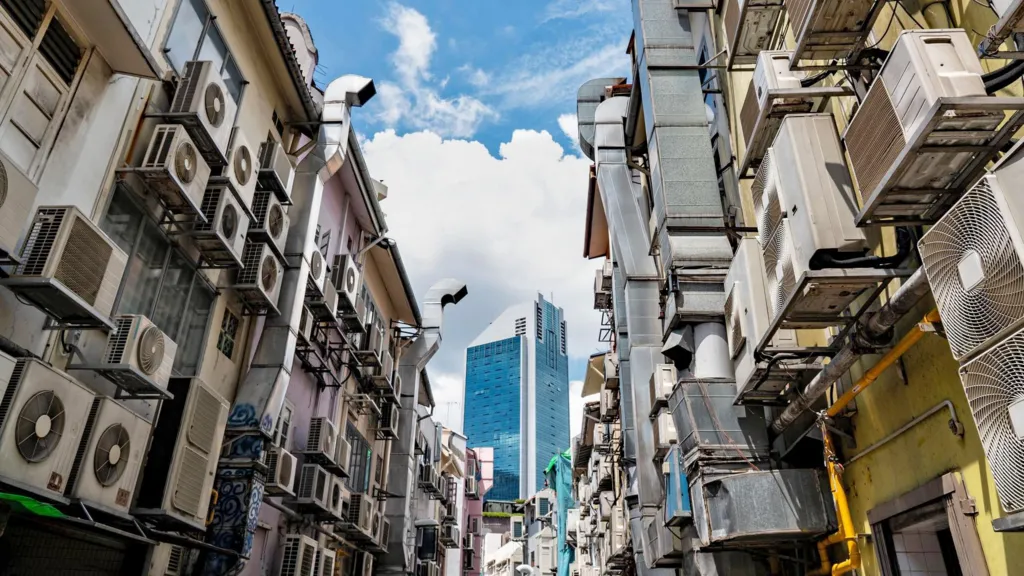
SINGAPORE — As the “seismic” disruptions to global gas supplies from the Middle East continue, the island nation of Singapore is facing a “tectonic” test of its most famous obsession: air conditioning. With over 95% of its electricity generated from imported natural gas—much of which is currently caught in the “logistical friction” of the Strait of Hormuz—the city-state is grappling with a “market shock” in utility prices. This has forced a “very frank” national conversation about Singapore’s “air-con addiction,” a climate-controlled lifestyle that Lee Kuan Yew once called the “greatest invention of the 20th century.”

In a city where the “unfiltered” humidity rarely drops below 80%, the air-con isn’t just a luxury; it is the “Power Plant” of the economy. However, as the 2026 energy crisis drives retail electricity rates to “unprecedented” heights, the government is urging a “system update” in how residents and businesses stay cool. From “7-degree shifts” in office thermostats to the rapid deployment of “district cooling,” Singapore is becoming a global testbed for urban survival in a high-cost, high-heat world.
The scale of the challenge is a “technical glitch” in the city’s sustainability roadmap that can no longer be ignored.
-
The Energy Drain: Air conditioning accounts for up to 40% of the total electricity bill for the average Singaporean household and even more for commercial skyscrapers.
-
The Price Spike: Following the “seismic” surge in LNG prices this spring, some residents have reported a 25% increase in their monthly “Life & Society” expenses, leading to a “holding pattern” on non-essential spending.
-
The ‘Urban Heat Island’ Effect: Experts warn that the heat rejected by millions of individual air-con units is creating a feedback loop, raising outdoor temperatures and forcing units to work even harder—a “seismic” inefficiency.
The Singaporean government is pushing a “human-centered” behavioral change, encouraging a “remarkable wisdom” in thermostat management.
-
The ‘Casual Friday’ Revolution: Several major financial institutions in the CBD have relaxed formal dress codes, allowing employees to ditch the “Iron Horse” of the business suit in favor of lighter fabrics, permitting office temperatures to rise from 22°C to a more “energy-frugal” 25°C.
-
District Cooling Systems (DCS): In Marina Bay, a massive subterranean “chilled water” network provides cooling to over 20 buildings more efficiently than individual units. This “Science & Technology” solution is now being accelerated for new HDB housing estates to combat the “market shock” of energy costs.
-
The Return of the Fan: Retailers have reported a “remarkable” surge in sales of high-efficiency ceiling and misting fans as residents look for a “bum note” free alternative to the hum of the compressor.

While the “World holds its breath” for the Islamabad peace talks to reopen the shipping lanes, Singapore is utilizing the crisis to fast-track its “Green Plan 2030.” The goal is a “seismic” pivot toward solar-integrated facades and “passive cooling” architecture that reduces the “unfiltered” reliance on the grid.
“We have been living in a refrigerated bubble,” said one local environmental architect. “The 2026 crisis is the ‘system update’ we needed to realize that the future of the tropical city cannot be built on a 20-degree thermostat.” As the “Hot in the City” reality sets in, Singapore’s journey from “air-con addiction” to “thermal resilience” will serve as a “poetic” blueprint for every major metropolis facing the twin threats of energy insecurity and a warming planet.
Related News:
 British AI Startup Outshines Human Forecasters in Global Prediction Contest
 UK New Car Discounts Near £6,000 as Prices Are Slashed
 The Chinese AI App Sending Hollywood Into a Panic
 Etsy Sells Second‑Hand Fashion App Depop to eBay for $1.2bn
 Asos Co-Founder Dies After Thailand Balcony Fall
 Gold Fever Hits South Africa After Lucky Find in Cattle Pen
 The Rewilding Cash Grab Driving Farmers Off the Land
 Baba Vanga’s Chilling World War 3 Prediction and Russia’s New Leader
 ABC Staff Strike Over Pay and AI Concerns
 PM Seeks to Reassure Australians Over Fuel Supply
 How and When to See April’s Full Pink Moon
 Jim Ratcliffe’s £3.5bn Chemical Plant Delayed with Parts Stranded in the Gulf
 Michel Rolland: The ‘Spielberg of Wine’ Who Directed the Global Palate
 Baltic Blackout: Satellite Images Reveal Scorched Russian Oil Hubs After Ukraine Strikes
 ‘The Great Reset’: Behind the Wheel of Jaguar’s Most Polarizing Move in 80 Years
 “Homo Sapiens are All of Us”: Artemis II Crew Sends Emotional Message of Unity from Deep Space
 Apple at 50: Three Products That Changed How We Live
 Silver Linings: Why Global Tourism is Finding “Positives” Amidst Iran War Uncertainty
 Electric Shock: Australians Buy Record Number of New EVs as Fuel Crisis Bites
 War, Windfalls, and the Carbon Trap: The Iran Conflict’s Brutal Energy Math
 The ‘Svuota Londra’ Effect: Why the Super-Rich are Swapping Dubai for Milan
 Debt Relief or Drop in the Ocean? UK Caps Student Loan Interest at 6%
 The $100 Billion Peace: Trump’s ‘Grand Bargain’ Ends Iran Conflict at a Staggering Cost
 The ‘Golden Gates’ are Closing: Why Global Travelers are Rethinking the U.S. in 2026
 The ‘Shredder’ Syndrome: Why the 2026 Job Market is Breaking Entry-Level Spirits
 The ‘Heavy’ Shift: Gulf Coast Refineries Ramp Up Venezuelan Crude Intake
 ‘No Gas, No Food’: LPG Shortage Triggers Reverse Migration in Indian Metros
 The Great Chokehold: Why the Strait of Hormuz is the Epicenter of the 2026 Crisis
 The Kitchen Table Crisis: How the 2026 Iran War Hits Your Wallet
 How to Exit Your Broadband Contract Without Paying Exit Fees
 China’s crackdown on civil servant perks sparks economic concerns
 Shein UK Faces Allegations of Shifting Majority of Profits to Singapore to Reduce UK Tax
 Big Pharma Investment Freeze Puts UK Life Sciences Sector Under Strain
 Jaguar Land Rover Extends Production Halt Following Cyber-Attack
 Google at 27: The Untold Story of Ruth Kedar, the Woman Behind the Iconic Logo
 Experts Warn Russia’s Burevestnik Missile Could Destabilise Arms Control
 Virgin Trains Moves Closer to Challenging Eurostar Monopoly
 Britain deploys RAF specialists to assist Belgium with drone threats
 New laws to bolster UK’s defences against cyber attacks on NHS, transport and energy
 Pokémon to open world’s first theme park in Japan next year
 Canada Passes Carney’s First Budget in Tight Parliamentary Vote
 US Clears Nvidia AI Chip Sales to China in Policy Shift
 Amazon mistakenly signals new global layoffs to employees
 BT Names New Openreach Chief Amid Major Fibre Expansion
 Snow and Rain Warnings as Cold Snap Continues in the UK
 Indian University Kicked Out of AI Summit for Claiming Chinese Robot Dog as Its Own Invention
 China Shows Off Nunchuck‑Wielding Humanoid Robots for Lunar New Year
 Epstein Eyed Record Label Investment to Access Women, Files Suggest
 How Do You Modernise Mango Farming? India’s Growers Urged to Innovate as Climate Change Hits
 Live Nation Sees Strong Ticket Sales as Monopoly Lawsuit Looms
 Musk Cuts Starlink Access for Russian Forces – Giving Ukraine an Edge at the Front
 AI Coding Firm’s ‘Pride’ at Business Award Win
 ‘A Disgrace’ — Patient Blasts Neurology Report
 ‘We Pray for Peace’: Indian Filmmaker From Troubled State Who Won a BAFTA
 Bill Gates ‘Took Responsibility’ Over Epstein Ties in Staff Meeting, Foundation Says
 Social Media Trial: Woman Says Addiction Began at Six
 Instagram Investigating AI Profiles ‘Fetishising’ Disabled People
 Limited Flights Leave UAE But Disruption Continues Amid Iran Strikes
 The US Now Has the Medicine for Cheap Swarming Drone Attacks
 ‘Every Day Feels Like a Month’: Iranians Describe Life Under ‘Constant’ US‑Israeli Strikes
 We Have More Privacy Controls Yet Less Privacy Than Ever — The Paradox of Digital Life
 Study Says Only Two Nations May Survive Nuclear War
 Tears and Cheers as Controversial Long‑Running Australian Breakfast Radio Show Implodes
 Oil Prices Surge Above $100 Amid Iran War
 Sarah Ferguson Loses Another £1.5m Amid Financial Struggles
 Oil Price Jumps Despite Deal to Release Record Amount of Reserves
 ‘Heating Oil Suppliers Are Holding Us to Ransom’ as Prices and Cancellations Surge
 India’s $300bn Outsourcing Industry Faces AI Test
 Trump Considers Military Operation to Seize Iran’s Uranium
 John Bengtson: The ‘Silent Film Sleuth’ Who Found History in the Background
 ‘The Final Word’: Kathleen Stock’s Polemic Against Assisted Dying Reshapes the UK Debate
 ‘The Cost of Living’: Asia’s Migrant Workers Debate if Gulf Jobs are Worth the Risk of War
 Russia: The Unforeseen Winner of the Iran Conflict
 The $11k Ticket: High Stakes and Dynamic Pricing in FIFA’s First Open Sale
 National Treasure: Raja Ravi Varma Masterpiece Smashes Indian Art Record with $17.9m Sale
 Oil and Diplomacy: Russian Refineries Burn as Zelenskyy Secures Middle East Shield
 Voices of the Vanguard: ‘Audio Time Capsule’ of Disability Rights Pioneers Discovered
 ‘The Soul of Spain’: Politicians Clash Over Renewed Push to Move Picasso’s Guernica
 The Suffocating Silhouette: Why Metal’s Mask Trend is Turning Deadly
 The Fallen Icon: Ben Roberts-Smith Charged with Five War-Crime Murders