
Published: 14 April 2026. The English Chronicle Desk. The English Chronicle Online
A surge of whistleblower reports from travelers has revealed that safety concerns within the UK’s hospitality sector extend far beyond recent headlines involving budget chains like Travelodge. An extensive dossier compiled by consumer advocacy groups and verified through independent inspections suggests that a “culture of complacency” regarding fire safety, room security, and hygiene standards is currently permeating mid-range and luxury hotel brands alike. The revelations, fueled by a series of viral social media exposés and formal complaints, have prompted calls for an urgent government review of how hotel safety certificates are issued and maintained in an era of post-pandemic staffing shortages.

The investigation was ignited by a group of frequent business travelers who began documenting systemic failures across several prominent hotel groups. The most alarming reports involve faulty fire doors that fail to close, disabled smoke detectors in guest rooms, and emergency exit routes being used as overflow storage for laundry and furniture. While budget hotels are often the primary targets of scrutiny, this new data suggests that paying a premium does not always guarantee a safer environment. In several four-star establishments in major city centers, guests reported “dead-bolt” locks that were easily bypassed and windows on high floors that lacked the mandatory safety restrictors, posing a severe risk to families with young children.
One of the most concerning aspects of the report is the apparent lack of consistent night-time security. Several guests recounted experiences where they were able to wander into “staff-only” areas or access guest floors without a valid key card, highlighting a significant vulnerability in large, multi-story buildings. In one documented instance at a high-end boutique hotel, a guest filmed an unlocked and unattended reception desk at 3:00 AM, with master keys and guest manifests left in plain sight. These security lapses, experts argue, are the direct result of “skeleton staffing” models where a single employee is often expected to manage the front desk, bar, and security simultaneously.
Hygiene and structural maintenance have also come under fire. Beyond the aesthetic issues of damp and mold, the report details instances of “legionella risks” in properties where water systems have not been properly flushed or maintained during low-occupancy periods. Maintenance logs obtained by investigators show that in some cases, mandatory safety checks for elevators and electrical systems were signed off by non-qualified personnel. This “checkbox exercise” approach to safety has left many travelers feeling like they are staying in “ticking time bombs,” where a lack of visible maintenance is merely the tip of a much deeper, more dangerous iceberg of neglect.

In response to the growing outcry, the UK’s leading hospitality associations have issued a joint statement acknowledging that while the vast majority of hotels operate safely, there is a clear need for “re-standardization” across the industry. They have pointed to the unprecedented pressure of rising energy costs and the loss of experienced facility managers as contributing factors. However, for the guests who have shared their harrowing stories, these explanations are insufficient. As the summer tourist season approaches, there is a mounting demand for a “public-facing” safety rating system—similar to food hygiene ratings—that would allow travelers to see a hotel’s safety compliance record before they book their stay.
Related News:
 Luxury Airbnb Cabins With Hot Tubs Must Be Demolished After Planning Ruling
 Glasgow Central to Reopen After Union Street Fire
 Glasgow Central Set for Full Reopening After Fire
 UK Aviation Watchdog Clips Heathrow’s Fee Hike Wings
 The Iron Horse Returns: Borders Railway Extension Business Case Set for Late 2027
 The Autonomous Frontier: Northern Ireland Group Secures ‘Seismic’ Grant for Self-Driving Buses
 How to Exit Your Broadband Contract Without Paying Exit Fees
 Chancellor Rachel Reeves Pushes for Sweeping Changes to Environmental Protections to Accelerate Development
 Inflation Latest: Cost of Living Expected to Rise Again in Key Figures Released Today
 Retail Sales See Uptick Amid Errors and Delays as ONS Faces Scrutiny
Shein UK Faces Allegations of Shifting Majority of Profits to Singapore to Reduce UK Tax
Retail Sales See Uptick Amid Errors and Delays as ONS Faces Scrutiny
Shein UK Faces Allegations of Shifting Majority of Profits to Singapore to Reduce UK Tax
 UK Retail Sales Rise in August, but Tax Concerns Loom Over Festive Period
 Jaguar Land Rover Extends Production Halt Following Cyber-Attack
 UK Labour Market Shows Signs of Cooling as Wage Growth Slows and Redundancies Rise
 British AI Startup Outshines Human Forecasters in Global Prediction Contest
 Great Britain’s Energy Operator Commits to Strengthening Grid to Prevent Blackouts
 UK Government Backs Return of International Rail Travel to Kent Stations
 Senior Tories Condemn Badenoch’s Vow to Repeal Climate Change Act as Catastrophic
 Wetherspoon vows to keep prices low amid soaring energy and tax costs
 UK House Price Growth Slows as Buyers Exercise Caution Ahead of Autumn Budget
 Kemi Badenoch Unveils ‘Golden Rule’ to Halve Spending Cuts for Deficit Reduction at Tory Conference
 New V-Level qualification to transform post-16 education
 Pizza Hut to shut 68 sites after collapsing into administration
 Real living wage set to rise nearly 7% for UK workers in 2026
 Reeves Faces Setback as Labour May Miss Homes Target
 Trump’s UK Ambassador Urges North Sea Drilling to Strengthen US Ties
 M&S Profits More Than Halve After Cyber-Attack
 Tony Blair think tank warns Rachel Reeves must cut taxes if manifesto broken
 Millionaires group urge Reeves to introduce wealth tax to ‘lift kids out of poverty’
 Global markets drop amid tech sell-off and China slowdown
 Mossmorran Plant Closure Hits Cowdenbeath Hard
 Starmer Says Labour’s Economic Plan Needs Years to Deliver
 Virgin Media Fined £23.8m Over Telecare Safety Failures
 Rising Water Bills Lift Troubled Thames Back to Profit
 Historic £100-Weekly Pension Boost Brings Relief for UK Mineworkers
 UK Investment G7: Britain Records Lowest Level Under Starmer
MPs warn AI financial risks threaten UK stability
UK Investment G7: Britain Records Lowest Level Under Starmer
MPs warn AI financial risks threaten UK stability
 Households in England Face Rising Water Bills in April
 UK New Car Discounts Near £6,000 as Prices Are Slashed
 Pound Sinks and Borrowing Costs Rise as Starmer Fights for Job
 London Loses Its Grip on Ambitious Young Workers
 Major UK Clothing Firm Collapses into Administration — 109 Jobs at Risk
 Could Manchester Lead the UK’s Economic Revival?
 Royal Mail Blames Poor Weather and Sickness for Delayed Deliveries
 Lloyds Boss Accepts Concern Over Use of Staff Data in Pay Talks
 Dual Nationals Face Scramble for UK Passports as New Rules Come Into Force
 Bumper Ski Season but Avalanches Threaten Scotland’s Snowy Hills
 UK Job Vacancies Hit Five-Year Pandemic Low
 US Will Not Back Out of Tariff Deals with UK and Others, Says Trump Trade Representative
Storm Hernando: Edinburgh Airport Flights Cancelled in US Travel Chaos
US Will Not Back Out of Tariff Deals with UK and Others, Says Trump Trade Representative
Storm Hernando: Edinburgh Airport Flights Cancelled in US Travel Chaos
 UK Youth Unemployment Surges Amid Tax Changes
 Strong Rebound for UK Housing Market Sees 6% More Homes
 Rolling Hills and Heritage: A Car-Free Break in Leicestershire
 Switching Energy Deal Can Save £200 as Price Cap Falls
 Islanders Advised on Travel to Middle East Amid Escalation
 Labour’s Employment Shake‑Up ‘Makes Britain Worse Than France’
 Limited Flights Leave UAE But Disruption Continues Amid Iran Strikes
 Sarah Ferguson Loses Another £1.5m Amid Financial Struggles
 UK Fuel Tax Hike Plan to Be Kept Under Review Over Iran Conflict
 ‘Heating Oil Suppliers Are Holding Us to Ransom’ as Prices and Cancellations Surge
 Rare Glimpse of Historic Bridge Thanks to Low Tide
 UK Wage Growth Slows as Jobs Market Holds Firm
 Charity Watchdog Takes Control of Learning Disability Care Home
 Starmer Launches Labour Local Election Campaign Under Shadow of ‘Bloodbath’ Predictions
 English Football’s Managerial Merry-Go-Round Has Become a Circus
 Tottenham Ramp Up Roberto De Zerbi Pursuit with Blockbuster Five-Year Offer
 The 8 Million Dilemma: Why Britain’s Disability Safety Net is Facing a ‘2026 Reckoning’
 The ‘Peterborough Windfall’: Council Calculator Finds £84,800 in Unclaimed Support
 ‘Better Off Not Planting’: UK Farmers Face 36% Fertiliser Spike as Gulf Crisis Bites
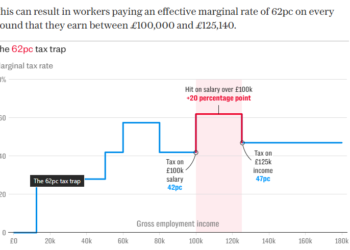 The ‘Career Ceiling’: One in Five High Earners Say £100k Tax Trap is ‘Ruining’ Their Ambition
 ‘White Elephant on Wheels’: Orkney Council to Sell £456,000 Bin Lorry with Only 2,000 Miles
 New UK Farm Inheritance Tax Rule Will Cause ‘Significant Challenges’, Say Accountants
 Iceland Boss Offers Role to Sacked Waitrose Employee
 Debt Relief or Drop in the Ocean? UK Caps Student Loan Interest at 6%
 The Silicon Emerald: How Irish Engineers are Cashing In on the AI Boom
 Paws on the Wheel: Driver Facing Fine After Dog Photographed on Lap
 The Pre-School Lottery: Families Left in ‘Holding Pattern’ as Local Places Vanish
 Heavier SUVs Accelerate Britain’s Pothole Crisis
 The Waiting Ward: ‘Month of Worry’ as Doctor Strikes Trigger Seismic Surgery Delays
 Policy Stand-Off: Streeting Denies Any ‘System Update’ to Resident Doctor Pay Deal