Published: 12 January 2026. The English Chronicle Desk. The English Chronicle Online.
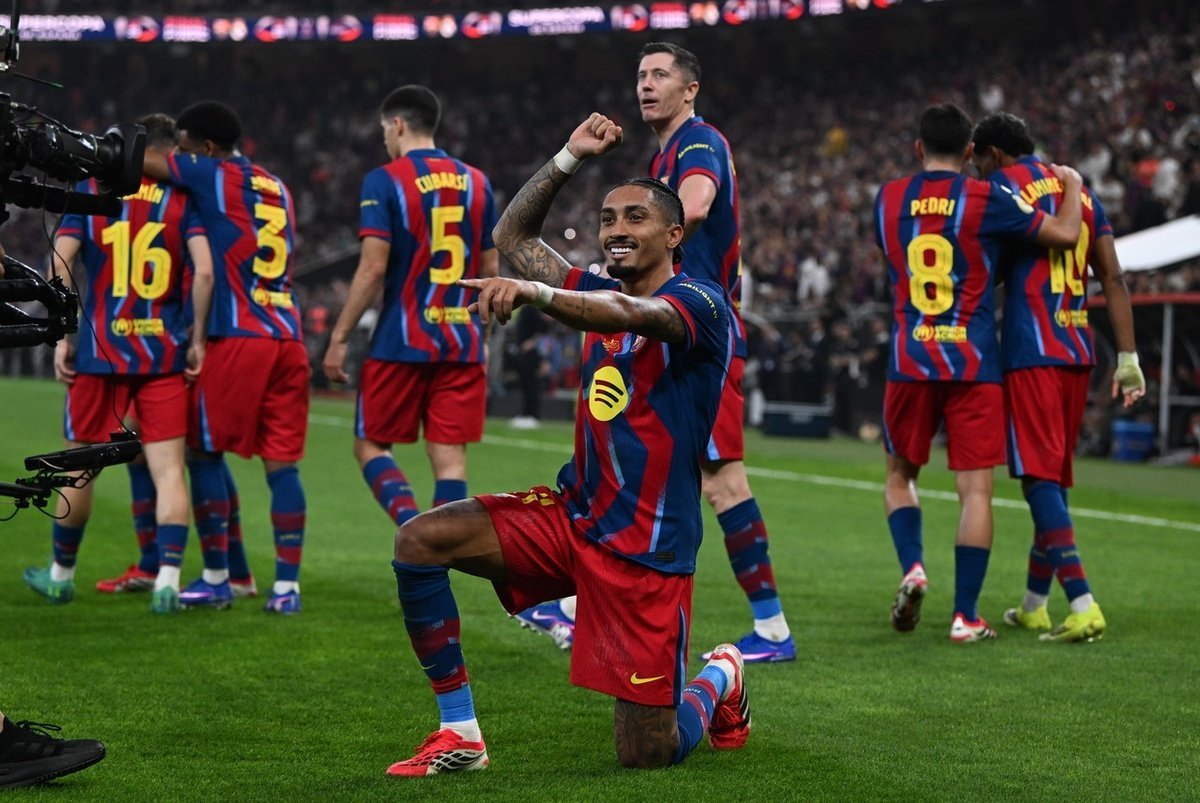
The night began with high anticipation, and Raphinha goal in mind, Barcelona dominated early on. From the opening whistle, the Brazilian winger caused constant problems for Real Madrid’s defence, combining skill and speed to unsettle opponents. By the first 30 minutes, it was clear Raphinha goal would define the contest, as his movement opened spaces for Lewandowski and Pedri. Despite Vinícius Júnior and Gonzalo García responding, Barcelona maintained composure, showcasing tactical precision and attacking intent that few teams can match.
Madrid initially played cautiously, adopting a formation designed to absorb pressure and release Vinícius quickly. However, Barcelona’s control of possession, reaching nearly 80% early, set the tone. Minutes 32 to 35 were decisive. First, Gonzalo García’s shot was brilliantly saved by Joan García. Pedri and Fermín López followed with missed chances, before an exquisite pass from Lamine Yamal allowed Raphinha to score. This moment confirmed that the Raphinha goal would be crucial to Barcelona’s triumph.

The first half continued in dramatic fashion. Vinícius sprinted past defenders but was repeatedly denied by Joan García. Raphinha’s influence persisted, assisting Lewandowski for a second goal just before halftime. Even after Dean Huijsen equalised with a header, Barcelona quickly regained control, highlighting that the Raphinha goal had already shifted momentum decisively. Madrid struggled to respond coherently, unable to exploit fleeting opportunities, while Barcelona’s offensive precision intensified.
In the second half, Barcelona capitalised on Madrid’s vulnerabilities. Another Raphinha goal, aided by an unexpected deflection off Asencio, extended their lead and silenced opposition attacks. Despite Mbappé and Marcus Rashford entering late, Joan García’s goalkeeping and defensive organisation ensured Madrid could not reclaim the initiative. Frenkie de Jong’s sending off reflected mounting frustration, while Barcelona lifted the Super Cup with calm authority.
Tactically, Barcelona’s approach balanced possession, movement, and opportunistic finishing. Raphinha goal exemplified this blend of skill and timing, while Lewandowski converted chances clinically. Madrid’s counter-attacks occasionally threatened, especially through Vinícius, yet the visitors lacked cohesion and failed to convert opportunities. The match underscored the importance of decisive moments and the ability to maximise them under intense pressure.

The victory marks Barcelona’s first trophy of the season and reinforces their position in Spanish football. Fans celebrated Raphinha goal and the attacking flair on display, while Lewandowski and Pedri contributed to a dynamic, relentless performance. For Madrid, despite flashes of brilliance, the team could not match Barcelona’s strategic execution or convert late chances into goals.
As the final whistle blew, Barcelona players were exhausted but triumphant. The Super Cup trophy symbolised not only the team’s early-season intent but also the impact of Raphinha goal in securing victory. Each player contributed, yet the Brazilian winger’s influence remained central, blending creativity, composure, and finishing ability in a decisive performance.
Ultimately, the Super Cup clash highlighted how high-level football hinges on seizing opportunities. Barcelona’s success reflected tactical discipline, adaptability, and clinical execution, with the Raphinha goal as a pivotal moment. Madrid displayed resilience and determination, but Barcelona’s control during crucial passages ensured their triumph. Fans will remember this match for its intensity, unpredictability, and Raphinha’s game-defining performance.
Related News:
 Tottenham shine at Everton but Frank wary of title push
 Matty Cash seals Villa win as City falter again at Villa Park
 Sarr Double Sinks Young Liverpool in Carabao Cup
 Nwaneri and Saka Secure Arsenal Win Over Brighton
 Woltemade Hot Streak Fires Newcastle Past Spurs
 Kieffer Moore Hat-Trick Ends Coventry’s Unbeaten Run
 Salah & Gravenberch Lead Liverpool to Win Against Villa
 Dyche Criticises Corner Decision as Forest Draw with United
 Caicedo Shines as Chelsea Edge Spurs in Chaotic Derby
 Granit Xhaka Rescue Earns Everton Draw at Sunderland
 Liverpool Edge Real Madrid 1-0 in Champions League Thriller
 Van de Ven Stunner Lifts 10-Man Spurs to UCL Glory
 Burn and Joelinton Head Newcastle to Victory Over Bilbao
 Foden shines as Man City dismantle Dortmund in dominant display
 Garnacho Spares Chelsea From Shock Champions League Loss in Baku
 Tension and Turmoil at Aston Villa v Maccabi Match
 Bellingham has ‘the edge’ among England No 10s
Man City Masterclass on Guardiola’s Milestone Day Exposes Liverpool Woes
Bellingham has ‘the edge’ among England No 10s
Man City Masterclass on Guardiola’s Milestone Day Exposes Liverpool Woes
 Lando Norris Dominates Brazil GP to Strengthen F1 Title Bid
 England cannot afford to be in awe of the All Blacks, warns Jamie George
 VAR Must Rein Its Neck In to Save Football’s Spirit
 Trescothick Hints Pope Will Keep Number Three Spot
 Ronaldo Confirms Final World Cup and Plans Retirement
 Mary Earps’s Manchester United Return Faces Mixed Reception
 Sam Kerr Stars in Chelsea Return with Champions League Double
 This kid is something else: Alex Scott’s rise to England call-up
 UK and Ireland Announce Venues for Euro 2028 Tournament
 England Maintain Perfect World Cup Qualifying Record with Win Over Serbia
 Saka Solidifies Role as Tuchel’s Key England Lieutenant
 Former Lion Heskey Warns of Shortage of England Strikers
 Australia Mourns Paralympic Champion Paige Greco
 Troy Parrott Hat-Trick Sends Ireland to World Cup Play-Offs
 Irish Hero Parrott Says Goal Brought First Tears in Years
 Scotland Fans Reflect on France ’98 as World Cup Looms
 Nigeria Misses World Cup Again After Play-Off Loss
 Germany and Netherlands Confirm Places in 2026 World Cup
 Spain Qualify for 2026 World Cup After Dramatic Draw
 From heartbreak to glory: Scotland’s dramatic return to the World Cup
 Tiny Curacao Makes History as Smallest Nation to Reach World Cup
 Haiti Qualifies for World Cup Despite Coach Never Visiting Country
 Scotland Fans Celebrate Historic World Cup Qualification
 Major League Baseball Scores New Broadcast Deals Through 2028
 Barcelona Returns to Camp Nou vs Athletic Bilbao
 Moyes Defends Gueye After Dramatic Everton Bust-Up
 Kids Football Coach Removed Over Suspected ‘Drugs Menu’
 Mbappe Scores 4 as Real Madrid Edge Olympiakos
 Man City Lose, Champions League Risk
 Gerrard warns Liverpool’s terrible run could worsen
 Jac Morgan to Miss Six Nations Start After Surgery
 Alexander Isak ends drought as Liverpool stop rot with win at West Ham
 Mbappe rescues Real Madrid with a penalty at Girona
 Barcelona, Atletico set for decisive La Liga showdown
 Maxwell withdraws from IPL 2026 after 13 seasons
 Mbappe stars as Real Madrid thrash Athletic, close on Barca
 Trump to attend 2026 FIFA World Cup draw in Washington
 Australia Face Big Changes as Cummins and Lyon Ruled Out of Ashes
 Van de Ven Tackle Leaves Isak with Fractured Leg
 City Set to Land Semenyo After Chelsea Exit from Transfer Race
 Arrizabalaga Sends Arsenal Through in Dramatic Shootout
 Ashes Shock: Boland Admits Struggle Bowling With Keeper Up
 Alex Sarama: How a 30-Year-Old Englishman Became WNBA Coach
 ECB powerless to halt England’s recurring Ashes failures
 Stokes urges empathy for England players amid Ashes struggles
 Aston Villa Remain Arsenal’s Key Obstacle in Title Pursuit
 Damien Martyn in Induced Coma After Meningitis Diagnosis
 Spin Bowling Struggles as Pace Dominates 2025 Ashes Series
 Anthony Joshua Released After Nigeria Car Crash
 Chelsea Sack Looms: Enzo Maresca Relationship Collapses
 Africa’s Superpowers Shine in Cup of Nations Quarter-Finals
 Amorim’s United Future Uncertain Amid Wilcox Tension
 Raducanu Battles Injury as Britain Exit United Cup
 Australia Dominates England: Smith, Head Crush Bowlers in Sydney
 Australian Open Prize Money Hits Record $111.5m
 Nick Kyrgios Faces Singles Struggles at Brisbane Tennis Return
 Nottingham Forest Deny West Ham in Dramatic Late Win
 Manchester United Fan Group Targets Jim Ratcliffe Over Club Chaos
 Morocco sail into Afcon semis after Díaz inspires win
 Wrexham stun Nottingham Forest with Okonkwo FA Cup heroics
 Salah Shines as Egypt Knock Out Ivory Coast at Afcon
 Ashes Calamity Shakes McCullum’s Credibility in England Camp