Published: 16 January 2026. The English Chronicle Desk. The English Chronicle Online.
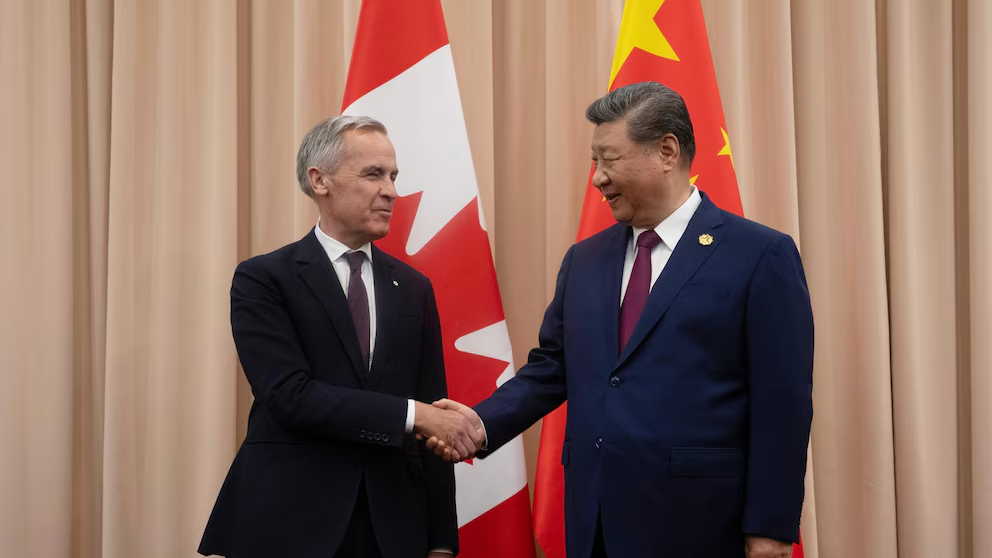
Canada-China trade has entered a critical new chapter as Prime Minister Mark Carney highlighted a strategic partnership during his landmark visit to Beijing, the first by a Canadian leader in eight years. Carney emphasized that cooperation in agriculture, energy, and finance could deliver immediate benefits while reducing Canada’s heavy reliance on the United States. The renewed focus on Canada-China trade reflects Ottawa’s urgent strategy to diversify exports and navigate the complex global economic landscape shaped by tariffs and geopolitical uncertainty.
The visit comes after years of diplomatic friction, including Canada’s 2018 arrest of Huawei executive Meng Wanzhou and China’s retaliatory detention of two Canadians. These incidents fueled a cycle of tariffs and trade restrictions that hampered both economies. Carney’s approach marks a deliberate pivot, prioritizing Canada-China trade as a mechanism to open new markets and offset the impact of US tariffs on steel, aluminium, vehicles, and lumber. Analysts note that China’s potential as a market remains underutilized, with only four percent of Canadian exports reaching it in 2024, underscoring the need to strengthen trade relations.

During talks, Xi Jinping acknowledged progress since their last encounter at the Apec summit in October 2025, describing bilateral trade as increasingly important for both nations’ shared interests. “The healthy and stable development of our economic ties serves the common good,” Xi stated, signaling Beijing’s readiness to rebuild trust. Carney stressed that engagement, not confrontation, should guide the renewed partnership, emphasizing the strategic role of trade in securing economic resilience and long-term growth.
Economic observers emphasize that strengthened trade can help Ottawa reduce vulnerability to US tariffs while expanding export diversity. Carney has advocated for doubling non-US trade by 2035, and China represents the most promising avenue to achieve this goal. Meetings with Chinese business leaders explored practical ways to lower trade barriers and foster investment, aiming to make commerce more efficient and mutually beneficial. Both governments expressed optimism, though formal agreements on tariffs have yet to be finalized.
The Canada-China trade dialogue also carries broader geopolitical significance. As Canada seeks greater independence in global commerce, partnerships with China may influence diplomatic and economic balances. Carney’s remarks that the new relationship should adapt to “new global realities” reflect the changing dynamics of international trade, highlighting the strategic importance of diversifying export markets beyond the United States. Experts suggest that sustained engagement and clear trade frameworks will be essential for ensuring Canada-China trade delivers tangible economic outcomes.

Public and business reactions in Canada have been cautiously positive. Entrepreneurs in energy, agriculture, and finance view the partnership as a practical opportunity, while analysts caution that human rights and security issues could complicate progress. In Beijing, officials underscored mutual benefits, noting that Canada-China trade could stabilize bilateral relations while providing Canada with an alternative economic pathway to the US market.
As both countries continue negotiating tariff reductions and investment initiatives, the focus on Canada-China trade will remain central. Carney’s leadership highlights proactive diplomacy as a tool to secure measurable benefits, demonstrating how trade and strategic foresight can reinforce international partnerships. Observers believe that if managed effectively, Canada-China trade could serve as a blueprint for pragmatic cooperation between Western economies and China, balancing economic opportunity and geopolitical considerations.
In conclusion, the renewed Canada-China trade partnership represents a deliberate effort to expand markets, restore trust, and navigate shifting global realities. By focusing on sectors with immediate growth potential and fostering sustained dialogue, both nations aim to achieve practical results while reducing historical tensions. Carney’s visit lays the groundwork for a more resilient trade future, ensuring Canada-China trade remains a cornerstone of economic strategy for years to come.
Related News:
 Reeves Faces Setback as Labour May Miss Homes Target
 Virgin Trains Moves Closer to Challenging Eurostar Monopoly
 UK Small Business Owner to Challenge L’Oréal in Tribunal
 Trump’s UK Ambassador Urges North Sea Drilling to Strengthen US Ties
 150-Year-Old Arctic Beer to Be Reborn in Scotland
 Ryanair Chief UK Economy ‘Doomed’ Under Labour
 Court Hears Challenge Over Water Bills Funding Sewage Fixes
 ABF May Split Primark from Food Division Amid Tough Market
 Rachel Reeves Set to Break Labour Pledge and Raise Income Tax
 UPS Cargo Plane Crash in Kentucky Kills Seven
 M&S Profits More Than Halve After Cyber-Attack
 Tony Blair think tank warns Rachel Reeves must cut taxes if manifesto broken
 Oprah enjoys Meghan’s jam on English muffins
 MPs Press Rachel Reeves to Hike Gambling Taxes
 Earl of Yarmouth Faces £1.3m Legal Bill Over Family Estate
 North Sea oil workers must lose weight or face job loss
 Cuts to home insulation funding threaten UK climate goals
 Warning as Britons prepare to spend £4 billion this Black Friday
 Millionaires group urge Reeves to introduce wealth tax to ‘lift kids out of poverty’
 From Lego to Pokémon: How Adults Are Driving UK Toy Market Growth
 Borough Market Clash Sparks Influencer Backlash
 UK toy market enjoys bumper year as ‘kidults’ fuel demand
 New laws to bolster UK’s defences against cyber attacks on NHS, transport and energy
 Skims Eyes Global Expansion After Reaching $5 Billion Value
 US Strikes Last Penny After 230 Years of Production
 Trump Moves to Cut Coffee and Banana Tariffs in Latin America Deals
 Reeves’s Tax U-Turn Triggers Fresh Jitters in UK Markets
 Global markets drop amid tech sell-off and China slowdown
 Canada Passes Carney’s First Budget in Tight Parliamentary Vote
 UK Rejects Funding to Save Mossmorran Plant
 Nvidia Soars as Blockbuster Earnings Silence AI Bubble Fears
 PM Highlights UK Business at G20 in South Africa
 Mossmorran Plant Closure Hits Cowdenbeath Hard
 UK Taskforce Unveils Plan to Streamline Nuclear Reactor Rules
 Steel billionaire Lakshmi Mittal reportedly leaves UK
 English Mayors Set to Introduce Tourist Taxes
 India’s Labour Law Overhaul Sparks Fierce Debate
 Carney’s Alberta Pipeline Deal Sparks Immediate Pushback
 EU reviews Apple Ads and Maps under strict digital rules
 Starmer Says Labour’s Economic Plan Needs Years to Deliver
 Virgin Media Fined £23.8m Over Telecare Safety Failures
 Rising Water Bills Lift Troubled Thames Back to Profit
 Tesla Warns UK That Weak EV Rules Could Threaten Sales
 Prada buys Versace for $1.38bn, expanding luxury fashion empire
 BP agrees £7.4bn Castrol sale to US investment firm
 Sainsbury’s CEO leads business honours in New Year list
 George Clooney and Amal Clooney Receive French Citizenship
 FTSE 100 Hits 10,000: UK Market Celebrates Record Year
 UK House Prices Fall Sharply at Year-End, Nationwide Reports
 UK Car Sales Pass 2 Million as Chinese Brands Surge
 Starmer Faces Parliamentary Battles Over UK-EU ‘Reset’ Plan
 Shock US Raid: Maduro Pleads Not Guilty in Manhattan Court
 UK and France Agree Troop Deployment Plan for Ukraine
 Capitol Attack Anniversary Sparks Deep Political Divide
 EU Weakens as Trump Targets Venezuela and Greenland
 Saudi Officials Report Zubaidi Flee Before Yemen Peace Talks
 Venezuela Oil Deal Opens Tensions with US Control
 UK Targets in New York Bomb Threat Hoax: Man Jailed
 Trump Plans Venezuela Meeting, Warns of Cartel Land Strikes
 Gambia Supreme Court Hears Case to Overturn FGM Ban
 Trump Labels Renee Good a ‘Paid Agitator’ After Minneapolis ICE Killing
 Wessex Water chiefs receive £50,000 extra despite government bonus ban
 Indonesia blocks Grok chatbot over sexual content risk
 Austrian Airlines Halts Tehran Flights Amid Political Unrest
 US Citizens Warned to Venezuela Flee Amid Paramilitary Threats
 3,000 Jobs at Risk Without UK Helicopter Order
 British skier killed in La Plagne avalanche tragedy
 German Supermarket Aldi to Open 180 US Stores This Year
 Starmer links foreign trips to tackling cost of living crisis
 Mandelson apologises over Epstein ties after public scrutiny
 Trump targets Iran trade with 25% tariff warning
 Rudd successor: Defence chief and former ministers considered
 US Senate rejects resolution limiting Trump military powers
 Venezuela regime claims release of political prisoners signals new era
 Friedman Uninvited From 2024 Adelaide Writers’ Week
 Gulf states warn Trump Iran strikes risk wider Middle East war
 Machado Trump medal gesture reshapes Venezuela power struggle
 Greenland defence seen as shared Nato duty amid troop arrivals
 China Dependence Threatens UK Energy Supply Chains and Jobs
 Geopolitical football: Iran, Trump and the World Cup clash