Published: 25 January 2026. The English Chronicle Desk. The English Chronicle Online
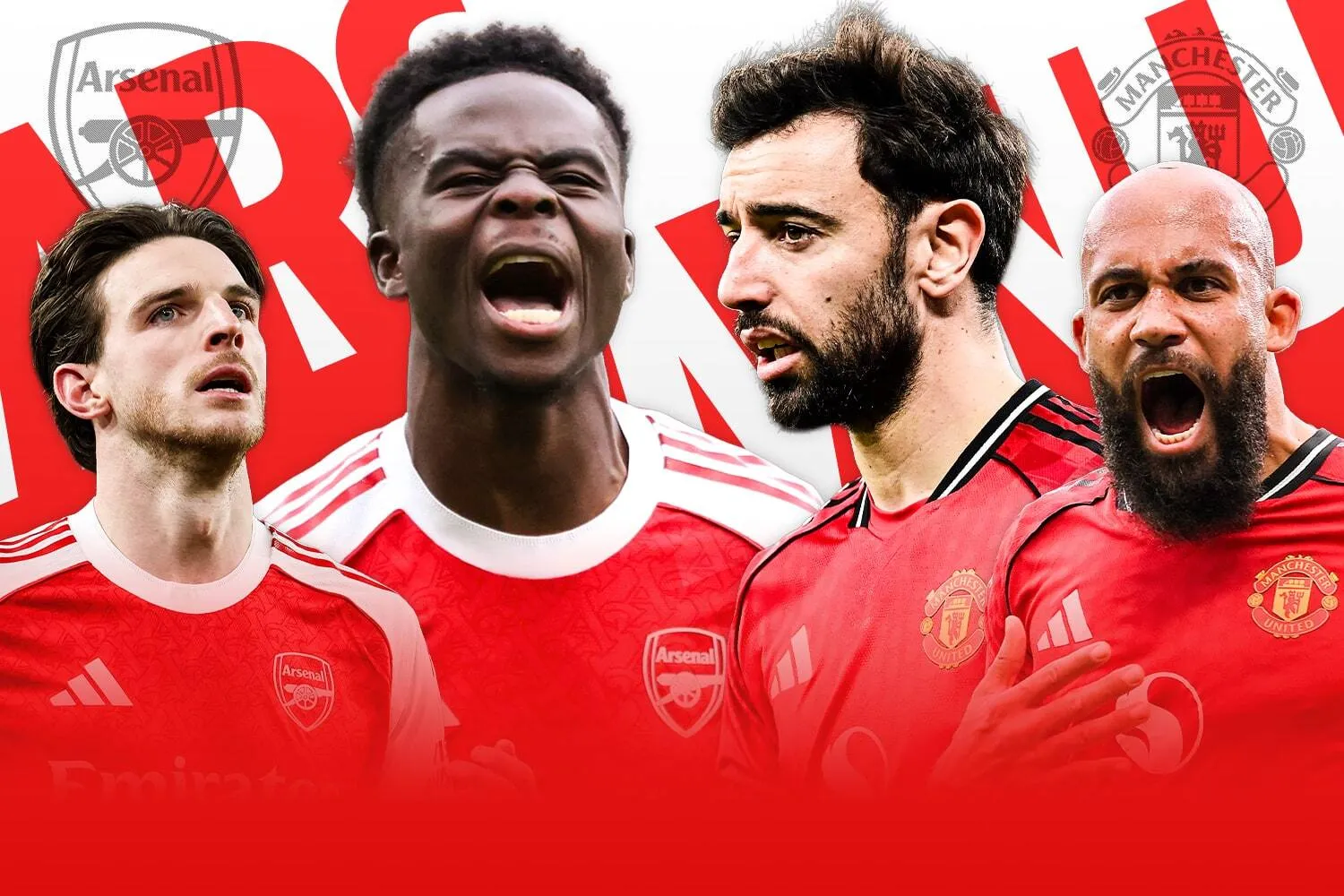
A familiar sense of occasion surrounds the Emirates Stadium as Arsenal and Manchester United lock horns in one of English football’s most enduring rivalries, with team news already fuelling debate long before the first whistle. In a decision that has caught the attention of supporters and pundits alike, Arsenal manager Mikel Arteta has opted to start Gabriel Jesus ahead of Viktor Gyökeres, while Manchester United boss Michael Carrick has named an unchanged side for this high-stakes Premier League encounter.
From the moment the teamsheets dropped, conversation shifted sharply toward Arteta’s call in attack. Gyökeres, heavily linked with Arsenal and widely tipped as a physical presence capable of unsettling United’s defence, was expected by many to start. Instead, Arteta has placed his faith in Jesus, a forward whose intelligence, pressing, and link-up play have often proved decisive in big matches. For the Arsenal manager, the choice appears rooted in trust and tactical familiarity rather than raw momentum.
Jesus arrives into the match under scrutiny, having endured an inconsistent run in front of goal this season. Yet Arteta has repeatedly defended the Brazilian’s contribution beyond scoring, pointing to his movement, ability to drag defenders out of position, and work rate without the ball. Against a United side that prefers compact defensive phases and quick transitions, Arteta clearly believes Jesus offers the sharper tactical fit.
Gyökeres’ absence from the starting line-up does not necessarily signal a lack of confidence. Instead, it hints at a potential impact role later in the match, particularly if Arsenal need greater physicality or directness. With United often vulnerable late on when pressed deep, Gyökeres could yet play a decisive role from the bench.
On the opposite touchline, Michael Carrick has chosen continuity. Manchester United line up unchanged from their previous outing, a signal that the interim manager sees stability as essential during a turbulent period for the club. Carrick’s decision reflects satisfaction with recent performances, even if results have not always matched expectations.
United’s starting XI suggests a cautious but confident approach. The unchanged midfield aims to control tempo and limit Arsenal’s dominance of possession, while the defensive unit, tested repeatedly this season, will need to remain disciplined against Arsenal’s fluid front line. Carrick’s trust in his players also carries an implicit challenge: deliver under pressure or risk changes ahead of a demanding festive schedule.
The match itself arrives at a critical juncture for both sides. Arsenal remain firmly in the title conversation, aware that dropped points at home could hand momentum to rivals chasing them at the summit. The Emirates crowd, vocal from warm-up onward, expects intensity, control, and a statement performance.
Manchester United’s objectives differ yet remain equally pressing. The club continues to search for consistency amid transition, with every fixture carrying broader implications for confidence and direction. A positive result in north London would not only disrupt Arsenal’s ambitions but also reinforce Carrick’s growing authority within the dressing room.
Early phases of the match reflect that tension. Arsenal dominate possession, probing down the flanks and attempting to draw United’s defensive lines higher. Jesus frequently drops deep, linking with midfield runners and creating space for wide players to exploit. United, disciplined and compact, look to spring forward on the counter, targeting the spaces left behind Arsenal’s advancing full-backs.
The tactical contrast underlines why Arteta favoured Jesus. His movement disrupts United’s shape, forcing midfielders to track back and defenders to make uncomfortable decisions. Gyökeres, watching from the bench, offers a different threat altogether, one based on power and direct confrontation rather than subtle manipulation of space.
Carrick’s unchanged team shows resilience in the opening exchanges. United absorb pressure patiently, clearing lines when required and refusing to be drawn into frantic pressing. Their game plan appears built around moments rather than dominance, with quick transitions designed to exploit Arsenal’s high line.
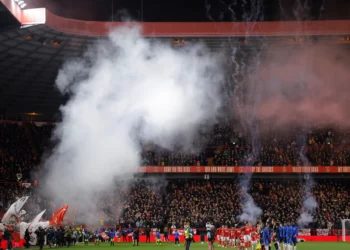
As the first half progresses, the match settles into a familiar rhythm. Arsenal press, United resist. The Emirates buzzes with expectation, every Arsenal attack greeted with rising noise, every United clearance met with relief from the travelling support. It is a contest defined less by chaos and more by control, a reflection of two managers prioritising structure over spectacle.
Beyond the ninety minutes, the implications loom large. For Arteta, the Jesus selection represents faith in a trusted lieutenant during a decisive phase of the season. A strong performance would justify that loyalty and silence doubts surrounding his attacking choices. For Carrick, an unchanged side performing under intense scrutiny would strengthen his case as a steadying presence at Old Trafford.
This fixture rarely passes quietly. History ensures drama, while current circumstances add urgency. Whether Jesus rewards Arteta’s confidence or Gyökeres emerges as a second-half difference-maker remains to be seen. Whether Carrick’s loyalty is repaid with resilience or exposed by Arsenal’s pressure will shape the narrative long after the final whistle.
For now, all eyes remain fixed on the pitch, where Arsenal and Manchester United once again write another chapter in a rivalry that refuses to lose relevance.
Related News:
 Tottenham shine at Everton but Frank wary of title push
 Matty Cash seals Villa win as City falter again at Villa Park
 Sarr Double Sinks Young Liverpool in Carabao Cup
 Nwaneri and Saka Secure Arsenal Win Over Brighton
 Woltemade Hot Streak Fires Newcastle Past Spurs
 Kieffer Moore Hat-Trick Ends Coventry’s Unbeaten Run
 Salah & Gravenberch Lead Liverpool to Win Against Villa
 Dyche Criticises Corner Decision as Forest Draw with United
 Caicedo Shines as Chelsea Edge Spurs in Chaotic Derby
 Granit Xhaka Rescue Earns Everton Draw at Sunderland
 Liverpool Edge Real Madrid 1-0 in Champions League Thriller
 Van de Ven Stunner Lifts 10-Man Spurs to UCL Glory
 Merino Shines as Arsenal Beat Slavia 3-0 Without Gyokeres
 Burn and Joelinton Head Newcastle to Victory Over Bilbao
 Foden shines as Man City dismantle Dortmund in dominant display
 Garnacho Spares Chelsea From Shock Champions League Loss in Baku
 Tension and Turmoil at Aston Villa v Maccabi Match
 Bellingham has ‘the edge’ among England No 10s
 Arteta Left Frustrated as Sunderland Deny Arsenal Late Win
Chelsea Cruise Past Wolves to Go Second in the Premier League
Man City Masterclass on Guardiola’s Milestone Day Exposes Liverpool Woes
Arteta Left Frustrated as Sunderland Deny Arsenal Late Win
Chelsea Cruise Past Wolves to Go Second in the Premier League
Man City Masterclass on Guardiola’s Milestone Day Exposes Liverpool Woes
 Lando Norris Dominates Brazil GP to Strengthen F1 Title Bid
 England cannot afford to be in awe of the All Blacks, warns Jamie George
 VAR Must Rein Its Neck In to Save Football’s Spirit
 Trescothick Hints Pope Will Keep Number Three Spot
 Ronaldo Confirms Final World Cup and Plans Retirement
 Mary Earps’s Manchester United Return Faces Mixed Reception
 Sam Kerr Stars in Chelsea Return with Champions League Double
 This kid is something else: Alex Scott’s rise to England call-up
 Anthony Joshua Faces Backlash Over Proposed Jake Paul Fight
 Former Lion Heskey Warns of Shortage of England Strikers
 Rogers Double Aston Villa as Leeds Slip Deeper into Trouble
Eze Hat-Trick Stuns Spurs in Dominant Arsenal Derby Win
Rogers Double Aston Villa as Leeds Slip Deeper into Trouble
Eze Hat-Trick Stuns Spurs in Dominant Arsenal Derby Win
 Moyes Defends Gueye After Dramatic Everton Bust-Up
 Rookie Driver Hollie McRae Flips Car but Walks Away Safe
 Gerrard warns Liverpool’s terrible run could worsen
 Jac Morgan to Miss Six Nations Start After Surgery
 Alexander Isak ends drought as Liverpool stop rot with win at West Ham
 Mbappe rescues Real Madrid with a penalty at Girona
 Wales hits 20,000-strong milestone in women’s football
 Stokes urges empathy for England players amid Ashes struggles
 Sports piracy surges in UK with 3.6bn illegal streams reported
 Chelsea fans inquiry launched after Charlton match policing concerns
 London Set to Honour Euro 2025 Champions as Lionesses Take Victory Parade Through the Capital
 Premier League Supercomputer Predicts Tough Season for Man Utd Amid Three-Team Title Battle
 Reeves Faces Setback as Labour May Miss Homes Target
 Kate Winslet to Narrate Film Highlighting King’s Environmental Mission
 Trump’s UK Ambassador Urges North Sea Drilling to Strengthen US Ties
 UK Bans Fake Numbers: Scammers Lose Their Trick
 M&S Profits More Than Halve After Cyber-Attack
 Patients to Test Health at Home to Ease NHS Winter Pressure
 Millionaires group urge Reeves to introduce wealth tax to ‘lift kids out of poverty’
 Reeves rejects £1bn plea for NHS redundancy payouts
 Northern Lights may illuminate UK skies this week
 PM Condemns Leaks, Vows Loyalty to Ministers and Stability
 Major Rent Reform Ends No-Fault Evictions in England
 Saka Solidifies Role as Tuchel’s Key England Lieutenant
 Stroke Patient Mistaken for Drunk, Care Delayed
 Tiny Curacao Makes History as Smallest Nation to Reach World Cup
 Inside the Helpline Protecting Missing Children in the UK
 Boots Showstopper Beauty Bundle Outshines Many Advent Calendars This Holiday Season
 PlayStation PS5 Deals Hit Lowest Prices Ahead of Black Friday
 Five-Year-Old Dies After Rare Tonsil Surgery Complication
 Starmer Says Labour’s Economic Plan Needs Years to Deliver
 UK unemployment rises to four-year high of 5.1% before budget
 Wiltshire Police Use Lasso to Catch Rampaging Village Goat
 Australia Face Big Changes as Cummins and Lyon Ruled Out of Ashes
 Children to Receive Home Vaccines as England Acts
 Raducanu Battles Injury as Britain Exit United Cup
 Cambridge College Faces Backlash Over Private School Recruitment
 Manchester United Fan Group Targets Jim Ratcliffe Over Club Chaos
 NHS Violence Crisis: Staff Face Daily Assaults
 Celebrity Campaign Highlights SMA Screening Failures
 Bereaved Fathers Gain New Paternity Leave Rights in UK
 Storm Goretti leaves Cornwall homes without power
 New Documentary Examines Teen’s Zombie Knife Murder
 Woman Jailed for Life After Killing E-Bike Rider in Tragic Mistaken Identity Case
 UK Ministers Drop Foreign Student Targets for Global Education Push
 No Gas Boiler Ban as UK Warm Homes Plan Backs Heat Pumps
 Shinzo Abe’s killer receives life sentence in Japan