Published: 28 January 2026. The English Chronicle Desk. The English Chronicle Online.
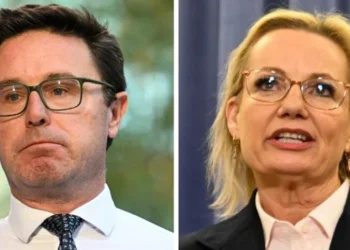
Sussan Ley’s attempt to mend fractured relations failed after David Littleproud rejected her Coalition talks proposal. Ley sent a letter to Littleproud on Tuesday evening suggesting a meeting “without preconditions” to discuss the relationship between the Liberals and Nationals, highlighting the national importance of functional cooperation. In her message to Liberal colleagues, Ley stressed that maintaining collaboration between the parties serves Australians and ensures stable governance. Despite this olive branch, Littleproud refused the offer, focusing instead on an impending motion to spill the Nationals leadership next week.
The Nationals are bracing for internal upheaval as Flynn MP Colin Boyce announced plans to challenge Littleproud for the leadership if the spill motion succeeds. Boyce described the recent Coalition split as a “political cliff” that jeopardises the party’s position and warned that exiting the partnership with the Liberals could empower One Nation. He firmly denied any intention of following former Nationals leader Barnaby Joyce by defecting to One Nation, though some colleagues expressed scepticism over his strategy.

Senior Nationals, including Matt Canavan and Darren Chester, immediately dismissed Boyce’s leadership prospects. Chester, representing Gippsland, criticised the bid as self-indulgent and unrelated to the needs of his constituents. Party sources confirmed that Littleproud declined Ley’s invitation to maintain respect for the party room’s internal decision-making. Ley signalled that the Liberals would engage with whoever the Nationals select as leader, emphasising that accountability to the Albanese Government remains the shared priority.
Following the Coalition’s collapse, Ley authorised a small group of shadow ministers, including Ted O’Brien and Dan Tehan, to maintain communication with the Nationals. This step was designed to keep potential avenues for future Coalition talks open, even as tensions simmer. Littleproud has indicated that he may consider re-entering the Coalition if Ley agrees to reinstate the three Nationals senators who resigned after crossing the floor over Labor’s hate speech laws. Their resignations triggered a mass frontbench walkout, ultimately dismantling the partnership.
The breakdown of Ley’s last-minute peace talks means she is now expected to proceed with announcing a Liberal-only frontbench ahead of parliament’s return on Tuesday. This announcement will likely follow the memorial service for former Liberal MP Katie Allen on Thursday. Meanwhile, Littleproud is preparing to assign Nationals portfolios as soon as this week.
Although speculation about a potential leadership challenge against Ley had circulated, it has quietened, with likely contenders Angus Taylor and Andrew Hastie yet to publicly declare intentions. Ley’s approach to rebuilding bridges, while cautious, demonstrates a commitment to maintaining functional governance, even amid deep-seated tensions.
Political analysts suggest that the failed negotiations may have lasting implications for both parties, with the Liberals needing to demonstrate unity and resolve, while the Nationals face pressure to clarify their leadership and strategic direction. The rejection of Coalition talks underscores the volatility within Australian politics, highlighting the complexities of inter-party dynamics.

Observers note that while the Nationals’ leadership challenge looms, the broader question remains whether the Liberals can navigate parliamentary challenges effectively without formal cooperation. Ley’s strategy to maintain open communication, even in the absence of formal agreements, reflects a pragmatic approach aimed at safeguarding legislative scrutiny and policy influence.
In the immediate term, focus will shift to parliamentary proceedings, party room maneuvers, and public reactions to leadership announcements. Analysts caution that the unfolding situation could reshape political alliances and impact voter perceptions ahead of upcoming elections, demonstrating the high stakes involved in managing party cohesion and inter-party negotiations.
The failed peace initiative marks another dramatic chapter in the ongoing narrative of Coalition politics, with implications for legislative strategy, electoral prospects, and the leadership ambitions of key figures. Ley’s insistence on dialogue, despite rejection, signals a continued commitment to Coalition talks, ensuring that parliamentary oversight and accountability remain central priorities, even amid heightened internal tensions.
Related News:
 Labor’s Hate Speech and Gun Laws Face Federal Roadblocks
 Trump Administration Dismisses 17 Immigration Judges, Sparking Debate Over Judicial Independence
 Tasers Introduced in UK Prisons to Combat Rising Violence and Protect Staff
 Ex-Army Chief Under Fire for Lobbying Allegations Tied to US Defence Firm
 David Lammy Faces Possible Legal Challenge Over Foreign Office Secondment Scheme
 Ministers Accused of Defamation Over Palestine Action Ban and Mass Arrests
 Police Advised to Disclose Ethnicity of Suspects in High-Profile Cases
 Sally Rooney Pledges BBC Royalties to Support Palestine Action Despite UK Terror Ban
 UK’s First Transgender Judge Seeks Rehearing of Supreme Court Ruling on Biological Sex
 Government Signs Deal with Iraq to Return Illegal Migrants in Latest Bid to Deter Small Boats
 Migrant Hotel Chaos as Councils Consider Legal Action to Ban Asylum Seekers
 DWP Launches Independent Review of Post Office Staff Prosecutions
 Angela Rayner Admits Underpaying Stamp Duty on £800,000 Seaside Flat
 Angela Rayner Faces Scrutiny as Stamp Duty Row Deepens
 Tanni Grey-Thompson Faces Abuse Over Opposition to Assisted Dying Bill
 First “One In, One Out” Deportation Flight Departs Without Migrants Amid Legal Challenges
 Hillsborough Law to Hold Public Officials Accountable, Promising Jail for Serious Misconduct
 Corbyn and Sultana Clash Over Membership Portal as Divisions Surface in New Leftwing Party
 Commons Speaker Warns UK Parliament Vulnerable to Foreign Espionage After China-Linked Case Dropped
 Mahmood Pledges Reform of Modern Slavery Laws After Court Blocks Deportation Appeal
 Migrants in UK May Need to Contribute or Face Removal, Home Secretary Signals
 Jailed Georgian Opposition Leaders Warn UK of Iranian Links to Ruling Party
 UK Police to Gain New Powers to Manage Repeated Protests, Home Office Announces
 MPs’ pay watchdog seeks to give public greater voice in how politicians are funded
 Digital ID Plans Ignite Debate Over £600m Treasury Tax Boost and Privacy Concerns
 Boris Johnson Breached Rules on Post-Office Business Contacts
 UK Extradition Law Change Sparks Fears Among Hong Kong Dissidents
 Nigel Farage’s partner linked to Brussels fraud probe
 Lucy Powell urged ministers to reconsider costly legal case for Labour donor’s firm
 Starmer Accused of Creating ‘Toxic Downing Street’
Johnson Approved China’s London ‘Super-Embassy’ in 2018
Starmer Accused of Creating ‘Toxic Downing Street’
Johnson Approved China’s London ‘Super-Embassy’ in 2018
 Phillipson urges careful review of gender recognition guidance
 French Taxi Driver Cleared in David Lammy Theft Case After Fare Dispute
 China-critical UK academics face ‘extremely heavy’ pressure from Beijing
 Met Police Culture Makes Racial Harm ‘Inevitable’
 Remaining rebel Labour MPs have whip restored
 Tim Davie resigns as BBC director general amid bias claims
 WASPI Women May Get Second Chance at Pension Redress
 Palace to reinstate hyphen in Andrew’s surname
 Trump Urges Herzog to Grant Netanyahu Full Pardon
 Victims’ commissioner Baroness Newlove dies aged 63
 Major Rent Reform Ends No-Fault Evictions in England
 Peers Flood Assisted Dying Bill with 942 Amendments
 US Justice Department Files Lawsuit Against California Over Partisan Voting Maps
 Nandy says BBC review to probe political board influence
 UK Unveils Fast-Track Deportation and Asylum Overhaul
 Trump Deploys DHS to Charlotte in Major Arrest Operation
 UK Asylum Overhaul Sparks Debate Over Human Rights and Deportations
 UK Asylum Reforms: Temporary Refugee Status and Faster Deportations
 Mahmood Defends Tough Overhaul of UK Asylum System
 Scottish Ministers Express Alarm Over UK Asylum Reforms
 South African Detained After Neo-Nazi Rally in Australia
 Westminster Advances Legacy Bill Amid Criticism
 Minister Defends Tough New Asylum Reform Plan
 UK Net Migration Falls Sharply After ONS Revisions
 Federal Court Blocks Texas Republican Maps Over Racial Bias
 Only One Republican Opposes Mass Release of Epstein Files
 Congress Approves Release of Epstein Files, Trump Expected to Sign
 Senedd Suspends Politician Over Offensive Racial Slur
 Trump Signs Bill Releasing Justice Department Files on Epstein
 Texas Governor Faces Lawsuit From CAIR
 Peers Get Extra Time to Debate Assisted Dying Bill
 US National Guard Member Killed in DC Shooting
 ICC to Rule on Duterte’s Provisional Release
 Chinese & Japanese Boats Clash Near Disputed Islands
 Putin Meets US Envoy Amid Key Ukraine Peace Talks
 Victoria Police Ends Warrantless Search Powers, Consolidating Peace
 Plans to Limit Jury Trials Face Retreat After Mounting Opposition
 Hanson and Joyce Use Rinehart Jet to Tour Flooded Queensland
 Australia grants Asio powers to designate hate groups under new laws
 Guterres Warns Global Cooperation Under Threat at UN’s 80th Year
 South Korea Jails Ex-President in Martial Law Ruling
 Starmer tariffs stance rejects US trade retaliation
 Nationals Crisis Meeting Threatens Coalition Stability
 Coalition crisis deepens after Nationals frontbench resignations
 American democracy faces crisis after Trump’s return
 Sussan Ley leadership milestone shakes Liberal future
 Andrew Hastie Emerges as Leadership Rival to Ley
 Tim Walz urges Trump to withdraw federal agents immediately
 Morrison Faces Backlash Over Call to Regulate Islam in Australia