Published: 31 January 2026. The English Chronicle Desk. The English Chronicle Online
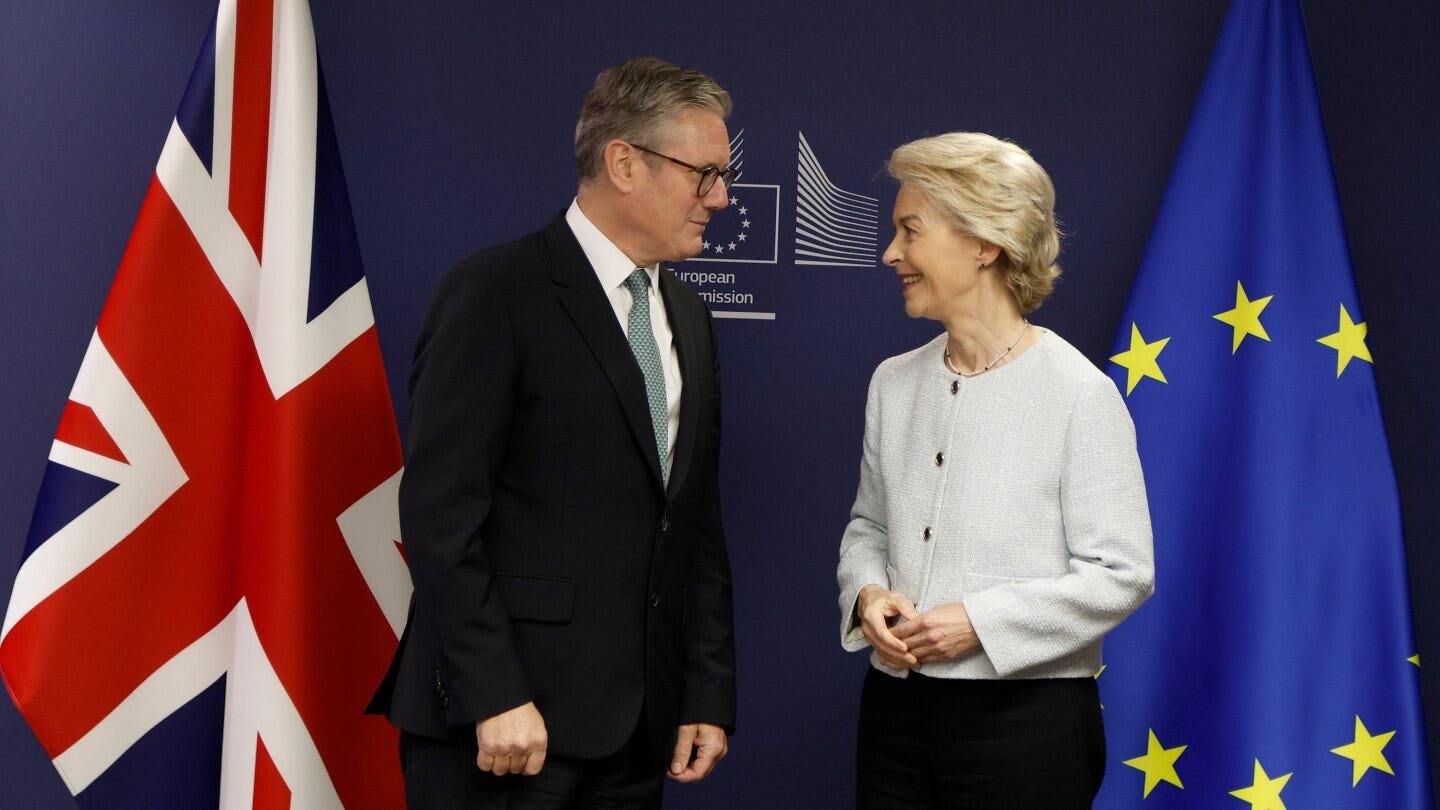
The United Kingdom and the European Union are cautiously moving towards renewed discussions on defence cooperation, signalling a possible shift in post-Brexit relations shaped by growing global instability. Senior figures on both sides have indicated that security collaboration could return to the agenda, as Prime Minister Keir Starmer emphasised his desire to deepen ties with Brussels beyond existing agreements.
The prospect of renewed defence talks emerges as Maroš Šefčovič, the European Union’s trade commissioner, prepares to visit London next week. His scheduled meetings are formally focused on trade, energy, and fisheries, yet diplomatic sources suggest defence cooperation is increasingly seen as an urgent and unavoidable topic. British officials are understood to be keen to restart negotiations as soon as political conditions allow.
Previous efforts to secure closer defence ties stalled in November 2025, when talks over British participation in the EU’s €150 billion Security Action for Europe defence fund collapsed. The programme, commonly known as Safe, was designed to strengthen Europe’s collective military capacity through long-term, low-cost loans. At the time, negotiations faltered amid disagreements over the financial terms required for UK entry.

European and British officials privately acknowledged that the failure was embarrassing, particularly because both sides had publicly championed enhanced cooperation only months earlier. At a high-profile summit hosted by Keir Starmer and European Commission President Ursula von der Leyen, defence collaboration through Safe had been presented as a symbol of renewed trust. The sudden breakdown highlighted lingering political sensitivities and unresolved post-Brexit tensions.
France has rejected claims that it was responsible for derailing the talks, yet diplomatic sources across Europe continue to point to divisions among member states. Germany is widely seen as supportive of British involvement, with officials arguing that UK participation would strengthen Europe’s overall security. French concerns, however, appear to centre on ensuring political leverage and maintaining strict conditions for third-country participation.
One European diplomat suggested that France wanted British access to Safe to be linked to participation in a separate defence initiative agreed by EU leaders in December. That programme involves a €90 billion loan to Ukraine, backed by frozen Russian assets held in Belgium. German officials reportedly opposed such preconditions, warning they could delay urgently needed cooperation.
Despite these disagreements, there is now growing appetite on both sides to revisit defence talks. Changing global dynamics have injected fresh urgency into the debate. Donald Trump’s renewed criticism of Nato, combined with provocative comments about Greenland, has unsettled European capitals. These developments have reinforced concerns about long-term reliance on the United States for continental security.
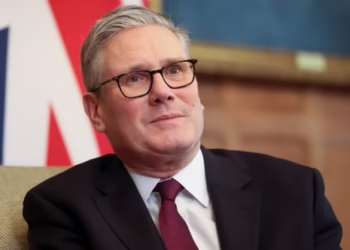
Speaking during a visit to Beijing, Keir Starmer avoided direct reference to defence policy but stressed the importance of developing a closer and more flexible relationship with the European Union. He argued that future EU-UK summits should be iterative, building on progress rather than simply maintaining existing arrangements. His remarks were widely interpreted as an invitation to reopen discussions across multiple policy areas.
Starmer suggested that further cooperation could be explored within the single market, rather than through the customs union, which he argued no longer served Britain’s interests effectively. He emphasised that any new agreements must align with national priorities, while acknowledging that significant opportunities for progress remain. Defence cooperation, although unmentioned, was seen as an obvious candidate.
Economic considerations are also shaping the broader negotiations. British and European officials are exploring potential sector-specific deals, including in chemicals and automotive manufacturing. These industries face new tariffs on non-electric vehicles from next year, creating pressure for pragmatic solutions. The UK is also engaged in talks over a youth mobility scheme, with the government seeking limits on participant numbers and duration.
Within the Labour Party, Starmer faces mounting pressure to pursue closer ties with Brussels. Several senior figures argue that deteriorating relations with Washington under Trump have underscored the need for stronger European partnerships. Defence, economic security, and supply chain resilience are increasingly framed as interconnected challenges requiring collective solutions.
Stella Creasy, the Labour MP who chairs the Labour Movement for Europe, has called for a comprehensive reset in relations. She argued that restoring a strong working relationship with EU partners should involve defence, national security, and economic stability. In her view, no area should be excluded from discussions if Britain is to protect its long-term interests.
Formal discussions next week will take place within the framework of the EU-UK Partnership Council, the body overseeing post-Brexit relations. Šefčovič is scheduled to meet Nick Thomas-Symonds, with food and drink trade expected to dominate the agenda. Defence is not officially listed, though officials concede that informal exchanges are likely.
Šefčovič will also meet Chancellor Rachel Reeves to discuss geoeconomic issues, including supply chains and industrial resilience. Additional talks with Business Secretary Peter Kyle are planned, reflecting the growing overlap between economic and security concerns. These meetings underline how defence cooperation is increasingly viewed through a broader strategic lens.
There may also be opportunities for further defence-related discussions in Washington, where a political summit on critical minerals is due to take place. Convened by US Senator Marco Rubio, the meeting will bring together key allies to address supply vulnerabilities. The UK Foreign Office is expected to be represented by a minister, potentially opening space for informal EU-UK dialogue.
Sources close to the British government acknowledge that financial disagreements remain a significant obstacle. During previous negotiations, the EU reportedly sought a British contribution of around €2 billion to the Safe fund. British officials argued that a contribution measured in hundreds of millions would be more proportionate, given the UK’s status outside the union.
The Safe fund itself is structured around long-term borrowing by the European Commission, with loans repaid over forty-five years. Member states can use the funds to procure military equipment, including ammunition, drones, and missile systems. Procurement is open to suppliers inside and outside the EU, including British companies, under certain conditions.
Supporters of British participation argue that joining Safe would deliver tangible benefits to the UK defence industry. While Britain would not be eligible to apply directly for loans, participation under third-country rules would allow UK firms to bid for major procurement contracts. This could boost domestic manufacturing and strengthen strategic ties with European partners.

The original aim of the fund was to rapidly enhance Europe’s defence capabilities, an objective that has gained urgency amid uncertainty over US commitment. European leaders increasingly accept that collective self-reliance is essential in a volatile geopolitical environment. In this context, excluding one of Europe’s largest military powers appears increasingly impractical.
Although significant political hurdles remain, the renewed willingness to talk marks an important shift. Both sides appear more pragmatic than during earlier post-Brexit disputes, driven by shared security concerns and economic realities. Whether this momentum will translate into a concrete agreement remains uncertain.
For now, the prospect of renewed defence cooperation reflects a broader reassessment of the UK-EU relationship. As global alliances are tested and traditional assumptions challenged, London and Brussels may find that strategic necessity outweighs past divisions. The coming months will reveal whether cautious optimism can be transformed into lasting partnership.
Related News:
 Ministers Accused of Defamation Over Palestine Action Ban and Mass Arrests
 Charlie Kirk Killing Used to Mobilise UK’s Largest Far-Right Rally in Decades
 Jailed Georgian Opposition Leaders Warn UK of Iranian Links to Ruling Party
 Shabana Mahmood Warns Border Failings Are Eroding Trust in States
 Tories Push to Dilute Labour’s Workers’ Rights Bill
 British Woman in Iran ‘Losing Hope’ Amid Ongoing Detention
 It’s time to come clean on the China spy case
 Johnson Approved China’s London ‘Super-Embassy’ in 2018
 BBC Journalist Held and Interrogated in Vietnam
 Rachel Reeves Admits Renting Home Without Required Licence
 Experts Question HMRC Over Possible Child Benefit Privacy Breach
 Pregnant UK Teen to Be Freed from Georgian Jail
 Phillipson urges careful review of gender recognition guidance
 French Taxi Driver Cleared in David Lammy Theft Case After Fare Dispute
 Zohran Mamdani becomes New York City’s first Muslim mayor
 Just Stop Oil Protesters Convicted Amid Climate Defence Row
Zohran Mamdani names all-female transition team for NYC mayoralty
Just Stop Oil Protesters Convicted Amid Climate Defence Row
Zohran Mamdani names all-female transition team for NYC mayoralty
 China-critical UK academics face ‘extremely heavy’ pressure from Beijing
 Met Police Culture Makes Racial Harm ‘Inevitable’
 British Grandmother to Return Home After Death Sentence in Bali
 Remaining rebel Labour MPs have whip restored
 Tim Davie resigns as BBC director general amid bias claims
 Second world war veterans honoured as King leads Remembrance Sunday
 BBC director-general and news chief resign amid bias row
 Palace to reinstate hyphen in Andrew’s surname
 BBC Apologises to Trump but Rejects $1bn Compensation Claim
 Major Rent Reform Ends No-Fault Evictions in England
 Peers Flood Assisted Dying Bill with 942 Amendments
 US Justice Department Files Lawsuit Against California Over Partisan Voting Maps
 Your Party Turmoil Deepens Over Withheld Donations
 UK Unveils Fast-Track Deportation and Asylum Overhaul
 Trump Deploys DHS to Charlotte in Major Arrest Operation
 UK Asylum Overhaul Sparks Debate Over Human Rights and Deportations
 UK Asylum Reforms: Temporary Refugee Status and Faster Deportations
 Mahmood Defends Tough Overhaul of UK Asylum System
 Scottish Ministers Express Alarm Over UK Asylum Reforms
 Westminster Advances Legacy Bill Amid Criticism
 Minister Defends Tough New Asylum Reform Plan
 UK Net Migration Falls Sharply After ONS Revisions
 Congress Approves Release of Epstein Files, Trump Expected to Sign
 Rama Rebukes Mahmood for Targeting Albanian Families
 Russian Vessel Used Lasers on RAF Pilots, UK Claims
 Texas Governor Faces Lawsuit From CAIR
 Peers Get Extra Time to Debate Assisted Dying Bill
 Chinese & Japanese Boats Clash Near Disputed Islands
 Putin Meets US Envoy Amid Key Ukraine Peace Talks
 Ireland Boosts Ukraine Aid as Zelensky Visits Dublin
 Plans to Limit Jury Trials Face Retreat After Mounting Opposition
 US Africa aid remarks spark anger after leaked State email
 Tim Walz urges Trump to withdraw federal agents immediately
 Starmer China visit raises human rights pressure on Beijing
 UK Must Act with Courage and Clarity on Israel-Palestine Conflict, Says Foreign Affairs Committee Report
 Radioactive Leak at UK’s Nuclear Warhead Base Sparks Outcry Over Safety and Secrecy
 Is the UK Ready to Put Boots on the Ground in Ukraine? Assessing Military Capacity and Challenges
 Tanni Grey-Thompson Faces Abuse Over Opposition to Assisted Dying Bill
 Trump’s UK Ambassador Urges North Sea Drilling to Strengthen US Ties
BBC to Apologise Over Edited Trump Speech Amid Backlash
Trump’s UK Ambassador Urges North Sea Drilling to Strengthen US Ties
BBC to Apologise Over Edited Trump Speech Amid Backlash
 Britain deploys RAF specialists to assist Belgium with drone threats
 Palace May Restore Hyphen to Andrew Mountbatten-Windsor’s Name
 Millionaires group urge Reeves to introduce wealth tax to ‘lift kids out of poverty’
 Reeves rejects £1bn plea for NHS redundancy payouts
 PM Condemns Leaks, Vows Loyalty to Ministers and Stability
 Trump Urges Herzog to Grant Netanyahu Full Pardon
 Greene Pushes Epstein Files Amid Trump Fallout
 December Run-Off in Chile as Election Produces No Winner
 Canada Passes Carney’s First Budget in Tight Parliamentary Vote
 Shadow Fleet at Sea: Europe’s Battle Against Illicit Oil Shipping
 Royal Navy Shadows Russian Warships Entering the Channel
 Georgians Defy Government Crackdown After Year of Protests
 US National Guard Member Killed in DC Shooting
 ICC to Rule on Duterte’s Provisional Release
 Tokyo court rules Japan’s same-sex marriage ban constitutional
 Starmer Says Labour’s Economic Plan Needs Years to Deliver
 Albanese Opens Door to Bondi Royal Commission Amid Rising Pressure
 Woman Jailed for Life After Killing E-Bike Rider in Tragic Mistaken Identity Case
 UK Ministers Drop Foreign Student Targets for Global Education Push
 No Gas Boiler Ban as UK Warm Homes Plan Backs Heat Pumps
 Shinzo Abe’s killer receives life sentence in Japan
 EU Says US Ties Have Suffered ‘Big Blow’ After Greenland Crisis
 Police response times face strict new national limits