Published: 31 January 2026. The English Chronicle Desk. The English Chronicle Online
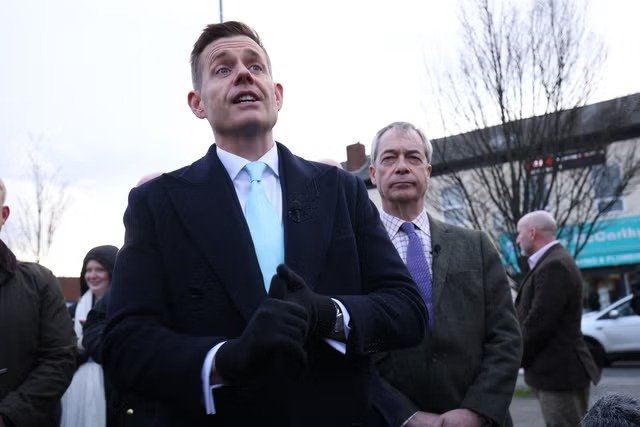
Labour has accused the Reform UK candidate in the Gorton and Denton byelection of embodying what it calls toxic politics. The attack follows an online endorsement from the far-right activist Tommy Robinson, a figure long associated with anti-Islam campaigning and extremist rhetoric in Britain.
The intervention has intensified political tensions ahead of the 26 February vote in Greater Manchester. Labour figures argue the endorsement exposes the ideological direction of Reform UK, despite efforts by its leader Nigel Farage to distance the party from Robinson.
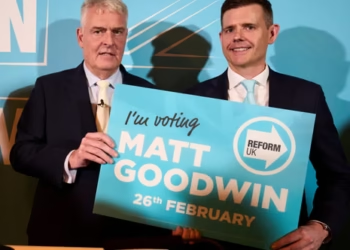
Robinson posted a brief message on social media urging his large following to support Reform’s candidate, Matthew Goodwin. The post was widely shared and quickly seized upon by Labour campaigners seeking to draw a sharp dividing line between the parties.
Labour said the endorsement demonstrated that Reform’s claims of moderation were not credible. Party officials argued that Robinson’s backing revealed an alignment with divisive ideas that risk deepening social fractures within the community.

A Labour campaign spokesperson said the stakes of the byelection were unusually high. They claimed voters faced a clear choice between unity and stability or what they described as division and political risk.
The party is presenting itself as the only realistic challenger capable of defeating Reform in the constituency. Labour has also used the moment to appeal to progressive voters who may be considering supporting smaller parties.
Reform UK moved quickly to reject Robinson’s intervention. A party spokesperson said Robinson was not welcome and insisted he had no association with the organisation. They stressed that endorsements from external figures did not reflect party policy.
Despite that response, Labour has continued to press the issue. Campaigners argue that far-right support does not emerge in a vacuum and reflects deeper ideological sympathy.
The situation is particularly awkward for Nigel Farage, who has spent years attempting to keep distance between his political projects and Robinson. Farage previously quit Ukip when Robinson was appointed as an adviser under a different leadership.
Political analysts say the endorsement risks undermining Reform’s efforts to broaden its appeal. The party has sought to position itself as a populist alternative rather than a vehicle for extremist views. Matthew Goodwin, the Reform candidate, is already a controversial figure. A former academic, he now works as a presenter on GB News and is known for outspoken views on identity and immigration.
Goodwin has previously questioned whether some UK-born citizens from minority ethnic backgrounds should automatically be considered British. Those comments have drawn criticism from across the political spectrum. When asked recently whether he still held those views, Goodwin declined to give a clear answer. He told an audience that citizenship involved more than legal documentation alone.
Labour has seized on those remarks as further evidence of what it calls exclusionary politics. Campaigners argue such views undermine social cohesion in a diverse city like Manchester.The Greens have also entered the race, unveiling their candidate and challenging Labour’s claim to be the main opposition. Green representatives argue that dissatisfaction with Labour creates space for an alternative progressive choice.
They point to Labour’s national polling difficulties and its decision not to field Greater Manchester mayor Andy Burnham in the seat. According to the Greens, this weakens Labour’s local appeal. Labour rejects that assessment and says momentum is firmly on its side. An internal memo prepared for senior party figures suggests early campaigning has produced encouraging signs.
The memo claims door-knocking has revealed strong support for Labour among undecided voters. It also suggests the Green party is failing to gain significant traction locally.
Labour organisers say volunteer mobilisation has been faster than in recent byelections. They describe the campaign start as exceptionally strong and well coordinated.
The party hopes to convert that early energy into a decisive result on polling day. Strategists believe framing the contest as a battle against extremism could energise turnout. Tommy Robinson, whose real name is Stephen Yaxley-Lennon, remains a polarising presence in British politics. He first gained attention as the founder of the English Defence League.
The group organised street protests focused on opposition to Islam and immigration. Robinson later became associated with broader far-right movements in the UK and abroad. He has a criminal record that includes convictions for assault, mortgage fraud, and passport offences. These convictions have reinforced his notoriety and public controversy.
Robinson’s profile has grown since his social media accounts were reinstated. He now presents himself as a journalist and activist, though critics dispute that characterisation.
Much of his online content focuses on immigration and Muslim communities. Campaign groups argue his messaging contributes to hostility and misinformation. His reach has expanded beyond the UK, particularly in the United States. Supporters view him as a free speech campaigner, while critics see an extremist agitator.
Last year, Robinson organised a large protest in London that drew tens of thousands of participants. The event highlighted his continued ability to mobilise supporters.
For Labour, Robinson’s endorsement represents a strategic opportunity. By linking Reform to far-right activism, the party hopes to consolidate centre-left and moderate voters. Labour figures argue that silence or ambiguity on such endorsements is not acceptable. They say political leaders must take responsibility for the company they keep.
Reform counters that it cannot control who supports its candidates online. Party officials insist their platform does not align with Robinson’s views.
However, critics argue that the absence of robust condemnation leaves room for interpretation. They say voters will judge parties by patterns rather than statements. The byelection has therefore become a symbolic contest over values as much as policy. Issues of identity, inclusion, and democratic norms are now central themes.
Local community leaders have urged calm and respectful debate. They warn that inflammatory rhetoric risks deepening divisions within the constituency.

Voters in Gorton and Denton face a crowded political landscape. The outcome may offer clues about the future direction of opposition politics in England. National parties are watching closely for signs of shifting allegiances. The result could influence campaign strategies ahead of future elections.
As the campaign enters its final weeks, rhetoric is expected to intensify. Endorsements, controversies, and turnout efforts will shape the final outcome. For many residents, everyday concerns remain paramount. Housing, jobs, and public services still dominate doorstep conversations. Yet the shadow of national politics looms large over the contest. The debate over extremism and political responsibility shows no sign of fading.
Whether Robinson’s intervention proves decisive remains uncertain. What is clear is that it has reframed the narrative of the byelection. The vote will test whether association, even indirect, carries electoral consequences. It will also measure public appetite for protest politics in a diverse urban seat. As polling day approaches, parties are sharpening their messages. Voters will ultimately decide which vision they trust to represent them.
Related News:
 Tories Push to Dilute Labour’s Workers’ Rights Bill
 It’s time to come clean on the China spy case
 Rachel Reeves Admits Renting Home Without Required Licence
 Experts Question HMRC Over Possible Child Benefit Privacy Breach
 Phillipson urges careful review of gender recognition guidance
 French Taxi Driver Cleared in David Lammy Theft Case After Fare Dispute
 Met Police Culture Makes Racial Harm ‘Inevitable’
 Remaining rebel Labour MPs have whip restored
 Tim Davie resigns as BBC director general amid bias claims
 Palace to reinstate hyphen in Andrew’s surname
 BBC Apologises to Trump but Rejects $1bn Compensation Claim
 Major Rent Reform Ends No-Fault Evictions in England
 Peers Flood Assisted Dying Bill with 942 Amendments
 Your Party Turmoil Deepens Over Withheld Donations
 UK Unveils Fast-Track Deportation and Asylum Overhaul
 UK Asylum Overhaul Sparks Debate Over Human Rights and Deportations
 UK Asylum Reforms: Temporary Refugee Status and Faster Deportations
 Mahmood Defends Tough Overhaul of UK Asylum System
 Scottish Ministers Express Alarm Over UK Asylum Reforms
 Westminster Advances Legacy Bill Amid Criticism
 Minister Defends Tough New Asylum Reform Plan
 UK Net Migration Falls Sharply After ONS Revisions
 Peers Get Extra Time to Debate Assisted Dying Bill
 Plans to Limit Jury Trials Face Retreat After Mounting Opposition
 Tim Walz urges Trump to withdraw federal agents immediately
 Calls Grow for King Charles to Apologise for Crown’s Role in Slavery
 UK and EU Signal Fresh Push for Defence Cooperation Talks
 Files Link Andrew to Epstein Dinner After Prison Release
 Emails Show Epstein Funded Mandelson’s Husband After Jail
 Tasers Introduced in UK Prisons to Combat Rising Violence and Protect Staff
 Tanni Grey-Thompson Faces Abuse Over Opposition to Assisted Dying Bill
 Mahmood Pledges Reform of Modern Slavery Laws After Court Blocks Deportation Appeal
 Migrants in UK May Need to Contribute or Face Removal, Home Secretary Signals
 Digital ID Plans Ignite Debate Over £600m Treasury Tax Boost and Privacy Concerns
 Johnson Approved China’s London ‘Super-Embassy’ in 2018
 Green Party Surges Past Labour in Latest UK Poll
 Celebrities and Charities Demand UK Government Act on Child Poverty
 Trump’s UK Ambassador Urges North Sea Drilling to Strengthen US Ties
 FBI Director Kash Patel Defends Girlfriend Amid Government Jet Claims
 Just Stop Oil Protesters Convicted Amid Climate Defence Row
 King Charles to Lead Nation in Remembrance Sunday Service
 ‘Reckless’ cuts to victims’ services will cost more than they save
 Millionaires group urge Reeves to introduce wealth tax to ‘lift kids out of poverty’
 Starmer Faces Growing Dissent as Labour MPs Weigh Leadership Challenge
 Reeves rejects £1bn plea for NHS redundancy payouts
 Politics latest: Starmer ‘will fight any leadership coup’ as Streeting denies attempt to oust Labour PM
 PM Condemns Leaks, Vows Loyalty to Ministers and Stability
 England’s Special Needs Support Faces Breaking Point
 US Justice Department Files Lawsuit Against California Over Partisan Voting Maps
 MoD warned over Excel risks before Afghan data breach
 Trump Deploys DHS to Charlotte in Major Arrest Operation
 Labour Faces Historic Decline in Wales
 Serial Rapist and Former Cop Found Guilty Again
 PM Highlights UK Business at G20 in South Africa
 Most Tories Expect to Support a Farage-Led Government
 Labour MP claims devolution bill is ‘blatant discrimination’ against Cornwall
 Millions Face Higher Taxes Under Reeves New Budget
 US National Guard Member Killed in DC Shooting
 ICC to Rule on Duterte’s Provisional Release
 Starmer Says Labour’s Economic Plan Needs Years to Deliver
 Virgin Media Fined £23.8m Over Telecare Safety Failures
 Culture secretary to review Telegraph takeover by Daily Mail owner
 Protest Rights Under Threat Across England and Wales
 Google Employee Claims Redundancy After Harassment Report
 Woman Jailed for Life After Killing E-Bike Rider in Tragic Mistaken Identity Case
 Right Must Unite After Jenrick Defection, Urges Rees-Mogg
 UK Ministers Drop Foreign Student Targets for Global Education Push
 MPs warn AI financial risks threaten UK stability
 MPs warn AI financial risks threaten UK stability
 No Gas Boiler Ban as UK Warm Homes Plan Backs Heat Pumps
 Hugh Grant Joins Call for Under-16 Social Media Ban in UK
 Shinzo Abe’s killer receives life sentence in Japan
 Lords Vote Piles Pressure on Starmer Over Social Media Ban
 Reform UK Health Plan ‘Would Cost £1.7bn’, Streeting Says
 Police response times face strict new national limits
 Labour policing overhaul sparks fears over growing central control
 Tories criticised after Braverman defection sparks mental health row
 Starmer warns of toxic division politics in Reform challenge
 Starmer China visit raises human rights pressure on Beijing
 Study Finds One in Seven England Takeaways Are Dark Kitchens