Published: 06 February 2026. The English Chronicle Desk. The English Chronicle Online.
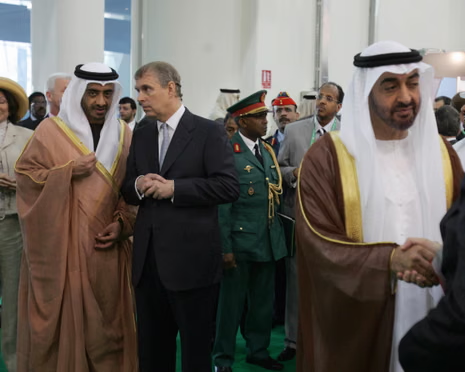
In a stunning development that has reverberated through UK and international media, newly released Department of Justice emails reveal that Andrew Mountbatten‑Windsor Epstein emails show the former royal actively vouched for convicted sex offender Jeffrey Epstein during a UK state visit to the United Arab Emirates in 2010. The latest disclosures have reignited debate over the depth of their relationship and raised uncomfortable questions about transparency and influence. The focus on Andrew Mountbatten‑Windsor Epstein emails has dominated headlines this week, drawing scrutiny from politicians, legal experts, and royal commentators alike.
The documents, released as part of an expansive tranche of files from the United States Justice Department, include an email sent on 24 November 2010 from the account labelled “The Duke” to Epstein. In it, Andrew appears to relay praise from Sheikh Abdullah bin Zayed Al Nahyan, then UAE foreign affairs minister, who thought highly of Epstein and was willing to meet him through Crown Prince Sheikh Mohamed bin Zayed Al Nahyan. The email suggests Andrew described Epstein as impressive and sought to facilitate introductions to influential figures. Epstein replied in a manner that encouraged further social engagement, even proposing joint travel with Emirati leaders. These revelations regarding Andrew Mountbatten‑Windsor Epstein emails have emerged amid a broader review of his past interactions and influence.

Beyond the UAE correspondence, other messages within the Andrew Mountbatten‑Windsor Epstein emails suggest Epstein met key Emirati officials shortly before and after the state visit, including Sheikh Mohammed bin Rashid Al Maktoum, the ruler of Dubai. One email purportedly shows Epstein coaching Andrew on how to promote his qualities, such as financial expertise and trustworthiness, to Arab dignitaries. While there is no suggestion of impropriety by the Emirati officials themselves, the nature of the encouragement has raised eyebrows across diplomatic circles. The Andrew Mountbatten‑Windsor Epstein emails thus provide rare insight into how privileged networks could be used to broker introductions for controversial figures.
The unfolding story goes beyond one moment in the Middle East. A series of related revelations from the latest release of Epstein documents paint a broader picture of the relationship between Andrew and Epstein that persisted well after the disgraced financier’s house arrest for soliciting a minor. Separate coverage has highlighted continued electronic communication into 2011 that appears to contradict the former royal’s public claims of cutting ties in 2010. Emails from early 2011 show messages from Andrew telling Epstein they would “keep in close touch and play some more,” emerging just days after a now‑famous photograph of Andrew with Epstein and Ghislaine Maxwell was published. These Andrew Mountbatten‑Windsor Epstein emails have provoked intense examination of the timeline and truthfulness of his stated break from the financier.
Political leaders in the UK have responded swiftly to the latest disclosures. The Labour Party’s Keir Starmer has called for Andrew to testify before US authorities about the extent and nature of his interactions with Epstein, while legal experts argue that the newly surfaced Andrew Mountbatten‑Windsor Epstein emails could be material in ongoing investigations in America. The documents have highlighted conversations about potential introductions to business figures, invitations to dinner, and social overtures that critics say demonstrate poor judgment given Epstein’s criminal convictions. Proponents of transparency argue that all correspondence, regardless of perceived intent, should be examined to ensure accountability.
Public reaction has been fierce and varied. Many commentators on social platforms express disbelief that someone so closely tied to the British monarchy could be engaged in such exchanges with a convicted sex offender, yet others caution against assuming guilt by association. The emergence of multiple strands within the Andrew Mountbatten‑Windsor Epstein emails—from diplomatic introductions to proposals of personal meetings—has intensified the national conversation about privilege, responsibility, and royal conduct in modern public life. Media outlets across the world continue to parse each email fragment for contextual meaning and relevance.
Family dynamics have also come under the spotlight, as revelations about the Andrew Mountbatten‑Windsor Epstein emails propagate beyond politics and international relations into the private sphere of the royal family. Reports suggest that Princess Beatrice and Princess Eugenie feel betrayed by the ongoing stream of disclosures, believing their father’s public assurances about cutting ties with Epstein long ago may have been incomplete. This emotional undercurrent adds a deeply personal layer to the broader geopolitical and legal implications now unfolding.
Despite the mounting controversy, Andrew Mountbatten‑Windsor has consistently denied any personal wrongdoing. His representatives maintain that the exchanges should not be interpreted as evidence of criminal conduct, noting that official roles often involve extensive communication with a wide range of individuals and that no direct accusations of criminal collaboration are made within the emails themselves. Government officials in both the UK and the UAE have declined to comment on the diplomatic correspondence, underscoring the sensitivity and complexity of these matters.

As the story continues to develop, legal analysts underscore the importance of separating fact from speculation. While the Andrew Mountbatten‑Windsor Epstein emails undeniably reveal communications with a controversial figure, the implications for legal liability remain unclear. Some experts argue this could prompt renewed scrutiny of how email metadata and context are weighed in judicial proceedings, particularly when they involve public figures whose reputations and legacies are at stake. Others are focusing on possible diplomatic ramifications, asking how such revelations may affect the UK’s relationship with Middle Eastern partners long after 2010.
The latest tranche of documents from the Epstein files has already had significant consequences, including police reviews of related allegations and broader discourse on accountability among the elite. As further portions of the files are expected to be released in the coming weeks, more aspects of the Andrew Mountbatten‑Windsor Epstein emails may come to light, potentially shaping the narrative around one of the most controversial royal scandals in modern British history. The world watches as institutions grapple with the fallout and seek answers in a case that defies easy resolution.
Related News:
 Shock US Raid: Maduro Pleads Not Guilty in Manhattan Court
 Trump Plans Venezuela Meeting, Warns of Cartel Land Strikes
 Mandelson apologises over Epstein ties after public scrutiny
 Rudd successor: Defence chief and former ministers considered
 US Senate rejects resolution limiting Trump military powers
 Trump Calls Greenland Critical for US Security After Denmark Talks
 Trump: Iran Killing Has Stopped, Strike Threats Pulled Back
 Machado Trump medal gesture reshapes Venezuela power struggle
 Trump Receives Machado’s Nobel Medal in White House Meeting
 Iran unrest slows under brutal crackdown and global tensions
 Trump Allies Pursue $200m European Gas Pipeline Deal
 US Considers Asylum for British Jews Amid Rising Antisemitism
 Starmer Challenges US Over Controversial Greenland Deal
 Spoof “Make America Go Away” Caps Rally Denmark Over Greenland
 Trump slams UK ‘stupidity’ over Chagos Islands, eyes Greenland takeover
 UK Presses On With Chagos Handover Despite Trump Criticism
 Kim Jong-un Fires Vice-Premier Over Factory Failures
 Shinzo Abe’s killer receives life sentence in Japan
 Starmer Resists Matching Trump Amid Greenland Tensions
 Netanyahu Accepts Trump’s ‘Board of Peace’ Invitation
 South Korean Ex-PM Jailed 23 Years Over Martial Law Role
 Russia Strikes Kyiv and Kharkiv as Peace Talks Enter Day Two
 Canada Rules Out Free Trade Deal With China Amid US Tensions
 Turnbull urges Albanese to confront Trump’s global ‘bully’ politics
 Snow Threatens Japan Election Turnout Amid Extreme Cold
 Keir Starmer meets Xi to strengthen UK-China economic relations
 Crisis Looms as Liberals Debate Sussan Ley Future
 Cambridge Faces Scrutiny Over Arms Investment Transparency
 Files Link Andrew to Epstein Dinner After Prison Release
 Thousands Protest ICE Operations in Nationwide US Day of Action
 Epstein Files Reveal Trump Officials’ Emails with Financier
 Thousands Protest ICE in New York Against Trump Deportation Campaign
 Trump-Petro Meeting Sparks Hopes of Diplomatic Detente
 Trump softens stance on Chagos Islands deal after Starmer call
 Green Party Surges Past Labour in Latest UK Poll
 Army Officers Orders to Cut Ties with Men-Only Clubs
 Trump’s UK Ambassador Urges North Sea Drilling to Strengthen US Ties
 French Taxi Driver Cleared in David Lammy Theft Case After Fare Dispute
 Labour immigration crackdown could cost UK £4.4bn
BBC to Apologise Over Edited Trump Speech Amid Backlash
Labour immigration crackdown could cost UK £4.4bn
BBC to Apologise Over Edited Trump Speech Amid Backlash
 Britain deploys RAF specialists to assist Belgium with drone threats
 Millionaires group urge Reeves to introduce wealth tax to ‘lift kids out of poverty’
 Starmer Faces Growing Dissent as Labour MPs Weigh Leadership Challenge
 Reeves rejects £1bn plea for NHS redundancy payouts
 PM Condemns Leaks, Vows Loyalty to Ministers and Stability
 Major Rent Reform Ends No-Fault Evictions in England
 Senator John Fetterman Hospitalized After Fall from Heart Flare-Up, Keeps Sense of Humor
 Greene Pushes Epstein Files Amid Trump Fallout
 Trump Deploys DHS to Charlotte in Major Arrest Operation
 December Run-Off in Chile as Election Produces No Winner
 Canada Passes Carney’s First Budget in Tight Parliamentary Vote
 Shadow Fleet at Sea: Europe’s Battle Against Illicit Oil Shipping
 Most Tories Expect to Support a Farage-Led Government
 Georgians Defy Government Crackdown After Year of Protests
 US National Guard Member Killed in DC Shooting
 ICC to Rule on Duterte’s Provisional Release
 Starmer Says Labour’s Economic Plan Needs Years to Deliver
 Khaleda Zia Death in Bangladesh: First Female PM Dies at 80
 Russia losses Ukraine war peace talks intensify amid rising deaths
 Albanese Opens Door to Bondi Royal Commission Amid Rising Pressure
 Trump Escalates Minnesota Immigration Surge Amid Rising Tensions
 Saudi Officials Report Zubaidi Flee Before Yemen Peace Talks
 UK Targets in New York Bomb Threat Hoax: Man Jailed
 Iran Protesters Defy Crackdown as Violent Clashes Intensify
 Homeland security agents deployed amid Minneapolis protests
 Gulf states warn Trump Iran strikes risk wider Middle East war
 Geopolitical football: Iran, Trump and the World Cup clash
 EU weighs response amid Greenland tariff crisis with Trump
 UK Ministers Drop Foreign Student Targets for Global Education Push
 No Gas Boiler Ban as UK Warm Homes Plan Backs Heat Pumps
 American democracy faces crisis after Trump’s return
 Sussan Ley leadership milestone shakes Liberal future
 EU Says US Ties Have Suffered ‘Big Blow’ After Greenland Crisis
 Satire Can Skewer Trump, But It Won’t Save Democracy
 Police response times face strict new national limits
 China General Under Investigation Amid Leadership Purge
 Labour policing overhaul sparks fears over growing central control
 Starmer warns of toxic division politics in Reform challenge
 Israel Moves to Bar MSF From Gaza Operations
 Palantir contracts face UK halt calls over transparency