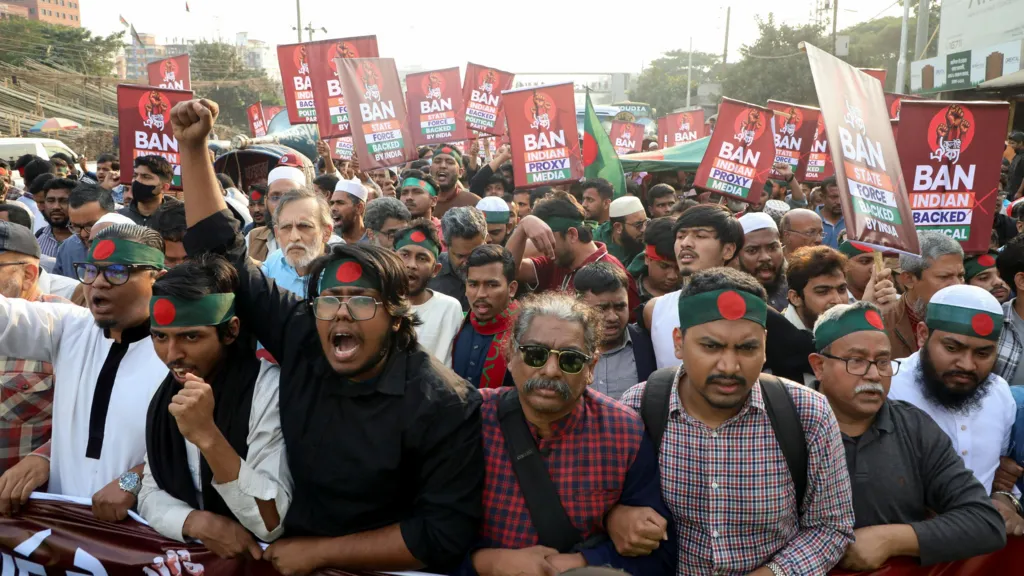
As Bangladesh heads into a pivotal national election, questions are intensifying over whether the country’s youth are increasingly turning against India, a trend analysts say is linked less to cultural antipathy and more to political disillusionment, nationalist narratives and long-standing grievances over bilateral issues. While sweeping claims of a youth “anti-India” movement are overstated, there is clear evidence of growing scepticism and criticism among segments of young Bangladeshis, particularly on social media, in protest circles and political discourse.
This discussion has intensified in recent months against a backdrop of domestic turmoil — from student-led uprisings that helped oust former Prime Minister Sheikh Hasina in 2024 to simmering tensions over economic cooperation, political interference perceptions and sports-related flashpoints in cricket and other arenas that have spilled across borders.

What Youth Attitudes Really Reflect
Experts caution against simplistically labelling Bangladesh’s younger generations as uniformly hostile toward India. Instead, their views are shaped by political experience, economic frustration and nationalist rhetoric more than outright anti-India sentiment. For many young Bangladeshis, scepticism stems from perceptions that India’s close ties with previous governments — especially during Sheikh Hasina’s long tenure — were linked to domestic repression or interference. Analysts note that these views are often expressed most loudly on social media and digital forums, where narratives of unequal economic relations, political meddling and sovereignty concerns circulate widely.
Indeed, Scroll reported that perceptions of economic inequality, such as tariff barriers and India’s abrupt withdrawal of a transshipment facility for Bangladeshi exports, have fuelled frustration among business-minded young professionals and students who feel Bangladesh’s economy has not benefitted fairly from ties with India.
Similarly, political discourse — including in opinion pieces and online commentary — shows that many youth and young activists are calling for sovereign foreign policy and resistance to any perceived dominance by larger neighbours, including India. These views tend to peak in election periods and high-stakes diplomacy moments.
The Effects of Domestic Politics and Identity
Bangladesh’s internal political landscape contributes heavily to how youth view foreign relations. The ouster of Hasina’s government, political violence, and renewed activism by groups including Jamaat-e-Islami and its student wing have shifted the political centre of gravity. Some of these actors actively promote criticism of India’s influence as part of broader nationalist and Islamist narratives, which can resonate with disenfranchised youth.
In recent protests, anti-India sentiments have occasionally appeared not because of broad cultural opposition but as part of broader political challenges to past alliances and state actions. In some instances, dissatisfaction with foreign policy decisions — including how cricket protests and sporting interactions were handled — has spilled into symbolic expressions of frustration toward India, especially among digitally connected young people.
Sports and Cultural Dimensions
Even sporting events have become touchpoints for wider sentiment. Bangladesh’s refusal to play India in a high-profile cricket series over security concerns demonstrated how political and diplomatic contexts can influence youth discourse around bilateral relations. Such moves do not necessarily mean a wholesale rejection of India by large swathes of youth, but they do highlight how politics and culture intertwine in shaping attitudes.
Caution Against Oversimplification
While certain media and social sectors amplify anti-India narratives, it remains important to recognise that Bangladesh society as a whole is far from uniformly antagonistic toward its giant neighbour. Many young people continue to admire Indian culture, enjoy Indian films and music, and pursue academic and professional opportunities linked to India and beyond. Some social media studies have even pointed out that online discussions can over-emphasise negative sentiment simply because conflict-driven posts tend to get more interaction — a pattern not unique to Bangladesh or India.
Additionally, Bangladesh’s population demographics — with about a quarter of the electorate comprised of Generation Z — mean that economic and governance issues often outweigh foreign policy in young people’s priorities, especially as unemployment, education quality and political representation take centre stage.

What Comes Next
In the weeks ahead, Bangladesh’s general election is poised to be a key barometer of how young voters view international relations, including ties with India. Political parties competing for power are framing their positions not just on domestic governance but on sovereignty, foreign influence and economic partnerships. How effectively they address youth aspirations — economic opportunity, good governance and regional cooperation — will likely shape the narrative around relations with India and other neighbours.
For now, the question “Is Bangladesh’s youth turning against India?” cannot be answered with a simple yes or no. Rather, what emerges is a complex tapestry of political, economic and identity-driven sentiments, with animated debates among young Bangladeshis reflecting broader questions about national direction, regional engagement and sovereignty in a rapidly changing South Asian context.
Publication Details
Published: 10 February 2026
The English Chronicle Desk
World News / South Asia
Related News:
 Shock US Raid: Maduro Pleads Not Guilty in Manhattan Court
 UK and France Agree Troop Deployment Plan for Ukraine
 EU Weakens as Trump Targets Venezuela and Greenland
 Israel Dossier Sparks Australian Political Interference Concern
 Venezuela Oil Deal Opens Tensions with US Control
 US Citizens Warned to Venezuela Flee Amid Paramilitary Threats
 Trump Says US Will Act on Greenland ‘Whether They Like It or Not’
 Gulf states warn Trump Iran strikes risk wider Middle East war
 Machado Trump medal gesture reshapes Venezuela power struggle
 Greenland defence seen as shared Nato duty amid troop arrivals
 Gulf states warn Trump Iran strikes risk wider Middle East war
 Trump Receives Machado’s Nobel Medal in White House Meeting
 Iran unrest slows under brutal crackdown and global tensions
 Syria President Declares Victory as Ceasefire Reached with SDF
 US Considers Asylum for British Jews Amid Rising Antisemitism
 Russia Strikes Kyiv and Kharkiv as Peace Talks Enter Day Two
 Emails Show Epstein Funded Mandelson’s Husband After Jail
 Thousands Protest ICE Operations in Nationwide US Day of Action
 Epstein Files Reveal Trump Officials’ Emails with Financier
 Thousands Protest ICE in New York Against Trump Deportation Campaign
 US Must Be Prudent When Supplying Arms to Taiwan, Xi Tells Trump
 Fears of New Arms Race as US-Russia Nuclear Weapons Treaty Expires
 US Military Says Two Killed in Strike on Alleged Drug Boat in Eastern Pacific
 Trump Endorses Japan’s Takaichi Ahead of Snap Election
 UK Must Act with Courage and Clarity on Israel-Palestine Conflict, Says Foreign Affairs Committee Report
 Tottenham Takes On Newcastle
 Radioactive Leak at UK’s Nuclear Warhead Base Sparks Outcry Over Safety and Secrecy
 Terence Stamp, ’60s British Film Legend and Star of Superman, Dies at 87
 Hong Kong Summons UK and Australian Envoys Following Asylum Grants to Democracy Activists
 Is the UK Ready to Put Boots on the Ground in Ukraine? Assessing Military Capacity and Challenges
 Channel Crossings Surge: Over 1,000 People Arrive in the UK in Small Boats in a Single Day
 Widow of Charlie Kirk Forgives Killer at Emotional Memorial Service
 Public Executions in Gaza City Captured on Video Amid Ongoing Conflict
 Macron Phones Trump Over Traffic Jam in New York
 Comey Indictment Deepens Fears of Political Retribution Under Trump
 Google at 27: The Untold Story of Ruth Kedar, the Woman Behind the Iconic Logo
 Yvette Cooper Signals Global Momentum Towards Gaza Peace Deal Amid Humanitarian Crisis
 “It Was Very Tough, But I Love Life”: Former Israeli Hostage Rebuilds Life After Family Killed by Hamas
 Chaos at Ibrox as Martin’s Rangers Era Comes to an End
 Nobel Prize Honours Pioneers Behind Materials That Could Heal the Planet
 Trump Claims Modi Has Agreed to Halt Russian Oil Imports Amid Heightened US Pressure
 Russia’s Latest Push to Win US Favors Shows Deep Desperation
 I’m a Celebrity 2025 line-up revealed: Osbourne joins
 BBC to Apologise Over Edited Trump Speech Amid Backlash
 Britain deploys RAF specialists to assist Belgium with drone threats
 Palace May Restore Hyphen to Andrew Mountbatten-Windsor’s Name
 Trump Urges Herzog to Grant Netanyahu Full Pardon
 Indian authorities demolish Kashmir home linked to Red Fort blast
 Greene Pushes Epstein Files Amid Trump Fallout
 December Run-Off in Chile as Election Produces No Winner
 Zelenskyy Signs Fighter Jet Deal Amid Russian Drone Attacks
 Canada Passes Carney’s First Budget in Tight Parliamentary Vote
 Shadow Fleet at Sea: Europe’s Battle Against Illicit Oil Shipping
 Tiny Curacao Makes History as Smallest Nation to Reach World Cup
 Deadly Russian Strikes Hit Western Ukraine, 20 Killed in Ternopil
 Ukraine Peace Plan: Zelensky Ready for Dialogue
 India’s COP30 Delay Raises Global Climate Concerns
 Royal Navy Shadows Russian Warships Entering the Channel
 Trump EPA Moves to Roll Back Soot Pollution Limits
 US Suspends Afghan Immigration After White House Shooting
 Georgians Defy Government Crackdown After Year of Protests
 Tokyo court rules Japan’s same-sex marriage ban constitutional
 ‘Extinct’ Antelope Returns to Sahara, Bringing Hope
 American Mother Extradited From UK to U.S. on Murder Charges
 Facebook Slow to Remove Bondi Attack Praise, Anti-Hate Group Claims
 Albanese Opens Door to Bondi Royal Commission Amid Rising Pressure
 Saudi Officials Report Zubaidi Flee Before Yemen Peace Talks
 Trump Weighs Response to Iran Crackdown as Tehran Says Communication Open With US
 US Clears Nvidia AI Chip Sales to China in Policy Shift
 US Senate rejects resolution limiting Trump military powers
 Geopolitical football: Iran, Trump and the World Cup clash
 EU weighs response amid Greenland tariff crisis with Trump
 Sydney Shark Attack Surge Shocks Australia Beaches
 Shinzo Abe’s killer receives life sentence in Japan
 American democracy faces crisis after Trump’s return
 EU Says US Ties Have Suffered ‘Big Blow’ After Greenland Crisis
 China General Under Investigation Amid Leadership Purge
 Videos reveal earlier clash before Alex Pretti shooting
 UK New Car Discounts Near £6,000 as Prices Are Slashed
 Israel Moves to Bar MSF From Gaza Operations