Published: 05 December 2025. The English Chronicle Desk. The English Chronicle Online
A fast‑spreading outbreak of measles has been confirmed in several schools across London, prompting urgent action from public health authorities and growing concern among parents, educators, and the wider community. The outbreak, which began with a number of isolated cases among pupils, has now escalated to an official alert, with health officials calling on families to ensure children are vaccinated and to be vigilant for symptoms.
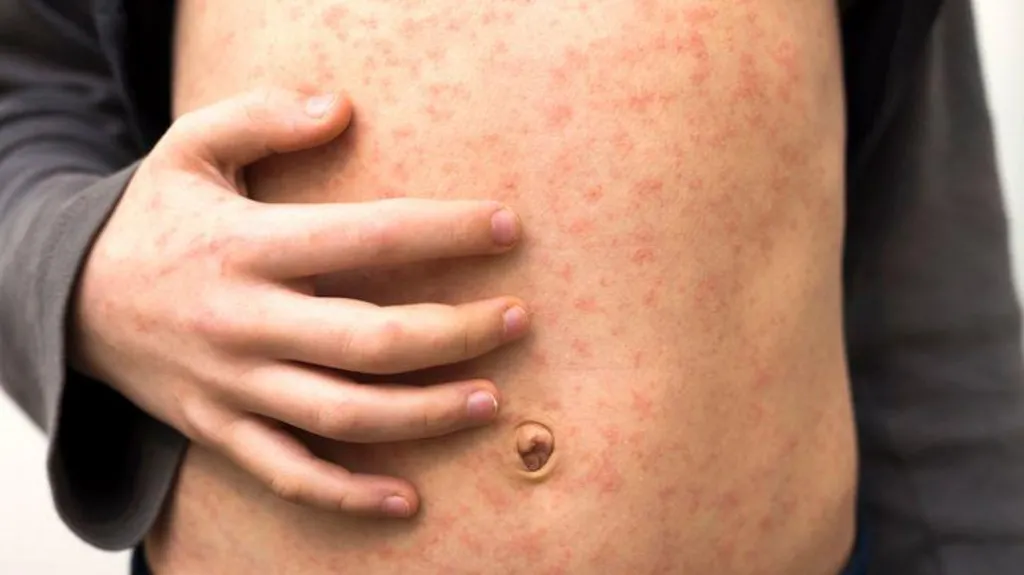
Measles, a highly contagious viral disease, can spread rapidly in environments where people are in close contact — such as classrooms, assembly halls and school buses. Early symptoms include fever, runny nose, cough and red eyes, followed by a distinctive rash that typically begins on the face and spreads across the body. While vaccination has reduced the disease’s prevalence dramatically in recent decades, pockets of under‑immunised populations can still facilitate outbreaks.

Government health agencies in London have identified clusters of cases at multiple primary and secondary schools in different boroughs. Local health protection teams are working closely with school administrators to track possible exposures, notify affected families, and provide guidance on preventing further transmission. Although most children recover fully, measles can lead to serious complications, especially in young children and those with weakened immune systems.
Officials are urging parents to check their children’s immunisation status, especially the measles, mumps and rubella (MMR) vaccine, which is the most effective means of protection against measles. The standard schedule in the UK includes two doses of the MMR vaccine, and health authorities report that individuals who have received both doses are highly unlikely to contract the disease.
Dr Susan Hargrave, a London health protection lead, said that “urgent steps are being taken to contain the spread.” She highlighted that rapid identification of cases, isolation of symptomatic individuals, and vaccination of susceptible contacts are central to controlling the outbreak. “We are working with schools and families to ensure that children showing symptoms are kept away from settings where they could infect others, and that vaccination records are up to date,” she added.
Affected schools have sent letters to parents and guardians, advising that any child exhibiting signs of measles — such as high fever, red eyes, rash and lethargy — should stay home and contact a GP or local health service. Some schools have also temporarily postponed large gatherings, assemblies, and extracurricular activities to minimise the risk of transmission while investigations continue.
In some affected areas, immunisation rates for measles have been lower than the national average, a factor that health professionals believe may have contributed to the outbreak’s rapid spread. Public health experts emphasise that measles requires very high levels of population immunity — typically around 95% — to interrupt transmission, and even small gaps can facilitate cluster outbreaks.
London families expressed a mix of concern and frustration. One parent said: “We thought measles was something that had been dealt with years ago. Seeing it spread through schools is frightening. We’ve booked our son’s MMR appointment as soon as possible.” Another school governor noted that the situation “underscores how important it is for parents to ensure children are up to date with vaccinations.”
While efforts to control the outbreak are underway, public health authorities stress that measles remains largely preventable through vaccination. Schools, clinics, and local health services are collaborating to offer catch‑up immunisation clinics and share educational resources with families to improve awareness about symptoms, transmission, and prevention.

Measles outbreaks are a reminder that preventable diseases can resurface when vaccination coverage declines or if community immunity weakens. As London confronts this latest cluster of cases, the public health response aims not only to contain current infections but also to reinforce the importance of vaccination as a cornerstone of community health and disease prevention.
Related News:
 NHS Resident Doctors Vote for Strike Action Amid Escalating Pay Dispute
 Concerns Mount Over Accuracy of At-Home Health Tests as Study Calls for Stricter Regulation
 Ageless Energy: How Life After 40 Is Sparking a New Era of Vitality and Innovation
 Labour Faces Standoff as NHS Strike Exposes Deeper Crisis
 The Ketamine Crisis in the UK is a Silent Epidemic Leaving Users with Lifelong Pain
 Justin Timberlake Shares His Lyme Diagnosis and the Strain of Performing Through Illness
 ‘I’m Trying to Cut Down My Alcohol Intake and This 99p Low-Calorie Drink Converted Me’
 Woman Warned She Might Need Leg Amputation to Survive After Liquid Brazilian Butt Lift
 It’s Thanks to Gabby That I Caught My Prostate Cancer in Time’ – Kenny Logan Opens Up on His Battle and His Mission to Save Lives
 Rugby Confronts Safety Concerns with Smart Mouthguards at Women’s World Cup
 Cats Develop Dementia Similarly to Humans, Study Finds
 Money Problem: ‘My husband is freelance and in hospital – how can I make sure we don’t lose our home?’
 Alarming rise in abusive teen relationships in the UK sparks urgent warnings
 Shocking Rise in Children’s Exposure to Violent Online Pornography Raises Alarm
 Compulsory Period Education for Boys and Girls Urged by New Study
 Calls Grow for a Complete Ban on Smacking as Public Opinion Shifts
 Baby Food Manufacturers Given 18 Months to Improve Nutrition and Labelling
 Costa Blanca Holiday Horror as Food Poisoning Outbreak Hits Four-Star Hotel
 ‘REAL DANGER’: Stark Fresher’s Flu Warning After 23-Year-Old Student, Who Woke Up With Sore Throat, Loses All Four Limbs
 NHS Launches Free Flu Vaccine Drive as Millions Urged to Get Protected
 Why E-Bikes and E-Scooters Are Making Streets a ‘Nightmare’ for Blind People
 Millions in the UK at Higher Risk of Heart Failure and Stroke Due to Air Pollution, Study Warns
 British Pilot Joins Crew Training for Year-Long Mars Simulation Mission
 UK Graduates in Healthcare Report Highest Satisfaction with Degree Choices
 Systemic Racism in Maternity Care Continues to Endanger Black Women in England, MPs Warn
 One in Three GPs in England Do Not Work in NHS, Raising Concerns Over Access to Care
 UK Doctors Guilty of Sexual Misconduct Continue Practising Amid Weak Sanctions, Research Finds
 Starmer Unveils Plan for NHS “Online Hospital” to Tackle Waiting Lists
 UK Health Officials Monitor New ‘Stratus’ Covid Variant Amid Rising Cases
 Questions Remain as Rugby Legend Lewis Moody Faces Motor Neurone Disease Diagnosis
 Women Challenge Meta Over Targeted Ads After Miscarriage
 Sir Michael Caine Urges Starmer to End Smacking in England
 £18 Prostate Cancer Test Could Save Thousands of Lives
 One in 12 Secondary Pupils Sent to Isolation Weekly
 M&S and Morrisons Lead Christmas Supermarket Taste Test
New Prostate Cancer Drug Set to Halve Death Risk in England
M&S and Morrisons Lead Christmas Supermarket Taste Test
New Prostate Cancer Drug Set to Halve Death Risk in England
 UK Health Leaders Push for Urgent Tobacco & Vape Bill
 Hospice Cuts Raise Alarm Across England Amid Funding Crisis
 Celebrities and Charities Demand UK Government Act on Child Poverty
 Patients to Test Health at Home to Ease NHS Winter Pressure
 London’s Childlessness Crisis: Schools Closing as Families Shrink
 Shouting Works Best to Deter Gulls, UK Study Finds
 Reeves rejects £1bn plea for NHS redundancy payouts
 Working-Class Men with Prostate Cancer Left Behind by NHS
 Senator John Fetterman Hospitalized After Fall from Heart Flare-Up, Keeps Sense of Humor
 New AI tool could cut wasted efforts in organ transplants
 Stroke Patient Mistaken for Drunk, Care Delayed
 ‘Traumatic Wait’: Northern Ireland Women Face Breast Cancer Delays
 Healthy Habits in Your 30s That Boost Life in Your 70s
 Scottish Families Take Legal Action Over School CO Leak
 Coffins Now Too Large to Cremate Amid Rising Obesity Crisis
 Vicki Fears Losing Motability Car
 Delhi’s Toxic Air Crisis Leaves Children Sick and Vulnerable
 Five-Year-Old Dies After Rare Tonsil Surgery Complication
 Fibromyalgia Patients Struggle as NHS Fails to Provide Care
 More Patients Now Contacting GPs Online, Data Shows
 Streeting Orders Review Amid Rising Mental Health Benefit Claims
 Kenya Signs $2.5bn Health Deal with US Amid Data Concerns
 Energy Drinks Linked to Rising Heart and Stroke Risks
 Ministers to back regulation of England’s funeral industry
 Teen Nicotine Pouch Use Sparks Growing Health Alarm
 Resident Doctors Seek Fresh Talks to Prevent New NHS Strikes
 Young Care Leavers in England to Receive Free Health Services
 Damien Martyn in Induced Coma After Meningitis Diagnosis
 Children to Receive Home Vaccines as England Acts
 Childhood Hypertension Sparks Urgent UK Testing Calls
 Local Fish Could Boost UK Health and Economy Significantly
 NHS Violence Crisis: Staff Face Daily Assaults
 Celebrity Campaign Highlights SMA Screening Failures
 Google Removes Some AI Health Summaries Over Safety Concerns
 Robo-Vaccination Could Transform Fight Against Bovine TB
 UK Glaucoma Rise Signals Looming Eye Health Crisis by 2060
 Reform UK Health Plan ‘Would Cost £1.7bn’, Streeting Says
 NHS boosts bowel screening accuracy with FIT reform
 Nottingham survivor warns of repeat attacks without mental health reform
 AI breast screening cuts later cancer diagnoses by 12%, study finds
 Study Finds One in Seven England Takeaways Are Dark Kitchens
 Pneumonia Surge Pushes England Emergency Cases Higher
 Most Statin Side-Effects Are Not Caused by Drugs, Study Confirms
 Headline: Measles Alert: Dr Oz Urges Americans to Vaccinate