Published: 04 September 2025 | The English Chronicle Desk
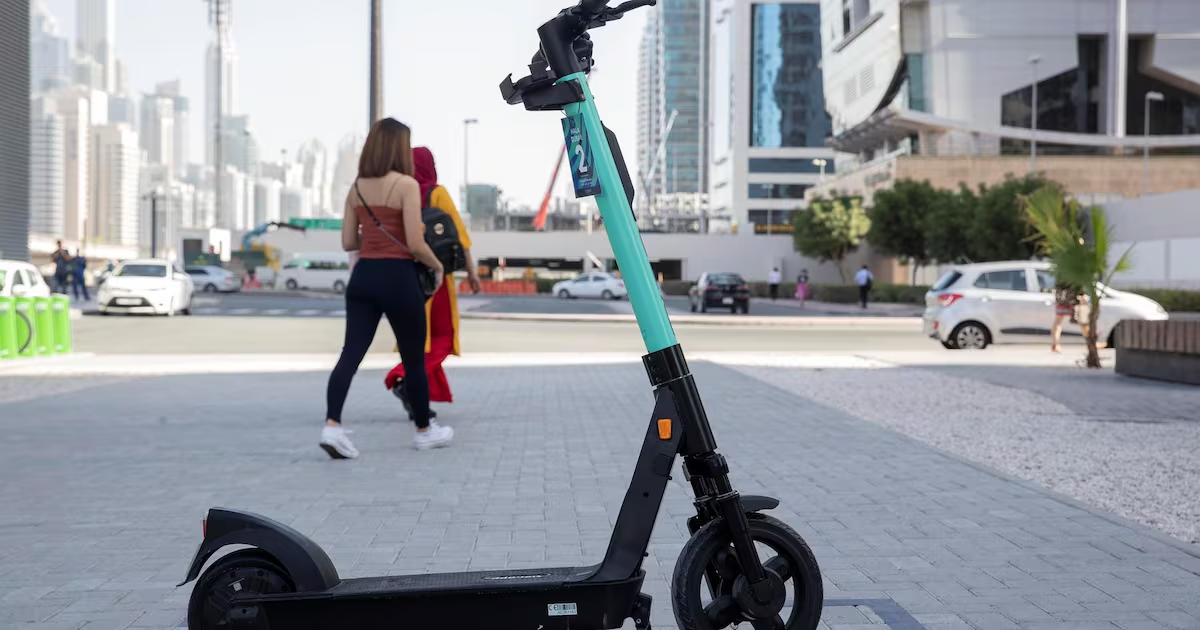
The rapid rise in the use of electric bikes and scooters across the UK is being met with growing concern from blind and partially sighted people, who say the vehicles are turning everyday journeys into a source of fear, stress, and danger. A new report by the Royal National Institute of Blind People (RNIB) reveals the extent of the problem, describing streets as a “nightmare” when pavements are blocked or when e-bikes and e-scooters speed past without warning.
According to the report, just one in ten blind people feels confident walking in their own neighbourhood. Of the 1,197 blind and partially sighted people surveyed, an overwhelming 92 per cent said they are often forced to step into roads because pavements are obstructed by parked vehicles, bikes, or e-scooters. The consequences can be severe: more than a third reported colliding with obstacles within the last three months alone.

For some, the situation has changed their lives dramatically. One participant shared that they now rely solely on a cane after their guide dog was withdrawn, having become too stressed by the constant need to navigate blocked pathways.
The rise of dockless rental schemes for e-bikes and e-scooters has exacerbated the problem. While users are instructed to park responsibly, vehicles are often left carelessly across pavements, creating significant hazards for those with visual impairments or mobility challenges.
Erik Matthies, RNIB’s policy lead for travel and transport, who himself lives with sight loss, said the growing number of street obstacles has made independent movement increasingly difficult. “I’m always having to double check or think about how I am going to get around by foot,” he explained. “This is tiring, takes up more time and makes me feel unsafe too. E-scooters and dockless bikes left on pavements have added to the issues with cars being parked on pavements, and advertising boards strewn all over.” He added that the unpredictability of fast-moving e-bikes and scooters is now contributing to mental health struggles among some blind and partially sighted people.
The RNIB is urging the government to establish “inclusive standards” for pavements, standards that can be both nationally recognised and robustly enforced. It has also called on local authorities to do more to maintain accessible pathways during roadworks, monitor food delivery cyclists more closely, and regulate rental schemes more effectively.
In response, the Department for Transport (DfT) has defended its approach, emphasising that safety remains its “top priority.” A spokesperson noted that private e-scooters are still illegal on public roads, and stressed that local authorities are required to ensure trial rental schemes do not obstruct disabled people. “To clamp down on reckless parking, we are bringing forward new powers to regulate e-scooters and e-bikes, letting local areas shape schemes to better meet their needs, whilst tackling badly parked cycles which are disruptive to many road users,” the DfT said.
The Local Government Association also underlined its commitment to ensuring accessibility, with Tom Hunt, chair of its inclusive growth committee, welcoming proposals in the Devolution Bill that would grant councils further regulatory powers. However, he warned that the government must act decisively on the estimated one million privately owned e-scooters in circulation, which remain unregulated, uninsured, and illegal to use on public roads. Hunt also raised concerns about the growing number of unlicensed electric motorbikes being misused as e-bikes.

The urgency of the matter is underscored by recent figures. According to the DfT, 52 pedestrians were seriously injured in collisions with e-scooters in England in 2023, highlighting the risks faced not just by blind and partially sighted people, but by pedestrians more broadly.
With the popularity of micromobility transport continuing to rise, campaigners argue that policymakers must act swiftly to balance innovation with accessibility, ensuring that blind and disabled people are not left feeling unsafe on Britain’s streets.
Related News:
 The Ketamine Crisis in the UK is a Silent Epidemic Leaving Users with Lifelong Pain
 Woman Warned She Might Need Leg Amputation to Survive After Liquid Brazilian Butt Lift
 Alarming rise in abusive teen relationships in the UK sparks urgent warnings
 Breakthrough Clinical Trial Lets 12-Year-Old Boy with Rare Skin Disorder Play Football
 Over 65? Gardening Instincts Can Help You Spot Financial Fraud
 Inquest Finds Agency Worker Failings Led to Unlawful Death of Vulnerable 14-Year-Old
 Expanded Access to Health Diagnostics in England Now Available Beyond Standard Hours
 Shocking Rise in Children’s Exposure to Violent Online Pornography Raises Alarm
 Experienced Skydiver Dies by Suicide Following Relationship Breakdown
 Martha’s Rule Now Fully Implemented Across All Acute Hospitals in England
 Council Proposes Limits on Ice Cream Van Music and Parking in South Cambridgeshire
 Norfolk Hospital Ranked Worst in England as NHS League Tables Return
 Ofsted Pushes Ahead with Controversial New Inspection Regime Despite Widespread Opposition
 More Than Half of UK Births Now Involve Medical Intervention
 Hospices ‘on the Brink’ as Assisted Dying Legislation Looms
 NHS ‘Toxic Culture’ Risks Harm to Mothers and Babies, Health Leader Warns
 First Group of Children from Gaza Arrive in UK for Life-Saving NHS Treatment
 One in Three GPs in England Do Not Work in NHS, Raising Concerns Over Access to Care
 UK Doctors Guilty of Sexual Misconduct Continue Practising Amid Weak Sanctions, Research Finds
 Private Psychology Costs Surge in UK as Practitioners Turn Away Clients Amid Record Demand
NHS Urged to Revamp Prostate Cancer Treatment for Black Men Amid Rising Death Toll
Private Psychology Costs Surge in UK as Practitioners Turn Away Clients Amid Record Demand
NHS Urged to Revamp Prostate Cancer Treatment for Black Men Amid Rising Death Toll
 Heavy Drinkers Lead Growth in Non-Alcoholic and Low-Alcohol Market
 One Lap, 400 Miles, One Week: GP Sets Sights on Cornwall Perimeter Record Run
 Starmer Unveils Plan for NHS “Online Hospital” to Tackle Waiting Lists
 Tragic Death Strikes Half-Marathon in Stoke-on-Trent: Runner Dies Shortly After Crossing Finish Line
 Medical Cannabis Offers New Hope for British Women Struggling with Chronic Pain
 One in four UK residents fear a loved one drinks excessively as addiction concerns rise
 Majority of UK Men Would Opt for Prostate Cancer Screening, Survey Finds
One in Three UK Workers Call in Sick After Work Drinks as Cultural Pressures Persist, Survey Finds
Majority of UK Men Would Opt for Prostate Cancer Screening, Survey Finds
One in Three UK Workers Call in Sick After Work Drinks as Cultural Pressures Persist, Survey Finds
 NHS Facilities Staff Vote to Strike Over Pay Discrimination
 Ambulance Worker Fired After Flinging Amputee from Wheelchair and Offering Bribe
 Women Challenge Meta Over Targeted Ads After Miscarriage
 Mum’s Final Wish: Donating Her Body to Science
 UK Woman Becomes Longest Survivor of Heart-Lung Transplant
 Phillipson Warns Parents Over Poor Quality Online Advice
£18 Prostate Cancer Test Could Save Thousands of Lives
Phillipson Warns Parents Over Poor Quality Online Advice
£18 Prostate Cancer Test Could Save Thousands of Lives
 Pregnant Women in England Face Rising Risk of Severe Birth Injury
 My ADHD left me drowning in debt and unable to cope
 One in 12 Secondary Pupils Sent to Isolation Weekly
 M&S and Morrisons Lead Christmas Supermarket Taste Test
 Mother dies after black market weight loss injection
 Young Woman Missed 13 Times by GPs Before Bowel Cancer Diagnosis
 UK Health Leaders Push for Urgent Tobacco & Vape Bill
 Man Trapped in Quicksand Rescued in Dramatic Coastal Rescue
 Hospice Cuts Raise Alarm Across England Amid Funding Crisis
 Morning-After Pill Now Free Across England’s Pharmacies
 Experts Warn on Home Birth Risks, Call for Skilled Midwives
 Experts Urge Legal Right to Timely Cancer Care
 NHS Takes Over Nuffield Hospital in ‘Windfall’ for London Care
 North Sea oil workers must lose weight or face job loss
 Crisis charity to become landlord amid UK housing emergency
No link found between paracetamol in pregnancy and autism
Crisis charity to become landlord amid UK housing emergency
No link found between paracetamol in pregnancy and autism
 UK Disability Pay Gap Means Millions Work for Free From Today
 Shouting Works Best to Deter Gulls, UK Study Finds
 Reeves rejects £1bn plea for NHS redundancy payouts
 NHS trust fined after woman takes life in mental health unit
 Leading doctors issue warning amid ‘bad’ flu season
 New Campaign Trains Vets to Spot Farmers’ Health Risks
 ‘Traumatic Wait’: Northern Ireland Women Face Breast Cancer Delays
 Coffins Now Too Large to Cremate Amid Rising Obesity Crisis
 David Cameron Reveals Prostate Cancer Diagnosis, Advocates Screening
 Five-Year-Old Dies After Rare Tonsil Surgery Complication
 Fibromyalgia Patients Struggle as NHS Fails to Provide Care
 “Enough is Enough”: Local MP Vows to Fight Rainham Quarry Plans
 More Patients Now Contacting GPs Online, Data Shows
 Concerns Mount Over Accuracy of At-Home Health Tests as Study Calls for Stricter Regulation
 Heartbreak in the New Forest as Shetland Ponies Vanish, Community on Edge
 Millions in the UK at Higher Risk of Heart Failure and Stroke Due to Air Pollution, Study Warns
 UK Retail Sales Rise in August, but Tax Concerns Loom Over Festive Period
 UK Graduates in Healthcare Report Highest Satisfaction with Degree Choices
 Zarah Sultana Seeks Legal Action After Bitter Clash with Jeremy Corbyn Over Party Membership Funds
 A Third of EU Citizens in UK Report Discrimination by Public Bodies Post-Brexit
 Jilly Cooper: The Bonkbuster Queen Who Redefined Romantic Fiction
 Children to Learn Local History in Major Curriculum Overhaul
 Prince William Plants Trees with Brazil’s Nature Heroes
 How to get help when a child goes missing – call 999 urgently
 Son Reveals UK Couple in Iran Resort to Hunger Strike for Help
 Mother Watches in Horror as Teen Daughter Dies on Tracks
 Vicki Fears Losing Motability Car
 Virgin Media Fined £23.8m Over Telecare Safety Failures