Published: 17 February 2026. The English Chronicle Desk. The English Chronicle Online
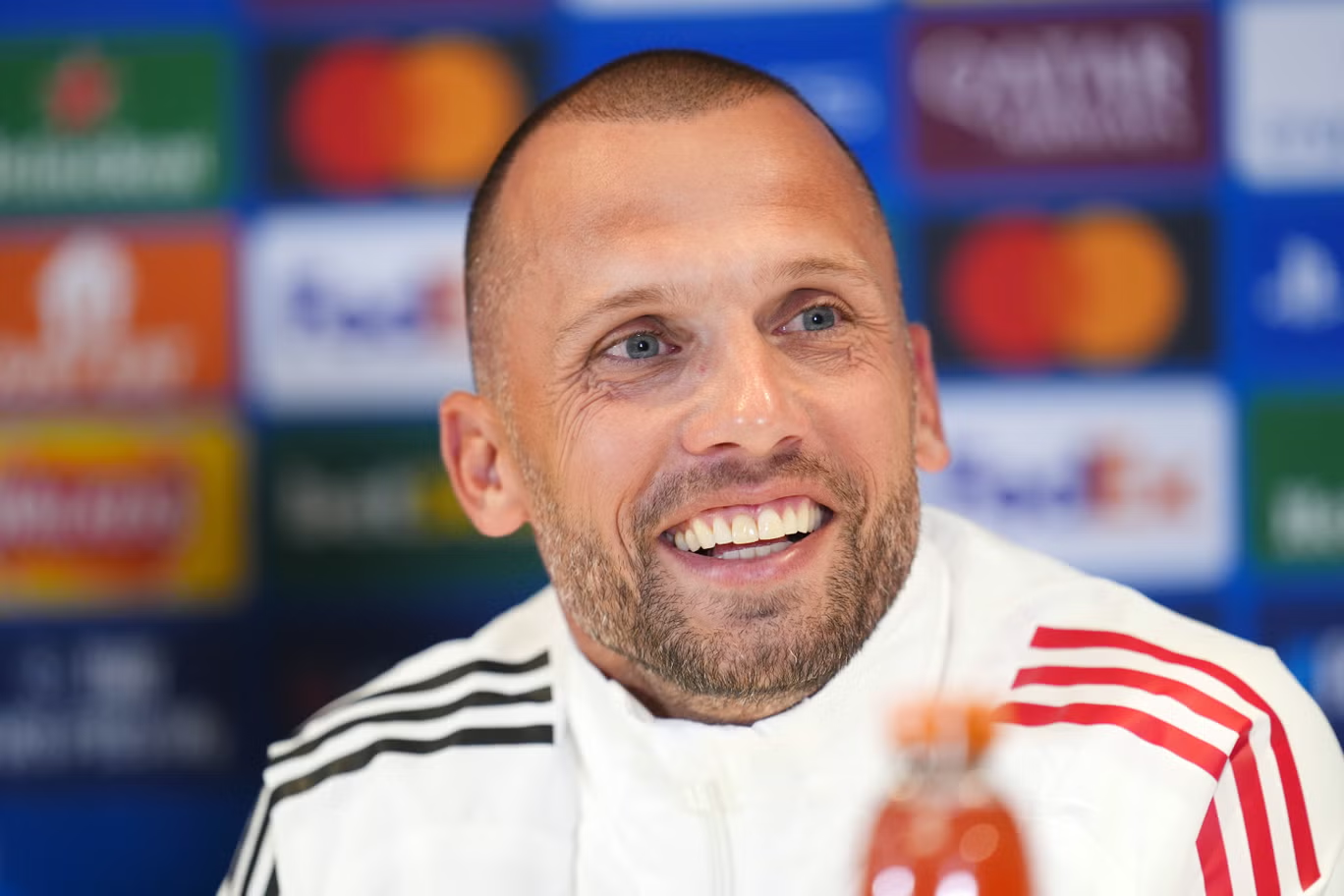
Tottenham Hotspur interim boss Igor Tudor has acted swiftly to overhaul his backroom staff following the club’s disappointing run in the Premier League, bringing in three new coaches after the dismissal of Justin Cochrane, John Heitinga, and Chris Haslam. The changes come just days after Thomas Frank was sacked, marking a rapid shift in the North London club’s coaching structure.
Heitinga, who joined Spurs on 15 January, had an exceptionally brief spell at the club, lasting only a month. Previously, he was part of Arne Slot’s coaching staff at Liverpool when the Reds clinched the Premier League title last season. Heitinga left Anfield last summer to pursue a managerial role and had a short stint as Ajax boss, which ended after just 15 games due to a poor run of results. His time at Tottenham was similarly fleeting, following Matt Wells’ departure to the Colorado Rapids and the appointment of Frank.

Frank’s seven-month tenure concluded last Wednesday, a day after a 2-1 home defeat to Newcastle United left Spurs languishing in 16th place, only five points clear of the relegation zone. Cochrane and Haslam, who joined the club last summer alongside Frank, have now also departed. Cochrane, who began his coaching career at Tottenham and had helped bring Frank to the club, had been billed as making a “special return,” but he and Haslam have now followed Frank out of the exit door.
Tudor has announced his new coaching team, introducing Ivan Javorcic as assistant coach, Riccardo Raganacci as physical coach, and Tomislav Rogic as goalkeeper coach. All three are familiar faces to the Croatian manager, having previously worked with him at Juventus. Their official start at Tottenham is pending the securing of work permits, but the club expects them to integrate quickly into the coaching setup.
The swift changes reflect Tudor’s determination to imprint his philosophy on the squad and address Tottenham’s early-season struggles. By bringing in trusted personnel who have previously collaborated with him, Tudor aims to stabilise the team, enhance tactical consistency, and boost player morale. Club insiders suggest that the restructuring is part of a long-term plan to reshape Spurs’ performance culture and improve results in the Premier League.
Fans have reacted to the backroom overhaul with a mix of surprise and cautious optimism. Heitinga’s brief tenure, in particular, drew attention for its unusual brevity, underscoring the high-pressure environment surrounding top-flight football management. Observers note that Tudor’s approach to staffing is reflective of a trend among elite clubs, where managers are increasingly seeking trusted collaborators to implement their systems efficiently and with minimal disruption.
The club’s immediate focus will be preparing for upcoming fixtures, while the new coaching team works to establish tactical cohesion and fitness regimes aligned with Tudor’s vision. The Premier League season is entering a critical phase, and Tottenham’s ability to climb the table will depend on how quickly players adapt to the new coaching structure. Analysts say that securing positive results in the next few matches will be vital to solidifying Tudor’s authority and setting the tone for the remainder of the campaign.

While Tottenham faces challenges on the pitch, the restructuring signals a clear commitment to change at executive and coaching levels. By integrating experienced coaches familiar with Tudor’s methods, the club hopes to instill discipline, modern training practices, and strategic clarity across all departments. Long-term, the intention is to build a sustainable foundation that balances immediate performance needs with the development of young talent in the academy system.
As the Premier League intensifies, attention now turns to Tudor and his new staff to deliver both stability and competitive results. Supporters will be watching closely to see whether the changes can reverse Tottenham’s precarious position in the league and restore confidence in the club’s management and long-term strategy. The coming weeks will be crucial in determining the success of Tudor’s coaching reshuffle and the team’s ability to regain form at a critical juncture of the season.
Related News:
 Tottenham shine at Everton but Frank wary of title push
 Matty Cash seals Villa win as City falter again at Villa Park
 Sarr Double Sinks Young Liverpool in Carabao Cup
 Nwaneri and Saka Secure Arsenal Win Over Brighton
 Woltemade Hot Streak Fires Newcastle Past Spurs
 Kieffer Moore Hat-Trick Ends Coventry’s Unbeaten Run
 Salah & Gravenberch Lead Liverpool to Win Against Villa
 Dyche Criticises Corner Decision as Forest Draw with United
 Caicedo Shines as Chelsea Edge Spurs in Chaotic Derby
 Granit Xhaka Rescue Earns Everton Draw at Sunderland
 Liverpool Edge Real Madrid 1-0 in Champions League Thriller
 Van de Ven Stunner Lifts 10-Man Spurs to UCL Glory
 Merino Shines as Arsenal Beat Slavia 3-0 Without Gyokeres
 Burn and Joelinton Head Newcastle to Victory Over Bilbao
 Foden shines as Man City dismantle Dortmund in dominant display
 Garnacho Spares Chelsea From Shock Champions League Loss in Baku
 Tension and Turmoil at Aston Villa v Maccabi Match
 Bellingham has ‘the edge’ among England No 10s
 Arteta Left Frustrated as Sunderland Deny Arsenal Late Win
Chelsea Cruise Past Wolves to Go Second in the Premier League
Man City Masterclass on Guardiola’s Milestone Day Exposes Liverpool Woes
Arteta Left Frustrated as Sunderland Deny Arsenal Late Win
Chelsea Cruise Past Wolves to Go Second in the Premier League
Man City Masterclass on Guardiola’s Milestone Day Exposes Liverpool Woes
 Lando Norris Dominates Brazil GP to Strengthen F1 Title Bid
 England cannot afford to be in awe of the All Blacks, warns Jamie George
 VAR Must Rein Its Neck In to Save Football’s Spirit
 Trescothick Hints Pope Will Keep Number Three Spot
 Ronaldo Confirms Final World Cup and Plans Retirement
 Mary Earps’s Manchester United Return Faces Mixed Reception
 Sam Kerr Stars in Chelsea Return with Champions League Double
 This kid is something else: Alex Scott’s rise to England call-up
 Anthony Joshua Faces Backlash Over Proposed Jake Paul Fight
 Former Lion Heskey Warns of Shortage of England Strikers
 Rogers Double Aston Villa as Leeds Slip Deeper into Trouble
Eze Hat-Trick Stuns Spurs in Dominant Arsenal Derby Win
Rogers Double Aston Villa as Leeds Slip Deeper into Trouble
Eze Hat-Trick Stuns Spurs in Dominant Arsenal Derby Win
 Moyes Defends Gueye After Dramatic Everton Bust-Up
 Rookie Driver Hollie McRae Flips Car but Walks Away Safe
 Gerrard warns Liverpool’s terrible run could worsen
 Jac Morgan to Miss Six Nations Start After Surgery
 Alexander Isak ends drought as Liverpool stop rot with win at West Ham
 Mbappe rescues Real Madrid with a penalty at Girona
 Wales hits 20,000-strong milestone in women’s football
 Stokes urges empathy for England players amid Ashes struggles
 Sports piracy surges in UK with 3.6bn illegal streams reported
 Chelsea fans inquiry launched after Charlton match policing concerns
 Arsenal vs Man Utd LIVE: Jesus Starts as Carrick Stays Loyal
 Arsenal Edge Closer to Ending ‘Nearly-Men’ Era After Cup Breakthrough
 Newcastle fans face bleak reality under Saudi ambitions
 Hugo Ekitike Becomes Liverpool’s New Cult Hero
 London Set to Honour Euro 2025 Champions as Lionesses Take Victory Parade Through the Capital
 Premier League Supercomputer Predicts Tough Season for Man Utd Amid Three-Team Title Battle
 Reeves Faces Setback as Labour May Miss Homes Target
 Kate Winslet to Narrate Film Highlighting King’s Environmental Mission
 Trump’s UK Ambassador Urges North Sea Drilling to Strengthen US Ties
 UK Bans Fake Numbers: Scammers Lose Their Trick
M&S Profits More Than Halve After Cyber-Attack
UK Bans Fake Numbers: Scammers Lose Their Trick
M&S Profits More Than Halve After Cyber-Attack
 Patients to Test Health at Home to Ease NHS Winter Pressure
 Millionaires group urge Reeves to introduce wealth tax to ‘lift kids out of poverty’
 Reeves rejects £1bn plea for NHS redundancy payouts
 Northern Lights may illuminate UK skies this week
 PM Condemns Leaks, Vows Loyalty to Ministers and Stability
 Major Rent Reform Ends No-Fault Evictions in England
 Saka Solidifies Role as Tuchel’s Key England Lieutenant
 Stroke Patient Mistaken for Drunk, Care Delayed
 Tiny Curacao Makes History as Smallest Nation to Reach World Cup
 Inside the Helpline Protecting Missing Children in the UK
 Boots Showstopper Beauty Bundle Outshines Many Advent Calendars This Holiday Season
 PlayStation PS5 Deals Hit Lowest Prices Ahead of Black Friday
 Five-Year-Old Dies After Rare Tonsil Surgery Complication
 Starmer Says Labour’s Economic Plan Needs Years to Deliver
 Children to Receive Home Vaccines as England Acts
 Cambridge College Faces Backlash Over Private School Recruitment
 Bereaved Fathers Gain New Paternity Leave Rights in UK
 Woman Jailed for Life After Killing E-Bike Rider in Tragic Mistaken Identity Case
 No Gas Boiler Ban as UK Warm Homes Plan Backs Heat Pumps
 Police response times face strict new national limits
 Devon hosts first high-density hydro power system
 Pornhub blocks new UK users over age checks dispute
 UK New Car Discounts Near £6,000 as Prices Are Slashed
 Pneumonia Surge Pushes England Emergency Cases Higher
 Send spending gap leaves deprived areas behind
 ALL GUNNS BLAZING: Arsenal vs Wigan LIVE SCORE – FA Cup Updates