Published: 24 February 2026. The English Chronicle Desk. The English Chronicle Online
The night her baby’s heart stopped, Clare* blamed herself. Had she taken her out in the cold too much? Had she damaged her lungs by drinking iced water during pregnancy? She fixated on Andi’s tiny chest, willing it to suck in air, rushing her to hospital in Fiji for the second time in as many days.
Through the early hours, Andi* clung to life. Doctors performed CPR multiple times, puncturing the month-old baby’s chest to insert a drain and remove fluid from around her lungs. “She was really, really sick and they didn’t know what was going on … she was getting weaker and weaker,” Clare says. She sat by her daughter’s bedside and prayed.

Then, doctors asked to perform an HIV test. Clare was confused, insisting she didn’t have it, having been tested before. Andi was HIV positive. So were Clare and her husband. During late pregnancy or while breastfeeding, Clare had contracted the virus and passed it to her daughter, who will now live with a chronic disease. “I thought it was the end of the world,” Clare says. She turned to her husband, an injecting drug user. “He said, ‘No, I’ve been cautious with this.’ I said, ‘We don’t know. So we’ll just have to figure this out, for the betterment of her’.”
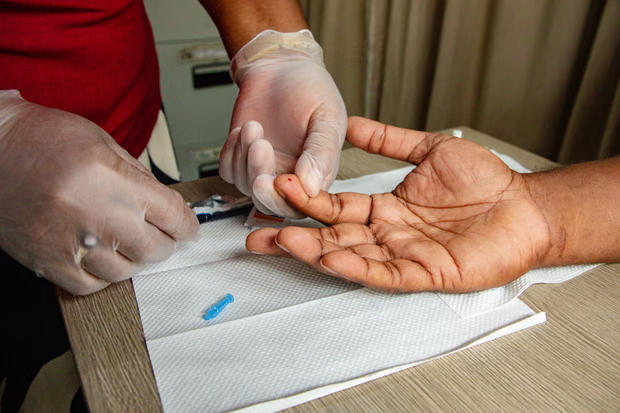
Clare’s family is one of thousands affected by Fiji’s HIV crisis, with new cases more than tripling between 2023 and 2024. Over 1,200 people were diagnosed in the first half of 2025, making it the world’s fastest-growing HIV epidemic amid declining global aid. The UN attributes this to Fiji’s role as a drug-trafficking hub, rising methamphetamine use, unsafe injecting practices, and lack of access to clean needles. Low health awareness, cultural stigma, and insufficient testing and treatment further exacerbate the crisis.
Now, infections increasingly affect the most vulnerable: babies born with HIV or AIDS-related complications. Health authorities report that one baby a week is diagnosed with HIV via mother-to-child transmission. Intensive care units are seeing a surge in babies needing life support, with one child under five dying monthly, says Dr. Jason Mitchell, head of Fiji’s HIV epidemic response. “It is preventable. It is inexcusable to have any more children born with HIV,” he emphasizes.
Fiji, an archipelago of around 930,000 people in the South Pacific, is a deeply Christian nation where traditional beliefs and customary healing persist, particularly among the iTaukei, or Indigenous Fijians, who make up about half the population. iTaukei also comprise roughly 90% of HIV cases.
“If you’re living with HIV you’re sinful, you’re going to hell, period. Religious values make it worse, because whatever the preacher says about ‘HIV is a sin’ is seeded in our heart,” says Christopher Lutukivuya, 38, an HIV activist living with the virus since 2013. He recounts friends being ostracized, forced to live in basements, or even taking their own lives rather than acknowledge their diagnosis. He assists those avoiding clinics, picking up medication and arranging tests.
Knowledge gaps remain widespread. Dr. Mark Jacobs, WHO representative for the South Pacific, notes that Fiji faces issues once common in 1980s Australia: lack of awareness about needle sharing, absence of safe needle programs, limited understanding of treatment, and reluctance to use condoms. Village leaders sometimes incorrectly attribute mother-to-child HIV transmission to the mother’s fault or are unaware that the infection is treatable.
“Even educated women may struggle to negotiate condom use with partners,” says Francine*, an Indo-Fijian woman in her mid-30s who contracted HIV from an IV-drug-using partner while breastfeeding.
The epidemic disproportionately affects young people. On the streets of Suva, children survive through theft or drug distribution, often injecting meth on first exposure. Dr. Dashika Balak explains that many remain on the streets because it is where they find both drugs and a sense of belonging.
Children are becoming addicted to meth as it moves through Fiji en route to New Zealand and Australia, with transnational criminal networks targeting the islands as a market. Social workers at Kauwai Youth Restoration Home, led by pastor Amani Waqetia, work to rehabilitate these youths, offering structured routines, nutrition, therapy, and faith.

Among them are Isac*, 17, who ran from an abusive uncle, and Nemaia*, 15, who fell into a life of theft and needle-sharing. Both contracted HIV. Isac recovered with structured support and now attends school, plays guitar, and trains in athletics. Nemaia, once aggressive and streetbound, now mentors younger residents, taking daily medication and leading a healthy life.
Despite the challenges, health professionals stress that HIV is manageable with treatment and early intervention. For Fiji’s young and vulnerable, timely care and awareness can mean the difference between life and death.
Related News:
 Costa Blanca Holiday Horror as Food Poisoning Outbreak Hits Four-Star Hotel
 CDC Plunged Into Turmoil as Ousted Chief Susan Monarez Refuses to Step Down
 First Group of Children from Gaza Arrive in UK for Life-Saving NHS Treatment
 Global Study Reveals Violence in GP Surgeries Linked to Long Waiting Times and Drug Refusals
 The diet that can significantly ease symptoms of IBS
 Europe, North America face early wave of bird flu
 Shock US Raid: Maduro Pleads Not Guilty in Manhattan Court
 UK and France Agree Troop Deployment Plan for Ukraine
 EU Weakens as Trump Targets Venezuela and Greenland
 Israel Dossier Sparks Australian Political Interference Concern
 Venezuela Oil Deal Opens Tensions with US Control
 US Citizens Warned to Venezuela Flee Amid Paramilitary Threats
 Trump Says US Will Act on Greenland ‘Whether They Like It or Not’
 Gulf states warn Trump Iran strikes risk wider Middle East war
 Machado Trump medal gesture reshapes Venezuela power struggle
 Greenland defence seen as shared Nato duty amid troop arrivals
 Gulf states warn Trump Iran strikes risk wider Middle East war
 Trump Receives Machado’s Nobel Medal in White House Meeting
 Iran unrest slows under brutal crackdown and global tensions
 Syria President Declares Victory as Ceasefire Reached with SDF
 US Considers Asylum for British Jews Amid Rising Antisemitism
 Russia Strikes Kyiv and Kharkiv as Peace Talks Enter Day Two
 Emails Show Epstein Funded Mandelson’s Husband After Jail
 Thousands Protest ICE Operations in Nationwide US Day of Action
 Epstein Files Reveal Trump Officials’ Emails with Financier
 Thousands Protest ICE in New York Against Trump Deportation Campaign
 US Must Be Prudent When Supplying Arms to Taiwan, Xi Tells Trump
 Fears of New Arms Race as US-Russia Nuclear Weapons Treaty Expires
 US Healthcare Needs Fixing, But There’s No Agreement on How to Do It
 US Military Says Two Killed in Strike on Alleged Drug Boat in Eastern Pacific
 Trump Endorses Japan’s Takaichi Ahead of Snap Election
 Is Bangladesh’s Youth Turning Against India? — A Deepening Debate
 Hong Kong Court Jails Pro-Democracy Media Tycoon Jimmy Lai for 20 Years
 Venezuela’s Opposition Says Party Leader Kidnapped Hours After Being Freed
 Christchurch Shooter Seeks to Overturn Guilty Plea in Appeals Court
 Sydney Protest Pepper Spray Clash During Herzog Visit
 Trump Bizarrely Claims China Will ‘Terminate All Ice Hockey in Canada’ in Threat to Block New Border Bridge
 Russia Rages “Now Is the Time to Strike” as UK Faces Fresh WW3 Nuclear Threats
 Facing a Demographic Catastrophe, Ukraine Is Paying for Troops to Freeze Their Sperm
 Boy First in UK to Have Surgery to Make Him Taller
 UK, US Medics Barred from Gaza Amid Rising Aid Concerns
 US Says It “Supports” UK Chagos Islands Deal
 Iran Says ‘Guiding Principles’ Agreed With US at Nuclear Talks
 Ukraine Peace Talks End in Acrimony After Two Hours
 Leave Chagos Now, Britain Tells Returning Islanders
 Britain’s Reliance on China Makes Us ‘Weak Link in the West’, Warn MPs
 Indian University Kicked Out of AI Summit for Claiming Chinese Robot Dog as Its Own Invention
 India Sentences Three Men to Death for Attack on Israeli Tourist and Hosts
 As Trump Retreats from Climate Goals, China Is Becoming a Green Superpower
 UK Has Not Given US Permission to Use RAF Bases for Iran Strikes
 Greenland Says ‘No Thanks’ to Trump’s US Hospital Boat Offer
 UK Must Act with Courage and Clarity on Israel-Palestine Conflict, Says Foreign Affairs Committee Report
 Systemic Racism in Maternity Care Continues to Endanger Black Women in England, MPs Warn
 Yvette Cooper Signals Global Momentum Towards Gaza Peace Deal Amid Humanitarian Crisis
 Chaos at Ibrox as Martin’s Rangers Era Comes to an End
 UK Health Officials Monitor New ‘Stratus’ Covid Variant Amid Rising Cases
 Sir Michael Caine Urges Starmer to End Smacking in England
 Trump Claims Modi Has Agreed to Halt Russian Oil Imports Amid Heightened US Pressure
 M&S and Morrisons Lead Christmas Supermarket Taste Test
 Russia’s Latest Push to Win US Favors Shows Deep Desperation
 BBC to Apologise Over Edited Trump Speech Amid Backlash
 Reeves rejects £1bn plea for NHS redundancy payouts
 Greene Pushes Epstein Files Amid Trump Fallout
 Zelenskyy Signs Fighter Jet Deal Amid Russian Drone Attacks
 Shadow Fleet at Sea: Europe’s Battle Against Illicit Oil Shipping
 US Suspends Afghan Immigration After White House Shooting
 Five-Year-Old Dies After Rare Tonsil Surgery Complication
 ‘Extinct’ Antelope Returns to Sahara, Bringing Hope
 Energy Drinks Linked to Rising Heart and Stroke Risks
 Children to Receive Home Vaccines as England Acts
 US Senate rejects resolution limiting Trump military powers
 Sydney Shark Attack Surge Shocks Australia Beaches
 AI breast screening cuts later cancer diagnoses by 12%, study finds
 Most Statin Side-Effects Are Not Caused by Drugs, Study Confirms
 Portugal Election Delivers Socialist Win as Far Right Surges
 Australian Families Leave Syrian Camp for Home
 ‘I Would Scream in My Sleep’: Alawite Women from Syria Tell of Kidnap and Rape
 Epstein Eyed Record Label Investment to Access Women, Files Suggest
 How Do You Modernise Mango Farming? India’s Growers Urged to Innovate as Climate Change Hits
 Ukraine Negotiator Reveals What It Feels Like Facing Russia