Published: 25 February 2026. The English Chronicle Desk. The English Chronicle Online.
Reform UK has ignited fierce political debate after unveiling plans for a sweeping Reform UK repeal of key Labour-era protections. In a speech that set the tone for the party’s economic strategy, senior figures confirmed they would scrap flagship laws covering workers’ rights and tenant safeguards. The proposed Reform UK repeal has already drawn anger from trade unions, housing charities and environmental groups, who warn it would reverse hard-won protections for millions across Britain.
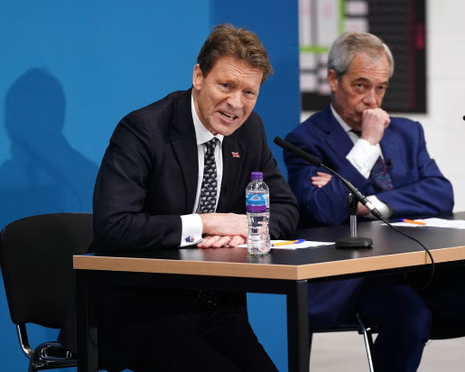
The announcement came from Richard Tice, recently appointed to oversee business, trade and energy under party leader Nigel Farage. Addressing supporters in Birmingham, Tice pledged what he described as a “great repeal act” to remove regulations he believes are stifling growth. He argued that excessive rules were harming businesses, discouraging landlords and undermining job creation.
Central to the proposed Reform UK repeal is the scrapping of the Employment Rights Act, passed under Prime Minister Keir Starmer. The legislation introduced enhanced rights to sick pay, strengthened parental leave provisions and greater security for those on zero-hours contracts. It also included guaranteed hours for some workers and compensation for cancelled shifts at short notice. Most controversially for employers, it curtailed the practice known as fire-and-rehire.

Tice claimed the law was discouraging businesses from hiring younger staff. He linked rising youth unemployment to what he described as rigid employment standards. According to his remarks, firms facing uncertainty were reluctant to commit to permanent contracts. Critics, however, argue there is little evidence directly tying youth job losses to the new act.
The Reform UK repeal would also abolish the Renters’ Rights Act, another high-profile measure introduced by Labour. That law removed so-called “no fault” evictions, limiting landlords’ ability to terminate tenancies without reason. It replaced fixed-term contracts with open-ended agreements and introduced tougher obligations regarding property safety and health hazards.
Tice insisted the housing market had reacted negatively to the changes. He argued that many landlords had withdrawn properties due to perceived legal risk. According to his assessment, reduced supply had driven rents higher in several regions. Supporters of the law dispute that narrative, pointing instead to long-term supply shortages and wider market pressures.
Housing campaigners responded swiftly to the proposed Reform UK repeal. Shelter warned that dismantling tenant protections would expose vulnerable families to instability. The charity’s leadership said the existing system had left renters at the mercy of arbitrary evictions for decades. Removing safeguards, they cautioned, could increase homelessness and deepen insecurity for low-income households.
The Renters’ Reform Coalition described the proposal as a serious setback for millions of tenants. Its representatives argued that open-ended tenancies provided stability essential for families and children. They stressed that predictable housing conditions support community cohesion and employment continuity.
Trade unions also voiced alarm over the Reform UK repeal agenda. Unison, one of the country’s largest public service unions, accused Reform MPs of consistently opposing workplace fairness measures. Union leaders maintained that stronger employment standards improve productivity and morale. They said scrapping the legislation would weaken protections many workers had only recently secured.
Tice framed the initiative as part of a broader drive to revive British industry. He criticised what he called “daft” environmental and labour regulations. He pledged to end legally binding net zero targets, arguing they imposed heavy costs on businesses. Environmental organisations swiftly condemned that position, warning of long-term economic and climate consequences.
Energy policy formed a significant part of the Birmingham speech. Tice proposed renewed oil drilling in the North Sea and a revival of shale gas extraction through fracking. He presented domestic energy production as a patriotic imperative, linking local resources to regional job creation. His remarks echoed themes often associated with former US president Donald Trump, particularly the emphasis on tariffs and protectionist measures.
Tice suggested the UK should consider quotas and targeted tariffs on certain Chinese imports. He argued that domestic manufacturing required shielding from unfair competition. Critics countered that trade barriers risk higher consumer prices and diplomatic tensions. Economists note that complex supply chains limit the effectiveness of blunt tariff policies.
Environmental campaigners warned that expanded fossil fuel extraction could undermine climate commitments. Friends of the Earth urged policymakers to prioritise renewable energy and home insulation programmes. They argued that investment in clean power offers more sustainable energy security. Such measures, they say, create jobs without increasing carbon emissions.
The Reform UK repeal proposal arrives during a delicate economic period. Britain continues to navigate sluggish growth and persistent inflationary pressures. Businesses face higher borrowing costs and global uncertainty. Against that backdrop, debates over regulation and competitiveness have intensified.
Political analysts suggest the announcement is designed to sharpen ideological divides before the next general election. Reform UK has sought to position itself as a champion of deregulation and national sovereignty. By targeting Labour’s flagship reforms, the party signals a clear alternative economic philosophy. Whether that approach resonates with voters remains uncertain.
Public opinion on workers’ rights appears broadly supportive of stronger protections. Recent surveys indicate widespread backing for guaranteed sick pay and secure contracts. Tenant rights have also gained prominence amid rising rental costs. Any Reform UK repeal would therefore face significant parliamentary and public scrutiny.

Labour figures defended their legislative record in response to the speech. They argued that fair employment standards create stability and consumer confidence. Ministers also pointed to early data suggesting the rental market is adapting gradually. They insist reforms were necessary to correct long-standing imbalances.
Business groups remain divided over the proposals. Some small firms have expressed frustration with administrative burdens linked to employment law. Larger corporations, however, often favour regulatory stability and predictability. Sudden reversals, they warn, can create uncertainty affecting investment decisions.
The broader question concerns how Britain balances flexibility with fairness. Proponents of deregulation believe reduced red tape stimulates entrepreneurship. Opponents caution that weakening safeguards risks widening inequality. The outcome of this debate will shape the country’s economic and social landscape.
As Parliament prepares for further debate, the Reform UK repeal plan has already achieved one objective. It has placed the party firmly at the centre of national conversation. Supporters view the proposal as bold and necessary. Critics see it as a rollback of essential protections.
For millions of workers and renters, the stakes are tangible and immediate. Employment contracts determine financial stability and family wellbeing. Housing security affects education, health and community ties. Any legislative reversal would carry profound consequences.
The coming months are likely to see intensified campaigning on both sides. Advocacy groups will marshal data and personal stories to defend existing laws. Reform UK will continue arguing that regulatory relief can unlock growth. The direction voters choose may redefine Britain’s approach to work and housing.
Related News:
 British Woman in Iran ‘Losing Hope’ Amid Ongoing Detention
 BBC Journalist Held and Interrogated in Vietnam
 Green Party Surges Past Labour in Latest UK Poll
 Celebrities and Charities Demand UK Government Act on Child Poverty
 Trump’s UK Ambassador Urges North Sea Drilling to Strengthen US Ties
 FBI Director Kash Patel Defends Girlfriend Amid Government Jet Claims
 French Taxi Driver Cleared in David Lammy Theft Case After Fare Dispute
 MPs Press Rachel Reeves to Hike Gambling Taxes
 Boris Johnson accused of undermining BBC leadership
 ‘Reckless’ cuts to victims’ services will cost more than they save
 Millionaires group urge Reeves to introduce wealth tax to ‘lift kids out of poverty’
 Starmer Faces Growing Dissent as Labour MPs Weigh Leadership Challenge
 Reeves rejects £1bn plea for NHS redundancy payouts
 Farage appointee to lead Reform youth accused of anti-British views
 Politics latest: Starmer ‘will fight any leadership coup’ as Streeting denies attempt to oust Labour PM
 PM Condemns Leaks, Vows Loyalty to Ministers and Stability
 Major Rent Reform Ends No-Fault Evictions in England
 Peers Flood Assisted Dying Bill with 942 Amendments
 England’s Special Needs Support Faces Breaking Point
 MoD warned over Excel risks before Afghan data breach
 UK Asylum Overhaul Sparks Debate Over Human Rights and Deportations
 UK Candidate Moved to Safe House After Election Threats
 Mahmood Defends Tough Overhaul of UK Asylum System
 UK Warns China After MI5 Issues Espionage Alert
 UK Vulnerable to Attack, Defence Committee Finds
 Labour Faces Historic Decline in Wales
 Rama Rebukes Mahmood for Targeting Albanian Families
 PM Highlights UK Business at G20 in South Africa
 Kate Forbes: Motherhood Harder Than Politics
 Most Tories Expect to Support a Farage-Led Government
 Labour MP claims devolution bill is ‘blatant discrimination’ against Cornwall
 Millions Face Higher Taxes Under Reeves New Budget
 Peers Get Extra Time to Debate Assisted Dying Bill
 Planned Palestinian Flag Raising at Belfast City Hall Faces Delay Amid Legal Concerns
 Starmer Says Labour’s Economic Plan Needs Years to Deliver
 Culture secretary to review Telegraph takeover by Daily Mail owner
 Andy Burnham Apologises for Past LGBTQ+ Police Discrimination
 Plans to Limit Jury Trials Face Retreat After Mounting Opposition
 Jenrick Reform defection deepens Tory civil war
 Right Must Unite After Jenrick Defection, Urges Rees-Mogg
 UK Ministers Drop Foreign Student Targets for Global Education Push
 MPs warn AI financial risks threaten UK stability
 MPs warn AI financial risks threaten UK stability
 No Gas Boiler Ban as UK Warm Homes Plan Backs Heat Pumps
 Hugh Grant Joins Call for Under-16 Social Media Ban in UK
 Shinzo Abe’s killer receives life sentence in Japan
 Lords Vote Piles Pressure on Starmer Over Social Media Ban
 Planned Troubles Board Game Sparks Outrage in Northern Ireland
 Reform UK Health Plan ‘Would Cost £1.7bn’, Streeting Says
 Police response times face strict new national limits
 Labour policing overhaul sparks fears over growing central control
 Tories criticised after Braverman defection sparks mental health row
 Burnham Westminster return hopes fade amid Labour rift
 Starmer warns of toxic division politics in Reform challenge
 Starmer China visit raises human rights pressure on Beijing
 Labour Must Revive High Streets to Avoid Election Collapse
 Conservative Party Rejects Centrism Under Badenoch’s Leadership
 Calls Grow for King Charles to Apologise for Crown’s Role in Slavery
 Starmer Signals UK Return to EU Defence Pact Talks
 Starmer crisis deepens as Labour MPs turn on PM
 Palantir contracts face UK halt calls over transparency
 Labour Thinktank Row Deepens Over Journalist Probe Claims
 Morgan McSweeney downfall shocks Labour leadership
 Sarwar call shakes Labour as No 10 calms fears
 Labour Lord Doyle Apologises Over Paedophile Ties in Political Storm
 Palestine Action Verdict Sparks Debate on Activist Tactics
 Cabinet Secretary Shake-Up Triggers Due Diligence Warning
 Starmer Faces Inquiry Calls Over Thinktank Probe
 Royal Mail Delivery Crisis Deepens Amid Weather Chaos
 Labour Together probe scandal sparks fresh Cabinet Office investigation
 Farage to Name Jenrick as Reform Chancellor Pick
 Farage Unveils Reform UK Frontbench Team
 NHS Negligence Ruling Raises Payout Costs
 Civil Service Pay: Union Urges Ministers to End ‘Barking Mad’ Limits
 Antonia Romeo appointment sparks criticism
 Trump and Chagos Deal Rift Over Iran Strikes
 Andrew Mountbatten-Windsor Arrest After FBI Radar
 Farage Chagos Islands Row Sparks Fury
 Trump Tariffs Threat Spark UK and EU Alarm
 Gasfield Deal Sparks Debate Over Fracking in Lincolnshire