Published: 25 February 2026. The English Chronicle Desk. The English Chronicle Online.
Japan missiles deployment plans have intensified regional tensions after a significant announcement from Tokyo. The decision to station advanced air defence systems near Taiwan signals a decisive shift in Japan’s security posture. The move, confirmed this week, is expected to reshape strategic calculations across East Asia. It also places renewed focus on fragile relations between Japan and China.
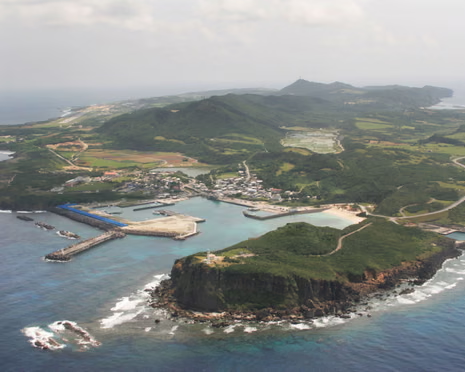
Defence minister Shinjiro Koizumi revealed that surface-to-air missiles will be deployed on Yonaguni by March 2031. The small island lies roughly 100 kilometres from Taiwan and sits at the western edge of Japan’s territory. Officials indicated that preparations could begin as early as fiscal 2030, depending on facility construction progress. This marks the first time a clear timetable has been shared publicly.
The Japan missiles deployment is designed to strengthen air defence capabilities in the southwest archipelago. The planned systems are capable of intercepting aircraft and ballistic missiles. According to defence officials, the objective is deterrence rather than provocation. However, Beijing has already voiced concerns about what it views as expanding militarisation.
The announcement follows heightened diplomatic friction between Tokyo and Beijing in recent months. Prime minister Sanae Takaichi previously stated that a Chinese attack on Taiwan could threaten Japan’s survival. She suggested that such a scenario might trigger involvement from Japan’s Self-Defence Forces. Those remarks were met with strong objections from Chinese officials.
China responded by urging its citizens to reconsider travel to Japan. Authorities also imposed restrictions on certain exports described as having dual-use potential. Chinese officials argue that Japan’s evolving defence policies signal a departure from post-war restraint. Tokyo maintains that all actions remain within its constitutional framework.

The strategic importance of Yonaguni has grown steadily over the past decade. Although small, the island occupies a crucial position near contested waters. It already hosts a monitoring facility operated by Japan’s Self-Defence Forces. Around 160 personnel are stationed there, observing maritime activity in the East China Sea.
Residents of Yonaguni number approximately 1,500, forming a close-knit island community. In 2015, locals narrowly voted in favour of hosting a military base. The base became operational in 2016, introducing new economic opportunities alongside security concerns. Some islanders appreciate the employment benefits that defence facilities bring. Others worry about becoming a frontline target in any future conflict.
The Japan missiles deployment plan has therefore generated mixed reactions locally. Defence ministry officials are expected to hold community briefings to explain the timeline. Authorities insist that transparency will guide discussions with residents. The government hopes reassurance will ease fears about escalating military tensions.
Yonaguni is also known for its natural beauty and unique wildlife. Its miniature horses graze freely, while divers visit to witness seasonal hammerhead shark gatherings. Tourism remains a modest but meaningful contributor to the local economy. Many residents fear that a stronger military presence could deter visitors.
Beyond Yonaguni, broader territorial disputes continue to strain relations between Tokyo and Beijing. The uninhabited Senkaku Islands are administered by Japan but claimed by China. In China, they are known as the Diaoyu Islands. Chinese coastguard vessels have repeatedly entered waters surrounding the islets, prompting diplomatic protests from Tokyo.
Japan’s defence strategy has evolved considerably since 2022. Previously, much attention focused on northern threats, particularly from Russia. However, increased Chinese naval and air activity shifted strategic priorities southward. The government subsequently approved measures to bolster defences across remote western islands.
Security analysts note that the Japan missiles initiative aligns with these broader reforms. Tokyo has committed to raising defence spending significantly over the coming years. The objective is to develop counterstrike capabilities and reinforce deterrence. Supporters argue that regional instability demands stronger preparedness.
Critics caution that such moves risk fuelling an arms race in East Asia. They warn that visible military expansion could deepen mistrust between neighbouring states. Beijing has not ruled out using force to achieve what it calls reunification with Taiwan. That stance remains a central source of tension across the Taiwan Strait.
Japan’s constitutional pacifism continues to frame domestic debate. Article 9 renounces war as a sovereign right and limits military capabilities. Successive governments have interpreted the constitution to permit self-defence measures. Still, each expansion of capability invites scrutiny and political discussion.
Prime minister Takaichi has defended her remarks on Taiwan’s security. She argues that Japan cannot remain indifferent to regional developments. According to her position, instability near Taiwan could disrupt shipping lanes and threaten Japanese territory. Trade routes passing through nearby waters are vital to Japan’s economy.
The United States, Japan’s key ally, maintains a complex relationship with Taiwan. While Washington recognises Beijing diplomatically, it provides defensive support to Taipei. Japan’s security planning often reflects coordination with American forces stationed in the region. Any escalation involving Taiwan would likely draw international attention swiftly.

For residents of Yonaguni, geopolitical strategy feels intensely personal. The island’s proximity to Taiwan makes it strategically valuable but potentially vulnerable. Some locals express pride in contributing to national defence. Others fear their home could become an early target in a confrontation.
Defence minister Koizumi emphasised that deployment plans depend on infrastructure readiness. Construction of missile facilities requires careful environmental and safety assessments. Officials insist that community impact will remain under review. The ministry aims to balance national security with local wellbeing.
Regional observers believe the Japan missiles decision reflects long-term strategic calculations. China’s expanding naval capabilities and frequent exercises near Taiwan have raised alarms. Japan views deterrence as essential to preventing miscalculation. Whether the deployment ultimately stabilises or destabilises the region remains uncertain.
Diplomatic channels between Tokyo and Beijing remain open despite rising tensions. Both governments continue economic engagement alongside political disagreements. Trade between the two nations remains substantial and mutually significant. However, trust has eroded amid recurring disputes over maritime boundaries and security policy.
As 2031 approaches, attention will focus on implementation milestones. The coming years will test Japan’s ability to reassure domestic audiences while signalling resolve abroad. Regional stability depends not only on military assets but also on diplomatic restraint. The Japan missiles deployment underscores the delicate balance facing policymakers today.
Related News:
 Top Christmas Books Reads: Classics to Cozy Romcoms
 Just Stop Oil Protesters Convicted Amid Climate Defence Row
 BBC to Apologise Over Edited Trump Speech Amid Backlash
 Britain deploys RAF specialists to assist Belgium with drone threats
 Palace May Restore Hyphen to Andrew Mountbatten-Windsor’s Name
 US Senate Passes Funding Bill to End Historic Shutdown
 US Justice Department Files Lawsuit Against California Over Partisan Voting Maps
 Greene Pushes Epstein Files Amid Trump Fallout
 Trump Deploys DHS to Charlotte in Major Arrest Operation
 December Run-Off in Chile as Election Produces No Winner
 Zelenskyy Signs Fighter Jet Deal Amid Russian Drone Attacks
 Orban Says Ukraine Has ‘No Chance’ as EU Support Continues
 Canada Passes Carney’s First Budget in Tight Parliamentary Vote
 Israeli Strike Kills 13 Near Palestinian Camp in Lebanon
 Shadow Fleet at Sea: Europe’s Battle Against Illicit Oil Shipping
 Tiny Curacao Makes History as Smallest Nation to Reach World Cup
 Haiti Qualifies for World Cup Despite Coach Never Visiting Country
 Deadly Russian Strikes Hit Western Ukraine, 20 Killed in Ternopil
 Pentagon Officials in Ukraine to Discuss War End
 Ukraine Peace Plan: Zelensky Ready for Dialogue
 Vietnam Battles Deadly Floods as Rains Continue
 Venezuela Threatens Nobel Winner Machado with Fugitive Status
 At Least Three Dead in Bangladesh Earthquake
 Royal Navy Shadows Russian Warships Entering the Channel
 Israel Confirms Hamas Returned Dror Or’s Body
 US Suspends Afghan Immigration After White House Shooting
 Two National Guard Soldiers Critically Injured Near White House
 Georgians Defy Government Crackdown After Year of Protests
 Southern Lebanon reels as Israeli strikes shatter communities
 Mbappe Scores 4 as Real Madrid Edge Olympiakos
 Sri Lanka Floods Leave 56 Dead, Dozens Missing
 Tokyo court rules Japan’s same-sex marriage ban constitutional
 ‘Extinct’ Antelope Returns to Sahara, Bringing Hope
 EU plans $105bn Ukraine aid using frozen Russian assets
 Global campaign launched to free Palestinian leader Barghouti
 American Mother Extradited From UK to U.S. on Murder Charges
 Russia losses Ukraine war peace talks intensify amid rising deaths
 Facebook Slow to Remove Bondi Attack Praise, Anti-Hate Group Claims
 Australian Cruise Ship Freed After Reef Grounding in Papua New Guinea
 Zelenskyy Accuses Russia of Sabotaging Peace Talks
 US Cities Erupt in Protests Against Trump’s Venezuela Military Action
 Albanese Opens Door to Bondi Royal Commission Amid Rising Pressure
 Trump Escalates Minnesota Immigration Surge Amid Rising Tensions
 Iran Protesters Defy Crackdown as Violent Clashes Intensify
 US Clears Nvidia AI Chip Sales to China in Policy Shift
 Trump Threatens Strong Action If Iran Executes Protesters
 Gulf states warn Trump Iran strikes risk wider Middle East war
 Machado Trump medal gesture reshapes Venezuela power struggle
 Greenland defence seen as shared Nato duty amid troop arrivals
 EU weighs response amid Greenland tariff crisis with Trump
 Syria President Declares Victory as Ceasefire Reached with SDF
 Sydney Shark Attack Surge Shocks Australia Beaches
 ICE street raids expose a chilling future for public freedoms
 Thousands Flee Cambodia Scam Centres Amid Global Pressure
 EU Says US Ties Have Suffered ‘Big Blow’ After Greenland Crisis
 Andrew Hastie Emerges as Leadership Rival to Ley
 Starmer China visit raises human rights pressure on Beijing
 Arizona border shooting leaves suspect hospitalised after agent pursuit
 US Launches Multi-Day Air Drills Amid Rising Iran Tensions
 Videos reveal earlier clash before Alex Pretti shooting
 China Executes 11 Linked to Myanmar Scam Networks
 UK New Car Discounts Near £6,000 as Prices Are Slashed
 Israel Moves to Bar MSF From Gaza Operations
 Tragic Ski Lift Accident Claims Australian Snowboarder
 Thousands Left Without Heating in Ukraine Amid Russia Strikes
 Trump Praises ‘Terrific’ Petro After White House Talks
 Portugal Election Delivers Socialist Win as Far Right Surges
 Sydney Protest Escalates and Elderly Woman Suffers Severe Injury
 Tarique Rahman’s Rise Toward Bangladesh’s Top Job
 Glass Cliff Debate After Ley’s Ouster
 Australian Families Leave Syrian Camp for Home
 SA Police Intensify Search in Gus Lamont Case
 Trump Attacks UK-California Energy Pact
 Kim Jong-un Unveils Housing for War Families
 Trump and Chagos Deal Rift Over Iran Strikes
 Andrew Arrest Sparks Republic Debate in Australia
 Global corruption crisis: Who Washington shields
 El Mencho Killed as Mexico Faces Violence
 Farage Chagos Islands Row Sparks Fury
 Gold Rush in Gugulethu Leaves South Africans Desperate for Work and Hope