Published: 25 February 2026. The English Chronicle Desk. The English Chronicle Online.
As new UK border rules come into force today, travel has become a source of frustration and confusion for many British dual nationals returning home from abroad. From 25 February 2026, the UK Home Office has stepped up enforcement of its digital border controls, meaning international carriers must now check that every passenger bound for the United Kingdom has valid documentation proving their right to enter the country. That requirement has left some dual citizens unable to board flights, ferries and trains because they did not hold the correct travel papers, prompting outrage and calls for immediate reform.
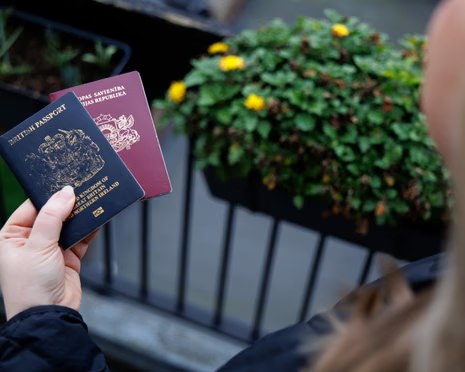
Under the updated border rules, British citizens are expected to travel on a valid British passport, or on a foreign passport that includes a Certificate of Entitlement confirming their right of abode in the UK. This change applies even to those with dual nationality who might previously have entered the country using a foreign passport, particularly if that passport was from an ETA‑exempt country such as Australia, Canada or the United States.
For many affected travellers, the shock came just days before full enforcement began. Messages on social media from people stranded overseas paint a picture of disrupted plans and skyrocketing costs as families struggled to make last‑minute arrangements. Some British dual nationals who had assumed their right to re‑enter the UK was automatic found themselves blocked at check‑in desks when carriers refused to accept their foreign passport alone. This practical hurdle stems from new rules that place responsibility for document checks squarely on airlines and other operators, a shift driven by the Home Office’s aim to modernise border security.

The government’s rationale for introducing the stricter checks centres on its Electronic Travel Authorisation (ETA) system, a digital entry permission that has been gradually rolled out since 2023 and came into full effect this week. While most visitors from visa‑free countries now require an ETA costing £16, British and Irish citizens are exempt. However, that exemption has a caveat: only those who can show a British or Irish passport, or a valid right of abode certificate, can benefit from it. In practice, dual nationals without those documents are treated differently by carriers’ pre‑departure systems, leading to boarding refusals.
The cost of compliance has proved a flashpoint in the debate. Standard British passport applications are relatively inexpensive and usually straightforward, but the alternative Certificate of Entitlement can cost £589 and take many weeks to process. The high price tag and long processing time have angered many dual nationals, who argue that the change disproportionately impacts those who have long identified as British but never held a UK passport. Social media has been flooded with accounts from parents who must now delay flights because their children lack proper documentation, and from older citizens who were unaware of the policy shift until confronted with refusal at the airport.
Political reaction in the UK has been vociferous. The Liberal Democrats and other opposition figures have condemned the sudden enforcement of the new border controls without a grace period, arguing that the short notice has left many people in limbo. Critics have urged the government to reconsider or delay the changes to avoid what they describe as penalising loyal citizens, especially since many were unaware that their foreign passport alone would no longer suffice. Some MPs have also flagged how the lack of clarity around the acceptance of expired British passports has added to the confusion.
In defence of the policy, the Home Office has pointed out that public information on the documentation requirements has been available for months, and that a communications campaign has been running since 2023. Officials say that the enhanced border system will improve security and help manage immigration more effectively by digitising permissions to travel, bringing the UK in line with systems used by several other countries. They also highlight that Irish citizens, including those with dual UK‑Irish nationality, remain able to use their Irish passport as proof of their right to enter the UK under the Common Travel Area agreement.
Yet for many dual nationals the theory has not matched the reality. People posting in travel and expatriate forums expressed frustration about the practical implications of the rule, particularly around the requirement to use the same passport for both departure and arrival. Some reported being told by carrier systems that they needed an ETA because their foreign passport lacked any UK‑issued endorsement, even though they believed they were legally exempt as British citizens. The reliance on automated checks has, in numerous cases, overshadowed the legal right to enter, leaving travellers to argue their case at gates and customer service counters with little success.

The issue has also highlighted the complexities of dual citizenship in a modern, interconnected world. Many individuals hold multiple passports for convenience, work or family reasons, and they are now navigating a visa and document landscape that does not always accommodate the nuances of their status. The sudden pivot to stringent pre‑departure checks has underscored how quickly travel rights can shift with changes in policy, and how crucial effective communication is when governments overhaul long‑standing practices.
Some travellers, caught off‑guard by the new rules, are scrambling to renew expired British passports. Others are trying to obtain Certificates of Entitlement, though the process has been described on social platforms as labyrinthine and expensive. There are widespread calls for clearer guidance, faster processing options, and perhaps most importantly, a transitional period to lessen the financial and logistical burden on affected families. As it stands, many people who thought they had the right to return home with ease are facing delays, added expenses, and the wrenching prospect of missing key life events.
As the first days of enforcement unfold, it remains to be seen whether the government will respond to the outcry. For thousands of British dual nationals, the experience of trying to board a plane only to be told they lack the right documentation has been a stark reminder of how policy changes can impact lives. With travel plans disrupted and emotions running high, there is a growing consensus among advocates that more support and clearer communication from authorities is urgently needed.
Related News:
 British Woman in Iran ‘Losing Hope’ Amid Ongoing Detention
 BBC Journalist Held and Interrogated in Vietnam
 Green Party Surges Past Labour in Latest UK Poll
 Celebrities and Charities Demand UK Government Act on Child Poverty
 Trump’s UK Ambassador Urges North Sea Drilling to Strengthen US Ties
 FBI Director Kash Patel Defends Girlfriend Amid Government Jet Claims
 French Taxi Driver Cleared in David Lammy Theft Case After Fare Dispute
 Boris Johnson accused of undermining BBC leadership
 ‘Reckless’ cuts to victims’ services will cost more than they save
 Millionaires group urge Reeves to introduce wealth tax to ‘lift kids out of poverty’
 Starmer Faces Growing Dissent as Labour MPs Weigh Leadership Challenge
 Reeves rejects £1bn plea for NHS redundancy payouts
 Politics latest: Starmer ‘will fight any leadership coup’ as Streeting denies attempt to oust Labour PM
 PM Condemns Leaks, Vows Loyalty to Ministers and Stability
 Major Rent Reform Ends No-Fault Evictions in England
 Peers Flood Assisted Dying Bill with 942 Amendments
 England’s Special Needs Support Faces Breaking Point
 MoD warned over Excel risks before Afghan data breach
 UK Asylum Overhaul Sparks Debate Over Human Rights and Deportations
 UK Candidate Moved to Safe House After Election Threats
 UK Warns China After MI5 Issues Espionage Alert
 Labour Faces Historic Decline in Wales
 Rama Rebukes Mahmood for Targeting Albanian Families
 PM Highlights UK Business at G20 in South Africa
 Kate Forbes: Motherhood Harder Than Politics
 Most Tories Expect to Support a Farage-Led Government
 Labour MP claims devolution bill is ‘blatant discrimination’ against Cornwall
 Millions Face Higher Taxes Under Reeves New Budget
 Peers Get Extra Time to Debate Assisted Dying Bill
 Planned Palestinian Flag Raising at Belfast City Hall Faces Delay Amid Legal Concerns
 Starmer Says Labour’s Economic Plan Needs Years to Deliver
 Culture secretary to review Telegraph takeover by Daily Mail owner
 Andy Burnham Apologises for Past LGBTQ+ Police Discrimination
 Plans to Limit Jury Trials Face Retreat After Mounting Opposition
 Jenrick Reform defection deepens Tory civil war
 Right Must Unite After Jenrick Defection, Urges Rees-Mogg
 UK Ministers Drop Foreign Student Targets for Global Education Push
 MPs warn AI financial risks threaten UK stability
 MPs warn AI financial risks threaten UK stability
 No Gas Boiler Ban as UK Warm Homes Plan Backs Heat Pumps
 Hugh Grant Joins Call for Under-16 Social Media Ban in UK
 Shinzo Abe’s killer receives life sentence in Japan
 Lords Vote Piles Pressure on Starmer Over Social Media Ban
 Planned Troubles Board Game Sparks Outrage in Northern Ireland
 Reform UK Health Plan ‘Would Cost £1.7bn’, Streeting Says
 Police response times face strict new national limits
 Labour policing overhaul sparks fears over growing central control
 Tories criticised after Braverman defection sparks mental health row
 Burnham Westminster return hopes fade amid Labour rift
 Starmer warns of toxic division politics in Reform challenge
 Starmer China visit raises human rights pressure on Beijing
 Labour Must Revive High Streets to Avoid Election Collapse
 Conservative Party Rejects Centrism Under Badenoch’s Leadership
 Calls Grow for King Charles to Apologise for Crown’s Role in Slavery
 Starmer Signals UK Return to EU Defence Pact Talks
 Starmer crisis deepens as Labour MPs turn on PM
 Palantir contracts face UK halt calls over transparency
 Labour Thinktank Row Deepens Over Journalist Probe Claims
 Morgan McSweeney downfall shocks Labour leadership
 Sarwar call shakes Labour as No 10 calms fears
 Labour Lord Doyle Apologises Over Paedophile Ties in Political Storm
 Palestine Action Verdict Sparks Debate on Activist Tactics
 Cabinet Secretary Shake-Up Triggers Due Diligence Warning
 Starmer Faces Inquiry Calls Over Thinktank Probe
 Royal Mail Delivery Crisis Deepens Amid Weather Chaos
 Labour Together probe scandal sparks fresh Cabinet Office investigation
 Farage to Name Jenrick as Reform Chancellor Pick
 Farage Unveils Reform UK Frontbench Team
 NHS Negligence Ruling Raises Payout Costs
 Civil Service Pay: Union Urges Ministers to End ‘Barking Mad’ Limits
 Antonia Romeo appointment sparks criticism
 Trump and Chagos Deal Rift Over Iran Strikes
 Andrew Mountbatten-Windsor Arrest After FBI Radar
 Farage Chagos Islands Row Sparks Fury
 Trump Tariffs Threat Spark UK and EU Alarm
 Gasfield Deal Sparks Debate Over Fracking in Lincolnshire
 Reform UK targets workers’ rights repeal
 Ministers Urged to Ban Crypto Political Donations
 Mandelson Denounces Arrest Over ‘Baseless’ Fleeing Claims
 Russian Trade Routed Through British Islands Exposed