Published: 26 February 2026. The English Chronicle Desk. The English Chronicle Online.
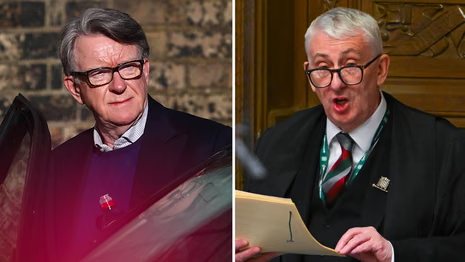
The unfolding Mandelson arrest saga took another dramatic turn on Wednesday afternoon. The Metropolitan Police formally apologised to Commons Speaker Sir Lindsay Hoyle after mistakenly disclosing that he had passed on a sensitive tipoff. The revelation emerged during the investigation into Peter Mandelson and allegations of misconduct in public office.
The apology followed confirmation that Hoyle had relayed information suggesting Mandelson might leave Britain. That tipoff claimed the former ambassador planned to travel to the British Virgin Islands. Acting on the intelligence, officers from the Metropolitan Police arrested Mandelson on Monday.
The arrest came despite prior arrangements for a voluntary interview next month. Mandelson, once a powerful cabinet minister, strongly denies any wrongdoing. He has also rejected claims that he was preparing to flee the United Kingdom.
In a brief statement delivered in the House of Commons, Hoyle addressed growing speculation. He explained that he had acted in good faith after receiving information. He stressed that passing such intelligence to police fell within his duty.
The matter escalated when a custody document was shared with Mandelson’s legal team. That document reportedly named the Lords speaker as the source of the tipoff. The reference was later understood to be a mistaken description of Hoyle.
After the Lords speaker, Michael Forsyth, publicly denied involvement, confusion deepened. Forsyth described the suggestion as entirely false and without foundation. In response, Hoyle clarified that he himself had informed the police.
Senior officers from Scotland Yard arranged to meet Hoyle in person. The internal view within the force reportedly considers the disclosure a serious breach. Police sources indicated that protecting confidential sources remains a fundamental protocol.

The information about a possible departure to the Caribbean territory reportedly came from authority figures there. Hoyle had recently visited the British Virgin Islands on official business. He attended events marking the seventy-fifth anniversary of the territory’s assembly.
During the visit, he met both the governor and the premier. He also delivered an address to the local parliament. It was during or shortly after this trip that the intelligence reached him.
After receiving the tipoff, Hoyle passed it to the Metropolitan Police. Officers then conducted their own risk assessment before acting. Ultimately, they decided to arrest Mandelson rather than wait.
The Mandelson arrest took place in London on Monday afternoon. He was questioned under caution and later released on bail. As part of his bail conditions, he is understood to have surrendered his passport.
Friends of Mandelson said he was angered by the sequence of events. He reportedly believed a voluntary interview had already been agreed. According to his account, the sudden arrest was unnecessary and damaging.
In a private message shared with associates, he rejected the allegation outright. He described the suggestion that he would abandon family and home as fiction. He questioned who or what might be behind the claim.
The investigation itself centres on alleged misconduct in public office. It also relates to accusations that Mandelson shared confidential government information. The claims reference his past association with the late financier Jeffrey Epstein.
Mandelson has consistently denied feeding any secret information to Epstein. The former business secretary has previously acknowledged a friendship with the financier. However, he insists that no improper conduct occurred.
Political pressure surrounding his diplomatic appointment has steadily intensified. Prime Minister Keir Starmer appointed Mandelson as ambassador to Washington in late 2024. Critics questioned the decision given media reports about Epstein connections.
Those reports detailed continued contact between Mandelson and Epstein after a US conviction. The controversy ultimately led to Mandelson’s dismissal last September. Files released by American authorities added further scrutiny.
At Prime Minister’s Questions this week, the issue hovered over proceedings. Conservative leader Kemi Badenoch did not directly challenge Starmer on the arrest. However, she referenced language describing Labour in deeply critical terms.
The remark prompted immediate condemnation from several Labour MPs. They warned that inflammatory rhetoric could endanger party activists. A Conservative spokesperson later said Badenoch had quoted an existing comment.
Beyond party exchanges, attention has turned to document transparency. A Conservative-led motion in the Commons called for the release of papers related to Mandelson’s appointment. The government has agreed to prioritise an initial batch.
Officials say those documents do not intersect with the police inquiry. They also state the papers carry no national security implications. Therefore, they will not require review by the Intelligence and Security Committee.
Even so, further disclosures may take several weeks. The Cabinet Office has reportedly recruited internal volunteers to assist. The process reflects the intense political sensitivity surrounding the case.
Separately, ministers have committed to releasing material about another appointment. The Commons motion extends to documents concerning Prince Andrew, formally known as Andrew Mountbatten-Windsor. He served as a trade envoy between 2001 and 2011.
That review is being led by the Department for Business and Trade. Complications arise because Prince Andrew faces a separate police investigation. Allegations in that case also concern potential misconduct in public office.
The Metropolitan Police acknowledged its error in a brief statement. A spokesperson confirmed that an apology had been delivered to Hoyle. The force described the disclosure as inadvertent during an ongoing investigation.
Legal experts note that revealing a confidential source can undermine trust. Such breaches may also complicate future intelligence sharing. In politically charged cases, procedural precision becomes especially important.

For Mandelson, the immediate priority remains cooperation with investigators. His lawyers, from Mishcon de Reya, have sought clarification about the arrest basis. They have formally asked what evidence justified urgent action.
Supporters argue that voluntary attendance would have sufficed. Critics counter that police must assess flight risk independently. The fact that officers believed arrest necessary will likely be examined closely.
The Mandelson arrest therefore sits at the centre of overlapping tensions. It involves police procedure, political accountability and public confidence. Each development appears to generate fresh scrutiny from multiple directions.
Hoyle’s intervention has added an unexpected institutional dimension. The role of a Commons Speaker is traditionally impartial and carefully bounded. His decision to speak publicly aimed to prevent damaging speculation.
Observers suggest the apology may calm immediate constitutional concerns. Yet broader questions about the investigation’s trajectory remain unresolved. Much depends on what evidence ultimately supports or undermines the allegations.
For now, Mandelson continues to deny any plan to leave Britain. He maintains that cooperation, not evasion, defines his approach. The police, meanwhile, must balance transparency with investigative confidentiality.
As the story develops, it will test trust in public institutions. The Mandelson arrest has already reshaped political debate this week. Whether it leads to charges or closure remains uncertain.
Related News:
 British Woman in Iran ‘Losing Hope’ Amid Ongoing Detention
 BBC Journalist Held and Interrogated in Vietnam
 Green Party Surges Past Labour in Latest UK Poll
 Celebrities and Charities Demand UK Government Act on Child Poverty
 Trump’s UK Ambassador Urges North Sea Drilling to Strengthen US Ties
 FBI Director Kash Patel Defends Girlfriend Amid Government Jet Claims
 French Taxi Driver Cleared in David Lammy Theft Case After Fare Dispute
 Boris Johnson accused of undermining BBC leadership
 ‘Reckless’ cuts to victims’ services will cost more than they save
 Millionaires group urge Reeves to introduce wealth tax to ‘lift kids out of poverty’
 Starmer Faces Growing Dissent as Labour MPs Weigh Leadership Challenge
 Reeves rejects £1bn plea for NHS redundancy payouts
 Politics latest: Starmer ‘will fight any leadership coup’ as Streeting denies attempt to oust Labour PM
 PM Condemns Leaks, Vows Loyalty to Ministers and Stability
 Major Rent Reform Ends No-Fault Evictions in England
 Peers Flood Assisted Dying Bill with 942 Amendments
 England’s Special Needs Support Faces Breaking Point
 MoD warned over Excel risks before Afghan data breach
 UK Asylum Overhaul Sparks Debate Over Human Rights and Deportations
 UK Candidate Moved to Safe House After Election Threats
 UK Warns China After MI5 Issues Espionage Alert
 Labour Faces Historic Decline in Wales
 Rama Rebukes Mahmood for Targeting Albanian Families
 PM Highlights UK Business at G20 in South Africa
 Kate Forbes: Motherhood Harder Than Politics
 Most Tories Expect to Support a Farage-Led Government
 Labour MP claims devolution bill is ‘blatant discrimination’ against Cornwall
 Millions Face Higher Taxes Under Reeves New Budget
 Peers Get Extra Time to Debate Assisted Dying Bill
 Planned Palestinian Flag Raising at Belfast City Hall Faces Delay Amid Legal Concerns
 Starmer Says Labour’s Economic Plan Needs Years to Deliver
 Culture secretary to review Telegraph takeover by Daily Mail owner
 Andy Burnham Apologises for Past LGBTQ+ Police Discrimination
 Plans to Limit Jury Trials Face Retreat After Mounting Opposition
 Jenrick Reform defection deepens Tory civil war
 Right Must Unite After Jenrick Defection, Urges Rees-Mogg
 UK Ministers Drop Foreign Student Targets for Global Education Push
 MPs warn AI financial risks threaten UK stability
 MPs warn AI financial risks threaten UK stability
 No Gas Boiler Ban as UK Warm Homes Plan Backs Heat Pumps
 Hugh Grant Joins Call for Under-16 Social Media Ban in UK
 Shinzo Abe’s killer receives life sentence in Japan
 Lords Vote Piles Pressure on Starmer Over Social Media Ban
 Planned Troubles Board Game Sparks Outrage in Northern Ireland
 Reform UK Health Plan ‘Would Cost £1.7bn’, Streeting Says
 Police response times face strict new national limits
 Labour policing overhaul sparks fears over growing central control
 Tories criticised after Braverman defection sparks mental health row
 Burnham Westminster return hopes fade amid Labour rift
 Starmer warns of toxic division politics in Reform challenge
 Starmer China visit raises human rights pressure on Beijing
 Labour Must Revive High Streets to Avoid Election Collapse
 Conservative Party Rejects Centrism Under Badenoch’s Leadership
 Calls Grow for King Charles to Apologise for Crown’s Role in Slavery
 Starmer Signals UK Return to EU Defence Pact Talks
 Starmer crisis deepens as Labour MPs turn on PM
 Palantir contracts face UK halt calls over transparency
 Labour Thinktank Row Deepens Over Journalist Probe Claims
 Morgan McSweeney downfall shocks Labour leadership
 Sarwar call shakes Labour as No 10 calms fears
 Labour Lord Doyle Apologises Over Paedophile Ties in Political Storm
 Palestine Action Verdict Sparks Debate on Activist Tactics
 Cabinet Secretary Shake-Up Triggers Due Diligence Warning
 Starmer Faces Inquiry Calls Over Thinktank Probe
 Royal Mail Delivery Crisis Deepens Amid Weather Chaos
 Labour Together probe scandal sparks fresh Cabinet Office investigation
 Farage to Name Jenrick as Reform Chancellor Pick
 Farage Unveils Reform UK Frontbench Team
 NHS Negligence Ruling Raises Payout Costs
 Civil Service Pay: Union Urges Ministers to End ‘Barking Mad’ Limits
 Antonia Romeo appointment sparks criticism
 Trump and Chagos Deal Rift Over Iran Strikes
 Andrew Mountbatten-Windsor Arrest After FBI Radar
 Farage Chagos Islands Row Sparks Fury
 Trump Tariffs Threat Spark UK and EU Alarm
 Gasfield Deal Sparks Debate Over Fracking in Lincolnshire
 Reform UK targets workers’ rights repeal
 Ministers Urged to Ban Crypto Political Donations
 Mandelson Denounces Arrest Over ‘Baseless’ Fleeing Claims
 Russian Trade Routed Through British Islands Exposed