Published: 26 February 2026. The English Chronicle Desk. The English Chronicle Online.
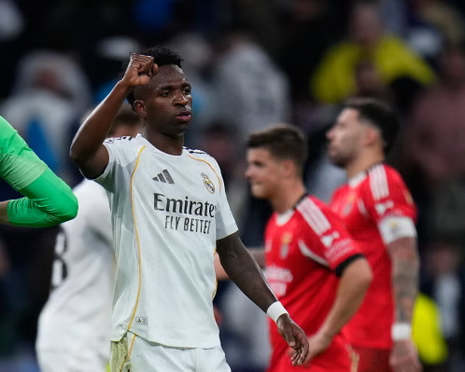
Vinícius Júnior delivered the decisive moment as Real Madrid confirmed their place in the Champions League.
The Brazilian winger sprinted to the corner flag and celebrated with his trademark dance, a gesture repeated from Lisbon. Around him, teammates, fans, and staff shared the relief and jubilation of qualification secured with 10 minutes remaining. Real Madrid had faced a tense encounter at the Santiago Bernabéu, where nerves and pressure mounted against a determined Benfica side. Vinícius’s late goal, however, silenced fears and ensured a 2-1 victory in the second leg, 3-1 on aggregate, sending Madrid into the round of 16. Head coach Álvaro Arbeloa praised his star forward, saying he deserved the decisive contribution in such a high-stakes match.
Madrid arrived with a slender advantage after their first-leg victory in Lisbon, though that game had been overshadowed by allegations of racial abuse directed at Vinícius from Benfica’s Gianluca Prestianni. Despite the lingering controversy, Real Madrid started the second leg calmly, yet the Portuguese team struck first through Rafa Silva, unsettling the home side. Madrid responded quickly, Aurélien Tchouaméni equalising within 165 seconds, showing composure and determination despite the early scare. The match thereafter remained tightly contested, with Madrid unable to fully relax until Vinícius’s late intervention confirmed their progression in Europe’s premier competition.

Absent from the match were Prestianni, serving a suspension, and José Mourinho, who returned to the Santiago Bernabéu but observed from a lower section rather than the designated radio cabin. Kylian Mbappé was also sidelined due to a knee injury, leaving Madrid without key attacking options. Despite these absences, the team’s performance reflected tactical discipline, resilience, and individual brilliance, demonstrating that collective effort can overcome adversity in critical fixtures. Arbeloa acknowledged the difficulty of facing strong opponents like Benfica, hinting at the familiar challenges awaiting Madrid should they face Manchester City in later rounds.
Benfica’s frustration was palpable, with their assistant coach João Tralhão emphasising pride at the team’s performance despite falling short. Thibaut Courtois, Madrid’s goalkeeper, was instrumental in denying numerous chances, earning the description of a “giant” by Tralhão. Benfica’s opening goal had followed an intricate team move spanning nearly a minute, highlighting their attacking intent and early dominance. A diagonal pass from Fredrik Aursnes stretched Madrid’s defence, while Amar Didic exploited the space to feed Vangelis Pavlidis, whose effort eventually resulted in Rafa Silva finishing after a scramble, putting Benfica ahead and energising 4,000 travelling supporters in the north stand.
Early pressure from Benfica did not fade after the opener, with midfielders and wide players probing Madrid’s defence effectively. Didic’s dynamic movement created multiple opportunities, including a dangerous chance for Andreas Schjelderup, whose strike narrowly missed the target. Silva also tested Courtois with a quick futsal-style attempt, reflecting Benfica’s willingness to adapt and challenge Madrid. However, their advantage lasted only two minutes, as Tchouaméni capitalised on a defensive lapse by Nicolas Otamendi, receiving the ball from Arda Güler and Fede Valverde before curling a composed finish past Anatoliy Trubin. His calm goal, followed by gestures for composure, reminded teammates and fans of Madrid’s resilience under pressure.
Throughout the first half, Madrid struggled with moments of vulnerability. A long ball behind Trent Alexander-Arnold almost led to a swift Benfica counter, while Schjelderup and Silva repeatedly threatened from wide positions. Madrid’s offside awareness and Courtois’s sharp reflexes were crucial in maintaining parity. Video assistant referee interventions ruled out potential goals for Madrid, ensuring Benfica remained competitive. The home supporters experienced a mixture of anxiety and exasperation, reflecting the uncertainty and drama of European knockout football.
As the second half unfolded, both teams exchanged chances without decisive impact, with Benfica continuing to press high and Madrid cautiously seeking openings. Raúl Asencio and Alexander-Arnold tested Courtois, while Schjelderup’s creativity constantly challenged defensive organisation. Silva struck the bar, and Pavlidis narrowly missed from a deflection, illustrating the fine margins defining the outcome. Madrid’s energy appeared cautious, with substitutions and tactical adjustments aimed at consolidating the advantage rather than creating additional risk.
The game’s tension peaked when Asencio collided with Eduardo Camavinga, necessitating stretcher removal and a neck brace, momentarily intensifying concern for player safety. However, the decisive moment arrived when Tomas Araujo misjudged a ball, leaving space in midfield. Valverde intercepted and immediately released Vinícius, whose pace and timing were flawless. Racing into the final third, the Brazilian finished clinically past Trubin, securing victory and providing the final flourish to an emotionally charged night. Fans erupted, and the Santiago Bernabéu collectively exhaled, acknowledging the skill, determination, and composure that ensured Madrid’s passage to the next round.
Vinícius’s performance exemplified his growing maturity and ability to influence crucial fixtures. Beyond goals, his movement, pressing, and understanding of space contributed to Madrid’s effectiveness throughout the match. The celebration reflected not only personal achievement but also team unity, symbolising relief after a night of fluctuating fortunes and high tension. Arbeloa’s praise and the crowd’s acclaim confirmed the significance of his contribution, reinforcing the Brazilian winger’s status as a decisive figure in both domestic and European campaigns.
 Madrid’s progression underscores the challenges and unpredictability of the Champions League. Benfica, despite their disciplined approach and attacking threats, demonstrated how narrow margins can determine outcomes at the highest level. Courtois’s heroics, strategic positioning, and composure under pressure were critical in maintaining parity during moments of sustained pressure. Tchouaméni’s quick equaliser emphasised Madrid’s ability to respond to setbacks swiftly, while Vinícius’s late strike highlighted the importance of persistence and opportunism. The match’s narrative, oscillating between anxiety and relief, reflects the drama inherent in knockout football, where individual brilliance and team cohesion intersect to define success.
Looking ahead, Real Madrid now anticipate the next round with heightened focus, aware that encounters against teams such as Manchester City or Sporting Lisbon will demand similar intensity, strategic awareness, and individual contributions. The team’s performance against Benfica, combining defensive solidity with attacking incisiveness, provides a template for upcoming challenges. Fans can draw confidence from the resilience displayed, recognising that while threats emerge at various stages, composure, coordination, and timely execution remain decisive.
In conclusion, Vinícius Júnior’s late strike delivered both victory and reassurance, epitomising the drama, skill, and collective effort of Real Madrid. Benfica’s spirited performance and early dominance set the stage for a contest marked by tension, tactical adjustment, and crucial saves. Madrid’s ability to withstand pressure, equalise promptly, and ultimately secure progression through Vinícius’s intervention reflects the strategic and psychological complexities of elite football. As the Champions League unfolds, lessons from this fixture will resonate, emphasising the importance of individual brilliance combined with disciplined team play to navigate high-pressure European ties successfully.
Related News:
 Sarr Double Sinks Young Liverpool in Carabao Cup
 Nwaneri and Saka Secure Arsenal Win Over Brighton
 Woltemade Hot Streak Fires Newcastle Past Spurs
 Salah & Gravenberch Lead Liverpool to Win Against Villa
 Dyche Criticises Corner Decision as Forest Draw with United
 Caicedo Shines as Chelsea Edge Spurs in Chaotic Derby
 Granit Xhaka Rescue Earns Everton Draw at Sunderland
 Burn and Joelinton Head Newcastle to Victory Over Bilbao
 Foden shines as Man City dismantle Dortmund in dominant display
 Tension and Turmoil at Aston Villa v Maccabi Match
 Bellingham has ‘the edge’ among England No 10s
 Man City Masterclass on Guardiola’s Milestone Day Exposes Liverpool Woes
 Lando Norris Dominates Brazil GP to Strengthen F1 Title Bid
 England cannot afford to be in awe of the All Blacks, warns Jamie George
 VAR Must Rein Its Neck In to Save Football’s Spirit
 Trescothick Hints Pope Will Keep Number Three Spot
 Ronaldo Confirms Final World Cup and Plans Retirement
 Mary Earps’s Manchester United Return Faces Mixed Reception
 Sam Kerr Stars in Chelsea Return with Champions League Double
 This kid is something else: Alex Scott’s rise to England call-up
 UK and Ireland Announce Venues for Euro 2028 Tournament
 Saka Solidifies Role as Tuchel’s Key England Lieutenant
 Former Lion Heskey Warns of Shortage of England Strikers
 Australia Mourns Paralympic Champion Paige Greco
 Irish Hero Parrott Says Goal Brought First Tears in Years
 Nigeria Misses World Cup Again After Play-Off Loss
 From heartbreak to glory: Scotland’s dramatic return to the World Cup
 Tiny Curacao Makes History as Smallest Nation to Reach World Cup
 Haiti Qualifies for World Cup Despite Coach Never Visiting Country
 Major League Baseball Scores New Broadcast Deals Through 2028
 Barcelona Returns to Camp Nou vs Athletic Bilbao
 Moyes Defends Gueye After Dramatic Everton Bust-Up
 Kids Football Coach Removed Over Suspected ‘Drugs Menu’
 Mbappe Scores 4 as Real Madrid Edge Olympiakos
 Man City Lose, Champions League Risk
 Jac Morgan to Miss Six Nations Start After Surgery
 Alexander Isak ends drought as Liverpool stop rot with win at West Ham
 Mbappe rescues Real Madrid with a penalty at Girona
 Barcelona, Atletico set for decisive La Liga showdown
 Maxwell withdraws from IPL 2026 after 13 seasons
 Mbappe stars as Real Madrid thrash Athletic, close on Barca
 Australia Face Big Changes as Cummins and Lyon Ruled Out of Ashes
 Van de Ven Tackle Leaves Isak with Fractured Leg
 City Set to Land Semenyo After Chelsea Exit from Transfer Race
 Arrizabalaga Sends Arsenal Through in Dramatic Shootout
 Ashes Shock: Boland Admits Struggle Bowling With Keeper Up
 ECB powerless to halt England’s recurring Ashes failures
 Stokes urges empathy for England players amid Ashes struggles
 Damien Martyn in Induced Coma After Meningitis Diagnosis
 Spin Bowling Struggles as Pace Dominates 2025 Ashes Series
 Anthony Joshua Released After Nigeria Car Crash
 Chelsea Sack Looms: Enzo Maresca Relationship Collapses
 Africa’s Superpowers Shine in Cup of Nations Quarter-Finals
 Amorim’s United Future Uncertain Amid Wilcox Tension
 Raducanu Battles Injury as Britain Exit United Cup
 Australia Dominates England: Smith, Head Crush Bowlers in Sydney
 Australian Open Prize Money Hits Record $111.5m
 Nick Kyrgios Faces Singles Struggles at Brisbane Tennis Return
 Nottingham Forest Deny West Ham in Dramatic Late Win
 Manchester United Fan Group Targets Jim Ratcliffe Over Club Chaos
 Morocco sail into Afcon semis after Díaz inspires win
 Wrexham stun Nottingham Forest with Okonkwo FA Cup heroics
 Salah Shines as Egypt Knock Out Ivory Coast at Afcon
 Israeli fans ban questioned after Dutch police dispute evidence
 Semenyo Shines for City – Winners and Losers of Transfer
 Geopolitical football: Iran, Trump and the World Cup clash
 Regragui condemns Afcon final chaos after dramatic defeat
 Brahim Díaz’s Panenka Fail Highlights Penalty Risks
 Madison Keys’ Australian Open defence tested as Ukrainian debutant dazzles
 ‘A long time coming’: US table tennis finds its moment
 Mbappé’s Late Penalty Lifts Real Past Nine-Man Rayo
 Women’s FA Cup Could Introduce Seeded Teams from Last 32
 Yamal and Rashford Shine as Barcelona Reach Copa Semis
 Newcastle fans face bleak reality under Saudi ambitions
 ‘Scrutiny and Pressure on Irish Has Reached New Level’ — Rugby Faces Brutal Spotlight After France Defeat
 Hugo Ekitike Becomes Liverpool’s New Cult Hero
 Wrestler at 60: A Powerful New Start in the Ring
 ‘We’re like a family here’: Habib Diarra thrives at Sunderland
 Infantino Faces Russia Threat and Trump Concerns at Uefa Congress
 Coventry v Boro: Momentum Shifts in Championship Race