Published: 26 February 2026. The English Chronicle Desk. The English Chronicle Online.
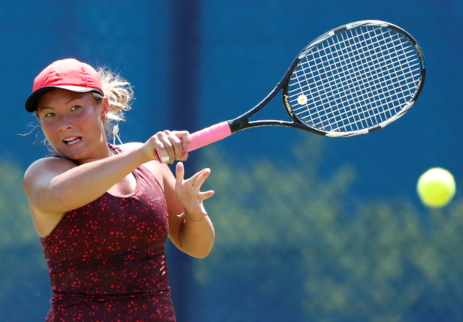
The professional tennis landscape is currently facing a seismic shift as internal conflicts reach a boiling point. At the heart of this storm is the British doubles specialist Tara Moore and her pursuit of justice. The breakaway players’ union has now officially thrown its full weight behind the Moore legal battle against the Women’s Tennis Association. This move signifies a massive escalation in what many experts are calling a civil war within the sport. Moore is seeking twenty million dollars in damages following a long and painful suspension for alleged doping violations. Her legal team argues that the governing bodies failed in their fundamental duty to protect athletes.
The Professional Tennis Players Association has recently emerged as a powerful ally for the embattled British star. This organization was originally founded by Novak Djokovic to give players a much stronger collective voice. Although Djokovic recently stepped away from the union, the group remains a formidable force in the industry. They are currently challenging the traditional power structures of the ATP and the WTA in federal court. By supporting the Moore legal battle, the union is highlighting systemic flaws they believe exist in tennis. The group claims that the current ranking systems and prize money distributions are inherently unfair to players.
Moore first faced a suspension in June 2022 after testing positive for banned substances during a tournament. She has consistently maintained her innocence and claimed that contaminated meat was the true source of the problem. An initial independent tribunal actually cleared her of wrongdoing after reviewing the complex scientific evidence presented. However, the International Tennis Integrity Agency chose to appeal that decision to the Court of Arbitration for Sport. That move resulted in a devastating four-year ban being reimposed on the veteran British doubles player. This flip-flop in legal rulings has caused significant outrage among her peers and union representatives.

The Moore legal battle is now being fought in the Southern District of New York with expert counsel. Her attorneys are from King & Spalding, a firm that also serves as a partner to the PTPA. While the union is not directly paying her legal bills, the connection between the parties is undeniable. Sources indicate that the lawyers are working on a pro bono basis to ensure Moore receives fair representation. This partnership illustrates a growing trend of players banding together to fight against the established governing bodies. Many believe that the outcome of this case will set a precedent for future athlete disputes.
The financial stakes of this particular lawsuit are incredibly high for the Women’s Tennis Association and its leaders. Moore is seeking twenty million dollars to compensate for what she describes as complete reputational and financial ruin. Her claim suggests that the WTA should have warned players about the risks of meat contamination in Colombia. The legal documents argue that the association failed to provide the necessary guidance to keep its athletes safe. This alleged negligence has reportedly cost Moore years of her career and significant earnings from various endorsements. The emotional toll of being labeled a drug cheat has also been highlighted in the filings.
In response to these serious allegations, the WTA has released a relatively brief and formal public statement. They acknowledged the filing in the US district court but declined to offer any detailed specific comments. The association maintains that the arbitration process was conducted by a neutral and highly qualified independent arbitrator. They believe there is no legal basis to vacate the award that was previously handed down to Moore. The ITIA has also remained silent on the matter as the legal proceedings continue to move forward. This silence from the governing bodies is a standard procedure during active and sensitive litigation cases.
The Moore legal battle is just one piece of a much larger puzzle involving the PTPA. The union is also involved in a massive billion-dollar investment round to fund a brand-new global tour. This potential rival circuit represents a direct threat to the dominance of the existing ATP and WTA tours. By creating a new platform, the PTPA hopes to offer players better pay and more transparent governance. The union has already filed an anti-trust lawsuit against several major grand slam tournaments and the tours. They accuse these organizations of collaborating to suppress prize money and limit player freedom and mobility.
Interestingly, the union recently reached a peace deal with Tennis Australia right before the start of the Australian Open. This agreement saw the PTPA drop its anti-trust claims against that specific governing body in exchange for cooperation. Tennis Australia has reportedly agreed to provide confidential financial information to help the union’s case against others. This strategic move has isolated the remaining grand slams and placed them under even more intense legal pressure. It suggests that the PTPA is willing to use divide and conquer tactics to achieve its goals. The cooperation of a major national federation could be a game-changer for the union’s legal strategy.
A source close to the situation stated that Moore has been treated appallingly by the current tennis system. There is a growing sentiment that different rules apply to different players depending on their global ranking. Smaller players often feel they lack the resources to defend themselves against powerful and wealthy sports organizations. The Moore legal battle serves as a rallying cry for those who feel marginalized by the status quo. It highlights the need for a more equitable and transparent approach to anti-doping and player discipline. The union believes that no athlete should have to face such a long and expensive fight alone.
As the case progresses, the tennis world will be watching the Southern District of New York very closely. The technical arguments regarding meat contamination and negligence will be examined by experienced American judges and legal experts. If Moore is successful, it could force the WTA to change how it communicates with its many players. It might also lead to a massive overhaul of the anti-doping protocols used across all professional sports. The financial implications for the WTA could be severe if they are found liable for Moore’s losses. A twenty-million-dollar payout would be a significant blow to the organization’s annual operating budget.

The Moore legal battle also brings to light the role of independent integrity units in modern professional sports. While these units are meant to be impartial, critics argue they often act as the prosecutor and judge. The PTPA wants to ensure that players have a seat at the table when these rules are written. They believe that the current system is too weighted in favor of the governing bodies and tournaments. By supporting Moore, they are demonstrating their commitment to protecting the rights of every single professional player. This conflict is likely to define the future of tennis for at least the next decade.
Despite the intensity of the legal fight, Moore remains a respected figure within the tight-knit British tennis community. Her colleagues have often spoken out about her professionalism and her deep love for the game of tennis. Many were shocked by the initial positive test and the subsequent legal rollercoaster that followed the first ruling. The support from the PTPA has provided her with a renewed sense of hope and professional purpose. It shows that even a player facing a long ban can still find allies in the industry. Her journey has become a symbol of resilience for many athletes facing similar professional challenges.
The English Chronicle will continue to follow this story as new developments emerge from the New York courtroom. This civil war in tennis is far from over and the stakes continue to rise every day. The intersection of sports law, international competition, and player rights makes this an incredibly compelling and complex narrative. Whether the Moore legal battle ends in a settlement or a full trial remains to be seen. What is clear is that the relationship between the players and the tours has changed forever. The push for a new global tour and better player representation is a movement with significant momentum.
Related News:
 Sarr Double Sinks Young Liverpool in Carabao Cup
 Nwaneri and Saka Secure Arsenal Win Over Brighton
 Woltemade Hot Streak Fires Newcastle Past Spurs
 Salah & Gravenberch Lead Liverpool to Win Against Villa
 Dyche Criticises Corner Decision as Forest Draw with United
 Caicedo Shines as Chelsea Edge Spurs in Chaotic Derby
 Granit Xhaka Rescue Earns Everton Draw at Sunderland
 Burn and Joelinton Head Newcastle to Victory Over Bilbao
 Foden shines as Man City dismantle Dortmund in dominant display
 Tension and Turmoil at Aston Villa v Maccabi Match
 Bellingham has ‘the edge’ among England No 10s
 Man City Masterclass on Guardiola’s Milestone Day Exposes Liverpool Woes
 Lando Norris Dominates Brazil GP to Strengthen F1 Title Bid
 England cannot afford to be in awe of the All Blacks, warns Jamie George
 VAR Must Rein Its Neck In to Save Football’s Spirit
 Trescothick Hints Pope Will Keep Number Three Spot
 Ronaldo Confirms Final World Cup and Plans Retirement
 Mary Earps’s Manchester United Return Faces Mixed Reception
 Sam Kerr Stars in Chelsea Return with Champions League Double
 This kid is something else: Alex Scott’s rise to England call-up
 UK and Ireland Announce Venues for Euro 2028 Tournament
 Saka Solidifies Role as Tuchel’s Key England Lieutenant
 Former Lion Heskey Warns of Shortage of England Strikers
 Australia Mourns Paralympic Champion Paige Greco
 Irish Hero Parrott Says Goal Brought First Tears in Years
 Nigeria Misses World Cup Again After Play-Off Loss
 From heartbreak to glory: Scotland’s dramatic return to the World Cup
 Tiny Curacao Makes History as Smallest Nation to Reach World Cup
 Haiti Qualifies for World Cup Despite Coach Never Visiting Country
 Major League Baseball Scores New Broadcast Deals Through 2028
 Barcelona Returns to Camp Nou vs Athletic Bilbao
 Moyes Defends Gueye After Dramatic Everton Bust-Up
 Kids Football Coach Removed Over Suspected ‘Drugs Menu’
 Mbappe Scores 4 as Real Madrid Edge Olympiakos
 Man City Lose, Champions League Risk
 Jac Morgan to Miss Six Nations Start After Surgery
 Alexander Isak ends drought as Liverpool stop rot with win at West Ham
 Mbappe rescues Real Madrid with a penalty at Girona
 Barcelona, Atletico set for decisive La Liga showdown
 Maxwell withdraws from IPL 2026 after 13 seasons
 Mbappe stars as Real Madrid thrash Athletic, close on Barca
 Australia Face Big Changes as Cummins and Lyon Ruled Out of Ashes
 Van de Ven Tackle Leaves Isak with Fractured Leg
 City Set to Land Semenyo After Chelsea Exit from Transfer Race
 Arrizabalaga Sends Arsenal Through in Dramatic Shootout
 Ashes Shock: Boland Admits Struggle Bowling With Keeper Up
 ECB powerless to halt England’s recurring Ashes failures
 Stokes urges empathy for England players amid Ashes struggles
 Damien Martyn in Induced Coma After Meningitis Diagnosis
 Spin Bowling Struggles as Pace Dominates 2025 Ashes Series
 Anthony Joshua Released After Nigeria Car Crash
 Chelsea Sack Looms: Enzo Maresca Relationship Collapses
 Africa’s Superpowers Shine in Cup of Nations Quarter-Finals
 Amorim’s United Future Uncertain Amid Wilcox Tension
 Raducanu Battles Injury as Britain Exit United Cup
 Australia Dominates England: Smith, Head Crush Bowlers in Sydney
 Australian Open Prize Money Hits Record $111.5m
 Nick Kyrgios Faces Singles Struggles at Brisbane Tennis Return
 Nottingham Forest Deny West Ham in Dramatic Late Win
 Manchester United Fan Group Targets Jim Ratcliffe Over Club Chaos
 Morocco sail into Afcon semis after Díaz inspires win
 Wrexham stun Nottingham Forest with Okonkwo FA Cup heroics
 Salah Shines as Egypt Knock Out Ivory Coast at Afcon
 Israeli fans ban questioned after Dutch police dispute evidence
 Semenyo Shines for City – Winners and Losers of Transfer
 Geopolitical football: Iran, Trump and the World Cup clash
 Regragui condemns Afcon final chaos after dramatic defeat
 Brahim Díaz’s Panenka Fail Highlights Penalty Risks
 Madison Keys’ Australian Open defence tested as Ukrainian debutant dazzles
 ‘A long time coming’: US table tennis finds its moment
 Mbappé’s Late Penalty Lifts Real Past Nine-Man Rayo
 Women’s FA Cup Could Introduce Seeded Teams from Last 32
 Yamal and Rashford Shine as Barcelona Reach Copa Semis
 Newcastle fans face bleak reality under Saudi ambitions
 ‘Scrutiny and Pressure on Irish Has Reached New Level’ — Rugby Faces Brutal Spotlight After France Defeat
 Hugo Ekitike Becomes Liverpool’s New Cult Hero
 Wrestler at 60: A Powerful New Start in the Ring
 ‘We’re like a family here’: Habib Diarra thrives at Sunderland
 Infantino Faces Russia Threat and Trump Concerns at Uefa Congress
 Coventry v Boro: Momentum Shifts in Championship Race