Published: 27 February 2026. The English Chronicle Desk. The English Chronicle Online.
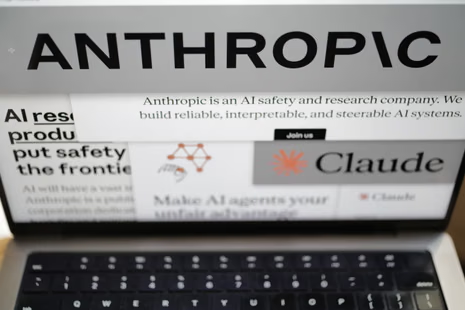
Anthropic AI has refused a direct request from the Pentagon to remove key safety checks from its powerful artificial intelligence system. The dispute has escalated into a high-stakes standoff between the technology company and the United States Department of Defense, raising urgent questions about military oversight and the responsible use of emerging technologies.
The company said it “cannot in good conscience” comply with the demand to strip away built-in guardrails from its flagship model, Claude. The Pentagon had reportedly warned that failure to comply could result in the cancellation of a $200 million contract and the company being labelled a supply chain risk. Such a designation would carry serious financial and reputational consequences across the defence sector.
Anthropic AI chief executive Dario Amodei issued a firm statement addressing the growing controversy. He made clear that threats from US defence secretary Pete Hegseth would not alter the company’s position. Amodei said the firm remains willing to support national security efforts, but only with specific safeguards intact.
At the heart of the disagreement lies the future use of Claude, Anthropic AI’s advanced language model. The Pentagon has requested that the system be made available for any lawful application within military operations. Anthropic AI, however, has resisted allowing its technology to be deployed for mass domestic surveillance or autonomous weapons systems capable of lethal force without human oversight.

This disagreement reflects a broader debate unfolding across the artificial intelligence industry. As governments invest heavily in advanced systems, companies are grappling with the ethical boundaries of their creations. For Anthropic AI, the line appears firmly drawn at applications that remove meaningful human control from life-and-death decisions.
The Department of Defense has increasingly partnered with major technology firms to enhance its digital capabilities. In July last year, Anthropic AI joined companies such as Google and OpenAI in securing contracts worth up to $200 million each. These agreements aimed to integrate advanced artificial intelligence into military planning, logistics, and intelligence analysis.
What distinguishes Anthropic AI from its competitors is its previous exclusive approval for use within classified US military systems. That exclusivity heightened its influence and responsibility. Earlier this week, xAI, founded by Elon Musk, also secured access to classified defence environments. This development has intensified scrutiny of how AI firms balance commercial ambition with public accountability.
In his statement, Amodei argued that current artificial intelligence technology cannot safely support fully autonomous weapons or sweeping domestic monitoring. He stressed that such uses exceed the reliable capabilities of existing systems. Anthropic AI believes that removing protective guardrails would risk unintended harm and undermine public trust.
The Pentagon’s reported ultimatum set a deadline for compliance by Friday evening. Officials allegedly warned that refusal would trigger punitive action, including revocation of contracts. Being labelled a supply chain risk would effectively block other defence contractors from integrating Anthropic AI tools into their systems. That outcome could significantly restrict the company’s future growth in the lucrative defence market.
Observers say this confrontation represents a defining moment for Anthropic AI’s identity. The firm has cultivated a reputation as one of the most safety-focused companies in the rapidly evolving artificial intelligence sector. It has frequently called for stronger regulatory oversight and clearer ethical frameworks governing advanced AI systems.
Amodei has previously advocated for careful global coordination on artificial intelligence safety standards. His stance has sometimes contrasted sharply with more aggressive technology deployment strategies favoured within parts of the US government. That tension has become particularly visible under the leadership of Hegseth, who has emphasised military strength and reduced what he describes as bureaucratic restraint.
The clash also reflects shifting political dynamics in Washington. Defence officials argue that technological superiority is essential in an era of intensifying global competition. They contend that limiting AI capabilities could hinder operational effectiveness and strategic advantage. From their perspective, lawful military use should not be restricted by corporate hesitation.
Anthropic AI counters that legality alone does not resolve deeper ethical concerns. The company maintains that autonomous systems capable of lethal force without human input raise profound moral and practical questions. Even if technically lawful, such systems could malfunction, misinterpret data, or produce unintended outcomes.
Concerns about autonomous weapons have grown steadily in recent years. Military technologies such as advanced drones already operate with varying degrees of independence. In some scenarios, communication links between operators and machines can be disrupted. That reality has fuelled fears about systems continuing lethal operations without direct human supervision.
Reports indicate that Anthropic AI’s technology has already contributed to sensitive operations. One recent example involved the capture of Venezuelan leader Nicolás Maduro, where artificial intelligence tools reportedly supported intelligence analysis. While such uses remain within conventional command structures, they demonstrate how embedded AI has become in modern security efforts.
The ethical boundary between analytical assistance and autonomous action remains contested. Supporters of broader deployment argue that artificial intelligence can enhance precision and reduce human error. Critics respond that increased automation risks distancing accountability from decision-making processes.
Anthropic AI’s resistance has been widely discussed across technology and defence communities. Some industry analysts see it as a bold assertion of corporate responsibility. Others warn that refusing Pentagon demands could isolate the company from key government partnerships.
Financial implications loom large in this debate. Defence contracts represent substantial revenue streams for technology firms. Losing a $200 million agreement would not only affect immediate earnings but also investor confidence. Moreover, a supply chain risk label could extend beyond one contract, influencing relationships across the sector.
Despite these risks, Anthropic AI appears determined to defend its safeguards. Amodei emphasised that the company remains ready to support US national security objectives. However, he reiterated that two requested protective measures must remain in place. Those measures are understood to prevent deployment in autonomous lethal systems and broad domestic surveillance programmes.
The broader artificial intelligence landscape continues to evolve at remarkable speed. Companies race to develop more capable models, while regulators struggle to keep pace. Governments worldwide are drafting frameworks aimed at balancing innovation with public safety.

In the United Kingdom, policymakers have also debated how to manage advanced AI responsibly. The unfolding situation in Washington will likely influence discussions in Westminster and beyond. British observers are watching closely as Anthropic AI tests the limits of corporate resistance to government pressure.
Ultimately, this confrontation may shape the future relationship between technology firms and defence institutions. If Anthropic AI withstands the Pentagon’s threats, it could embolden other companies to assert clearer ethical boundaries. If it relents, critics may argue that commercial incentives outweigh principled restraint.
For now, the outcome remains uncertain. The Pentagon has not publicly confirmed whether it will proceed with punitive measures. Anthropic AI, meanwhile, has signalled that its position is firm.
This episode underscores the complex interplay between innovation, ethics, and national security. Artificial intelligence promises transformative capabilities, yet its deployment carries profound responsibilities. As governments seek strategic advantage and companies pursue growth, society must confront difficult questions about control and accountability.
Anthropic AI’s decision marks a pivotal moment in that ongoing conversation. Whether it represents a turning point or a temporary impasse will depend on the choices made in the coming days. What is clear is that the debate over artificial intelligence and military power has entered a new and more public phase.
Related News:
 Britain deploys RAF specialists to assist Belgium with drone threats
 Night after night, Belgium is on high alert.
 Hitler’s DNA Confirms He Truly Had Only One Testicle
 Ukraine to Get 100 French Rafale Jets in Historic Deal
 Poll Reveals China Leads World in Trusting AI Technology
 US Clears Nvidia AI Chip Sales to China in Policy Shift
 UK New Car Discounts Near £6,000 as Prices Are Slashed
 Google at 27: The Untold Story of Ruth Kedar, the Woman Behind the Iconic Logo
 Experts Warn Russia’s Burevestnik Missile Could Destabilise Arms Control
 Virgin Trains Moves Closer to Challenging Eurostar Monopoly
 UK Bans Fake Numbers: Scammers Lose Their Trick
 Vibe coding’ named Collins dictionary’s word of the year
 Patients to Test Health at Home to Ease NHS Winter Pressure
 BBC to Apologise Over Edited Trump Speech Amid Backlash
 Palace May Restore Hyphen to Andrew Mountbatten-Windsor’s Name
 Stop using ChatGPT to write speeches, AI minister tells MPs
 Northern Lights may illuminate UK skies this week
 New AI tool could cut wasted efforts in organ transplants
 Greene Pushes Epstein Files Amid Trump Fallout
 Trump Deploys DHS to Charlotte in Major Arrest Operation
 December Run-Off in Chile as Election Produces No Winner
 Zelenskyy Signs Fighter Jet Deal Amid Russian Drone Attacks
 Orban Says Ukraine Has ‘No Chance’ as EU Support Continues
 Canada Passes Carney’s First Budget in Tight Parliamentary Vote
 Sundar Pichai Cautions on AI Hype and Market Risks
 Google Chief Urges Caution: Don’t Trust AI Blindly
 Shadow Fleet at Sea: Europe’s Battle Against Illicit Oil Shipping
 Tiny Curacao Makes History as Smallest Nation to Reach World Cup
 Deadly Russian Strikes Hit Western Ukraine, 20 Killed in Ternopil
 Ukraine Peace Plan: Zelensky Ready for Dialogue
 Royal Navy Shadows Russian Warships Entering the Channel
 US Suspends Afghan Immigration After White House Shooting
 Two National Guard Soldiers Critically Injured Near White House
 Georgians Defy Government Crackdown After Year of Protests
 Tokyo court rules Japan’s same-sex marriage ban constitutional
 ‘Extinct’ Antelope Returns to Sahara, Bringing Hope
 American Mother Extradited From UK to U.S. on Murder Charges
 Russia losses Ukraine war peace talks intensify amid rising deaths
 Facebook Slow to Remove Bondi Attack Praise, Anti-Hate Group Claims
 US Cities Erupt in Protests Against Trump’s Venezuela Military Action
 Albanese Opens Door to Bondi Royal Commission Amid Rising Pressure
 Trump Escalates Minnesota Immigration Surge Amid Rising Tensions
 Iran Protesters Defy Crackdown as Violent Clashes Intensify
 Trump Threatens Strong Action If Iran Executes Protesters
 Gulf states warn Trump Iran strikes risk wider Middle East war
 Machado Trump medal gesture reshapes Venezuela power struggle
 Astronomers Prepare for First-Ever Movie of a Black Hole
 EU weighs response amid Greenland tariff crisis with Trump
 Sydney Shark Attack Surge Shocks Australia Beaches
MPs warn AI financial risks threaten UK stability
Sydney Shark Attack Surge Shocks Australia Beaches
MPs warn AI financial risks threaten UK stability
 Thousands Flee Cambodia Scam Centres Amid Global Pressure
 EU Says US Ties Have Suffered ‘Big Blow’ After Greenland Crisis
 Andrew Hastie Emerges as Leadership Rival to Ley
 Pornhub blocks new UK users over age checks dispute
 Amazon mistakenly signals new global layoffs to employees
 Videos reveal earlier clash before Alex Pretti shooting
 AI breast screening cuts later cancer diagnoses by 12%, study finds
 Israel Moves to Bar MSF From Gaza Operations
 Tragic Ski Lift Accident Claims Australian Snowboarder
 Most Statin Side-Effects Are Not Caused by Drugs, Study Confirms
 Portugal Election Delivers Socialist Win as Far Right Surges
 BT Names New Openreach Chief Amid Major Fibre Expansion
 Tech Trends Set to Transform Life in 2026
 Australian Families Leave Syrian Camp for Home
 SA Police Intensify Search in Gus Lamont Case
 Trump Attacks UK-California Energy Pact
 Indian University Kicked Out of AI Summit for Claiming Chinese Robot Dog as Its Own Invention
 China Shows Off Nunchuck‑Wielding Humanoid Robots for Lunar New Year
 Trump and Chagos Deal Rift Over Iran Strikes
 Andrew Arrest Sparks Republic Debate in Australia
 How Do You Modernise Mango Farming? India’s Growers Urged to Innovate as Climate Change Hits
 Global corruption crisis: Who Washington shields
 Musk Cuts Starlink Access for Russian Forces – Giving Ukraine an Edge at the Front
 Farage Chagos Islands Row Sparks Fury
 Gold Rush in Gugulethu Leaves South Africans Desperate for Work and Hope
 Stewart Brand on Musk, Bezos and a Life of Long Thinking
 Facial Recognition Error Leads to Wrongful Arrest in Milton Keynes
 Hilary Knight speaks out on Trump’s recent hockey remarks
 Trump Speech Sparks Intense Debate Across Divided America
 Has Europe truly learned from the failures of 2022?