Published: 27 February 2026. The English Chronicle Desk. The English Chronicle Online.
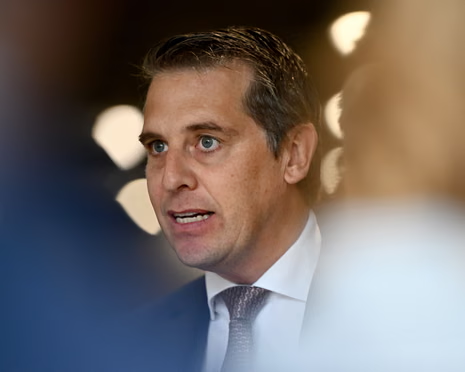
The New South Wales government currently faces intense scrutiny following a deadly fungal outbreak at a major Sydney hospital. Health Minister Ryan Park has firmly denied any deliberate attempt to hide the crisis from the public. This controversy centers on the Royal Prince Alfred Hospital, where a dangerous mould cluster claimed lives. Two patients died after contracting infections while receiving care in the specialized transplant unit late last year. Four other patients became seriously unwell during this period as the infection spread through the ward. The state government only recently confirmed these details after being forced by a strict parliamentary order. Opposition leaders have described the delay in sharing this information as a calculated political cover-up. They argue that the public deserved to know about the risks present at the medical facility.
Minister Park defended the decision to keep the fungal outbreak quiet for several months on Friday. He claimed the primary goal was to avoid causing unnecessary panic among the local Sydney community. The minister stated that health officials prioritized direct communication with the affected patients and their families. He insisted that hundreds of people were informed about the situation through internal hospital channels. According to his statement, there was never a specific intention to deceive or mislead the public. The government followed advice from an expert panel led by the state’s chief health officer. This panel suggested that a public announcement might cause more harm than good at the time. However, the timing of the disclosure has raised many questions about transparency in the healthcare system.

The fungal outbreak involved a common type of environmental mould known scientifically as aspergillus spores. These spores are frequently found in soil, dust, and damp areas throughout the Australian climate. Most healthy people can breathe in these spores without experiencing any negative health impacts at all. However, the mould poses a lethal threat to patients with severely weakened immune systems. Transplant patients are particularly vulnerable because their bodies cannot fight off such aggressive environmental infections. The Royal Prince Alfred Hospital transplant unit is designed to protect these very high-risk individuals. Records show that six patients developed infections within a short eight-week window starting in October. This sudden spike in cases immediately caught the attention of frontline clinical staff at the hospital.
Internal documents reveal that medical staff first raised serious concerns about the cluster in early December. One patient had already passed away on 5 November due to complications from the fungal infection. A second patient died on 19 November as the mould continued to spread through the ward. Despite these tragic deaths, the health minister’s office was reportedly not notified until late December. Once informed, NSW Health assembled a team of experts to manage the growing medical emergency. This panel was responsible for guiding the clinical response and determining the necessary communication strategy. They ultimately decided to limit information to those directly within the hospital environment for months. Critics argue that this restricted approach prevented other vulnerable patients from making informed healthcare choices.
Minutes from a January meeting show that hospital staff felt uncomfortable with the lack of transparency. Some employees expressed frustration at being left to explain the situation to worried patients alone. District officials responded by saying that communication was difficult while the cause remained officially unconfirmed. They noted that any public statement would likely attract significant and unwanted international media attention. Shadow Health Minister Sarah Mitchell has condemned this logic as a failure of responsible governance. She stated that the families of those who died deserved immediate and complete honesty from authorities. Mitchell believes the government prioritized its own reputation over the fundamental right to public information. The opposition continues to demand a full inquiry into how the crisis was managed.
Investigations suggest that a massive $940m redevelopment project at the hospital may have triggered the fungal outbreak. Construction work often disturbs old dust and soil where mould spores naturally live and grow. The transplant unit is located directly next to the active construction site at the hospital. Historical data shows that the hospital typically records only one such infection per year on average. The sudden jump to six cases in two months strongly suggests an external environmental cause. Chief Health Officer Dr Kerry Chant admitted that construction is a well-known risk factor in hospitals. She noted that air monitoring was not a routine requirement under the existing health guidelines. This gap in safety protocols may have allowed the mould to reach dangerous levels.
Dr Chant explained that distinguishing between related and unrelated infections can be a very difficult task. Another transplant patient died from a fungal infection during this period, but it was deemed unrelated. Medical experts must carefully analyze each case to determine if environmental factors played a direct role. Following the investigation, the hospital installed specialized air filters to trap any lingering airborne spores. Antifungal medication was also administered to high-risk patients as a proactive and preventative safety measure. The transplant unit was eventually closed on 2 January to allow for a deep clean. Patients were moved to a different ward while construction work was temporarily paused for safety. Testing later confirmed that air quality in the unit had returned to safe levels.

During the cleaning process, contractors found visible mould across four different floors of the hospital building. Aspergillus was specifically identified in a plant room located on the fourth floor of the facility. Experts believe that heavy rainfall and water damage may have contributed to this widespread mould growth. This particular cluster was part of a larger report detailing mould issues across several hospitals. Minister Park acknowledged that mould is a recurring problem in many older public health buildings. He noted that the state manages over 220 hospitals, many of which face environmental challenges. The government maintains that surface mould does not always pose a direct threat to patient safety. They claim to rectify and remove any identified mould as quickly as humanly possible.
The situation has sparked a wider debate about safety standards during major hospital renovation projects. New South Wales Health plans to issue updated advice on managing infections among transplant patients. This new guidance will likely include stricter requirements for air quality monitoring near construction zones. The goal is to ensure that such a deadly fungal outbreak never happens again. Families of the victims remain deeply upset by the perceived lack of initial government transparency. They are seeking assurances that patient safety will always come before political or administrative concerns. The fallout from this incident is expected to continue as more documents are reviewed. For now, the hospital remains under close observation by both health experts and the public.
The Royal Prince Alfred Hospital has returned to normal operations following the extensive remediation work. The transplant unit reopened in February after ceiling leaks were repaired and air filters replaced. Officials insist the facility is now safe for even the most vulnerable of patients. However, the political damage from the alleged cover-up may take much longer to heal. This incident serves as a stark reminder of the risks present in hospital environments. It also highlights the delicate balance between managing public concern and ensuring full transparency. As the investigation concludes, the focus remains on protecting those who rely on these vital services. The New South Wales government must now work hard to rebuild trust with the community.
Related News:
 The diet that can significantly ease symptoms of IBS
 Europe, North America face early wave of bird flu
 Tick Bite Tragedy Claims Teen in Meat Allergy Case
 Costa Blanca Holiday Horror as Food Poisoning Outbreak Hits Four-Star Hotel
 Hospice Cuts Raise Alarm Across England Amid Funding Crisis
 Just Stop Oil Protesters Convicted Amid Climate Defence Row
 Patients to Test Health at Home to Ease NHS Winter Pressure
 BBC to Apologise Over Edited Trump Speech Amid Backlash
 Britain deploys RAF specialists to assist Belgium with drone threats
 Palace May Restore Hyphen to Andrew Mountbatten-Windsor’s Name
 Shouting Works Best to Deter Gulls, UK Study Finds
 Reeves rejects £1bn plea for NHS redundancy payouts
 Senator John Fetterman Hospitalized After Fall from Heart Flare-Up, Keeps Sense of Humor
 New AI tool could cut wasted efforts in organ transplants
 Greene Pushes Epstein Files Amid Trump Fallout
 Trump Deploys DHS to Charlotte in Major Arrest Operation
 December Run-Off in Chile as Election Produces No Winner
 Zelenskyy Signs Fighter Jet Deal Amid Russian Drone Attacks
 Orban Says Ukraine Has ‘No Chance’ as EU Support Continues
 Stroke Patient Mistaken for Drunk, Care Delayed
 Canada Passes Carney’s First Budget in Tight Parliamentary Vote
 Shadow Fleet at Sea: Europe’s Battle Against Illicit Oil Shipping
 ‘Traumatic Wait’: Northern Ireland Women Face Breast Cancer Delays
 Tiny Curacao Makes History as Smallest Nation to Reach World Cup
 Haiti Qualifies for World Cup Despite Coach Never Visiting Country
 Deadly Russian Strikes Hit Western Ukraine, 20 Killed in Ternopil
 Ukraine Peace Plan: Zelensky Ready for Dialogue
 Scottish Families Take Legal Action Over School CO Leak
 Royal Navy Shadows Russian Warships Entering the Channel
 US Suspends Afghan Immigration After White House Shooting
 Two National Guard Soldiers Critically Injured Near White House
 Georgians Defy Government Crackdown After Year of Protests
 Five-Year-Old Dies After Rare Tonsil Surgery Complication
 Fibromyalgia Patients Struggle as NHS Fails to Provide Care
 Tokyo court rules Japan’s same-sex marriage ban constitutional
 More Patients Now Contacting GPs Online, Data Shows
 ‘Extinct’ Antelope Returns to Sahara, Bringing Hope
 Kenya Signs $2.5bn Health Deal with US Amid Data Concerns
 American Mother Extradited From UK to U.S. on Murder Charges
 Russia losses Ukraine war peace talks intensify amid rising deaths
 Facebook Slow to Remove Bondi Attack Praise, Anti-Hate Group Claims
 Damien Martyn in Induced Coma After Meningitis Diagnosis
 Children to Receive Home Vaccines as England Acts
 Childhood Hypertension Sparks Urgent UK Testing Calls
 US Cities Erupt in Protests Against Trump’s Venezuela Military Action
 Albanese Opens Door to Bondi Royal Commission Amid Rising Pressure
 Trump Escalates Minnesota Immigration Surge Amid Rising Tensions
 NHS Violence Crisis: Staff Face Daily Assaults
 Iran Protesters Defy Crackdown as Violent Clashes Intensify
 Celebrity Campaign Highlights SMA Screening Failures
 US Clears Nvidia AI Chip Sales to China in Policy Shift
 Gulf states warn Trump Iran strikes risk wider Middle East war
 EU weighs response amid Greenland tariff crisis with Trump
 Sydney Shark Attack Surge Shocks Australia Beaches
 UK Glaucoma Rise Signals Looming Eye Health Crisis by 2060
 EU Says US Ties Have Suffered ‘Big Blow’ After Greenland Crisis
 Videos reveal earlier clash before Alex Pretti shooting
 AI breast screening cuts later cancer diagnoses by 12%, study finds
 UK New Car Discounts Near £6,000 as Prices Are Slashed
 Israel Moves to Bar MSF From Gaza Operations
 Tragic Ski Lift Accident Claims Australian Snowboarder
 Pneumonia Surge Pushes England Emergency Cases Higher
 Most Statin Side-Effects Are Not Caused by Drugs, Study Confirms
 Headline: Measles Alert: Dr Oz Urges Americans to Vaccinate
 Portugal Election Delivers Socialist Win as Far Right Surges
 Australian Families Leave Syrian Camp for Home
 SA Police Intensify Search in Gus Lamont Case
 Trump Attacks UK-California Energy Pact
 UK MPs Demand Ban on Brazilian Butt Lifts
 Trans Youth Care Crisis: NY Hospital Ends Gender‑Affirming Treatment
 Andrew Arrest Sparks Republic Debate in Australia
 Farage Chagos Islands Row Sparks Fury
 Drugs, Denial, Stigma: Fiji’s HIV Crisis Hits Children
 Half of Britons Avoid GP When Ill, Survey Reveals Growing Concern
 ‘I Wanted to Save Her Life’ — The Moment Twin Sisters Learned They Were Identical
 Hilary Knight speaks out on Trump’s recent hockey remarks
 Christina Applegate shares the harsh reality of her daily life
 Trump Speech Sparks Intense Debate Across Divided America
 Has Europe truly learned from the failures of 2022?
 Social Media Trial: Woman Says Addiction Began at Six