Published: 02 March 2026. The English Chronicle Desk. The English Chronicle Online.
The debate over OBR reform has intensified as the spring forecast approaches. An unusual alliance of thinktanks is urging Chancellor Rachel Reeves to rethink the powers and purpose of the Office for Budget Responsibility. They argue that without meaningful OBR reform, Britain risks underinvesting in its future at a critical economic moment.
The intervention comes just days before the Treasury delivers its much-anticipated spring forecast. It also follows a bruising political week for Prime Minister Keir Starmer, whose party suffered defeat in the Gorton and Denton by-election. The loss has sharpened internal debates about Labour’s economic direction and fiscal caution.
The coalition calling for OBR reform spans ideological divides within the centre-left. It includes Progress, often associated with Labour’s moderate wing. It also features the New Economics Foundation, Common Wealth, and the Women’s Budget Group. Together, they present a rare show of unity on fiscal reform.
In a joint statement, the groups warned that Britain’s fiscal framework is ill-suited to modern challenges. They believe current rules encourage short-term decisions at the expense of long-term resilience. According to them, the watchdog’s structure contributes to underinvestment and policy instability.
At the heart of the argument lies frustration with how the Office for Budget Responsibility evaluates government plans. Established in 2010 by then chancellor George Osborne, the OBR was designed to provide independent scrutiny after the financial crisis. Its mandate focused on restoring credibility to public finances during an era of austerity.

Critics now say that framework no longer reflects Britain’s economic needs. They contend that the OBR’s methodology places heavy weight on short-term forecasts. Small changes in economic projections can trigger dramatic fiscal adjustments. This, they argue, distorts policymaking and deters strategic investment.
Louisa Dollimore, of the Good Growth Foundation, described the watchdog as a backseat driver with outdated maps. She suggested that its rigid assessments obstruct essential long-term planning. Britain, she said, needs investment in infrastructure, housing, and green industries.
Hannah Peaker from the New Economics Foundation echoed those concerns. She emphasised that independent scrutiny remains vital for democratic accountability. Yet she warned that an overreliance on uncertain forecasts leads to kneejerk policy reversals. Such volatility, she argued, undermines confidence and hampers economic transformation.
The issue of OBR reform also intersects with broader debates about fiscal rules. Last week, the Institute for Fiscal Studies called for an overhaul of the current framework. The IFS argued that existing targets may not adequately reflect long-term investment needs.
Under Reeves, Labour has already adjusted the fiscal rules to permit greater borrowing for capital spending. The Treasury has raised taxes significantly to stabilise public services. Despite this, some Labour MPs believe the government remains overly cautious. They fear that strict adherence to deficit targets constrains ambition.
Economists sympathetic to OBR reform argue that public investment generates future returns often ignored in headline forecasts. Spending on transport links, clean energy, and skills can lift productivity over time. However, these benefits are harder to quantify in short-term budget windows.
The watchdog’s pass-or-fail verdict on fiscal rules has attracted particular criticism. Detractors say it creates a cliff-edge dynamic in economic management. When forecasts deteriorate slightly, ministers may rush to announce spending cuts or tax rises. That pattern was evident in last year’s spring statement.
In that statement, the Treasury introduced £5 billion in welfare savings to maintain compliance with fiscal targets. Some observers believe those cuts reflected pressure from short-term projections rather than strategic priorities. The episode has become a touchstone in arguments for OBR reform.
Reeves has already sought modest adjustments to the watchdog’s timetable. She requested that formal verdicts on fiscal rules be delivered once annually, at the autumn Budget. Supporters of deeper reform argue that more fundamental changes are needed. They want a broader assessment of long-term risks and opportunities.
Adam Langleben of Progress said the OBR was created for a different economic era. He noted that while the watchdog counts upfront costs precisely, it may overlook enduring value. Investment in healthier communities or modern transport networks produces dividends beyond immediate balance sheets.
He added that scrutiny should inform decisions rather than stifle ambition. For advocates of OBR reform, the greater danger lies in policy inertia. They argue that failing to invest will leave Britain trailing global competitors. Economic renewal, they believe, requires confidence and strategic patience.
Not everyone shares this assessment. Former OBR chair Richard Hughes recently warned about persistent fiscal risks. Speaking before the Treasury Select Committee, he emphasised that governments often face negative economic surprises. Without prudence, deficits and debt can drift upward over time.
Robert Chote, another former head of the watchdog, has similarly defended its role. He argues that credible oversight underpins market confidence and keeps borrowing costs stable. From this perspective, weakening the OBR could undermine financial discipline. Investors, after all, watch Britain’s fiscal trajectory closely.
Supporters of the existing framework point to turbulent global conditions. Geopolitical tensions, energy volatility, and sluggish growth present constant risks. In such an environment, they argue, clear fiscal anchors are essential. Relaxing oversight might expose the country to sudden market pressures.
Yet the coalition pressing for OBR reform insists it is not seeking to abolish independent scrutiny. Instead, it calls for a revised remit that values long-term investment more explicitly. They propose integrating climate risk, demographic change, and productivity trends into formal evaluations.
This debate unfolds against a delicate political backdrop. Labour’s by-election setback has emboldened critics who question the party’s economic narrative. Some voters appear impatient for visible improvements in living standards. That urgency adds weight to calls for transformative investment.

Reeves is expected to use the spring forecast to highlight signs of economic recovery. Treasury officials point to moderating inflation and stabilising growth indicators. The Chancellor will likely stress fiscal responsibility alongside cautious optimism. Balancing credibility and ambition remains her central challenge.
The outcome of the OBR reform debate could shape Britain’s economic trajectory for years. A recalibrated framework might allow bolder infrastructure programmes and industrial strategy. Conversely, maintaining strict oversight may reassure markets but limit fiscal flexibility.
For many observers, the question is not whether oversight should exist, but how it should function. The financial crisis context that birthed the watchdog differs markedly from today’s climate transition and productivity puzzles. Institutions must adapt if they are to remain effective.
As Tuesday’s forecast approaches, Westminster awaits signals from the Chancellor. Will she embrace significant OBR reform, or defend the status quo with minor adjustments? The answer will influence not only fiscal policy but also Labour’s broader economic identity.
In the coming days, the focus will rest on whether Britain chooses caution or calculated boldness. The conversation about OBR reform reflects deeper tensions about risk, responsibility, and renewal. However it unfolds, the decision will resonate far beyond the Treasury benches.
Related News:
 Tories Push to Dilute Labour’s Workers’ Rights Bill
 Trump’s UK Ambassador Urges North Sea Drilling to Strengthen US Ties
 Rachel Reeves Set to Break Labour Pledge and Raise Income Tax
 Thinktanks Urge Rachel Reeves to Reform UK Tax System
 Company linked to Michelle Mone owes £39m in tax
MPs Press Rachel Reeves to Hike Gambling Taxes
Company linked to Michelle Mone owes £39m in tax
MPs Press Rachel Reeves to Hike Gambling Taxes
 Cuts to home insulation funding threaten UK climate goals
 Millionaires group urge Reeves to introduce wealth tax to ‘lift kids out of poverty’
 PM Highlights UK Business at G20 in South Africa
 English Mayors Set to Introduce Tourist Taxes
 Starmer Says Labour’s Economic Plan Needs Years to Deliver
BBC bosses ‘right to stick by their guns’ against Trump, says minister
Starmer Says Labour’s Economic Plan Needs Years to Deliver
BBC bosses ‘right to stick by their guns’ against Trump, says minister
 China Dependence Threatens UK Energy Supply Chains and Jobs
 MPs warn AI financial risks threaten UK stability
 MPs warn AI financial risks threaten UK stability
 UK Government Borrowing Drops to £11.6bn in December
 Labour Must Revive High Streets to Avoid Election Collapse
 Barclays drops Global Counsel after Mandelson link scrutiny
 Unsustainable gaps in franchise policing, MPs warn
 UK shelves £110m border project amid trade strain
 UK Sees Record £30.4bn Budget Surplus, Boosting Reeves’ Position
 SNP Charging £750 per Ticket for Business Event Featuring ‘Beer and Blether’ with Stephen Flynn
 Ministers Urged to Ban Crypto Political Donations
 Reeves Must Back Defence Plan or Face Dismissal, Says Unite Chief
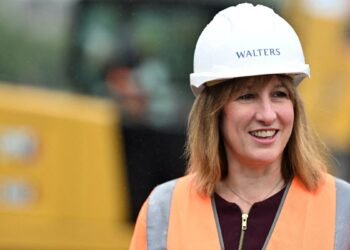 Chancellor Rachel Reeves Pushes for Sweeping Changes to Environmental Protections to Accelerate Development
 Senior Tories Condemn Badenoch’s Vow to Repeal Climate Change Act as Catastrophic
 Kemi Badenoch Unveils ‘Golden Rule’ to Halve Spending Cuts for Deficit Reduction at Tory Conference
 Reeves Faces Setback as Labour May Miss Homes Target
 Green Party Surges Past Labour in Latest UK Poll
 French Taxi Driver Cleared in David Lammy Theft Case After Fare Dispute
M&S Profits More Than Halve After Cyber-Attack
French Taxi Driver Cleared in David Lammy Theft Case After Fare Dispute
M&S Profits More Than Halve After Cyber-Attack
 Tony Blair think tank warns Rachel Reeves must cut taxes if manifesto broken
 Starmer Faces Growing Dissent as Labour MPs Weigh Leadership Challenge
 Reeves rejects £1bn plea for NHS redundancy payouts
 PM Condemns Leaks, Vows Loyalty to Ministers and Stability
 Major Rent Reform Ends No-Fault Evictions in England
 Peers Flood Assisted Dying Bill with 942 Amendments
 Global markets drop amid tech sell-off and China slowdown
 Canada Passes Carney’s First Budget in Tight Parliamentary Vote
 Most Tories Expect to Support a Farage-Led Government
 Labour MP claims devolution bill is ‘blatant discrimination’ against Cornwall
 Millions Face Higher Taxes Under Reeves New Budget
 Virgin Media Fined £23.8m Over Telecare Safety Failures
 Rising Water Bills Lift Troubled Thames Back to Profit
 Culture secretary to review Telegraph takeover by Daily Mail owner
 Plans to Limit Jury Trials Face Retreat After Mounting Opposition
 Right Must Unite After Jenrick Defection, Urges Rees-Mogg
 UK Ministers Drop Foreign Student Targets for Global Education Push
 No Gas Boiler Ban as UK Warm Homes Plan Backs Heat Pumps
 Hugh Grant Joins Call for Under-16 Social Media Ban in UK
 Shinzo Abe’s killer receives life sentence in Japan
 Lords Vote Piles Pressure on Starmer Over Social Media Ban
 Reform UK Health Plan ‘Would Cost £1.7bn’, Streeting Says
 Police response times face strict new national limits
 Labour policing overhaul sparks fears over growing central control
 Tories criticised after Braverman defection sparks mental health row
 Starmer warns of toxic division politics in Reform challenge
 Starmer China visit raises human rights pressure on Beijing
 Households in England Face Rising Water Bills in April
 UK New Car Discounts Near £6,000 as Prices Are Slashed
 Palantir contracts face UK halt calls over transparency
 Labour Lord Doyle Apologises Over Paedophile Ties in Political Storm
 Cabinet Secretary Shake-Up Triggers Due Diligence Warning
 Could Manchester Lead the UK’s Economic Revival?
 Starmer Faces Inquiry Calls Over Thinktank Probe
 Royal Mail Delivery Crisis Deepens Amid Weather Chaos
 Royal Mail Blames Poor Weather and Sickness for Delayed Deliveries
 Farage to Name Jenrick as Reform Chancellor Pick
 Civil Service Pay: Union Urges Ministers to End ‘Barking Mad’ Limits
 Antonia Romeo appointment sparks criticism
 Trump and Chagos Deal Rift Over Iran Strikes
 Farage Chagos Islands Row Sparks Fury
 UK Job Vacancies Hit Five-Year Pandemic Low
 UK Youth Unemployment Surges Amid Tax Changes
 Reform UK targets workers’ rights repeal
 Strong Rebound for UK Housing Market Sees 6% More Homes
 Russian Trade Routed Through British Islands Exposed
 Mandelson Arrest: Met Apologises to Hoyle
 Palestine Action ban appeal moves forward
 Switching Energy Deal Can Save £200 as Price Cap Falls