Published: 05 March 2026. The English Chronicle Desk. The English Chronicle Online.
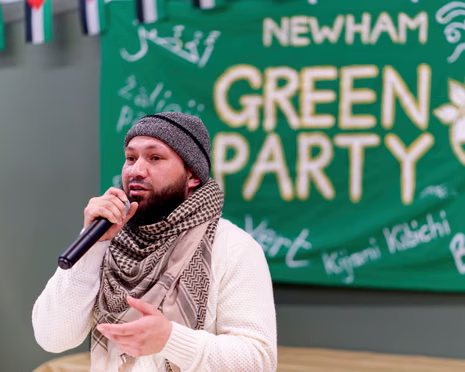
The Starmer row surrounding comments about a senior Green politician has intensified after fresh details emerged. Mothin Ali, deputy leader of the Green Party of England and Wales, has demanded an apology from Prime Minister Keir Starmer. He says remarks made in Parliament fuelled false claims that placed him and his family in danger.
Ali has described feeling frightened after receiving a series of racist death threats. Several threatening messages seen by national media included warnings such as “we know where to find you”. Another message told him to “pack your bags before it’s too late”. He believes the threats escalated after his appearance at a weekend anti-war protest in central London.
The demonstration took place in Parliament Square and drew a range of campaigners. Organisers said the rally opposed recent military action involving the United States and Israel against Iran. However, some commentators portrayed the gathering as supportive of the Iranian regime. That description was strongly rejected by organisers and many who attended.
The controversy reached the Commons on Monday when Conservative MP Alec Shelbrooke raised the issue. He told Parliament he was appalled to see the Green deputy leader “protesting in support of the ayatollah”. In response, Starmer said many were shocked by the actions of the Green Party deputy leader. He added that the party had recently taken a troubling direction.

Those remarks were made under parliamentary privilege, which protects statements made in the Commons. Ali argues that such comments lent weight to misleading narratives circulating online. He insists he attended the protest as an anti-war activist, not as a supporter of Iran’s leadership. He said he has long campaigned against military interventions, including those backed by British governments.
Speaking about the threats, Ali said the situation felt increasingly dangerous. He explained that abuse had reached a point where he feared for his safety. He said the impact extended beyond him to his family and colleagues. The emotional toll, he suggested, has made it harder to focus on community work.
The Starmer row has also drawn intervention from within Parliament. Ellie Chowns defended her colleague during the same Commons session. She accused Shelbrooke of attacking Ali’s reputation without evidence. Chowns said Ali attended a protest organised by established anti-war groups, consistent with his principles.
The rally was supported by the Stop the War Coalition and the Campaign for Nuclear Disarmament. It was also backed by the Campaign Against Sanctions, Military and Imperial Interventions. Its founder, Prof Abbas Edalat, stated clearly that the central message opposed what organisers called illegal attacks on Iran. He said the event brought together people with different views about Iran’s domestic politics.
Photographs and videos from the day show a mixture of banners and placards. A small number featured images of Ayatollah Ali Khamenei alongside political slogans. Those placards were linked to the Islamic Human Rights Commission, which has previously expressed support for Iran’s government. Yet most signs focused on anti-war messaging and criticism of Western foreign policy.
Some protesters carried Iranian flags, while others displayed banners from women’s groups and Jewish solidarity networks. Chants criticising the Labour Party’s foreign policy could be heard across the square. Organisers maintain that the demonstration opposed military escalation rather than endorsing any regime. They argue that conflating anti-war activism with support for authoritarianism is misleading.
Ali believes the Starmer row has political undertones beyond the protest itself. He pointed to a recent by-election victory in Greater Manchester. The Greens celebrated a significant breakthrough when Hannah Spencer secured a seat previously held by Labour. Ali suggested that heightened rhetoric followed that electoral upset.
The Prime Minister’s office has not issued a formal apology. Nor has Shelbrooke retracted his remarks. Both have been approached for further comment. Downing Street sources indicated that concerns about extremism remain a serious matter. However, they did not provide specific evidence linking Ali to pro-regime activism.
Ali has faced hostility before entering national headlines. After his election to Leeds City Council in 2024, he ended a speech with the phrase “Allahu Akbar”. Far-right figures circulated clips online, claiming the words signalled extremism. Ali later explained the phrase simply means “God is great” and is commonly used in Muslim prayers.
Among those amplifying accusations at the time was Tommy Robinson, whose real name is Stephen Yaxley-Lennon. Online posts falsely alleged that Ali had supported unrest in his local ward. In reality, witnesses said he stood between police and residents to calm tensions. The episode deepened concerns about misinformation targeting minority politicians.
The latest threats have revived those fears. Ali recounted being followed near Earl’s Court underground station by a man who threatened violence. He said his hand shook as he tried to record the incident. The individual reportedly left when he realised he was being filmed. Police have been informed about the abuse.
Community leaders in Leeds and beyond have expressed solidarity with Ali. They argue that democratic debate must not spill into intimidation. Several have urged politicians to take greater care with language used in Parliament. They warn that heated rhetoric can inflame online hostility.

The Starmer row highlights broader tensions over Britain’s stance on Middle East conflicts. Critics of the government say allowing US forces to use UK bases implicates Britain in escalation. Ministers respond that cooperation with allies remains vital for national security. The debate has sharpened divisions across party lines.
Political analysts note that parliamentary privilege complicates disputes of this nature. While it protects free speech, it can leave those criticised with limited recourse. Some legal experts suggest reputational harm may still be addressed outside Parliament. Others caution against curbing robust debate within the Commons.
Ali maintains that his activism is rooted in opposition to war and support for diplomacy. He rejects antisemitism and says attempts to link him with it are unfounded. He emphasised that Jewish groups were present at the protest, demonstrating its broad coalition. For him, the central issue is preventing further violence abroad.
The Starmer row may yet have electoral consequences. The Green Party has sought to position itself as a consistent anti-war voice. Labour, under Starmer’s leadership, has prioritised distancing itself from factions associated with previous controversies. How voters interpret this clash could shape future contests.
For now, Ali says he wants an apology and a correction of the record. He believes that acknowledging the error would help reduce hostility. Whether that will happen remains uncertain. What is clear is that political language carries weight beyond the chamber walls.
As threats continue to circulate online, calls for calm have grown louder. Campaigners stress the importance of verifying claims before sharing them. The episode serves as a reminder that misinformation can have real-world consequences. In a tense political climate, responsible leadership matters more than ever.
Related News:
 British Woman in Iran ‘Losing Hope’ Amid Ongoing Detention
 BBC Journalist Held and Interrogated in Vietnam
 Green Party Surges Past Labour in Latest UK Poll
 Celebrities and Charities Demand UK Government Act on Child Poverty
 Trump’s UK Ambassador Urges North Sea Drilling to Strengthen US Ties
 FBI Director Kash Patel Defends Girlfriend Amid Government Jet Claims
 French Taxi Driver Cleared in David Lammy Theft Case After Fare Dispute
 ‘Reckless’ cuts to victims’ services will cost more than they save
 Millionaires group urge Reeves to introduce wealth tax to ‘lift kids out of poverty’
 Starmer Faces Growing Dissent as Labour MPs Weigh Leadership Challenge
 Reeves rejects £1bn plea for NHS redundancy payouts
 Politics latest: Starmer ‘will fight any leadership coup’ as Streeting denies attempt to oust Labour PM
 PM Condemns Leaks, Vows Loyalty to Ministers and Stability
 Major Rent Reform Ends No-Fault Evictions in England
 Peers Flood Assisted Dying Bill with 942 Amendments
 England’s Special Needs Support Faces Breaking Point
 MoD warned over Excel risks before Afghan data breach
 UK Asylum Overhaul Sparks Debate Over Human Rights and Deportations
 UK Warns China After MI5 Issues Espionage Alert
 Labour Faces Historic Decline in Wales
 PM Highlights UK Business at G20 in South Africa
 Kate Forbes: Motherhood Harder Than Politics
 Most Tories Expect to Support a Farage-Led Government
 Labour MP claims devolution bill is ‘blatant discrimination’ against Cornwall
 Millions Face Higher Taxes Under Reeves New Budget
 Peers Get Extra Time to Debate Assisted Dying Bill
 Starmer Says Labour’s Economic Plan Needs Years to Deliver
 Culture secretary to review Telegraph takeover by Daily Mail owner
 Andy Burnham Apologises for Past LGBTQ+ Police Discrimination
 Plans to Limit Jury Trials Face Retreat After Mounting Opposition
 Jenrick Reform defection deepens Tory civil war
 Right Must Unite After Jenrick Defection, Urges Rees-Mogg
 UK Ministers Drop Foreign Student Targets for Global Education Push
 MPs warn AI financial risks threaten UK stability
 MPs warn AI financial risks threaten UK stability
 No Gas Boiler Ban as UK Warm Homes Plan Backs Heat Pumps
 Hugh Grant Joins Call for Under-16 Social Media Ban in UK
 Shinzo Abe’s killer receives life sentence in Japan
 Lords Vote Piles Pressure on Starmer Over Social Media Ban
 Planned Troubles Board Game Sparks Outrage in Northern Ireland
 Reform UK Health Plan ‘Would Cost £1.7bn’, Streeting Says
 Police response times face strict new national limits
 Labour policing overhaul sparks fears over growing central control
 Tories criticised after Braverman defection sparks mental health row
 Burnham Westminster return hopes fade amid Labour rift
 Starmer warns of toxic division politics in Reform challenge
 Starmer China visit raises human rights pressure on Beijing
 Labour Must Revive High Streets to Avoid Election Collapse
 Calls Grow for King Charles to Apologise for Crown’s Role in Slavery
 Palantir contracts face UK halt calls over transparency
 Labour Thinktank Row Deepens Over Journalist Probe Claims
 Sarwar call shakes Labour as No 10 calms fears
 Labour Lord Doyle Apologises Over Paedophile Ties in Political Storm
 Cabinet Secretary Shake-Up Triggers Due Diligence Warning
 Starmer Faces Inquiry Calls Over Thinktank Probe
 Royal Mail Delivery Crisis Deepens Amid Weather Chaos
 Labour Together probe scandal sparks fresh Cabinet Office investigation
 Farage to Name Jenrick as Reform Chancellor Pick
 Farage Unveils Reform UK Frontbench Team
 NHS Negligence Ruling Raises Payout Costs
 Civil Service Pay: Union Urges Ministers to End ‘Barking Mad’ Limits
 Antonia Romeo appointment sparks criticism
 Trump and Chagos Deal Rift Over Iran Strikes
 Andrew Mountbatten-Windsor Arrest After FBI Radar
 Farage Chagos Islands Row Sparks Fury
 Trump Tariffs Threat Spark UK and EU Alarm
 Gasfield Deal Sparks Debate Over Fracking in Lincolnshire
 Reform UK targets workers’ rights repeal
 Ministers Urged to Ban Crypto Political Donations
 Mandelson Denounces Arrest Over ‘Baseless’ Fleeing Claims
 Russian Trade Routed Through British Islands Exposed
 Mandelson Arrest: Met Apologises to Hoyle
 Palestine Action ban appeal moves forward
 Reeves Must Back Defence Plan or Face Dismissal, Says Unite Chief
 NHS Maternity Units Cover Up Harmful Childbirth Errors
 Green Party Stuns Labour in Gorton and Denton Byelection
 Refugee Status Overhaul Sparks UK Debate
 Trump Rebukes Starmer Over Iran Strikes Row
 BBC Charter Reform Sparks Independence Battle
 Asylum Seekers to Work After Year-Long Wait