Published: 10 March 2026. The English Chronicle Desk. The English Chronicle Online.
How do you solve a problem such as Tottenham Hotspur, a club steeped in proud traditions? They remain the ninth-richest football team globally, celebrated for their thrilling style of play that demands daring and creativity on every occasion. Legends like Blanchflower, Hoddle, Ardíles, Gascoigne, Bale, Kane, and Son have all graced the pitch, embedding a sense of identity and flair into the club’s DNA. Last August, they stood seconds away from defeating Paris Saint-Germain to claim the Uefa Super Cup, tantalisingly close to European glory, yet seven months later, their form has collapsed into a crisis approaching Championship-level humiliation. Tottenham has become both a source of amusement and despair for football fans, as memes proliferate and pundits scratch their heads over what went wrong.
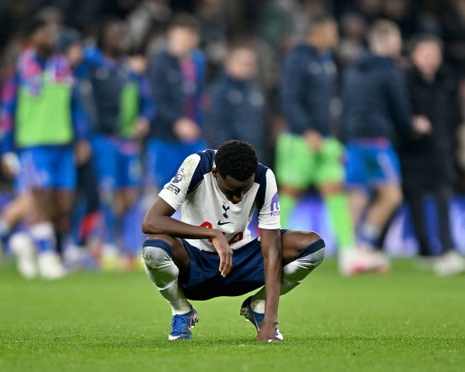
This season has been so thoroughly Spursy that appointing Igor Tudor as interim manager might be their most questionable decision yet. The Croatian manager has taken a squad in need of reassurance and placed them under a brutal regimen, publicly declaring their issues are simple: they cannot run, cannot score, and cannot defend. Support for his hiring was minimal, and early results have been catastrophic, with three consecutive defeats emphasising the harsh reality of his approach. Fans are beginning to wonder if any recovery is realistically achievable, as the club seems trapped in a cycle of mismanagement and poor morale. It is difficult to imagine a straightforward path out of the mess Tottenham currently inhabits.

As a lifelong Spurs supporter and season-ticket holder, the situation inspires both exasperation and creative solutions. One unconventional idea is to sack Tudor immediately and introduce a rotating series of guest managers for the remaining nine league fixtures. Figures such as Harry Redknapp, Glenn Hoddle, Jürgen Klinsmann, or even unexpected celebrities like Sue Perkins, Stephen Mangan, or ChatGPT could each take the helm for a single match. The strategy would be chaotic yet potentially effective, providing a morale boost and keeping supporters entertained while maintaining a chance of survival. In a season where conventional tactics have failed, unpredictability might offer the only remaining opportunity for meaningful success.
Pundits estimate Tottenham may require only three wins to avoid relegation, meaning even a partial success rate among guest managers could secure their Premier League status. Attempting the continuity approach with Thomas Frank proved ineffective, so rotating managerial leadership may inject fresh energy into a squad that has been stagnating. Fans, meanwhile, would enjoy witnessing a series of unexpected personalities in the dugout, possibly including flamboyant figures like Brian Blessed, whose presence alone could galvanise the team. The strategy is born from desperation, yet it also underlines the absurdity and unpredictability that defines modern Spurs football.
Conversely, yet another managerial change could reinforce the sense of chaos enveloping Tottenham. If Tudor were dismissed now, the club would experience one of the fastest declines in managerial tenure since historical naval disasters, a spectacle reflecting disorganisation and indecision. Yet Spurs’ current performance might not differ significantly even under a radically unqualified manager, illustrating that deeper structural and cultural issues plague the squad beyond coaching decisions. The narrative of failure at Tottenham is thus intertwined with moments of absurdity, creating an almost surreal footballing experience that defies conventional logic.
Within the wreckage of their disjointed performances, Tottenham still exhibits flashes of brilliance, hinting at the magic their reputation promises. Despite being derided for inconsistent league form, the team has achieved remarkable success in European competitions, advancing to the Champions League last sixteen with a display of skill, determination, and flair. The notion that Spurs could simultaneously face relegation domestically and triumph internationally is emblematic of the club’s unpredictable nature. It is a scenario that seems improbable yet perfectly Spursy, combining failure and glory in ways that defy simple explanation.
Recent fixtures, including the defeat to Crystal Palace, may represent critical turning points in Tottenham’s season. Micky van de Ven’s red card symbolised the absence of leadership on the field, while televised coverage highlighted despondent supporters exiting the stadium early, creating an image of collective frustration. The ironic sight of a banner proclaiming “WINNERS” above the entrance contrasted starkly with the club’s struggles, amplifying the bittersweet and often humorous nature of following Spurs. Even rival fans, typically gloating, expressed genuine sympathy, highlighting the uniquely tragicomic status of the club within English football culture.
The Tottenham-Crystal Palace rivalry carries personal significance for some supporters, making the fixture particularly poignant. The match evokes memories of family connections and past experiences, as exemplified by supporters recalling lost loved ones who cherished these encounters. This emotional dimension underscores how deeply intertwined football, identity, and community can become, rendering the outcomes of matches far more impactful than points alone. Victories and defeats in this context acquire a resonance that transcends statistics, tying into shared histories and cherished traditions within the supporter base.
Tottenham’s stadium, inaugurated in April 2019, has symbolised ambition and grandeur, yet it has also emphasised pressures the team has struggled to meet. Sitting high in the North Stand, supporters can feel the weight of expectation, sensing both pride and apprehension as matches unfold. The venue itself, with its state-of-the-art facilities, projects a sense of hubris and aspiration, intensifying scrutiny on players and management alike. A single social media post proclaiming the team is “In the zone” serves as a reminder that, despite modest league position, ambition and confidence remain embedded in the club’s public messaging.
The remainder of Tottenham’s season promises a blend of drama, unpredictability, and occasional brilliance. Fans can anticipate moments of triumph alongside periods of frustration, reflecting the inherent duality of following a team with such a mercurial nature. The word “Spursy,” though unofficial in the Oxford English Dictionary, encapsulates the essence of the club’s identity: a mixture of brilliance, chaos, and unpredictability that captivates and confounds supporters in equal measure. Whether through managerial experimentation, unexpected victories, or continued misadventures, Tottenham’s narrative remains compelling and uniquely engaging.

Ultimately, Tottenham Hotspur represents both the potential for greatness and the inevitability of folly, often within the same match. Their trajectory this season demonstrates how financial might, historical prestige, and individual talent cannot guarantee consistent success in a competitive sporting environment. Yet the club’s capacity to inspire, frustrate, and astonish simultaneously ensures its enduring appeal, highlighting the paradoxical nature of elite football. The interplay of hope and despair, innovation and error, renders following Spurs a singular experience, combining emotional investment with a constant readiness for the unexpected. For supporters, this season is a reminder that loyalty involves both celebration and endurance, a test of resilience and humour in equal measure.
No matter what happens over the final games, Tottenham will continue to provoke discussion, laughter, and passionate debate among fans, pundits, and casual observers alike. Their story embodies the enduring drama of football, where triumph and disaster are separated by a thin margin, and where reputation alone cannot insulate against the sport’s inherent unpredictability. Even as the club navigates its current crisis, the potential for narrative redemption exists, a thrilling possibility amplified by European competition and the enduring dedication of supporters. Tottenham’s season remains a fascinating study in contrast, emblematic of football’s capacity to surprise and delight simultaneously.
Related News:
 Tottenham shine at Everton but Frank wary of title push
 Matty Cash seals Villa win as City falter again at Villa Park
 Sarr Double Sinks Young Liverpool in Carabao Cup
 Nwaneri and Saka Secure Arsenal Win Over Brighton
 Woltemade Hot Streak Fires Newcastle Past Spurs
 Kieffer Moore Hat-Trick Ends Coventry’s Unbeaten Run
 Salah & Gravenberch Lead Liverpool to Win Against Villa
 Dyche Criticises Corner Decision as Forest Draw with United
 Caicedo Shines as Chelsea Edge Spurs in Chaotic Derby
 Granit Xhaka Rescue Earns Everton Draw at Sunderland
 Liverpool Edge Real Madrid 1-0 in Champions League Thriller
 Van de Ven Stunner Lifts 10-Man Spurs to UCL Glory
 Merino Shines as Arsenal Beat Slavia 3-0 Without Gyokeres
 Burn and Joelinton Head Newcastle to Victory Over Bilbao
 Foden shines as Man City dismantle Dortmund in dominant display
 Garnacho Spares Chelsea From Shock Champions League Loss in Baku
 Tension and Turmoil at Aston Villa v Maccabi Match
 Bellingham has ‘the edge’ among England No 10s
 Arteta Left Frustrated as Sunderland Deny Arsenal Late Win
Chelsea Cruise Past Wolves to Go Second in the Premier League
Man City Masterclass on Guardiola’s Milestone Day Exposes Liverpool Woes
Arteta Left Frustrated as Sunderland Deny Arsenal Late Win
Chelsea Cruise Past Wolves to Go Second in the Premier League
Man City Masterclass on Guardiola’s Milestone Day Exposes Liverpool Woes
 Lando Norris Dominates Brazil GP to Strengthen F1 Title Bid
 England cannot afford to be in awe of the All Blacks, warns Jamie George
 VAR Must Rein Its Neck In to Save Football’s Spirit
 Trescothick Hints Pope Will Keep Number Three Spot
 Ronaldo Confirms Final World Cup and Plans Retirement
 Mary Earps’s Manchester United Return Faces Mixed Reception
 Sam Kerr Stars in Chelsea Return with Champions League Double
 This kid is something else: Alex Scott’s rise to England call-up
 Anthony Joshua Faces Backlash Over Proposed Jake Paul Fight
 Former Lion Heskey Warns of Shortage of England Strikers
 Rogers Double Aston Villa as Leeds Slip Deeper into Trouble
Eze Hat-Trick Stuns Spurs in Dominant Arsenal Derby Win
Rogers Double Aston Villa as Leeds Slip Deeper into Trouble
Eze Hat-Trick Stuns Spurs in Dominant Arsenal Derby Win
 Moyes Defends Gueye After Dramatic Everton Bust-Up
 Rookie Driver Hollie McRae Flips Car but Walks Away Safe
 Gerrard warns Liverpool’s terrible run could worsen
 Jac Morgan to Miss Six Nations Start After Surgery
 Alexander Isak ends drought as Liverpool stop rot with win at West Ham
 Mbappe rescues Real Madrid with a penalty at Girona
 Wales hits 20,000-strong milestone in women’s football
 Stokes urges empathy for England players amid Ashes struggles
 Sports piracy surges in UK with 3.6bn illegal streams reported
 Chelsea fans inquiry launched after Charlton match policing concerns
 Arsenal vs Man Utd LIVE: Jesus Starts as Carrick Stays Loyal
 Arsenal Edge Closer to Ending ‘Nearly-Men’ Era After Cup Breakthrough
 Newcastle fans face bleak reality under Saudi ambitions
 Hugo Ekitike Becomes Liverpool’s New Cult Hero
 Tottenham Assistant Sacked After Just One Month as Tudor Reshapes Coaching Team
 BBC World Cup Presenting Duties Shared Among Trio
 Steve Borthwick Turns to 2003 Icons for Inspiration
 British Success at the Isle of Wight Masters Chess
 London Set to Honour Euro 2025 Champions as Lionesses Take Victory Parade Through the Capital
 Reeves Faces Setback as Labour May Miss Homes Target
 Kate Winslet to Narrate Film Highlighting King’s Environmental Mission
 Trump’s UK Ambassador Urges North Sea Drilling to Strengthen US Ties
 UK Bans Fake Numbers: Scammers Lose Their Trick
 Millionaires group urge Reeves to introduce wealth tax to ‘lift kids out of poverty’
 Reeves rejects £1bn plea for NHS redundancy payouts
 PM Condemns Leaks, Vows Loyalty to Ministers and Stability
 Saka Solidifies Role as Tuchel’s Key England Lieutenant
 Inside the Helpline Protecting Missing Children in the UK
 PlayStation PS5 Deals Hit Lowest Prices Ahead of Black Friday
 Five-Year-Old Dies After Rare Tonsil Surgery Complication
 Starmer Says Labour’s Economic Plan Needs Years to Deliver
 Children to Receive Home Vaccines as England Acts
 Cambridge College Faces Backlash Over Private School Recruitment
 Bereaved Fathers Gain New Paternity Leave Rights in UK
 Woman Jailed for Life After Killing E-Bike Rider in Tragic Mistaken Identity Case
 No Gas Boiler Ban as UK Warm Homes Plan Backs Heat Pumps
 Police response times face strict new national limits
 Devon hosts first high-density hydro power system
 Send spending gap leaves deprived areas behind
 UK Job Vacancies Hit Five-Year Pandemic Low
 UK Youth Unemployment Surges Amid Tax Changes
 Half of Britons Avoid GP When Ill, Survey Reveals Growing Concern
 Russian Trade Routed Through British Islands Exposed
 Hilary Knight speaks out on Trump’s recent hockey remarks
 Mother Says ‘I Hugged My Daughter’s Killer’ as They Cried Together in Prison
 Thousands Protest Iran Strikes Outside US Embassy London
 UK Oil and Gas Supplies Reassured Amid Middle East Concerns