Published: 12 March 2026. The English Chronicle Desk. The English Chronicle Online.
The US missile strike that destroyed an elementary school in southern Iran has triggered global outrage and urgent calls for accountability. A preliminary American military inquiry now suggests the devastating attack resulted from a targeting error rather than deliberate intent. The incident occurred on 28 February and reportedly killed scores of civilians, most of them young children. Early findings from investigators indicate the US missile strike was mistakenly directed toward the school due to outdated intelligence used during planning.
The attack struck the Shajarah Tayyebeh elementary school in the Iranian town of Minab. Iranian authorities reported that at least 175 people died during the explosion and subsequent collapse of the building. Many of the victims were children attending classes at the time. Rescue workers described chaotic scenes as families searched desperately through the rubble for survivors. The tragedy quickly became one of the deadliest incidents involving civilian casualties during the current regional conflict.
According to information cited by The New York Times, unnamed American officials confirmed the preliminary investigation. The inquiry reportedly concluded that military planners had relied on obsolete targeting data. That information had been provided by the Defense Intelligence Agency and used during strike planning by officers at US Central Command. As a result, the missile coordinates were created based on outdated intelligence about the site.

Investigators believe the original target was believed to be connected to nearby Iranian military facilities. The school building once formed part of a wider complex associated with the Islamic Revolutionary Guards Corps. However, satellite imagery indicates the building had been separated from the military compound for years. A large wall divided the school grounds from surrounding barracks and naval installations. Analysts say the separation had existed for at least nine years before the attack.
Satellite photographs also show the building displayed clear signs that it was an educational facility. Colourful murals decorated its walls and small sports fields surrounded the playground areas. These features were visible in various satellite images captured before the strike occurred. Analysts say such indicators normally help military planners avoid civilian targets during operations.
Despite these details, confusion over responsibility quickly emerged following the devastating explosion. Iranian officials immediately accused the United States of carrying out the US missile strike deliberately. Tehran released videos showing fragments of what appeared to be American-made missile components recovered from the site. Officials argued the evidence proved Washington was responsible for the deadly attack.
The administration of Donald Trump initially rejected those accusations and suggested Iran itself was responsible. Speaking publicly days after the incident, the US president claimed Iranian weapons had caused the destruction. Trump stated that Iranian missiles lacked accuracy and could have struck the school accidentally. However, he offered no evidence supporting the claim during his remarks.
Military spokespeople avoided repeating that accusation in subsequent statements. Officials from United States Central Command instead confirmed that an investigation had begun. They emphasised that the incident remained under review and declined to discuss operational details publicly. The United States Department of Defense later issued a brief statement repeating the same position.
In a short response to media inquiries, the Pentagon said only that the matter remained under investigation. Officials explained that it would be inappropriate to comment further until the review was complete. Critics argue the government’s cautious language reflects uncertainty within military leadership over what happened.
Meanwhile, independent investigators began examining video evidence posted on social media shortly after the explosion. Several videos verified by journalists showed the same destroyed school building from different angles. Distinctive murals on the exterior walls helped confirm the site’s identity in multiple recordings. These visual details allowed analysts to confirm that the footage depicted the same location.
One widely circulated video showed thick smoke rising behind the school’s boundary fence. The smoke appeared to originate from the direction of an adjacent military compound. Observers quickly realised the explosion might have been part of a larger strike targeting nearby installations.
Further evidence emerged days later when Iranian state media released another recording showing a missile impact in the Minab area. Investigators from Bellingcat analysed the footage using geolocation techniques. Their work involved comparing visible landmarks with high-resolution satellite images of the region.
The analysts matched roads, trees, buildings, and water towers visible in the video with satellite photographs. This allowed them to determine where the camera was located when the missile struck. Their findings indicated that the missile impacted a facility close to the school complex. The strike appeared to target the Iranian military compound next to the educational building.
Munitions specialists later examined the missile’s characteristics visible in the video recording. Experts identified the weapon as a Tomahawk missile based on its distinctive design. That identification significantly narrowed the list of possible operators responsible for launching it.
Weapons analyst N.R. Jenzen‑Jones, director of the research organisation Armament Research Services, explained the significance of that identification. He noted that Israel is not known to possess Tomahawk cruise missiles. As a result, the weapon strongly suggested American involvement in the operation.
Jenzen-Jones also addressed claims circulating online about Iranian missile systems. Some commentators suggested the strike might have involved an Iranian Soumar cruise missile. However, the analyst said the weapon visible in the footage clearly differed from that design. The Soumar missile carries a distinctive external engine mounted toward the rear underside. That feature was absent in the missile shown in the video evidence.
The preliminary investigation therefore aligns closely with the conclusions reached by independent analysts. Both suggest the missile was launched by American forces targeting nearby Iranian military infrastructure. However, an error in target selection appears to have caused the devastating strike on the school building.
International reaction has been swift and intense since the findings began circulating. Human rights groups have called for a full independent inquiry into the US missile strike and its planning process. Many organisations argue the scale of civilian casualties demands a transparent investigation.
Diplomatic tensions between Washington and Tehran have also intensified following the revelations. Iranian officials insist the attack represents a clear violation of international law and humanitarian protections. They argue the tragedy highlights the dangers of modern precision warfare conducted near civilian areas.
Legal experts say the investigation’s final conclusions could have significant consequences for international accountability. Military operations are required to follow strict rules designed to protect civilians during armed conflict. These rules demand careful verification that targets are military objectives before strikes occur.

If outdated intelligence was indeed used during planning, critics say the incident may reveal serious procedural failures. Such failures could raise difficult questions about how targeting decisions are verified within complex military command structures.
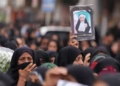
Families of the victims continue to mourn as the investigation proceeds. In Minab, community members have gathered repeatedly at the ruins of the destroyed school. Flowers, photographs, and children’s toys now cover the site where classrooms once stood.
Residents say the tragedy has permanently scarred the community. Many parents lost multiple children in the explosion, leaving entire families devastated. Survivors describe the shock of witnessing a peaceful school morning transform suddenly into chaos and destruction.
As the inquiry continues, pressure is mounting on Washington to provide clearer answers. Lawmakers and international observers have urged transparency about the chain of decisions that led to the US missile strike. For many families affected by the tragedy, accountability remains the only path toward justice.
The final investigation report is expected to examine the intelligence process, target verification procedures, and operational command decisions involved. Until those findings emerge, the devastating strike on the Minab school remains a stark reminder of war’s human cost.
Related News:
 Middle East Flights Halted After Iran Strikes
 US Iran Operation: Sixth Service Member Killed
 Hezbollah Anger Erupts as War Returns to Beirut
 Gaza Siege Deepens as Iran War Escalates
 Riyadh Drone Attack Escalates Regional War
 Middle East attacks intensify as Trump rejects Iran talks
 Iran-Iraq border airstrikes spark new tensions
 Iran-Iraq Border Strikes Spark New Front Fears
 Iran-Backed Militias Escalate Attacks Across Middle East
 UK Prepares Aircraft Carrier for Middle East Crisis
 Mojtaba Khamenei Chosen as Iran’s New Supreme Leader
 Tehran Oil Depot Strikes Darken City With Toxic Smoke
 Seventh US Service Member Killed in Iran Conflict Identified
 Mojtaba Khamenei Supporters Rally as Iranians Fear Repression
 Tehran Strikes Mark War’s Most Devastating Night
 Iran Defiance Grows Amid US-Israel War Pressure
 Hormuz Crisis Sparks Global Oil Market Fears
 Iranian Exile Factions Seek US Backing for Iran’s Future
 US-Israeli Strategy Shifts to Plan B in Iran War
 Injured Mojtaba Khamenei Elevated as Iran Leader
 BBC to Apologise Over Edited Trump Speech Amid Backlash
 Britain deploys RAF specialists to assist Belgium with drone threats
 Palace May Restore Hyphen to Andrew Mountbatten-Windsor’s Name
 Greene Pushes Epstein Files Amid Trump Fallout
 December Run-Off in Chile as Election Produces No Winner
 Zelenskyy Signs Fighter Jet Deal Amid Russian Drone Attacks
 Canada Passes Carney’s First Budget in Tight Parliamentary Vote
 Shadow Fleet at Sea: Europe’s Battle Against Illicit Oil Shipping
 Tiny Curacao Makes History as Smallest Nation to Reach World Cup
 Deadly Russian Strikes Hit Western Ukraine, 20 Killed in Ternopil
 Ukraine Peace Plan: Zelensky Ready for Dialogue
 Royal Navy Shadows Russian Warships Entering the Channel
 US Suspends Afghan Immigration After White House Shooting
 Georgians Defy Government Crackdown After Year of Protests
 Tokyo court rules Japan’s same-sex marriage ban constitutional
 ‘Extinct’ Antelope Returns to Sahara, Bringing Hope
 American Mother Extradited From UK to U.S. on Murder Charges
 Facebook Slow to Remove Bondi Attack Praise, Anti-Hate Group Claims
 Albanese Opens Door to Bondi Royal Commission Amid Rising Pressure
 US Clears Nvidia AI Chip Sales to China in Policy Shift
 Gulf states warn Trump Iran strikes risk wider Middle East war
 EU weighs response amid Greenland tariff crisis with Trump
 Sydney Shark Attack Surge Shocks Australia Beaches
 EU Says US Ties Have Suffered ‘Big Blow’ After Greenland Crisis
 Videos reveal earlier clash before Alex Pretti shooting
 UK New Car Discounts Near £6,000 as Prices Are Slashed
 Israel Moves to Bar MSF From Gaza Operations
 Tragic Ski Lift Accident Claims Australian Snowboarder
 Portugal Election Delivers Socialist Win as Far Right Surges
 Australian Families Leave Syrian Camp for Home
 SA Police Intensify Search in Gus Lamont Case
 Trump Attacks UK-California Energy Pact
 ‘I Would Scream in My Sleep’: Alawite Women from Syria Tell of Kidnap and Rape
 Iran Says ‘Guiding Principles’ Agreed With US at Nuclear Talks
 Andrew Arrest Sparks Republic Debate in Australia
 Farage Chagos Islands Row Sparks Fury
 Hilary Knight speaks out on Trump’s recent hockey remarks
 Has Europe truly learned from the failures of 2022?
 Social Media Trial: Woman Says Addiction Began at Six
 Iran’s Regime Still Intact — Coming Days Will Test Its Survival
 Allies of US in the Gulf Bear Brunt of Iran Attacks
 Trump Faces Questions Over Iran Conflict Plan
 In Maps: Strikes Across Iran and the Middle East
 Months of Planning Behind US‑Israeli Mission to Target Iran’s Supreme Leader
 Iran Civilian Deaths Surge Past 200 Amid Fear
 The Third Day of the US‑Israeli War With Iran
 Israel Launches Ground Invasion of Lebanon Amid Widening Middle East War
 Herzog Asio meeting sparks security storm
 Trump rebukes Starmer over Iran strikes
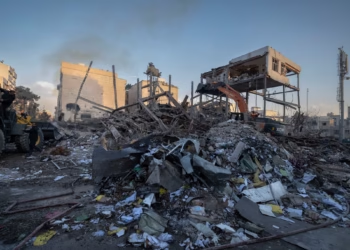 Civilian Deaths in Iran Pass 700 Amid Fear of Bombs and Regime Clampdown
 Petrol Prices Soar as Retailers Accused of Gouging Amid Global Tension
 Penny Wong silent on Australian crew in sub strike
 Australians on US Submarine in Iranian Warship Strike
 Thousands Protest Iran Strikes Outside US Embassy London
 Oil Prices Surge Above $100 Amid Iran War
 India T20 World Cup Triumph Seals Historic Title Defence
 Nine Days of Strikes Reshape the Middle East
 Trump Pressures Congress Over Save America Act
 Iranian Football Squad Asylum Drama Shocks Australia
 Goma Drone Attack Kills Three as Conflict Escalates