Published: 13 March 2026. The English Chronicle Desk. The English Chronicle Online.
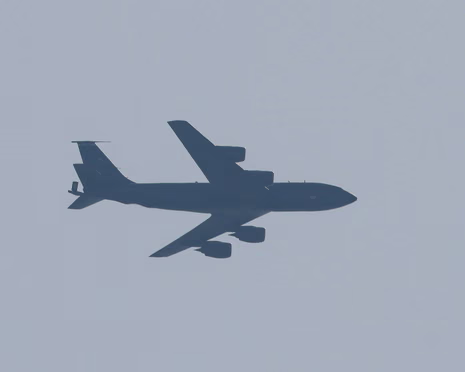
A dramatic rescue mission unfolded in western Iraq after a US plane crash involving a military refuelling aircraft during ongoing regional operations. The incident occurred on Thursday as American forces continued intensified air activity linked to the conflict surrounding Iran. Early reports confirmed that the aircraft involved was a KC-135 refuelling plane carrying several crew members during the mission. Officials said the US plane crash happened in friendly airspace and was not caused by enemy fire. Rescue teams were immediately deployed as military officials worked to determine the cause and potential casualties.
According to US Central Command, the aircraft went down during a complex operation known as Operation Epic Fury. This mission forms part of broader American and allied actions aimed at countering Iranian military activity across the region. Military officials stated that another aircraft was involved in the incident but landed safely afterwards. Investigators believe the two aircraft may have been operating closely during refuelling procedures when the crash occurred. At least five crew members were believed to be aboard the aircraft when the emergency happened.

Search and rescue teams began combing the crash area shortly after the aircraft went down. Helicopters and ground units were dispatched rapidly to locate the crew and secure the site. Officials described the situation as developing quickly, with information changing as teams reached the remote location. Western Iraq contains large stretches of desert terrain that often complicate emergency operations. Despite these challenges, military authorities confirmed that the rescue mission remained active late into the night.
The US plane crash comes at a particularly tense moment in Middle Eastern security dynamics. American forces have increased their air presence significantly in recent weeks due to rising hostilities involving Iran. Military planners deployed additional fighter jets, surveillance aircraft, and refuelling planes to support expanded operations. These aircraft enable longer missions across large distances by providing fuel to jets during flight. Such capabilities are essential during high-tempo operations across the region’s vast airspace.
Officials stressed that early findings show no evidence of hostile action behind the accident. Military statements emphasised that the crash did not result from enemy attacks or friendly fire incidents. However, a full investigation will still examine mechanical issues, operational factors, and environmental conditions during the mission. Aviation specialists typically analyse flight data, communications records, and debris patterns to determine exact causes. These processes can take weeks or months before final conclusions become available.
The latest US plane crash adds to a difficult period for American aviation operations in the region. Since late February, several aircraft incidents have occurred amid intense military activity. Earlier in March, three US Air Force fighter jets were mistakenly shot down by Kuwaiti air defences. That incident happened during a friendly fire accident while coalition forces conducted operations connected to the Iran conflict. Fortunately, all pilots involved in that earlier incident successfully ejected and survived the event.
Despite those close calls, the broader conflict has already claimed American lives and injured many service members. Military officials confirmed that seven US troops have died since the start of the confrontation. Reports also indicate that as many as 150 American personnel have suffered injuries during various attacks. Many of these casualties occurred in facilities supporting operations throughout the Middle East.
One of the deadliest attacks happened when an Iranian drone struck an operations centre in Kuwait. The strike targeted a logistics hub located within a civilian port facility supporting coalition military activities. Six members of the US Army Reserve were killed in that attack while working to maintain supply lines. These reservists played a crucial role ensuring troops received food, equipment, and other essential resources.
Another American service member later died from wounds sustained during a separate attack. That strike targeted the Prince Sultan airbase in Saudi Arabia earlier this month. The base serves as a key hub for US air operations and coordination across the region. Military analysts say such installations remain high-value targets during ongoing tensions.
Meanwhile, the conflict between the United States, Israel, and Iran continues to escalate. Air strikes and counter-attacks have taken place since late February following growing regional confrontations. Iran’s ambassador to the United Nations reported that more than 1,300 people have died within Iran during the fighting. Independent verification of those figures remains difficult because of restricted access and ongoing hostilities.
Political leaders in Washington have acknowledged the increasing human and financial costs of the campaign. Former President Donald Trump and US defence secretary Pete Hegseth recently warned that further casualties may occur. Both leaders argued that military pressure on Iran could continue for an extended period. Their statements highlighted the uncertainty surrounding how long the conflict might last.
Financial estimates also reveal the growing scale of the campaign. The Pentagon recently informed lawmakers that war expenses have already surpassed 11.3 billion dollars. Officials admitted the true long-term cost remains difficult to calculate at this stage. Military operations require enormous resources including aircraft maintenance, fuel, logistics support, and personnel deployments.
Within this context, the latest US plane crash underscores the risks facing service members even outside direct combat situations. Military aviation missions often involve demanding manoeuvres, heavy aircraft loads, and close coordination between crews. Refuelling aircraft like the KC-135 play particularly complex roles during high-pressure operations. They must carefully approach fast-moving jets while maintaining precise flight positions.
Such procedures require intense concentration from pilots and crew members. Even small miscalculations can create dangerous situations when aircraft operate close together in mid-air. Investigators will likely focus on whether the crash occurred during an aerial refuelling attempt or manoeuvre. They will also study weather patterns, communication exchanges, and equipment performance.
Despite the uncertainty, officials emphasised that rescue teams remained their highest priority following the crash. Military leaders said every effort was underway to locate the missing crew members quickly. Emergency personnel were supported by surveillance aircraft providing aerial monitoring of the crash zone. Satellite imagery and radar data were also being used to assist search operations.
Local authorities in Iraq were informed about the incident as part of standard coordination procedures. However, American military forces continued leading the response due to operational control in the area. Security teams established a perimeter around the crash site to protect sensitive equipment and evidence. This measure helps investigators preserve information essential to understanding the incident.

Analysts note that military aircraft accidents often draw intense scrutiny because of their strategic implications. Refuelling aircraft represent critical infrastructure within modern air forces. Without them, fighter jets and bombers cannot maintain extended missions across distant theatres. Their loss temporarily reduces operational flexibility until replacements are deployed.
For now, attention remains focused on the ongoing rescue mission and the wellbeing of the crew. Families of service members involved in the flight are receiving updates through official military channels. Authorities have urged patience while emergency teams continue their work on the ground.
The US plane crash in Iraq highlights the unpredictable dangers faced by military personnel during complex international operations. Even routine missions can quickly transform into emergencies under demanding operational conditions. As investigations continue, officials hope to determine the precise chain of events behind the accident.
The findings may eventually influence safety procedures and operational guidelines for future missions. Military aviation has historically evolved through lessons learned from incidents like this one. Each investigation aims to prevent similar tragedies while protecting service members performing difficult tasks.
For now, the focus remains on rescue efforts unfolding across Iraq’s desert landscape. The world watches closely as officials search for answers following the US plane crash.
Related News:
 Just Stop Oil Protesters Convicted Amid Climate Defence Row
 BBC to Apologise Over Edited Trump Speech Amid Backlash
 Britain deploys RAF specialists to assist Belgium with drone threats
 Palace May Restore Hyphen to Andrew Mountbatten-Windsor’s Name
 Greene Pushes Epstein Files Amid Trump Fallout
 Trump Deploys DHS to Charlotte in Major Arrest Operation
 December Run-Off in Chile as Election Produces No Winner
 Zelenskyy Signs Fighter Jet Deal Amid Russian Drone Attacks
 Orban Says Ukraine Has ‘No Chance’ as EU Support Continues
 Canada Passes Carney’s First Budget in Tight Parliamentary Vote
 Shadow Fleet at Sea: Europe’s Battle Against Illicit Oil Shipping
 Tiny Curacao Makes History as Smallest Nation to Reach World Cup
 Haiti Qualifies for World Cup Despite Coach Never Visiting Country
 Deadly Russian Strikes Hit Western Ukraine, 20 Killed in Ternopil
 Pentagon Officials in Ukraine to Discuss War End
 Ukraine Peace Plan: Zelensky Ready for Dialogue
 Venezuela Threatens Nobel Winner Machado with Fugitive Status
 Royal Navy Shadows Russian Warships Entering the Channel
 US Suspends Afghan Immigration After White House Shooting
 Two National Guard Soldiers Critically Injured Near White House
 Georgians Defy Government Crackdown After Year of Protests
 Southern Lebanon reels as Israeli strikes shatter communities
 Tokyo court rules Japan’s same-sex marriage ban constitutional
 ‘Extinct’ Antelope Returns to Sahara, Bringing Hope
 EU plans $105bn Ukraine aid using frozen Russian assets
 American Mother Extradited From UK to U.S. on Murder Charges
 Russia losses Ukraine war peace talks intensify amid rising deaths
 Facebook Slow to Remove Bondi Attack Praise, Anti-Hate Group Claims
 Australian Cruise Ship Freed After Reef Grounding in Papua New Guinea
 US Cities Erupt in Protests Against Trump’s Venezuela Military Action
 Albanese Opens Door to Bondi Royal Commission Amid Rising Pressure
 Trump Escalates Minnesota Immigration Surge Amid Rising Tensions
 Iran Protesters Defy Crackdown as Violent Clashes Intensify
 US Clears Nvidia AI Chip Sales to China in Policy Shift
 Trump Threatens Strong Action If Iran Executes Protesters
 Gulf states warn Trump Iran strikes risk wider Middle East war
 Machado Trump medal gesture reshapes Venezuela power struggle
 EU weighs response amid Greenland tariff crisis with Trump
 Sydney Shark Attack Surge Shocks Australia Beaches
 Thousands Flee Cambodia Scam Centres Amid Global Pressure
 EU Says US Ties Have Suffered ‘Big Blow’ After Greenland Crisis
 Andrew Hastie Emerges as Leadership Rival to Ley
 Starmer China visit raises human rights pressure on Beijing
 Videos reveal earlier clash before Alex Pretti shooting
 China Executes 11 Linked to Myanmar Scam Networks
 UK New Car Discounts Near £6,000 as Prices Are Slashed
 Israel Moves to Bar MSF From Gaza Operations
 Tragic Ski Lift Accident Claims Australian Snowboarder
 Thousands Left Without Heating in Ukraine Amid Russia Strikes
 Portugal Election Delivers Socialist Win as Far Right Surges
 Tarique Rahman’s Rise Toward Bangladesh’s Top Job
 Australian Families Leave Syrian Camp for Home
 SA Police Intensify Search in Gus Lamont Case
 Trump Attacks UK-California Energy Pact
 Trump and Chagos Deal Rift Over Iran Strikes
 Andrew Arrest Sparks Republic Debate in Australia
 Global corruption crisis: Who Washington shields
 Farage Chagos Islands Row Sparks Fury
 Gold Rush in Gugulethu Leaves South Africans Desperate for Work and Hope
 Hilary Knight speaks out on Trump’s recent hockey remarks
 Trump Speech Sparks Intense Debate Across Divided America
 Has Europe truly learned from the failures of 2022?
 Social Media Trial: Woman Says Addiction Began at Six
 UK Personnel Near Iranian Missile Strike in Bahrain
 Trump Faces Questions Over Iran Conflict Plan
 Iran Civilian Deaths Surge Past 200 Amid Fear
 Herzog Asio meeting sparks security storm
 Trump rebukes Starmer over Iran strikes
 Middle East attacks intensify as Trump rejects Iran talks
 Iran-Iraq border airstrikes spark new tensions
 Petrol Prices Soar as Retailers Accused of Gouging Amid Global Tension
 Penny Wong silent on Australian crew in sub strike
 Australians on US Submarine in Iranian Warship Strike
 Oil Prices Surge Above $100 Amid Iran War
 Pete Hegseth Iran War Remarks Spark Alarm
 India T20 World Cup Triumph Seals Historic Title Defence
 Trump Pressures Congress Over Save America Act
 Iranian Football Squad Asylum Drama Shocks Australia
 Goma Drone Attack Kills Three as Conflict Escalates
 Queensland Protest Laws Spark Free Speech Backlash