Published: 17 March 2026. The English Chronicle Desk. The English Chronicle Online.
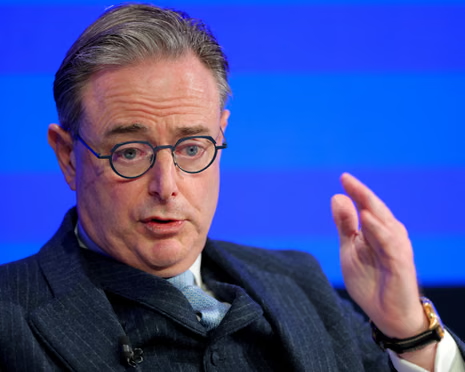
Belgium Russia energy tensions have intensified after controversial remarks from Bart De Wever sparked widespread criticism across Europe. The Belgian leader suggested restoring ties with Russia to ease soaring energy costs, prompting swift political backlash. His comments arrive at a delicate moment, as the European Union continues navigating the economic and geopolitical consequences of the war in Ukraine.
Speaking to the Belgian newspaper L’Echo, De Wever argued that Europe must act pragmatically to secure its economic future. He warned that the continent risks losing ground economically and strategically if it does not reconsider its approach. His suggestion that normalising relations with Moscow could restore access to affordable energy has been described by critics as both risky and premature.
The Belgian Russia energy debate quickly gained momentum as political leaders reacted with concern. Maxime Prévot publicly distanced himself from the prime minister’s remarks, highlighting divisions within Belgium’s coalition government. He stressed that Russia’s current stance in negotiations remains uncompromising, making any discussion of normalisation highly sensitive.

Prévot emphasised that such rhetoric could weaken European unity at a critical time. He warned that signalling openness to renewed relations might embolden Vladimir Putin, who continues to maintain firm demands in ongoing geopolitical disputes. The foreign minister insisted that maintaining pressure on Moscow remains essential for safeguarding European security interests.
The wider European response has reflected similar concerns, with leaders wary of any shift in policy direction. Kęstutis Budrys reminded observers of Russia’s demands prior to its 2022 invasion of Ukraine. Those proposals included significant restrictions on NATO’s presence in Eastern Europe, raising fears about long-term regional stability.
Budrys cautioned that such demands could resurface if Europe appears divided or weakened. He stressed that negotiations with Russia must occur from a position of strength rather than compromise. His remarks underline the broader anxiety among Eastern European nations, many of which view Moscow’s ambitions with deep suspicion.
The Belgium Russia energy controversy also reflects broader tensions within the European Union regarding energy policy. Since the invasion of Ukraine, the EU has taken significant steps to reduce its dependence on Russian fossil fuels. These measures include ambitious targets to phase out Russian gas imports by 2027, alongside similar goals for oil.
Dan Jørgensen reaffirmed the bloc’s commitment to these objectives, warning against any reversal. He noted that reliance on Russian energy had previously allowed Moscow to exert political pressure on Europe. According to Jørgensen, reducing this dependency is not only an economic necessity but also a strategic imperative.
De Wever’s remarks, however, suggest that economic concerns remain deeply influential in shaping political debate. Rising energy costs have placed pressure on households and industries across Europe, fuelling discussions about alternative solutions. Some analysts argue that these pressures could lead to increased political fragmentation within the EU.
The Belgian prime minister also pointed to the role of the United States in shaping the conflict’s trajectory. He suggested that meaningful pressure on Russia would require full American support, which he implied has not always been consistent. His comments hinted at perceived differences between Washington’s approach and Europe’s immediate interests.
Observers have noted that such statements risk complicating transatlantic relations, particularly at a time when unity is seen as crucial. The alignment between Europe and the United States has been a cornerstone of the response to Russia’s actions in Ukraine. Any suggestion of divergence could have significant diplomatic implications.
The Belgium Russia energy issue is further complicated by financial considerations linked to frozen Russian assets. Belgium holds a substantial portion of these assets, making it a key player in discussions about their potential use. De Wever has previously opposed using these funds to support Ukraine, citing legal and financial risks.
His stance has drawn criticism from those who believe the assets should be leveraged to aid Ukraine’s recovery and defence. Supporters of this approach argue that it represents a practical means of holding Russia accountable. Critics, however, warn that legal challenges could create long-term liabilities for countries involved.
Meanwhile, efforts to secure funding for Ukraine continue to face obstacles within the EU. A proposed €90 billion loan package aimed at supporting Kyiv’s war effort and public finances has encountered delays. Hungary has been a key source of resistance, reflecting ongoing divisions within the bloc.
The Belgium Russia energy debate highlights the complex interplay between economic pressures and geopolitical priorities. While some leaders emphasise the need for unity and resilience, others are increasingly focused on domestic economic concerns. This tension is likely to shape European policy discussions in the coming months.
Public opinion across Europe also plays a significant role in this evolving debate. Many citizens continue to support Ukraine and oppose concessions to Russia, particularly in countries closer to the conflict. However, rising living costs have led to growing frustration, creating a challenging environment for policymakers.

In Belgium, the reaction to De Wever’s comments has been particularly intense. Political opponents have accused him of undermining European solidarity and sending mixed signals internationally. Supporters, however, argue that his remarks reflect a necessary realism about Europe’s economic challenges.
The Belgium Russia energy controversy may ultimately serve as a test of the EU’s cohesion. As the bloc navigates ongoing geopolitical tensions, maintaining a unified approach remains a central goal. Diverging views among member states, however, could complicate this effort.
Experts suggest that the coming months will be crucial in determining the direction of European energy policy. Continued investment in renewable energy and diversification of supply sources are seen as key priorities. At the same time, the economic pressures driving calls for change are unlikely to disappear.
For Ukraine, the stakes remain exceptionally high. The country continues to rely on European support as it confronts ongoing military and economic challenges. Any shift in EU policy towards Russia could have profound implications for Kyiv’s future.
The Belgium Russia energy debate also underscores the broader challenges facing Europe in a rapidly changing world. Balancing economic needs with strategic priorities requires careful consideration and strong leadership. As the situation evolves, the decisions made by European leaders will shape the continent’s trajectory for years to come.
In the end, De Wever’s remarks have ignited a conversation that extends far beyond Belgium’s borders. The question of how to manage relations with Russia remains one of the most pressing issues facing Europe today. Whether the EU can maintain unity while addressing economic concerns will be a defining test of its resilience.
Related News:
 Just Stop Oil Protesters Convicted Amid Climate Defence Row
 BBC to Apologise Over Edited Trump Speech Amid Backlash
 Britain deploys RAF specialists to assist Belgium with drone threats
 Palace May Restore Hyphen to Andrew Mountbatten-Windsor’s Name
 Greene Pushes Epstein Files Amid Trump Fallout
 Trump Deploys DHS to Charlotte in Major Arrest Operation
 December Run-Off in Chile as Election Produces No Winner
 Zelenskyy Signs Fighter Jet Deal Amid Russian Drone Attacks
 Orban Says Ukraine Has ‘No Chance’ as EU Support Continues
 Canada Passes Carney’s First Budget in Tight Parliamentary Vote
 Shadow Fleet at Sea: Europe’s Battle Against Illicit Oil Shipping
 Tiny Curacao Makes History as Smallest Nation to Reach World Cup
 Haiti Qualifies for World Cup Despite Coach Never Visiting Country
 Deadly Russian Strikes Hit Western Ukraine, 20 Killed in Ternopil
 Pentagon Officials in Ukraine to Discuss War End
 Ukraine Peace Plan: Zelensky Ready for Dialogue
 Venezuela Threatens Nobel Winner Machado with Fugitive Status
 Royal Navy Shadows Russian Warships Entering the Channel
 US Suspends Afghan Immigration After White House Shooting
 Two National Guard Soldiers Critically Injured Near White House
 Georgians Defy Government Crackdown After Year of Protests
 Southern Lebanon reels as Israeli strikes shatter communities
 Tokyo court rules Japan’s same-sex marriage ban constitutional
 ‘Extinct’ Antelope Returns to Sahara, Bringing Hope
 EU plans $105bn Ukraine aid using frozen Russian assets
 American Mother Extradited From UK to U.S. on Murder Charges
 Russia losses Ukraine war peace talks intensify amid rising deaths
 Facebook Slow to Remove Bondi Attack Praise, Anti-Hate Group Claims
 Australian Cruise Ship Freed After Reef Grounding in Papua New Guinea
 US Cities Erupt in Protests Against Trump’s Venezuela Military Action
 Albanese Opens Door to Bondi Royal Commission Amid Rising Pressure
 Trump Escalates Minnesota Immigration Surge Amid Rising Tensions
 Iran Protesters Defy Crackdown as Violent Clashes Intensify
 US Clears Nvidia AI Chip Sales to China in Policy Shift
 Trump Threatens Strong Action If Iran Executes Protesters
 Gulf states warn Trump Iran strikes risk wider Middle East war
 Machado Trump medal gesture reshapes Venezuela power struggle
 EU weighs response amid Greenland tariff crisis with Trump
 Sydney Shark Attack Surge Shocks Australia Beaches
 EU Says US Ties Have Suffered ‘Big Blow’ After Greenland Crisis
 Videos reveal earlier clash before Alex Pretti shooting
 UK New Car Discounts Near £6,000 as Prices Are Slashed
 Israel Moves to Bar MSF From Gaza Operations
 Tragic Ski Lift Accident Claims Australian Snowboarder
 Portugal Election Delivers Socialist Win as Far Right Surges
 Australian Families Leave Syrian Camp for Home
 SA Police Intensify Search in Gus Lamont Case
 Trump Attacks UK-California Energy Pact
 Trump and Chagos Deal Rift Over Iran Strikes
 Andrew Arrest Sparks Republic Debate in Australia
 Global corruption crisis: Who Washington shields
 Farage Chagos Islands Row Sparks Fury
 Gold Rush in Gugulethu Leaves South Africans Desperate for Work and Hope
 Hilary Knight speaks out on Trump’s recent hockey remarks
 Trump Speech Sparks Intense Debate Across Divided America
 Has Europe truly learned from the failures of 2022?
 Social Media Trial: Woman Says Addiction Began at Six
 UK Personnel Near Iranian Missile Strike in Bahrain
 Trump Faces Questions Over Iran Conflict Plan
 Iran Civilian Deaths Surge Past 200 Amid Fear
 Herzog Asio meeting sparks security storm
 Trump rebukes Starmer over Iran strikes
 Middle East attacks intensify as Trump rejects Iran talks
 Iran-Iraq border airstrikes spark new tensions
 Petrol Prices Soar as Retailers Accused of Gouging Amid Global Tension
 Penny Wong silent on Australian crew in sub strike
 Australians on US Submarine in Iranian Warship Strike
 Oil Prices Surge Above $100 Amid Iran War
 Pete Hegseth Iran War Remarks Spark Alarm
 India T20 World Cup Triumph Seals Historic Title Defence
 Trump Pressures Congress Over Save America Act
 Iranian Football Squad Asylum Drama Shocks Australia
 Goma Drone Attack Kills Three as Conflict Escalates
 Queensland Protest Laws Spark Free Speech Backlash
 Eswatini Deal Sparks Global Outcry Over US Deportations
 Yvette Cooper: UK Must Follow Principles, Not US Pressure
 Trump Iran War Stance Hardens as Conflict Widens
 Iranian Captain Departs Australia Amid Asylum Tension
 Trump Nato threats expose Iran strategy vacuum
 Iran War Warning: Starmer Backs Ukraine Visit