Published: 17 March 2026. The English Chronicle Desk. The English Chronicle Online
Dozens of people have been confirmed dead after a devastating strike hit a drug rehabilitation centre in Afghanistan’s capital, Kabul, in what officials describe as one of the deadliest incidents in the country in recent months.

The attack targeted the Omid addiction treatment hospital, a major facility treating thousands of patients, late on Monday night. Initial reports from emergency responders indicated dozens of fatalities, with many more feared trapped under rubble as rescue operations continued into the following day.
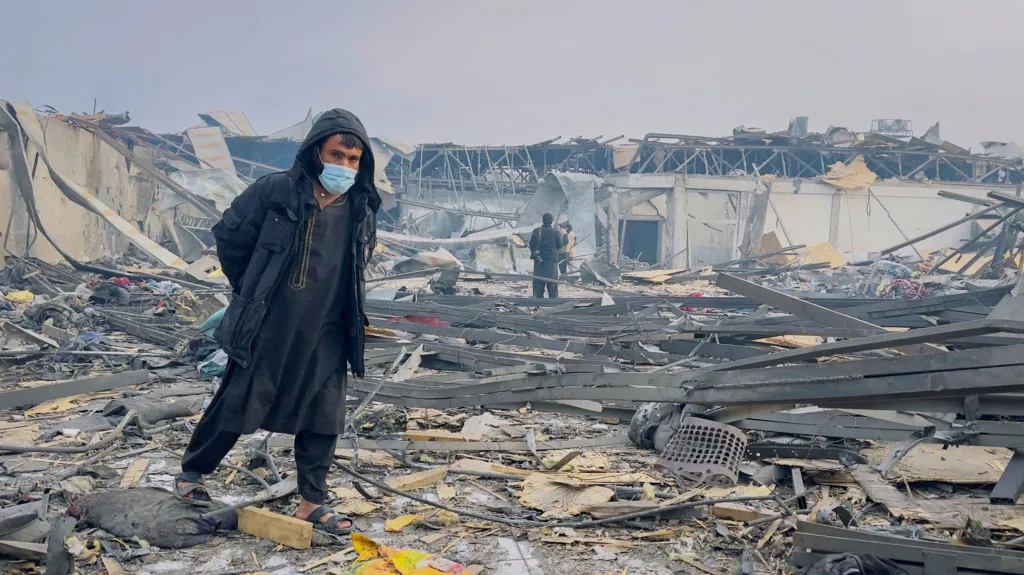
As the scale of the disaster became clearer, Afghan authorities warned that the death toll could rise dramatically. Government officials later claimed that hundreds may have been killed, with around 250 people injured, as large sections of the 2,000-bed facility were destroyed in the strike.
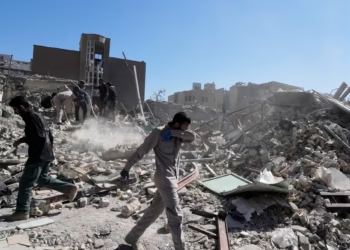
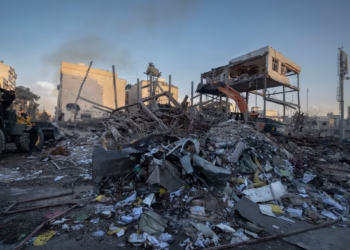
Eyewitnesses described scenes of chaos and devastation, with fires engulfing parts of the complex and rescue workers struggling to reach those buried beneath debris. Survivors recounted hearing explosions followed by collapsing structures, while emergency crews used basic tools and flashlights to search for victims through the night.
The rehabilitation centre was reportedly full at the time, housing a large number of patients undergoing treatment for drug addiction. Many of those inside were unable to escape when the strike hit, contributing to the high casualty figures and complicating rescue efforts.
Responsibility for the attack remains fiercely disputed. Afghan officials have accused Pakistan of carrying out the strike, describing it as a violation of sovereignty and a potential war crime. Pakistan, however, has categorically denied targeting civilian infrastructure, insisting that its operations were directed solely at militant and military sites.
The incident marks a sharp escalation in the ongoing conflict between Afghanistan and Pakistan, which has intensified in recent weeks with cross-border strikes and mounting accusations of support for militant groups. Analysts warn that the latest attack could further destabilise the region and increase the risk of prolonged confrontation.
International concern is growing as humanitarian organisations and global leaders call for restraint and an independent investigation into the strike. The United Nations has urged both sides to prioritise civilian protection, warning that continued escalation could have severe consequences for an already fragile region.

As rescue teams continue to recover bodies and search for survivors, the full human cost of the attack is still emerging. What is already clear, however, is that the strike has deepened an already volatile crisis and raised urgent questions about the protection of civilians in conflict zones.
Related News:
 Pakistan Strikes Afghanistan as PM Says Forces Ready to ‘Crush’ Taliban
 Iran Drones Hit Azerbaijan Airport as War Widens
 Anti-Regime Iranians Turn Anger Toward Trump
 Pakistan Denies Air Strike on Afghanistan Hospital That ‘Killed 400 People’
 After the Landslide: Can India Reset Ties with BNP Bangladesh?
 China Strikes at Japan’s Core — Will PM Takaichi Back Down?
 Japan’s Lost “Tigers” Were Actually Lions, Study Reveals
 India Sentences Three Men to Death for Attack on Israeli Tourist and Hosts
 Japan Braces as Takaichi Begins New Term with Huge Mandate for Low‑Tax, Ultra‑Conservative Agenda
 South Korea’s Ex-President Faces Death Penalty in Insurrection Trial
 US and Indonesia Finalise Deal to Cut Tariffs to 19%
 Kim Jong Un Reappointed as Ruling Party Chief
 Major 7.1 Earthquake Strikes Off Malaysian Tourist Coast
 Brit Killed in Horror Bus Crash as 18 Others Die and 25 Injured
 Ukraine Negotiator Reveals What It Feels Like Facing Russia
 Mandelson Arrested Amid Political Turmoil as Ukraine Marks Four Years of Conflict
 Russian Troops Executed by Commanders, Soldiers Tell BBC
 Ukraine war briefing: Why Ukraine remains defiant and does not feel close to defeat
 ‘Anyone who runs is shot’: Russian soldiers describe killings of troops who refuse orders
 Ukraine remembers its dead as war enters a fifth year
 Japan to Deploy Missiles on Island Near Taiwan by 2031
 German Chancellor Lands in Beijing for Inaugural China Trip
 ‘Fear Is Everywhere’: Reports From Mexican City Turned Into War Zone by Drug Cartel Feud
 Orbán Accuses Ukraine of Disrupting Oil Supplies to Hungary
 Why Asian Firms Are Not Cheering Trump Tariff Ruling
 Why Asian Firms Are Not Cheering Trump Tariff Ruling
 Iran’s Regime Still Intact — Coming Days Will Test Its Survival
 Allies of US in the Gulf Bear Brunt of Iran Attacks
 Hopes and Fears as US Iranians Take to Streets After Toppling of Supreme Leader
 Retaliations Continue on Day Two of US-Israel Attacks on Iran
 Could Kim’s Teen Daughter Become North Korea’s Next Leader?
 Iran, the US, and a World Cup That Starts in Three Months
 Allies of US in the Gulf Bear Brunt of Iran Attacks
 Israeli Attacks Kill 31 in Lebanon, Iran Strikes Across Region, US Warplanes Crash in Kuwait
 In Maps: Strikes Across Iran and the Middle East
 Months of Planning Behind US‑Israeli Mission to Target Iran’s Supreme Leader
 UK Will Allow US to Use Bases to Strike Iranian Missile Sites, PM Says
 Cooper: Joining US Strikes on Iran ‘Not in Britain’s Interest’
 What Khamenei’s Death Means for Russia and China
 Tehran Makes New Threat to Gulf Shipping as US Says ‘Hardest Hits’ on Iran ‘Yet to Come’
 Trump’s Iran Endgame Unclear After Mixed Messaging on War Aims
 Did Trump Declare War and Did Congress Approve Iran Attacks? What to Know
 The Third Day of the US‑Israeli War With Iran
 Why the US and Israel attacked Iran
 Israel Launches Fresh Strikes on Tehran & Beirut; US Warns “Hardest Hits” Ahead
 Three Days In, This War’s End Is Still Unclear
 US Has ‘Enough Weapons for Forever War,’ Trump Says
 At Least 169 Killed in South Sudan ‘Surprise’ Attack
 Israel Strikes Lebanon After Hezbollah Rocket Fire as Iran Conflict Widens
 Amazon Says Drones Damaged Three Facilities in UAE and Bahrain
 Israel’s New Airstrikes on Tehran & Beirut After US Embassy in Riyadh Is Hit
 Israel Launches Ground Invasion of Lebanon Amid Widening Middle East War
 Iranian Rockets Are Testing the Resolve of Dubai’s Instagram Stars
 US Embassy in Riyadh Hit by Iranian Drones as Israeli Troops Enter Southern Lebanon
 Civilian Deaths in Iran Pass 700 Amid Fear of Bombs and Regime Clampdown
 US Senate Backs Trump War Powers Amid Iran Missile Barrage
 Russia Blames Ukrainian Naval Drones as Tanker Sinks
 Nepal Holds First General Election Since Gen Z Protests Toppled Government
 US Submarine Sinks Iranian Warship in Indian Ocean, Hegseth Says
 ‘Every Day Feels Like a Month’: Iranians Describe Life Under ‘Constant’ US‑Israeli Strikes
 How Depleted Weapons Stockpiles Could Affect the Iran Conflict
 Nepal Election 2026: When Will We Get the Results?
 Azerbaijan Promises Retaliation After Iranian Drone Hits Airport
 Fuel and Remittances: How Iran Conflict Hits India At Home
 Sri Lanka Takes Control of Second Iranian Vessel a Day After US Sub Attack
 UK Prepares Aircraft Carrier for Middle East Crisis
 Australia Urged to Shield Iranian Team After Anthem Protest
 Nine Days of Strikes Reshape the Middle East
 China Moves to Enshrine ‘Ethnic Unity’ Law
 Gulf Oil Shock Sends Global Economic Ripples
 Video Analysis Suggests US Missile Hit Base Near Iran School
 Nepal Election 2026: Balendra Shah’s Party Nears Historic Supermajority
 Middle East crisis live: Supreme leader ‘safe’, Iran and Israel escalate conflict
 Ukraine War Becomes Flashpoint in Hungarian Election
 Bodies of Two Chinese Backpackers Found in Floodwaters
 Busy International Airport Targeted by Iran in Latest Strikes
 Point-Blank Gunshot Misses Indian Politician
 Trump’s Call for an Iran Uprising Draws Historical Warning Over Iraq 1991
 What to Stockpile at Home Amid Iran War Fears
 Trump’s Confidence Undimmed — But Every Iran Option Carries Risk