Published: 17 March 2026. The English Chronicle Desk. The English Chronicle Online.
The Kabul hospital strike has triggered global alarm after Afghan officials reported hundreds killed. The devastating incident, which unfolded in Kabul late Monday evening, has deepened tensions between neighbouring rivals Afghanistan and Pakistan. As conflicting accounts continue to emerge, the scale of the tragedy and its humanitarian consequences remain deeply concerning for international observers.
According to Afghan authorities, the Kabul hospital strike targeted a major state-run facility treating drug addiction patients. Hamdullah Fitrat confirmed that at least 400 people had been killed so far, with around 250 others injured. He stated that most victims were vulnerable patients receiving treatment at the time of the attack, highlighting the severity of the reported civilian toll.
Pakistan, however, has firmly rejected these accusations, describing them as misleading and politically motivated. Officials in Islamabad insisted that their military operation focused strictly on what they described as terrorist infrastructure. They claimed that precision strikes were carried out against militant targets and denied any involvement in attacks on civilian facilities such as hospitals.
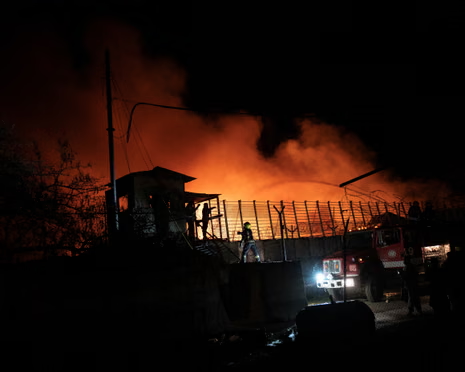
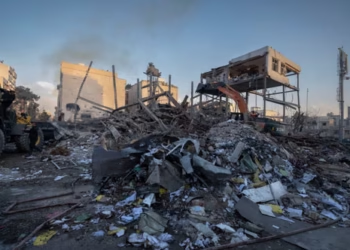
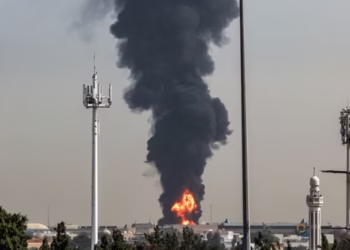
The hospital at the centre of the Kabul hospital strike was reportedly housing approximately 3,000 patients when the explosions occurred. Sharafat Zaman explained that the facility was operating at full capacity, providing treatment to individuals battling substance addiction. Eyewitness footage broadcast by local television channels showed firefighters struggling to control flames that engulfed large sections of the building.
Survivors have described scenes of chaos and devastation that unfolded within minutes of the attack. Ahmad, a 50-year-old security guard, recalled how the entire complex erupted in flames. He described the moment as resembling doomsday, adding that he was the only survivor from a dormitory where 25 staff members had been staying. His account reflects the scale of destruction witnessed during the Kabul hospital strike.
Another security guard, Omid Stanikzai, recounted how anti-aircraft fire preceded the bombing. He said military units were positioned nearby and engaged an aircraft, which then released explosives. According to his testimony, the exchange of fire escalated rapidly, leading to widespread destruction across the hospital compound.
Rescue efforts continued throughout the night and into Tuesday morning, as emergency workers searched through collapsed structures. Ambulance driver Haji Fahim described the scene as overwhelming, with fires still burning and victims trapped beneath debris. He said that even hours later, responders were being called back to recover bodies buried under rubble.
Patients who survived the Kabul hospital strike shared harrowing experiences of panic and confusion. Yousaf Rahim, who sustained injuries to his leg and thigh, said the explosion threw people from their beds. He described thick smoke filling the wards as patients screamed and struggled to escape. His account highlights the human cost of the disaster and the fear endured by those inside.
International organisations have also responded with concern. Dejan Panic confirmed that his organisation received casualties shortly after the strike. Medical teams treated dozens of wounded individuals, though access to the affected area remained challenging due to ongoing security risks.
The United Nations has urged restraint as tensions escalate. Richard Bennett expressed deep concern over reports of civilian casualties linked to the Kabul hospital strike. He called on all parties to respect international law and emphasised the importance of protecting civilian infrastructure, particularly healthcare facilities.
The incident comes amid a sharp deterioration in relations between Afghanistan and Pakistan. Border clashes have intensified in recent weeks, resulting in casualties on both sides. Afghan officials reported that four people, including children, were killed during cross-border exchanges on the same day as the hospital strike. Meanwhile, Pakistan cited earlier attacks originating from Afghan territory as justification for its military actions.
Islamabad has described the situation as approaching an open war, signalling a significant escalation in rhetoric. The conflict traces back to late February, when retaliatory strikes followed earlier air raids. A ceasefire brokered in October by Qatar has since collapsed, leaving diplomatic efforts in disarray and increasing fears of further violence.
At the heart of the dispute lies a long-standing accusation from Pakistan that Afghan طالبان authorities provide safe haven to militant groups. Islamabad has repeatedly linked cross-border attacks to fighters operating from Afghan soil, particularly those associated with the Pakistan Taliban. Afghan officials have consistently denied these claims, insisting they do not support militant activities targeting neighbouring countries.
Efforts to mediate the crisis have so far failed to yield progress. China recently dispatched a special envoy to the region in an attempt to ease tensions. Despite diplomatic engagement, both sides remain entrenched in their positions, with no immediate signs of de-escalation following the Kabul hospital strike.
The humanitarian implications of the incident are profound. Hospitals are considered protected spaces under international law, and any confirmed attack on such facilities could constitute a serious violation. Aid organisations have warned that continued fighting risks further destabilising an already fragile healthcare system in Afghanistan, where resources remain limited after years of conflict.
Local communities in Kabul are now grappling with grief and uncertainty. Families have gathered near the site, hoping for news of missing relatives. Many remain fearful of additional strikes, as tensions show little sign of easing. The psychological impact of the Kabul hospital strike is expected to linger, particularly among survivors who witnessed the destruction firsthand.
Global reaction has been swift, with calls for independent investigations into the incident. Analysts stress the importance of verifying claims from both sides to establish accountability. The conflicting narratives underline the challenges of reporting in conflict zones, where information is often contested and difficult to confirm independently.
As the situation develops, the focus remains on humanitarian response and diplomatic intervention. The Kabul hospital strike has become a defining moment in the current crisis, illustrating the devastating consequences of escalating conflict. Whether it leads to renewed peace efforts or further confrontation will depend on decisions made in the coming days.
For now, the tragedy stands as a stark reminder of the human cost of geopolitical tensions. With hundreds feared dead and many more injured, the need for clarity, accountability, and restraint has never been more urgent. The international community continues to watch closely, hoping for steps that could prevent further loss of life in an already volatile region.
Related News:
 Just Stop Oil Protesters Convicted Amid Climate Defence Row
 BBC to Apologise Over Edited Trump Speech Amid Backlash
 Britain deploys RAF specialists to assist Belgium with drone threats
 Palace May Restore Hyphen to Andrew Mountbatten-Windsor’s Name
 Greene Pushes Epstein Files Amid Trump Fallout
 Trump Deploys DHS to Charlotte in Major Arrest Operation
 December Run-Off in Chile as Election Produces No Winner
 Zelenskyy Signs Fighter Jet Deal Amid Russian Drone Attacks
 Orban Says Ukraine Has ‘No Chance’ as EU Support Continues
 Canada Passes Carney’s First Budget in Tight Parliamentary Vote
 Shadow Fleet at Sea: Europe’s Battle Against Illicit Oil Shipping
 Tiny Curacao Makes History as Smallest Nation to Reach World Cup
 Haiti Qualifies for World Cup Despite Coach Never Visiting Country
 Deadly Russian Strikes Hit Western Ukraine, 20 Killed in Ternopil
 Pentagon Officials in Ukraine to Discuss War End
 Ukraine Peace Plan: Zelensky Ready for Dialogue
 Venezuela Threatens Nobel Winner Machado with Fugitive Status
 Royal Navy Shadows Russian Warships Entering the Channel
 US Suspends Afghan Immigration After White House Shooting
 Two National Guard Soldiers Critically Injured Near White House
 Georgians Defy Government Crackdown After Year of Protests
 Southern Lebanon reels as Israeli strikes shatter communities
 Tokyo court rules Japan’s same-sex marriage ban constitutional
 ‘Extinct’ Antelope Returns to Sahara, Bringing Hope
 EU plans $105bn Ukraine aid using frozen Russian assets
 American Mother Extradited From UK to U.S. on Murder Charges
 Russia losses Ukraine war peace talks intensify amid rising deaths
 Facebook Slow to Remove Bondi Attack Praise, Anti-Hate Group Claims
 Australian Cruise Ship Freed After Reef Grounding in Papua New Guinea
 US Cities Erupt in Protests Against Trump’s Venezuela Military Action
 Albanese Opens Door to Bondi Royal Commission Amid Rising Pressure
 Trump Escalates Minnesota Immigration Surge Amid Rising Tensions
 Iran Protesters Defy Crackdown as Violent Clashes Intensify
 US Clears Nvidia AI Chip Sales to China in Policy Shift
 Trump Threatens Strong Action If Iran Executes Protesters
 Gulf states warn Trump Iran strikes risk wider Middle East war
 Machado Trump medal gesture reshapes Venezuela power struggle
 EU weighs response amid Greenland tariff crisis with Trump
 Sydney Shark Attack Surge Shocks Australia Beaches
 EU Says US Ties Have Suffered ‘Big Blow’ After Greenland Crisis
 Videos reveal earlier clash before Alex Pretti shooting
 UK New Car Discounts Near £6,000 as Prices Are Slashed
 Israel Moves to Bar MSF From Gaza Operations
 Tragic Ski Lift Accident Claims Australian Snowboarder
 Portugal Election Delivers Socialist Win as Far Right Surges
 Australian Families Leave Syrian Camp for Home
 SA Police Intensify Search in Gus Lamont Case
 Trump Attacks UK-California Energy Pact
 Trump and Chagos Deal Rift Over Iran Strikes
 Andrew Arrest Sparks Republic Debate in Australia
 Global corruption crisis: Who Washington shields
 Farage Chagos Islands Row Sparks Fury
 Gold Rush in Gugulethu Leaves South Africans Desperate for Work and Hope
 Hilary Knight speaks out on Trump’s recent hockey remarks
 Trump Speech Sparks Intense Debate Across Divided America
 Has Europe truly learned from the failures of 2022?
 Social Media Trial: Woman Says Addiction Began at Six
 UK Personnel Near Iranian Missile Strike in Bahrain
 Trump Faces Questions Over Iran Conflict Plan
 Iran Civilian Deaths Surge Past 200 Amid Fear
 Herzog Asio meeting sparks security storm
 Trump rebukes Starmer over Iran strikes
 Middle East attacks intensify as Trump rejects Iran talks
 Iran-Iraq border airstrikes spark new tensions
 Petrol Prices Soar as Retailers Accused of Gouging Amid Global Tension
 Penny Wong silent on Australian crew in sub strike
 Australians on US Submarine in Iranian Warship Strike
 Oil Prices Surge Above $100 Amid Iran War
 Pete Hegseth Iran War Remarks Spark Alarm
 India T20 World Cup Triumph Seals Historic Title Defence
 Trump Pressures Congress Over Save America Act
 Iranian Football Squad Asylum Drama Shocks Australia
 Goma Drone Attack Kills Three as Conflict Escalates
 Queensland Protest Laws Spark Free Speech Backlash
 Eswatini Deal Sparks Global Outcry Over US Deportations
 Yvette Cooper: UK Must Follow Principles, Not US Pressure
 Trump Iran War Stance Hardens as Conflict Widens
 Iranian Captain Departs Australia Amid Asylum Tension
 Trump Nato threats expose Iran strategy vacuum
 Iran War Warning: Starmer Backs Ukraine Visit