
Published: 23 March 2026. The English Chronicle Desk. The English Chronicle Online
After two weeks of disruption, uncertainty, and intensive recovery efforts, one of the United Kingdom’s busiest transport hubs is preparing to return to full operation. Glasgow Central Station will fully reopen all its platforms on Wednesday, marking a significant milestone in the aftermath of a devastating fire that shook the heart of the city earlier this month.
The blaze, which broke out on 8 March in a vape shop on Union Street, rapidly spread through a historic B-listed Victorian building adjacent to the station. The structure, known as Union Corner, dated back to 1851—predating the station itself—and was ultimately left structurally compromised. Large sections of the building collapsed, leaving only fragments of its façade standing before demolition teams moved in to clear the dangerous remains.

Despite the scale of the fire and the dramatic collapse of the neighbouring building, the station itself escaped major structural damage. However, safety concerns and the proximity of the destruction forced authorities to shut down significant portions of the station, disrupting thousands of daily journeys and affecting rail services across Scotland and beyond.
Now, following an intense period of restoration work, Network Rail has confirmed that all platforms, including those previously closed, will be back in operation. This includes platforms one through six, which had remained shut even after a partial reopening last week.
The return to full service is expected to restore normality for commuters, travellers, and businesses that rely heavily on the station. Both ScotRail services and cross-border routes will resume as scheduled, reconnecting Glasgow with key destinations across the UK. For many passengers, the reopening represents not just a logistical improvement but also a symbolic step toward recovery after a disruptive and unsettling event.
However, the station will not yet be operating entirely as before. The main entrance on Gordon Street will remain closed as demolition and clean-up work continues on the adjacent site. Passengers are being advised to use alternative access points, including the Hope Street entrance and the low-level platforms, which were among the first areas to resume service following the incident.
Station facilities, including shops and restrooms, are gradually reopening, although parts of the main concourse will remain restricted. Authorities have emphasised that safety remains the top priority as work continues to stabilise and clear the affected area.
The fire itself was both sudden and severe. Emergency services were called shortly after 15:45 on the day of the incident, as flames quickly engulfed the building at the corner of Union Street and Gordon Street. The intensity of the blaze led to widespread concern, with thick smoke visible across the city centre and fears that the fire could spread further into the station complex.
Firefighters worked tirelessly to contain the flames and prevent further damage, while transport officials began coordinating an immediate response to minimise disruption. The incident highlighted the vulnerability of infrastructure located in densely built urban environments, where historic buildings often stand alongside modern transport facilities.
In the days that followed, engineers and safety experts conducted detailed assessments to determine the extent of the damage and the necessary steps for recovery. The process involved not only repairing affected areas but also ensuring that the station could safely handle the high volume of passengers it typically serves.
The reopening has been welcomed by rail operators and officials alike. Leaders within ScotRail have acknowledged the frustration experienced by passengers during the closure and expressed relief at being able to resume normal timetables. The disruption had affected a wide range of routes, including key commuter lines and longer-distance services connecting Glasgow to other major cities.
Services returning to normal include routes linking Glasgow Central with destinations such as Edinburgh, Paisley, Newton, and Barrhead, among others. Longer-distance connections to locations including Dumfries, Carlisle, and Stranraer are also set to resume their usual schedules. These routes are vital not only for daily commuters but also for regional connectivity and economic activity.
The incident has also had a broader impact on the surrounding area. Businesses near the station experienced reduced foot traffic during the closure, while ongoing demolition work has continued to affect access and movement in parts of the city centre. Glasgow City Council has been overseeing the demolition of the damaged structure and the removal of debris, a process that is still ongoing.
For many residents and commuters, the reopening of the station represents a return to routine after an unexpected disruption. Yet it also serves as a reminder of the challenges posed by ageing infrastructure and the importance of rapid response and coordination in times of crisis.
The recovery effort has involved collaboration across multiple agencies, including transport operators, emergency services, and local authorities. Their combined efforts have ensured that the station could reopen safely and efficiently, minimising long-term disruption.

Looking ahead, passengers are being encouraged to check their travel plans in advance, as some temporary adjustments may still be in place. While the majority of services are returning to normal, the ongoing work around the station means that conditions may continue to evolve in the coming days.
In many ways, the reopening of Glasgow Central Station is a testament to resilience—both of the infrastructure itself and of the people who depend on it. From emergency responders who battled the flames to engineers who worked around the clock to restore services, the response has been swift and determined.
As trains once again begin to move through all platforms, the station is set to reclaim its role as a central hub of movement and connection. For a city that thrives on its links to the wider region and beyond, this moment marks not just the end of disruption, but the beginning of recovery.
Related News:
 Gender Pay Gap Won’t Close for Another 30 Years, Warns Union
 What Happened to Bathroom Doors in Hotels?
 Royal Mail Blames Poor Weather and Sickness for Delayed Deliveries
 Popular UK Service Station Announces Closures Amid Another’s Liquidation
 Abandoned UK Village Being Reclaimed by Nature is ‘Vast, Wild and Fascinating’
 Store at Famous Shopping Village to Close After 18 Years Due to Rising Costs
 Tesco Announces New Rule for Customer Parking Spaces – ‘We Need These Everywhere!’
 UK-Bound Jet2 Flight from Spain Declares Mid-Air Emergency Over English Channel
 Fury as Jobless-Migrant Households Receive Benefits Worth £10bn – ‘We Need to End This’
 Closing Factory Workers Paid to Help at Food Bank
 Luxury Airbnb Cabins With Hot Tubs Must Be Demolished After Planning Ruling

 Boy, 12, Home After Being Stranded in Middle East
 South East Water Faces £22m Fine for Supply Failures Affecting Hundreds of Thousands
 Sarah Ferguson Loses Another £1.5m Amid Financial Struggles
 Courier Firm Bust After 14 Years as Evri Deliveries Face ‘Temporary Disruption’
 Fuel Costs Are Rising — Drivers on the Frontline of the Price Surge
 Met Office Issues 9‑Hour Now Warning for 5 UK Regions on Friday – Full List
 ‘Heating Oil Suppliers Are Holding Us to Ransom’ as Prices and Cancellations Surge
 Rare Glimpse of Historic Bridge Thanks to Low Tide
 UK Households Urged to Buy Batteries and Charge Phones as Snow Forecast
 Scots in Five Areas Braced for 10 cm Snow and Travel Chaos as Met Office Issues Yellow Warning

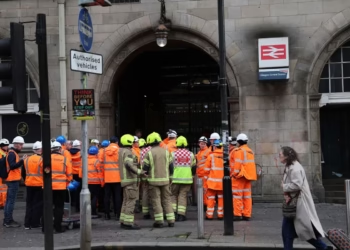 Glasgow Central to Reopen After Union Street Fire
 Disabled Girl ‘Felt Like Alien’ in Shoe Row
 Rising Costs Force Families to Rethink Days Out
 How to Exit Your Broadband Contract Without Paying Exit Fees
 Chancellor Rachel Reeves Pushes for Sweeping Changes to Environmental Protections to Accelerate Development
 Inflation Latest: Cost of Living Expected to Rise Again in Key Figures Released Today
 Retail Sales See Uptick Amid Errors and Delays as ONS Faces Scrutiny
Shein UK Faces Allegations of Shifting Majority of Profits to Singapore to Reduce UK Tax
Retail Sales See Uptick Amid Errors and Delays as ONS Faces Scrutiny
Shein UK Faces Allegations of Shifting Majority of Profits to Singapore to Reduce UK Tax
 Jaguar Land Rover Extends Production Halt Following Cyber-Attack
 Great Britain’s Energy Operator Commits to Strengthening Grid to Prevent Blackouts
 UK Government Backs Return of International Rail Travel to Kent Stations
 Wetherspoon vows to keep prices low amid soaring energy and tax costs
 UK House Price Growth Slows as Buyers Exercise Caution Ahead of Autumn Budget
 Kemi Badenoch Unveils ‘Golden Rule’ to Halve Spending Cuts for Deficit Reduction at Tory Conference
 New V-Level qualification to transform post-16 education
 Real living wage set to rise nearly 7% for UK workers in 2026
 Reeves Faces Setback as Labour May Miss Homes Target
 Trump’s UK Ambassador Urges North Sea Drilling to Strengthen US Ties
M&S Profits More Than Halve After Cyber-Attack
Trump’s UK Ambassador Urges North Sea Drilling to Strengthen US Ties
M&S Profits More Than Halve After Cyber-Attack
 Millionaires group urge Reeves to introduce wealth tax to ‘lift kids out of poverty’
 Starmer Says Labour’s Economic Plan Needs Years to Deliver
 Virgin Media Fined £23.8m Over Telecare Safety Failures
 Historic £100-Weekly Pension Boost Brings Relief for UK Mineworkers
MPs warn AI financial risks threaten UK stability
Historic £100-Weekly Pension Boost Brings Relief for UK Mineworkers
MPs warn AI financial risks threaten UK stability
 Households in England Face Rising Water Bills in April
 UK New Car Discounts Near £6,000 as Prices Are Slashed
 South Africa’s Garden Route Gem Faces Looming Water Crisis
 Labour Utterly Humiliated by Straight-Talking Mum Who Cut Through Keir Starmer’s Insanity
 Pound Sinks and Borrowing Costs Rise as Starmer Fights for Job
 London Loses Its Grip on Ambitious Young Workers
 Major UK Clothing Firm Collapses into Administration — 109 Jobs at Risk
 Renters Furious as Decent Homes Standard Delayed Until 2035
 Could Manchester Lead the UK’s Economic Revival?
 Motorists Could Face ‘Mandatory’ Driving Ban for Road Offences Under Tougher Laws
 Snow and Rain Warnings as Cold Snap Continues in the UK
 Flooding May Worsen Before It Improves as More Rain Forecast for the UK
 Lloyds Boss Accepts Concern Over Use of Staff Data in Pay Talks
 Dual Nationals Face Scramble for UK Passports as New Rules Come Into Force
 Dad Found in Bed with Daughter 16 Years After Abandoning Her as a Child
 ‘Don’t Make Us Security Guards,’ Says Teacher Stabbed by Pupil
 UK Job Vacancies Hit Five-Year Pandemic Low
Storm Hernando: Edinburgh Airport Flights Cancelled in US Travel Chaos
UK Job Vacancies Hit Five-Year Pandemic Low
Storm Hernando: Edinburgh Airport Flights Cancelled in US Travel Chaos
 UK Youth Unemployment Surges Amid Tax Changes
 Will the New SEND Reforms in England Work? You Have Your Say
 Strong Rebound for UK Housing Market Sees 6% More Homes
 BBC Edited a Second Racial Slur Out of BAFTA Ceremony
 Rolling Hills and Heritage: A Car-Free Break in Leicestershire
 Switching Energy Deal Can Save £200 as Price Cap Falls
 ‘I Almost Died After a Touch‑and‑Go C‑Section’
 Islanders Advised on Travel to Middle East Amid Escalation
 Labour’s Employment Shake‑Up ‘Makes Britain Worse Than France’
 Limited Flights Leave UAE But Disruption Continues Amid Iran Strikes
 Calls Grow to Remove Billboard Following Lyra McKee Graffiti
 Father Dies by Suicide Weeks After Wedding in Clitheroe
 Teen Wins Payout After TRNSMT Crush Horror
 Biker Suffers Fractured Spine After Hitting Pothole in Edinburgh
 Charity Watchdog Takes Control of Learning Disability Care Home